CoursesBasicsFirst CoursesSecond CoursesSides & VegetablesSoupsSaucesEggs & FrittatePizza & BreadBreakfastSnacksStreet FoodDesserts
DietVegetarianVegan
SeasonSpringSummerAutumnWinter
MainSeafoodMeatEggs
MoreCulture & TraditionsGlossaryAbout

Conchiglioni Ripieni al Forno
The Birthday Pasta

I said earlier that every Sunday we had pasta with red sauce. That was not entirely accurate. Often the Sunday pasta was pasta in the oven — pasta al forno, which is a different category entirely, the express lasagna of the Neapolitan kitchen. And conchiglioni ripieni — jumbo shells stuffed with ricotta and meat, baked in tomato sauce, cheese crust on top — were what my mother made me for my birthday. My ultimate favorite.
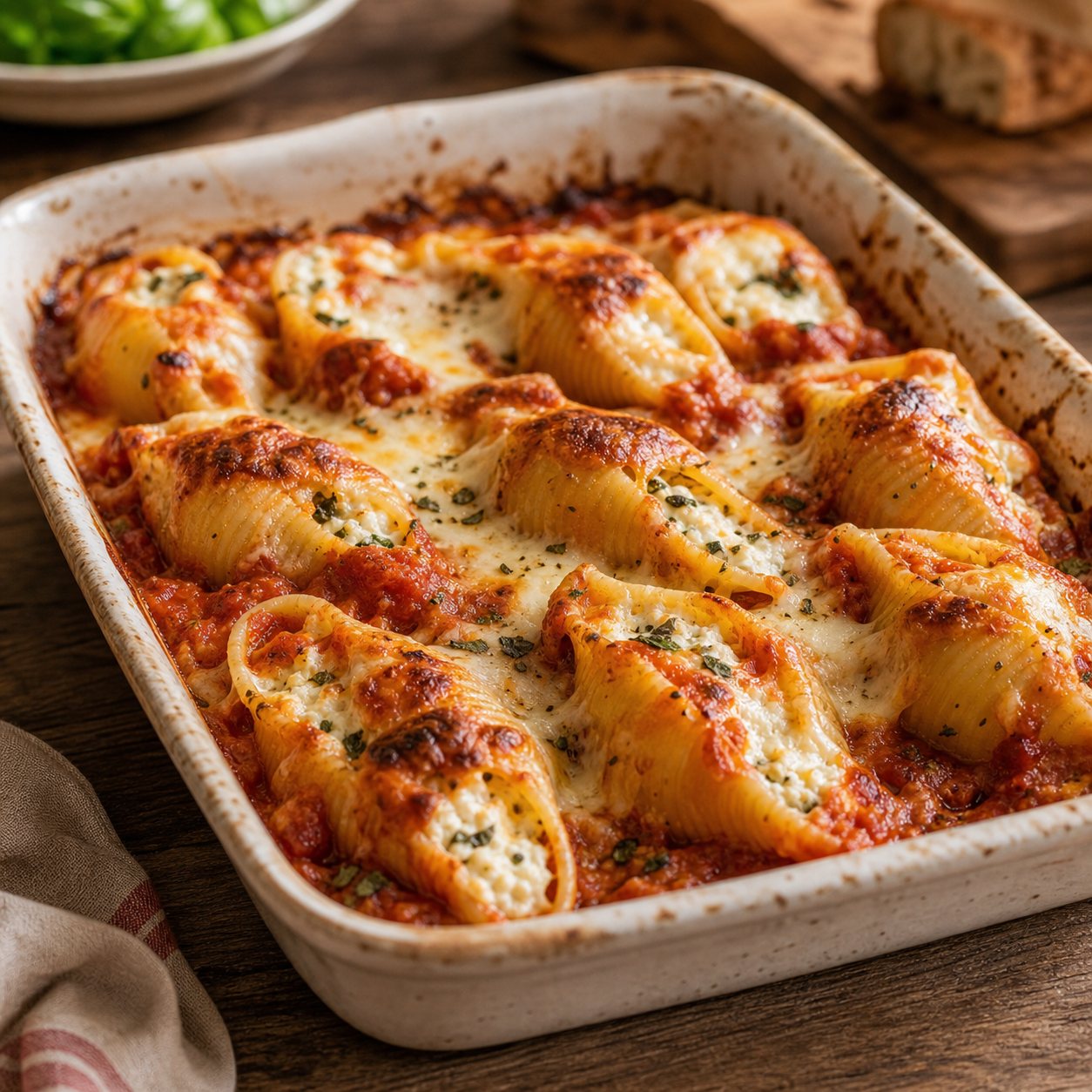
Conchiglioni Al Forno

The pasta al forno is the Neapolitan celebration pasta — not the Sunday sauce pasta, which was everyday, but the one that required preparation the day before and arrived at the table as an event. The conchiglioni specifically, or the cannelloni when the shells were not available, were my birthday request from as far back as I can remember. My mother would fill each shell individually with the ricotta and meat mixture, arrange them in the baking dish, cover them with tomato sauce and mozzarella and Parmigiano, and put them in the oven while the family assembled. The smell of the cheese browning and the tomato sauce bubbling around the shells — that is the birthday smell of my childhood.

My mother made this for my birthday.
Every year. My ultimate favorite.
A sort of express lasagna — more fun to eat, more specific to the occasion.
Conchiglioni ripieni al forno · Caserta, 1980s

The shape matters and it is worth noting because conchiglioni — the giant ridged shells — are genuinely difficult to find in the United States. Most American supermarkets stock jumbo shells (conchiglioni lisci, smooth-surfaced) which are an acceptable substitute, but the ridged version holds the filling more securely and the ridges grip the tomato sauce in the way that makes each forkful complete. Cannelloni are easier to find — the dried tubes that you can fill either raw or par-boiled — and the same filling works identically in them. The result is slightly different in texture (the cannelloni tube vs the open shell, which holds more filling) but equally good. This is what my mother made when the conchiglioni were not available at the market, and the dish held the same status.

The filling is the thing. A good ricotta — well-drained, not watery — is the base. To it: ground beef or mixed meat browned and deglazed with white wine and cooled slightly, diced cooked ham, cubed mozzarella or provola, grated Pecorino, an egg to bind. Mixed by hand until it becomes a single smooth, dense mixture. The mozzarella inside the filling melts during baking and produces pockets of molten cheese in the interior that are the best surprise in the dish. The mozzarella on top produces the golden, slightly blistered crust that is the visual signature of the pasta al forno and the thing that makes everyone at the table impatient while it rests.

A sort of express lasagna — same logic, more manageable scale, more specific to the occasion. The individual shells, each one filled by hand, make the dish feel made for the person eating it. Which is the point of a birthday dish.

Why pasta al forno tastes different from pasta with sauce — and why resting matters

Baked pasta undergoes a flavor transformation that dressed pasta does not. When the assembled dish goes into the oven at 200°C, three things happen simultaneously: the pasta continues cooking in the surrounding tomato sauce, absorbing it and swelling slightly; the cheese on top undergoes Maillard browning and partial caramelization, developing flavor compounds that are absent in melted-but-unbrowned cheese; and the ricotta filling sets as its proteins coagulate under heat, transforming from a loose mixture into a dense, sliceable filling. The tomato sauce reduces and concentrates around the pasta, and the released starch from the pasta thickens the sauce further, producing the characteristic dense, almost jammy texture of well-made pasta al forno.

The 5–10 minute rest after baking is not decorative. During baking the internal temperature of the dish is uneven — the crust is very hot, the center somewhat cooler. Resting allows the temperature to equalize and the ricotta filling to set fully. A pasta al forno cut immediately out of the oven tends to collapse and lose its structure; rested for ten minutes it holds its shape when lifted from the dish and the filling remains coherent. The same logic applies to lasagne and to all layered baked pasta preparations: the rest is part of the cooking, not an afterthought.


The recipe — serves 4
For the pasta and sauce
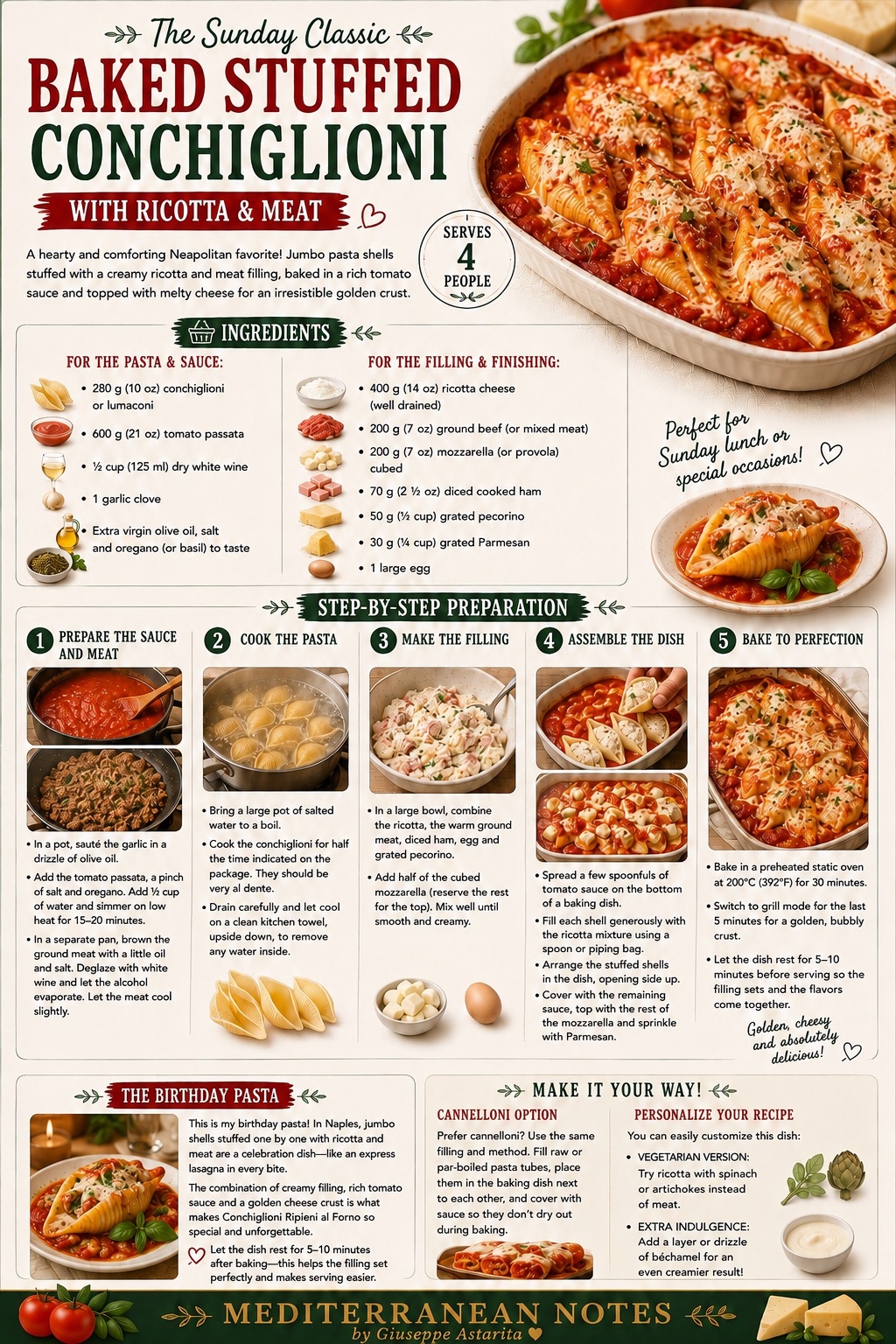
Baked Stuffed Conchiglioni with Ricotta and Meat — step-by-step infographic
Conchiglioni ripieni al forno — golosi, filanti, assolutamente deliziosi. Click to enlarge.
280 gConchiglioni or lumaconi — or cannelloni tubes
600 gTomato passata
125 mlDry white wine (for the meat)
1 cloveGarlic
generousExtra-virgin olive oil, salt, oregano or basil
For the filling
400 g, well drainedRicotta — drain overnight in a sieve if possible
200 gGround beef or mixed meat (beef + pork)
200 g, cubed — half for filling, half for topMozzarella or provola
70 g, diced smallCooked ham
50 g, gratedPecorino romano
30 g, gratedParmigiano Reggiano (for the top)
1 largeEgg
to tasteSalt and black pepper
1
Make the tomato sauce: sauté the garlic in olive oil, add the passata, salt, and oregano. Simmer for 15–20 minutes with ½ cup of water until slightly reduced. Set aside. In a separate pan, brown the ground meat in a little oil with salt. Deglaze with the white wine and let it evaporate completely. Let the meat cool slightly.
The meat must be cooled before going into the ricotta filling — if it is hot it will begin cooking the egg and the ricotta will become grainy.
2
Cook the conchiglioni in well-salted boiling water for half the time on the package — they should be very al dente, still firm enough to handle. Drain and lay upside down on a clean kitchen towel to remove all the water inside the shells. This step matters: water inside the shells dilutes the filling.
3
Make the filling: combine the ricotta, cooled ground meat, diced ham, egg, and grated Pecorino in a large bowl. Add half the cubed mozzarella. Mix by hand until smooth and uniform. Taste and adjust salt.
The filling should be dense enough to hold its shape when spooned into the shells without running out. If the ricotta is too wet, the filling will be loose. Drain the ricotta well — ideally overnight in a sieve in the refrigerator.
4
Preheat the oven to 200°C static. Spread a generous layer of tomato sauce on the bottom of the baking dish. Fill each shell with the ricotta mixture using a small spoon or piping bag, pressing firmly. Arrange them in the dish opening-side up, close together. Cover with the remaining tomato sauce. Scatter the remaining mozzarella cubes over the top and finish with grated Parmigiano.
5
Bake at 200°C for 30 minutes. Switch to grill mode for the last 5 minutes to produce the golden, slightly blistered crust. Remove from the oven and rest for 5–10 minutes before serving. Do not skip the rest — the filling needs to set.
The crust should be golden and spotted with darker areas. The sauce around the shells should be bubbling and slightly reduced. If the top is browning too fast, cover loosely with foil for the first 20 minutes.
On the shapes — and why you rarely find conchiglioni in the US
Conchiglioni — the giant ridged shells — are a specifically southern Italian pasta shape, produced in Campania and used primarily for baked preparations. The ridges grip the sauce and the filling simultaneously; the shell shape holds more filling than a tube and presents it differently at the table. They are findable in Italian specialty stores in the US and occasionally in well-stocked supermarkets, but they are not a standard American supermarket item.

Cannelloni — dried pasta tubes — are more available and take the same filling with the same result. The technique differs slightly: par-boil the tubes for 2 minutes to make them pliable, fill with a piping bag or small spoon, lay in the dish seam-side down, cover with sauce and cheese. The lumaconi (large snail-shaped pasta) is the closest substitute for the conchiglioni and is the one I would use in Massachusetts when the conchiglioni are not at the Italian market. All three produce the same dish at the table. The shape is a detail; the filling and the crust are the point.

Variations and notes

The vegetarian version
Replace the ground meat and ham with sautéed spinach (squeezed very dry) or artichoke hearts. The ricotta filling remains the same. Add more Pecorino for depth. The vegetarian version is lighter and works better as a summer preparation; the meat version is the occasion dish.
With béchamel
A layer of béchamel over the tomato sauce before the cheese produces an even creamier result — this moves the dish closer to a proper lasagne and is the version you make when you want maximum indulgence. The infographic notes this as "extra indulgence." It is not a compromise; it is a decision about what kind of occasion this is.
Cannelloni — the same filling
Par-boil the dried pasta tubes for 2 minutes, fill with a piping bag, lay seam-side down in the dish. Cover completely with sauce — unlike the conchiglioni which are open-ended and partially protected by the shell, the cannelloni dry out if not fully submerged in sauce. Easier to find in American stores.
Better the next day
Like all pasta al forno, this is better reheated the following day. The filling has had more time to set, the pasta has absorbed more sauce, the flavors have integrated. Cover with foil and reheat at 180°C for 15 minutes. Cold from the refrigerator at room temperature is also excellent, which is not something you can say about most pasta dishes.

My mother made this for my birthday. Every year I could ask for what I wanted at the table and this is what I asked for — not a restaurant, not something elaborate, just this. The conchiglioni filled individually, the smell of the cheese browning, the dish arriving at the table still bubbling slightly from the oven, the first shell lifted with a large spoon and the filling holding its shape. That is the dish. It is exactly what a birthday pasta should be.

Buon compleanno — e sempre i conchiglioni ripieni.
More from Primi
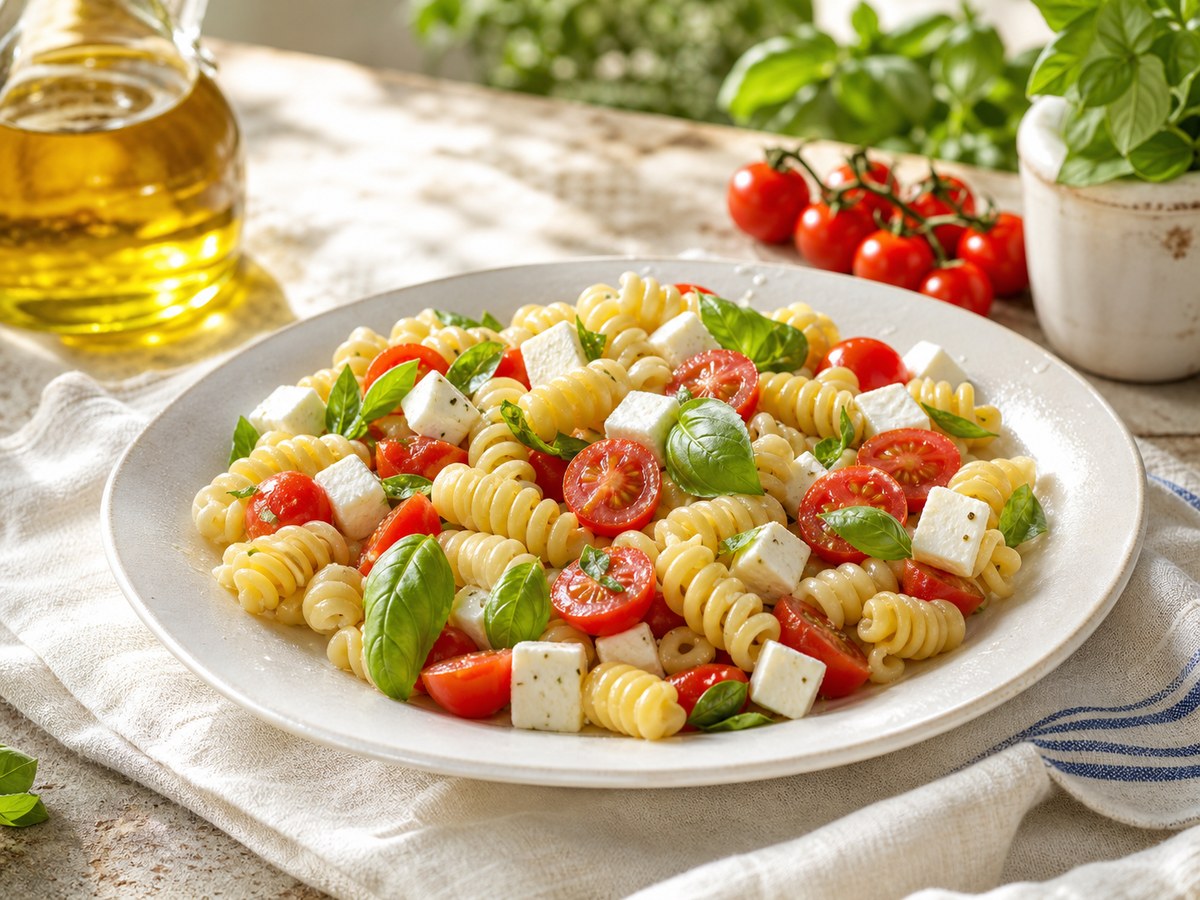
Insalata di pasta
Insalata di pasta
Cold summer pasta salad, ready in the fridge.
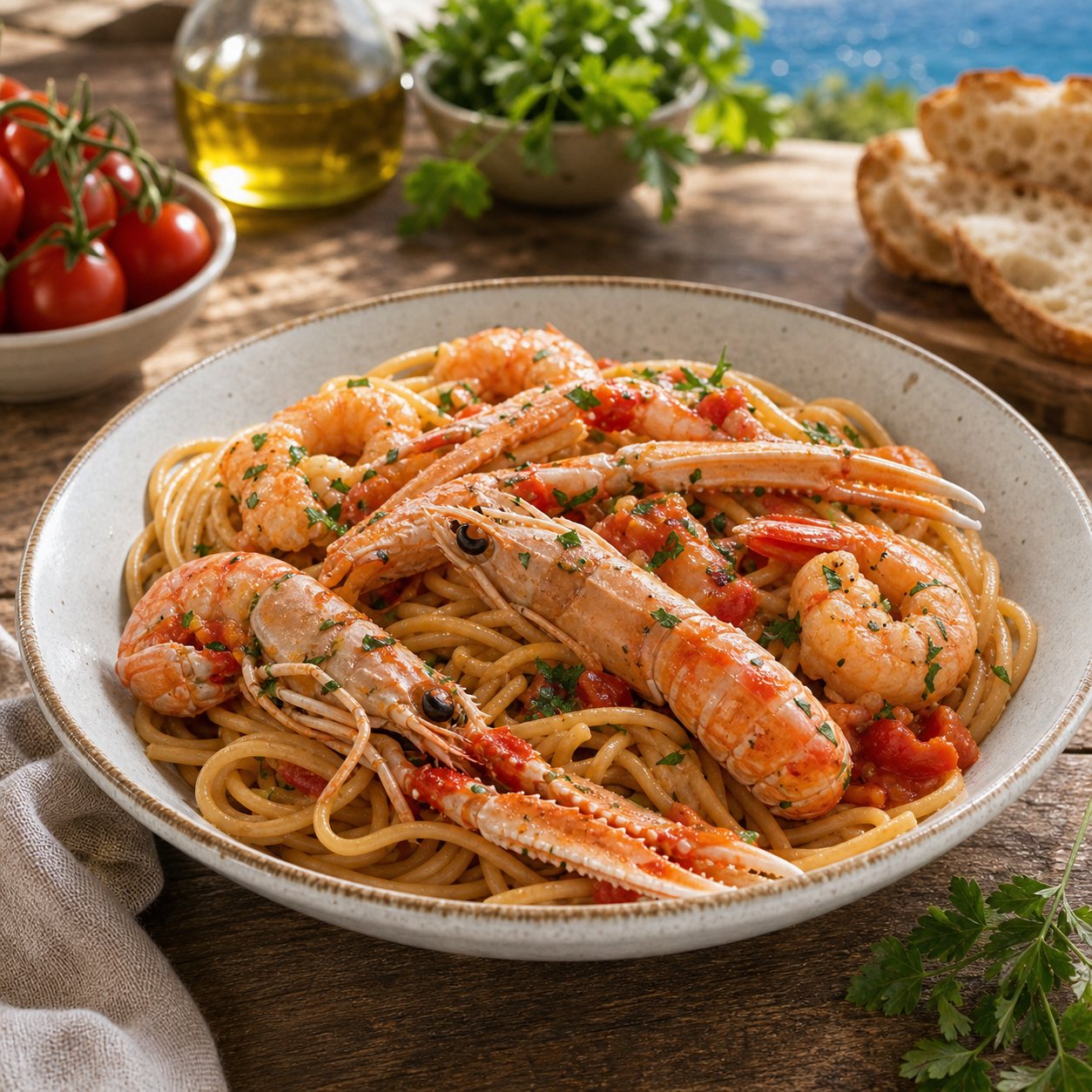
Spaghetti scampi e gamberi
Spaghetti con Scampi e Gamberi
Spaghetti with scampi and prawns.
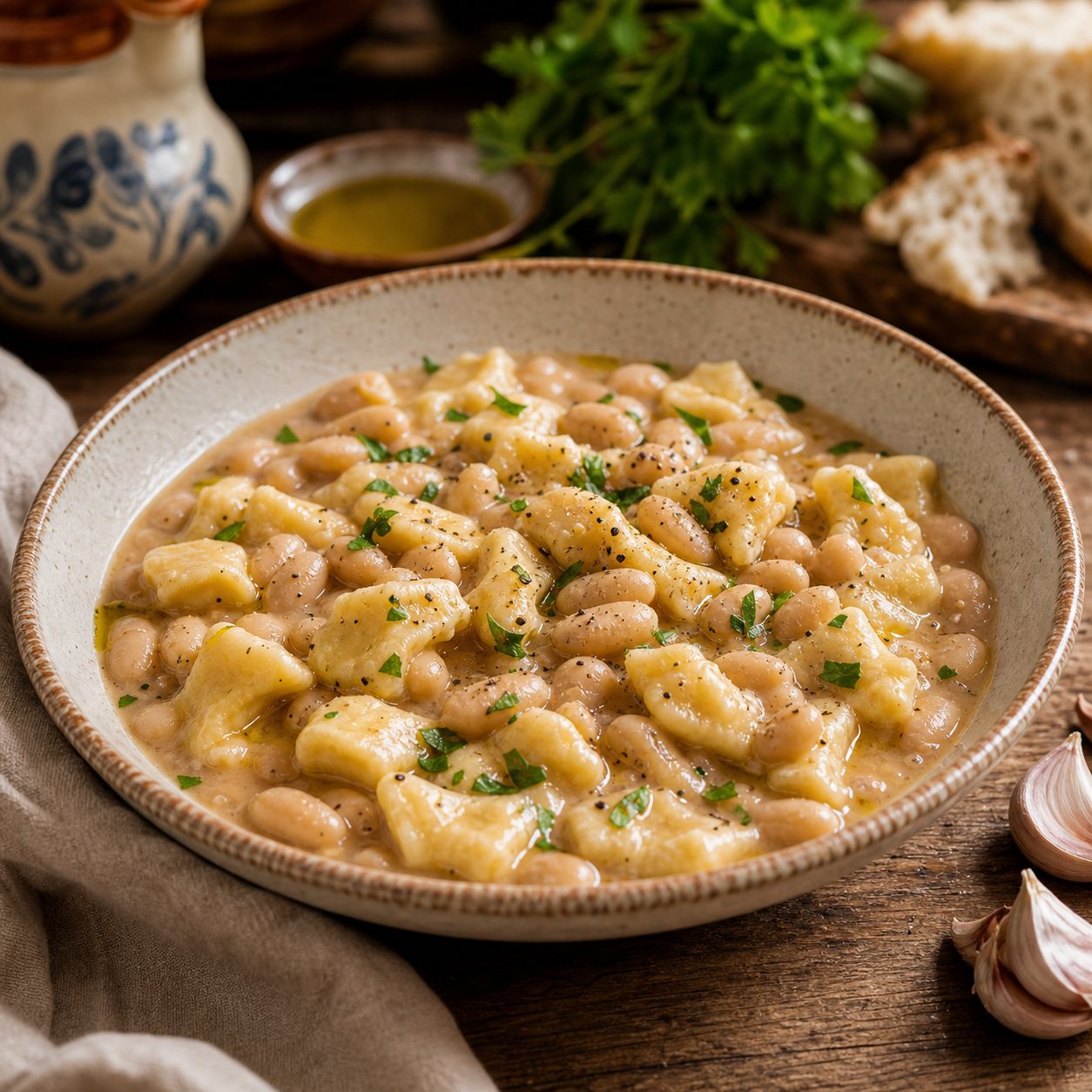
Pettole e fagioli
Pettole e fagioli
Creamy, rustic pasta and beans from the countryside.