Insalata di pasta semplice
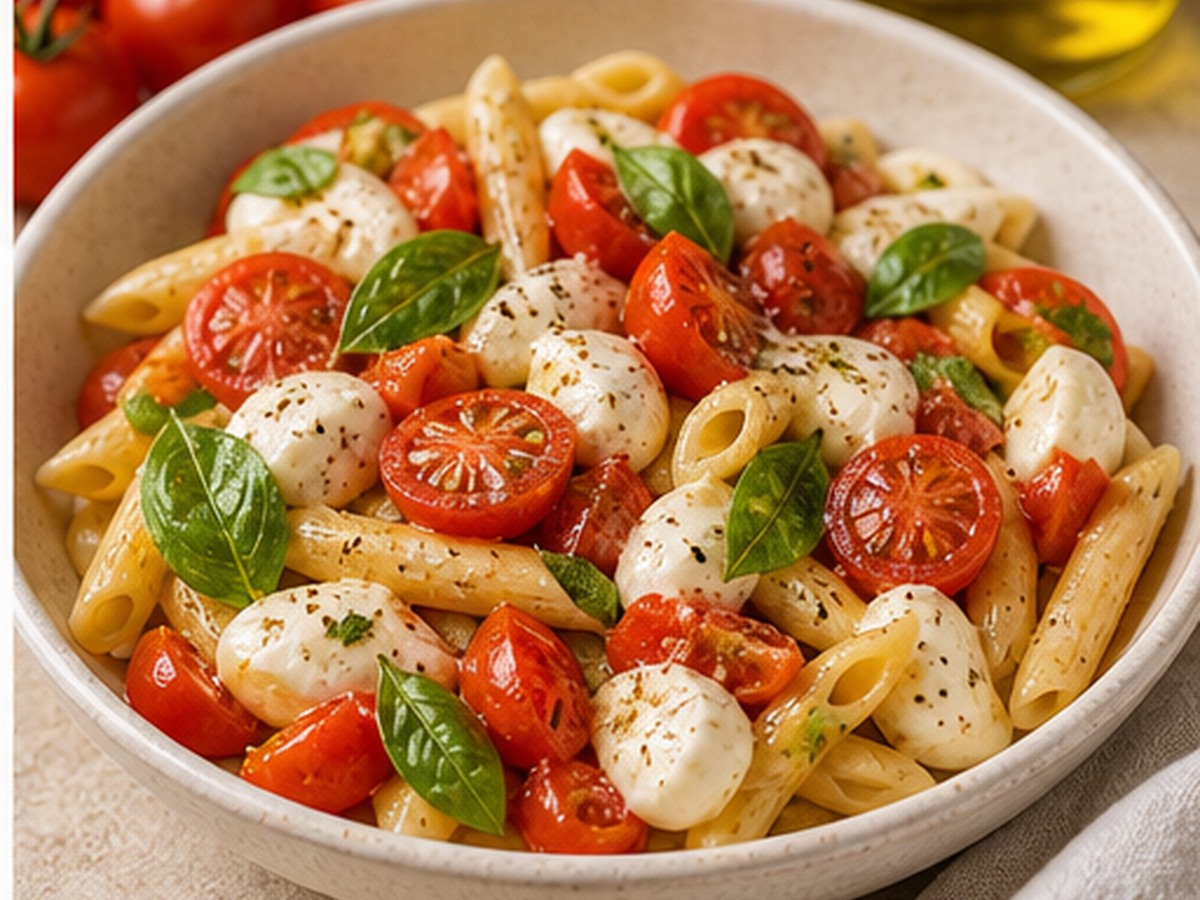
Cherry tomatoes marinated in garlic and olive oil for twenty minutes, torn mozzarella, fresh basil. The home version — the one you make the evening before and eat cold at noon when it is too hot to think about cooking.
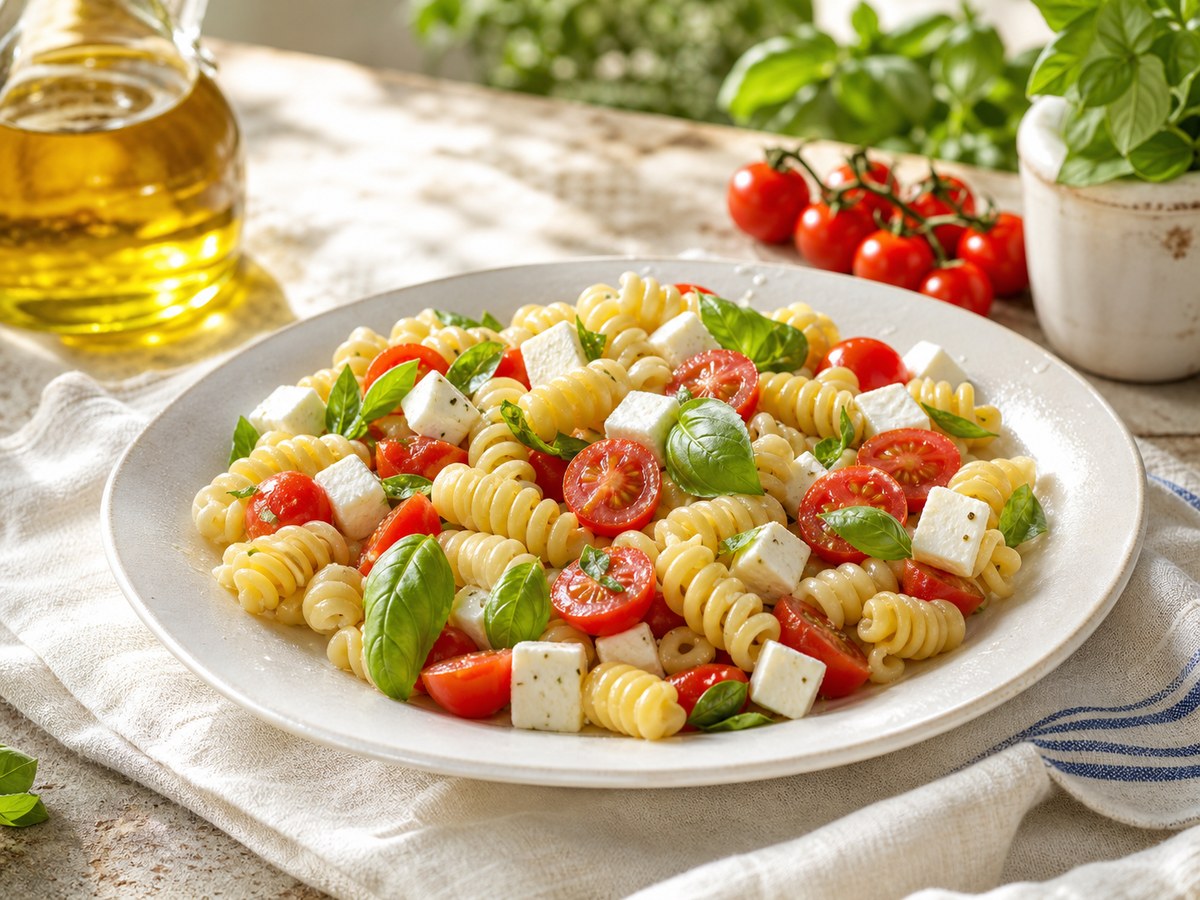
We had no air conditioning growing up. This sounds like a minor detail but it was not — in Caserta in July and August, with 38°C outside and no movement in the air, the kitchen was the last place you wanted to spend time in. My mother found ways around this. The pasta salad was one of them: made the evening before when it was cooler, kept in the refrigerator overnight, eaten cold at noon the next day. No reheating, no standing over a stove, no steam. You opened the fridge, portioned it into bowls, put them on the table. Lunch done.
The simple version requires almost no technique — and the few things it does require matter a great deal. The tomatoes are not added raw. They are halved, salted, and left to macerate with a crushed garlic clove and a generous pour of olive oil for at least twenty minutes before the pasta touches them. This is the step that separates a good pasta salad from a bowl of pasta with tomatoes on top. The salt draws water from the tomatoes, the garlic infuses, the oil picks up everything. By the time you combine it with the pasta, the macerated tomatoes have become something much better than raw.
The mozzarella goes in last, torn roughly by hand, after the pasta has had time to cool. If you add it warm, it melts slightly and turns rubbery as it cools. Cold pasta, cold mozzarella, torn generously — that is the sequence. Plenty of fresh basil at the end, added only when you serve, because basil blackens in olive oil after a few hours and loses its fragrance to oxidation. This is not a complicated dish. But it requires patience with the tomatoes and a light hand with the cheese.
Why you don't rinse the pasta — and what the starch coating actually does
When pasta finishes cooking, its surface carries a thin layer of dissolved starch. Rinsing removes this. Most recipes say rinsing is fine for cold pasta because you're not serving it hot. This is technically true but leaves out what the starch coating does for you: it provides a surface that absorbs and holds the olive oil and tomato juices as the pasta cools. Rinsed pasta, tossed with oil, will show oil pooling at the bottom of the bowl. Unrinsed pasta, dressed while still slightly warm, incorporates the oil into the starch matrix — the result is evenly coated pasta that holds its dressing throughout refrigeration. Drain, toss immediately with olive oil and the macerated tomatoes, let cool completely, then refrigerate. The starch does the work.
Recipe — serves 4
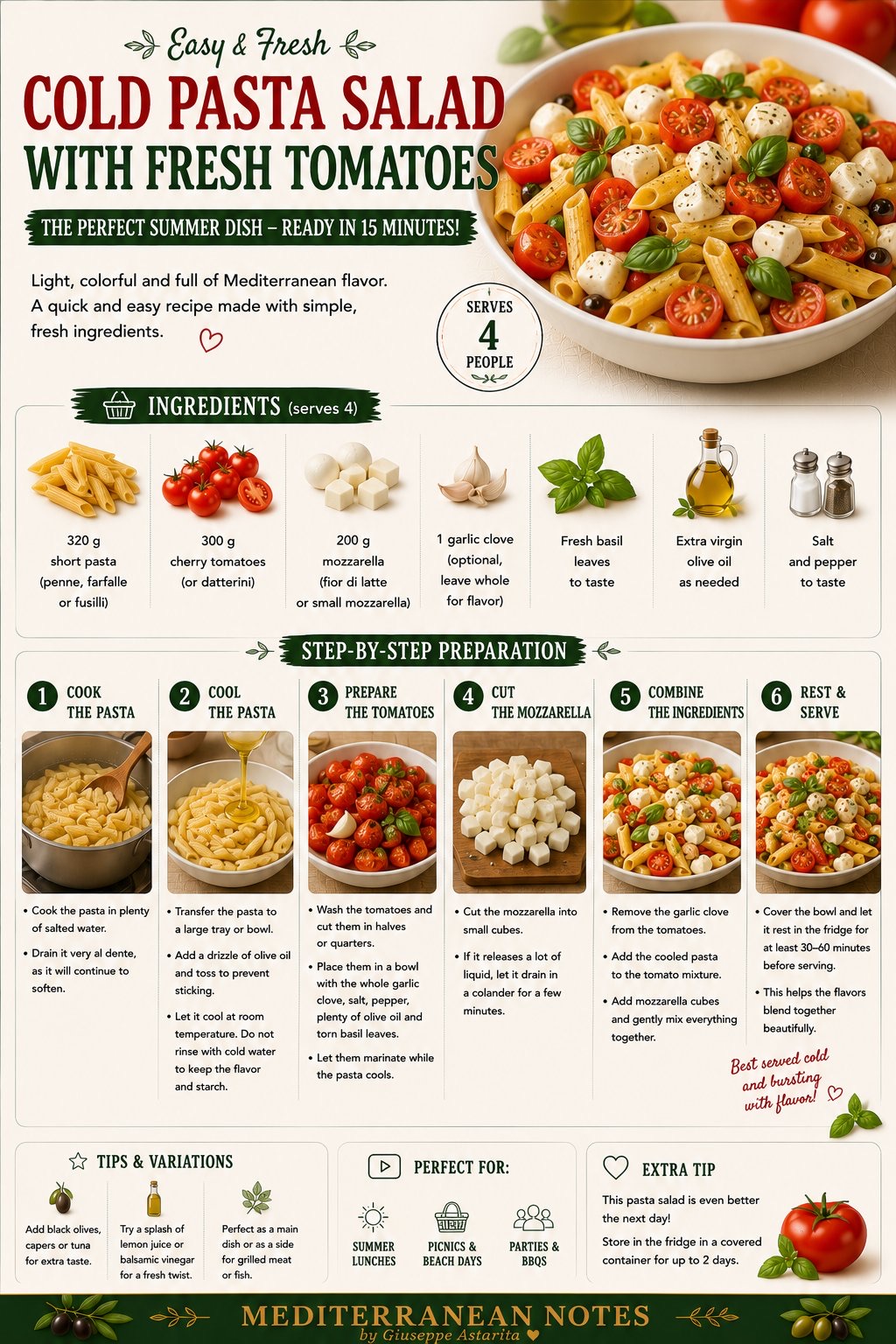
Ingredients
Method
Marinate the tomatoes — start 20 minutes before cooking. Halve the cherry tomatoes and place in a large bowl. Salt generously (half a teaspoon). Add the crushed garlic clove and 4 tbsp olive oil. Toss and set aside. The tomatoes should release their water and become glossy and fragrant. Remove the garlic after 20 minutes.
This step cannot be shortened. The maceration is what transforms the tomatoes from raw to dressed.
Cook the pasta. Bring a large pot of heavily salted water to a boil. Cook the fusilli 1 minute less than the package says — it will continue absorbing liquid as it sits. Drain without rinsing.
Dress immediately. While the pasta is still hot, add it directly to the bowl with the marinated tomatoes. Add the remaining 2 tbsp olive oil. Toss well so every piece of pasta is coated. Spread in the bowl so it cools evenly, or transfer to a large flat container.
Do not add the mozzarella now. Hot pasta melts it. Wait until the pasta is completely cool.
Cool, then refrigerate. Let the pasta come to room temperature — about 30 minutes. Then cover and refrigerate for at least 2 hours, or overnight. The dressing continues to develop in the fridge. This is a dish that benefits from waiting.
Finish and serve. Remove from the refrigerator 10 minutes before serving. Fold in the torn mozzarella. Taste and adjust salt. Scatter fresh basil leaves over the top — do not mix the basil in, just lay it on. Grind black pepper generously. Serve cold.
The basil goes on at the table, not in the fridge. Basil oxidizes in oil and turns black and bitter within a few hours.
The other version
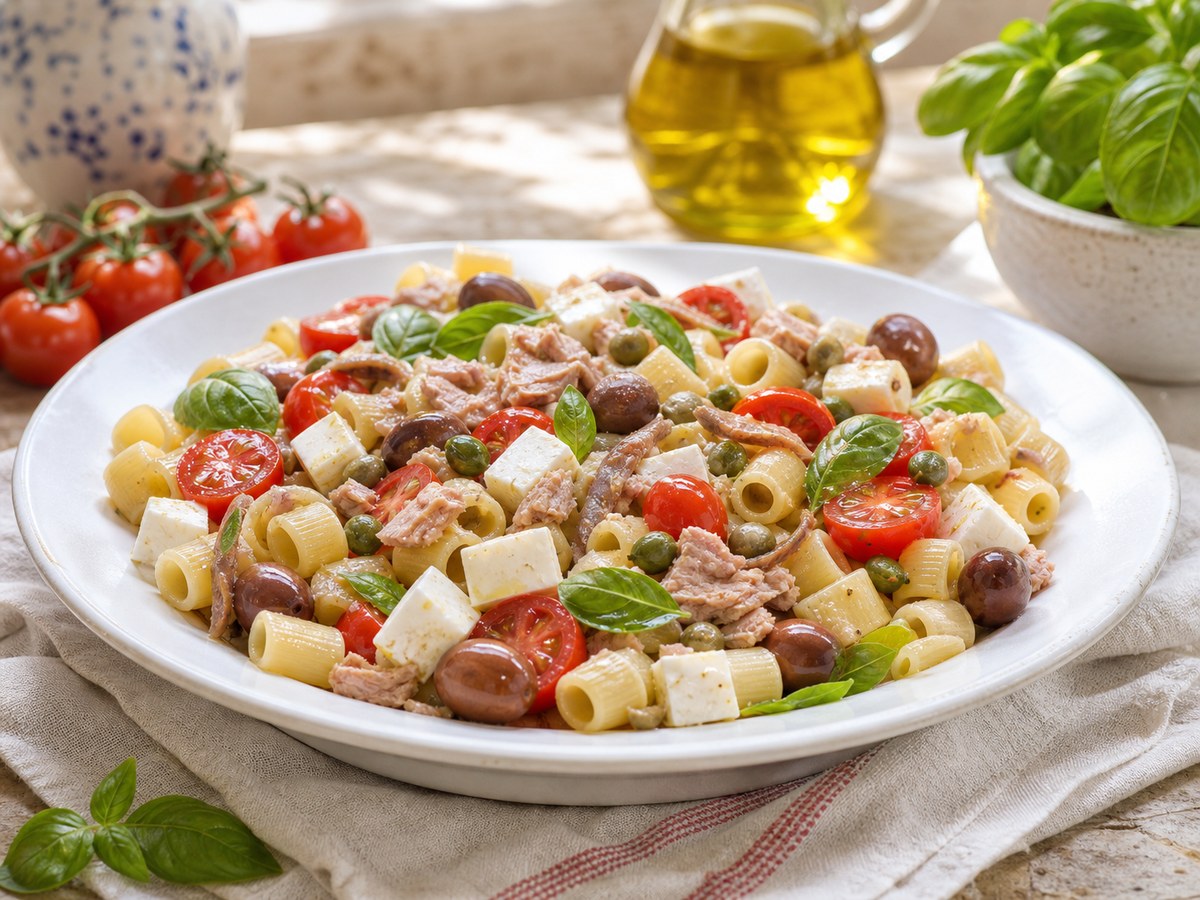
For the more substantial Neapolitan version — with tuna, Gaeta olives, capers, and anchovies — see the companion page.
Buona estate — e che il frigo sia sempre pronto.