Neapolitan Pasta with Tomatoes, Basil and Mozzarella
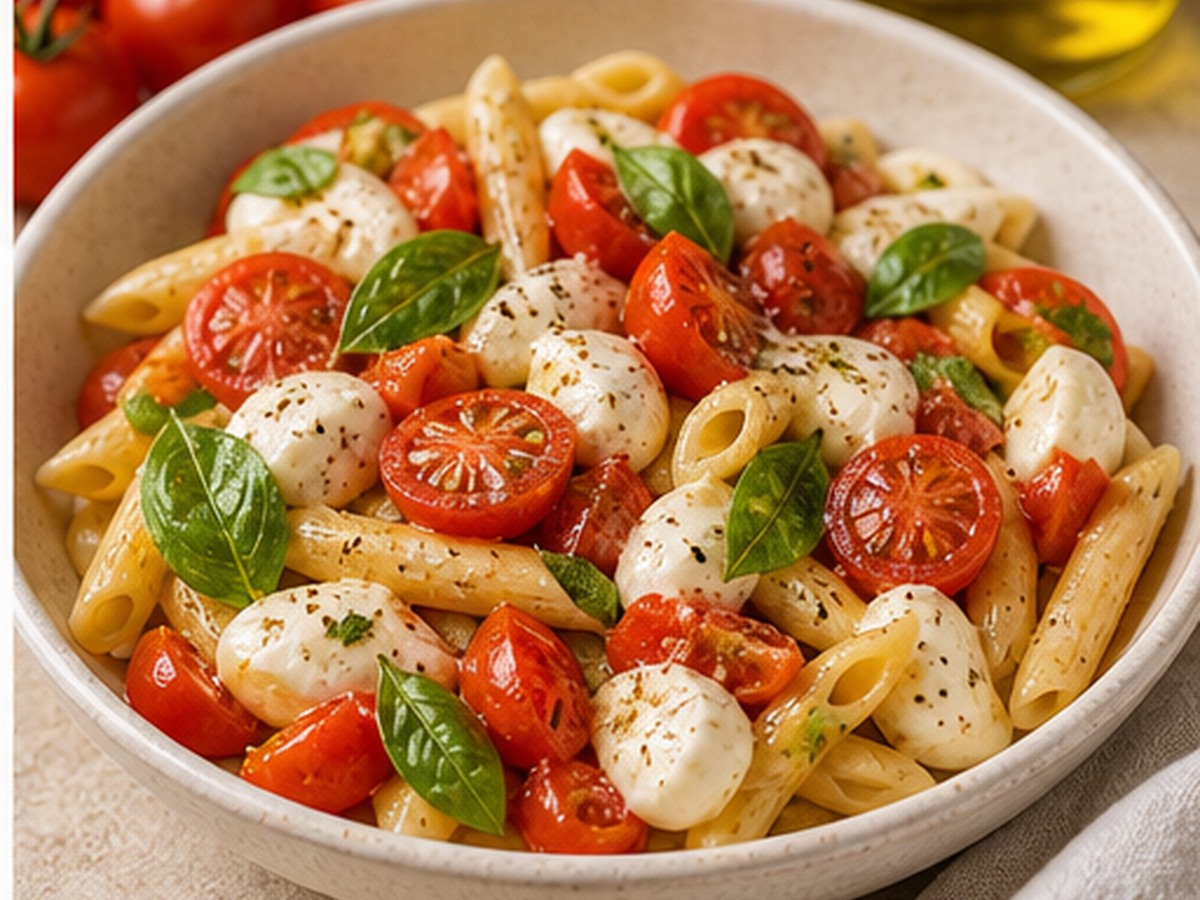
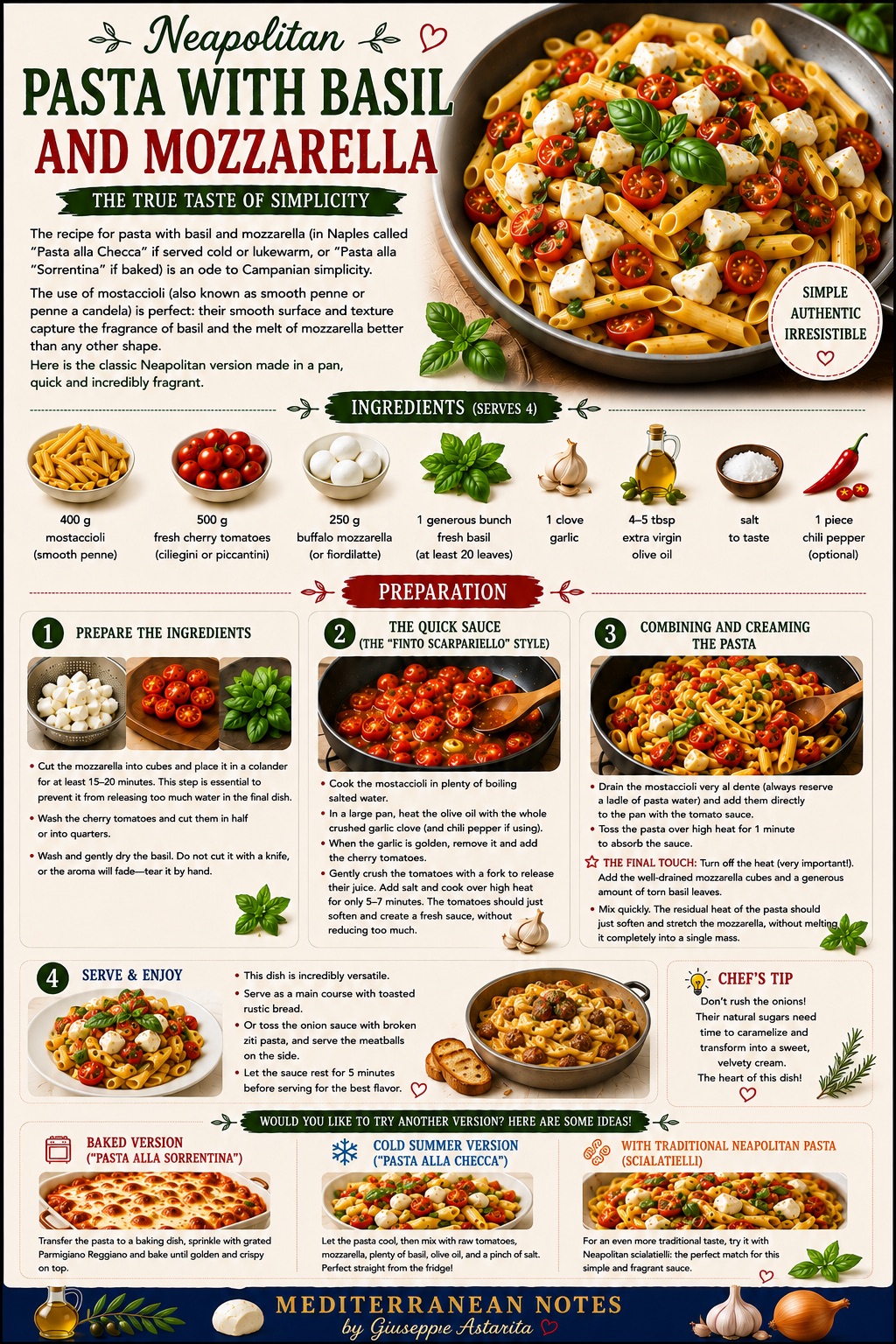
The pasta of the hottest weeks of summer — barely-cooked cherry tomatoes, fresh mozzarella torn in off the heat, and a generous amount of hand-torn basil. Known in Naples as pasta alla checca when served cool, alla sorrentina when baked.
In Naples this dish goes by two names depending on how it is served: pasta alla checca when it is dressed cold or warm in summer, and pasta alla sorrentina when it is baked. The shape matters more than people expect — smooth mostaccioli (penne lisce, penne a candela) hold the perfume of the basil and the melt of the mozzarella far better than a ridged shape does.
Ingredients · serves 4
Method
1. Prepare. Cube the mozzarella and leave it in a colander to drain for 15–20 minutes — this is essential, or it will water down the finished pasta. Halve or quarter the cherry tomatoes. Wash and dry the basil and tear it by hand; cutting it with a knife bruises the leaf and the aroma fades.
2. The quick sauce (the finto scarpariello style). Boil the mostaccioli in plenty of salted water. Meanwhile, heat the oil with a whole crushed garlic clove (and the chili, if using). When the garlic is golden, lift it out, add the tomatoes, and crush them lightly with a fork to release their juice. Salt, and cook over high heat for just 5–7 minutes — they should soften into a fresh sauce, not reduce.
3. Cream the pasta. Drain the pasta very al dente, saving a ladle of its water, and toss it in the pan for a minute to take up the sauce. Off the heat — this is the important part — add the drained mozzarella and a generous handful of torn basil. The residual warmth softens the mozzarella from the outside without melting it into a single mass.
4. Serve. Finish with a drizzle of extra-virgin olive oil over the top and a few raw basil leaves. Let it rest a couple of minutes before serving — good with toasted rustic bread alongside.
Three ways
Pasta alla Sorrentina (baked) — tip the dressed pasta into a baking dish, dust with grated Parmigiano, and bake until golden and crisp on top.
Pasta alla Checca (cold) — let the pasta cool, then dress it with raw tomatoes, mozzarella, plenty of basil, olive oil and a little salt. Straight from the fridge on the hottest days.
With scialatielli — for an even more traditional Neapolitan version, use fresh scialatielli; the fragrant sauce was made for them.
In late July the caseificio near my grandparents' house in Caserta would have fresh mozzarella ready by eight in the morning. You could smell the warm milk as you walked past. We would stop on the way back from the market, buy two or three balls still in their whey, and use them the same morning — never refrigerated, always at the temperature they came from the vat. The cherry tomatoes were from the garden behind the house, the small ones that split open if you pressed them between two fingers. In those two or three weeks of peak summer, this pasta made itself.
The dish depends entirely on the quality of its ingredients, which is why it does not survive out of season. A December tomato and refrigerated supermarket mozzarella produce something technically resembling this dish and tasting like a lesser version of something else. The acid, the sweetness, the warm-dairy scent of mozzarella that has never been cold — these are not details. They are the dish. In season, no intervention is needed. Out of season, no intervention is enough.
The mozzarella goes in off the heat, torn in pieces. It should not fully melt. The contrast between the hot pasta and tomato and the still-cool center of the cheese is part of what you are eating. If you stir it until it strings, you have made a different thing. Leave it to remain mostly itself, just barely warmed through.
Fresh mozzarella contains 50–60% water, while the low-moisture variety used on pizza is closer to 45%. This difference is significant at the table. Fresh mozzarella's high water content means its casein protein network — the structure that gives cheese its body — is more loosely assembled and more easily disrupted by heat. Added to a hot pan it releases water immediately, diluting the sauce; added off the heat it softens from the outside in while the cool interior remains firm. This is the textural contrast the dish is built on. The temperature of fresh mozzarella also matters: straight from refrigeration, the fat inside is partly solidified and the cheese feels rubbery; at room temperature (or warm from the dairy), the fat is in a more fluid state and the cheese is softer and more yielding. Cold mozzarella added to hot pasta produces a gummy, slightly grainy result. Warm mozzarella, torn and added off the heat, produces something that is still itself — just barely, pleasantly warmer than when it arrived at the pan.