Il Basilico
The king's plant
"Vai a prendere qualche foglia di basilico." Go get some basil leaves. It was never a whole recipe step in my mother's kitchen — it was an errand, sent out to the balcony and back, and it happened so often the plant itself was as much a fixture of the kitchen as anything actually indoors.
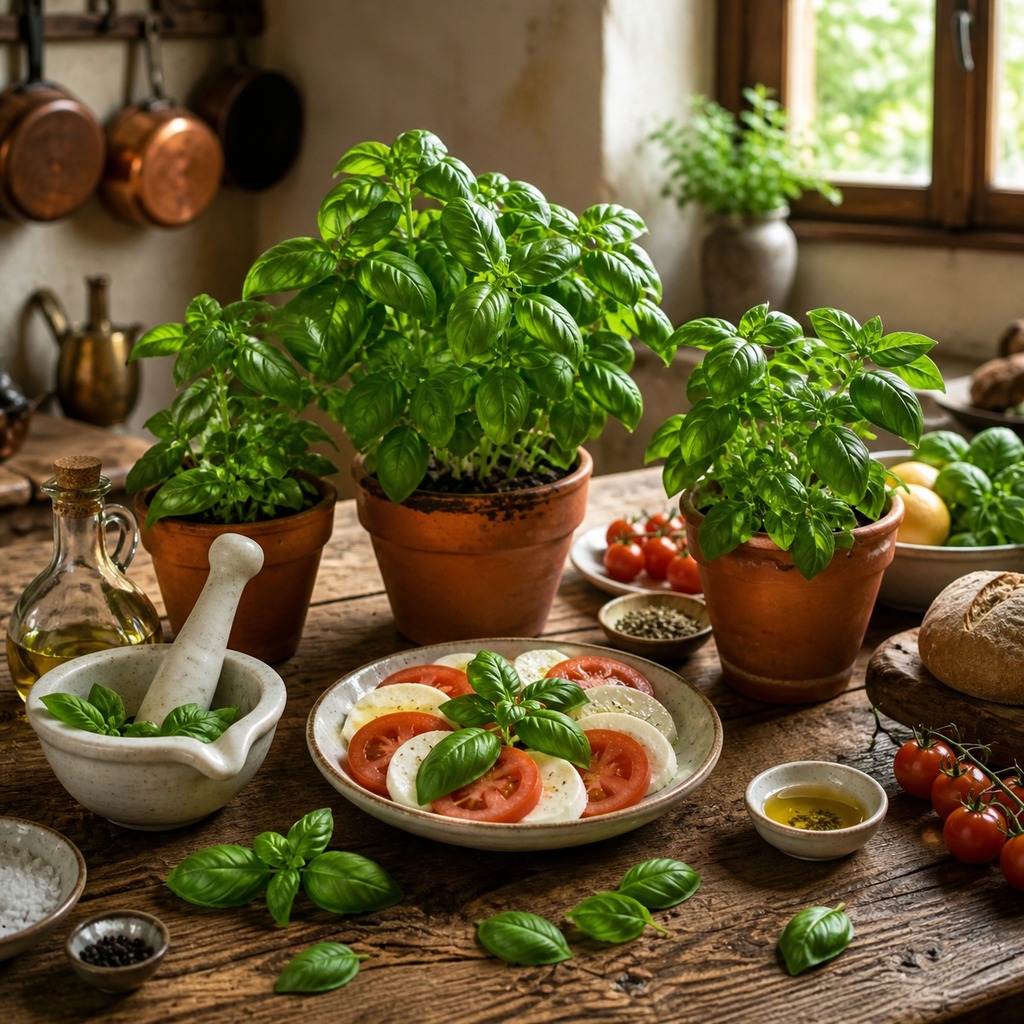
Basilico is called la pianta del re — the king's plant — and in a Campanian kitchen it more or less earns the title. It doesn't headline many dishes on its own the way tomato or garlic does, but pull it out of the pantry entirely and half the dishes on this blog stop tasting like themselves. My mother kept a pot of it on the kitchen balcony, and "vai a prendere qualche foglia di basilico" was one of the most repeated sentences of my childhood — not a big request, just the kind of small errand that happens so many times it becomes part of the architecture of a kitchen rather than something anyone remembers deciding to do.
It's a genuinely useful plant beyond flavor, too — basil carries anti-inflammatory compounds, mainly eugenol and other essential oils concentrated in the leaves, the same chemistry responsible for its sharp, clean scent. None of that is why anyone in my family grew it. It was grown because you needed it constantly, and a plant on the balcony meant you never had to plan ahead for it.
Where it goes — almost everywhere
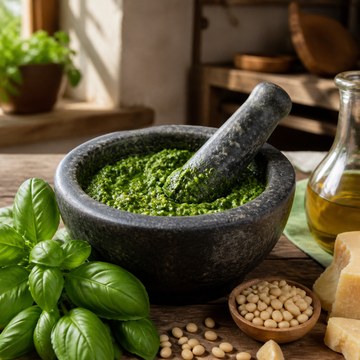
Basil is the one herb that shows up across nearly every category on this blog rather than staying in its lane. It's the entire identity of pesto di basilico, pounded with pine nuts and cheese into the greenest sauce in the Italian pantry. It finishes sugo al pomodoro and sciuè sciuè, torn in at the last minute so it never cooks long enough to lose its brightness. It's the third color on pizza margherita, laid over the melted mozzarella the moment the pizza comes out of the oven, never before. It stacks with tomato and mozzarella in caprese, where it's doing as much of the work as either of the other two ingredients despite being the smallest amount on the plate.
The rule that holds across almost all of it: basil goes in at the end, off the heat or close to it, torn by hand rather than cut with a knife — a blade bruises the leaf and turns the cut edge dark within minutes, where tearing leaves it green longer and releases the oils more gently. It's the last ingredient because it's the most fragile one, and everything about how it's used in this kitchen respects that.
Vai a prendere qualche foglia di basilico — buon appetito.