CoursesBasicsFirst CoursesSecond CoursesSides & VegetablesSoupsSaucesEggs & FrittatePizza & BreadBreakfastSnacksStreet FoodDesserts
DietVegetarianVegan
SeasonSpringSummerAutumnWinter
MainSeafoodMeatEggs
MoreCulture & TraditionsGlossaryAbout

Pesto di Basilico
The basic basil pesto

Basil, pine nuts, garlic, two cheeses, and good olive oil, worked into a rough green paste. Ligurian by birth, not ours — but it earned its place on our table long ago, and it does far more than dress pasta.
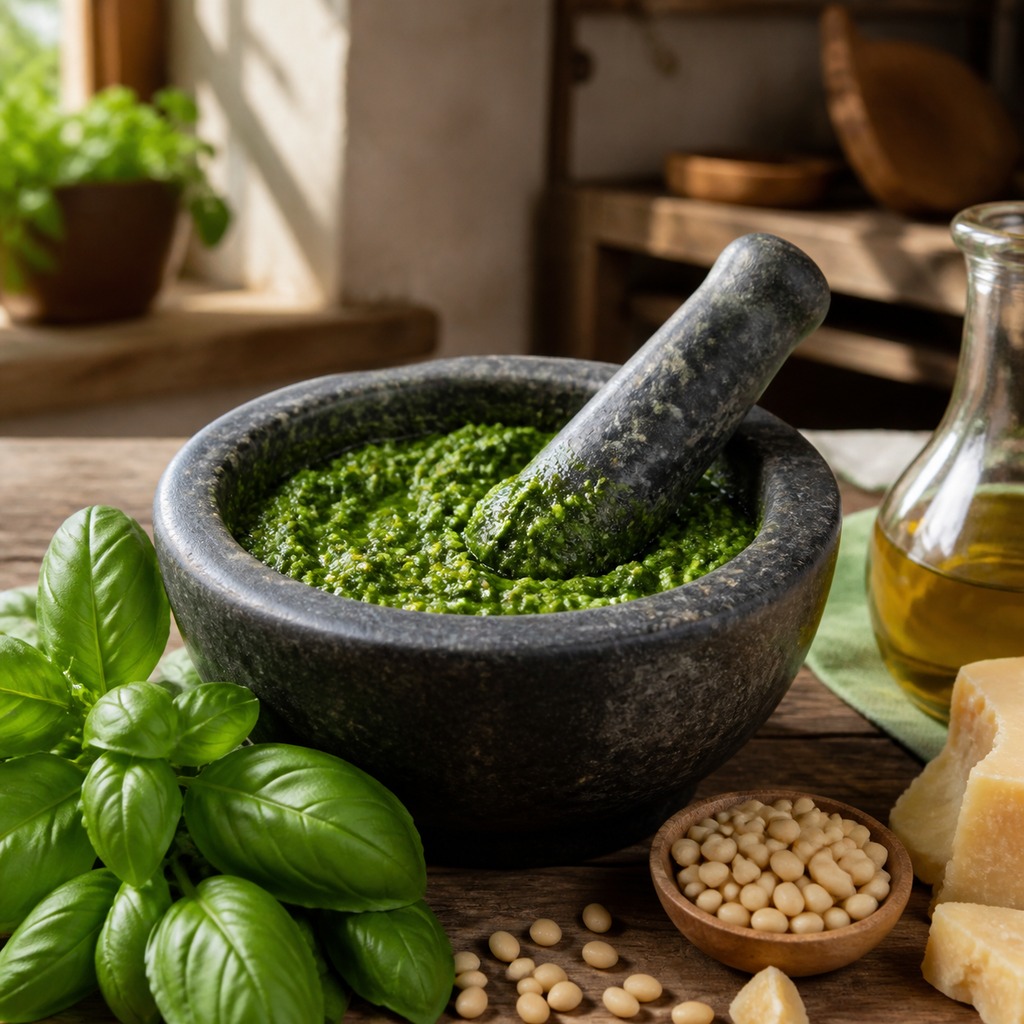
Pesto di basilico

Let me be honest about provenance first: pesto is from Genoa, not Campania. Nobody's Neapolitan grandmother invented it. But like a few other adopted dishes on this blog, it settled into our kitchen and stayed — a jar in the fridge in summer, when basil is everywhere and cooking feels optional.

This page is for the sauce itself, because pesto is not only a pasta dressing. Spread it on crostini or warm bruschetta. Spoon it over boiled potatoes and green beans. Stir a spoonful into a minestrone off the heat. Drop a little on grilled zucchini or a mozzarella and tomato plate. For the pasta version — with the Ligurian trick of potatoes and green beans in the pot — see pasta al pesto.

Pesto means "pounded." The mortar is the traditional tool and still the best one — but a blender used gently gets you close.
Why pesto turns dark, and how to stop it

Basil leaves are rich in polyphenol oxidase, the same enzyme that browns a cut apple. The moment the leaves are torn or crushed, the enzyme meets its substrates and oxygen, and the bright green begins sliding toward olive-brown. Heat accelerates it dramatically — which is why pesto is never cooked, and why a metal blade spinning fast (and warming the paste) darkens pesto faster than a mortar's slow pounding.

The defenses are simple: work cold (some cooks chill the blender jar), work fast, and cover the finished surface with a film of olive oil to keep oxygen out. Blanching the basil for a few seconds deactivates the enzyme entirely — restaurant pesto stays neon green that way — at a small cost in fresh-basil perfume.


The recipe

Makes about a cup — enough to dress pasta for four, or to keep in a jar in the fridge for the week.
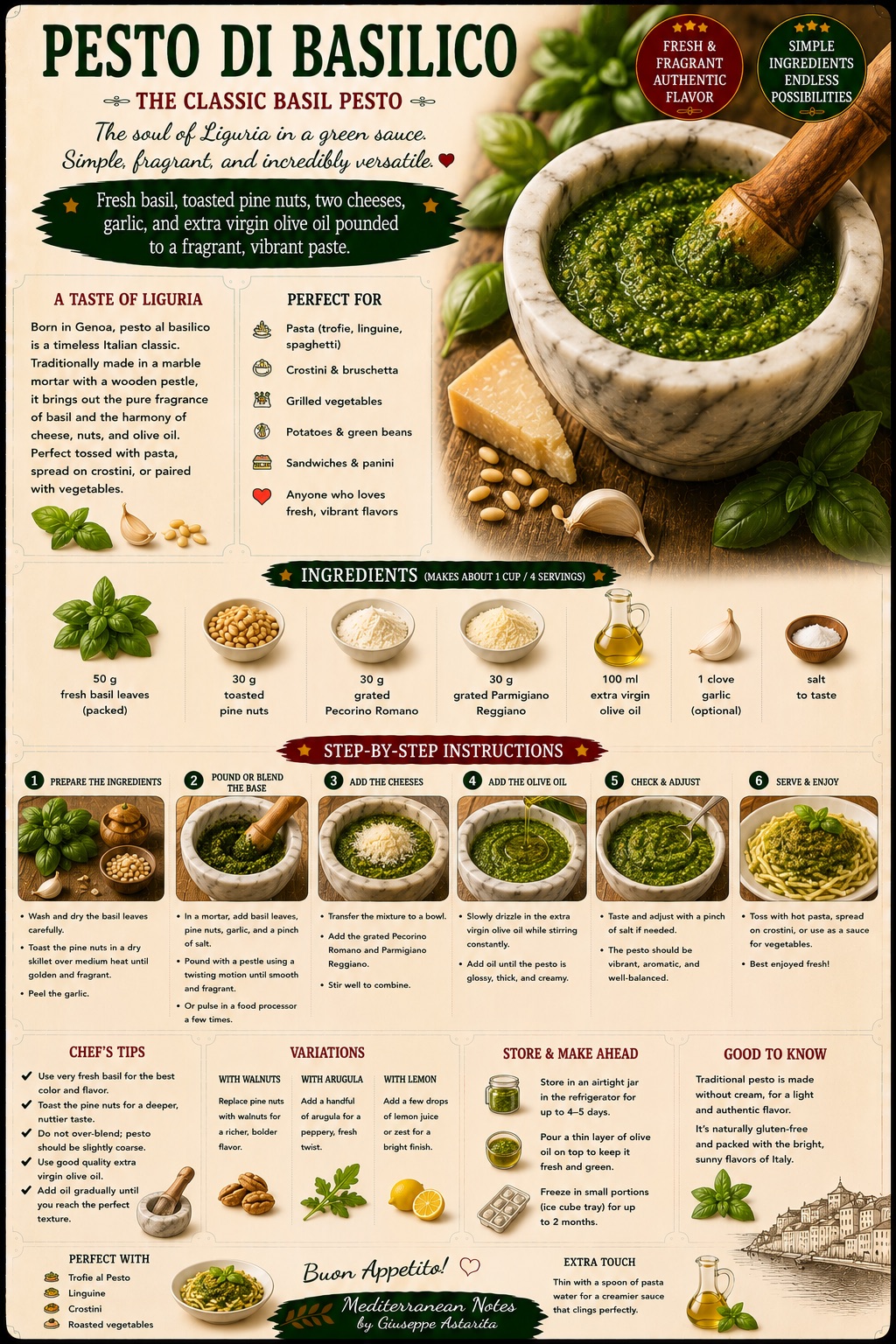
Pesto di Basilico — infographic by Giuseppe Astarita
Pesto di Basilico — the classic basil pesto. Click to enlarge.
50 g (2 packed cups)Fresh basil leaves
30 g, lightly toastedPine nuts
30 g, gratedPecorino Romano
30 g, gratedParmigiano Reggiano
100 mlExtra virgin olive oil
1 clove (optional)Garlic
To tasteSalt
1
Wash the basil gently and dry it completely — water is the enemy of both texture and color.
2
In a mortar (or a blender on low, in pulses), work the garlic and pine nuts with a pinch of coarse salt to a paste.
3
Add the basil a handful at a time, pounding or pulsing until broken down but not liquefied — some texture should remain.
4
Stir in both cheeses, then stream in the olive oil, stirring or pulsing just until the paste comes together, glossy and thick.
5
Taste for salt — the cheeses carry plenty. Use at once, or jar it under a film of olive oil; it keeps several days in the fridge and freezes well.
If it's destined for pasta, loosen the pesto with a spoonful of hot pasta water in the serving bowl — never in a pan on the heat.

Related

Pasta al pesto
The full dish, with the Ligurian trick of potatoes and green beans cooked with the pasta. See the full recipe.
Pesto di noci
The walnut cousin — creamier, autumnal, no basil required. See the full recipe.

Buon appetito.

More from Sauces
Pesto di olive
Pesto di Olive
The Gaeta olive paste for bruschetta and crostini.
Salsa verde
Salsa Verde
The green caper-and-anchovy sauce for boiled meat and fish.