Pesto di Olive
Gaeta olive paste for bruschetta
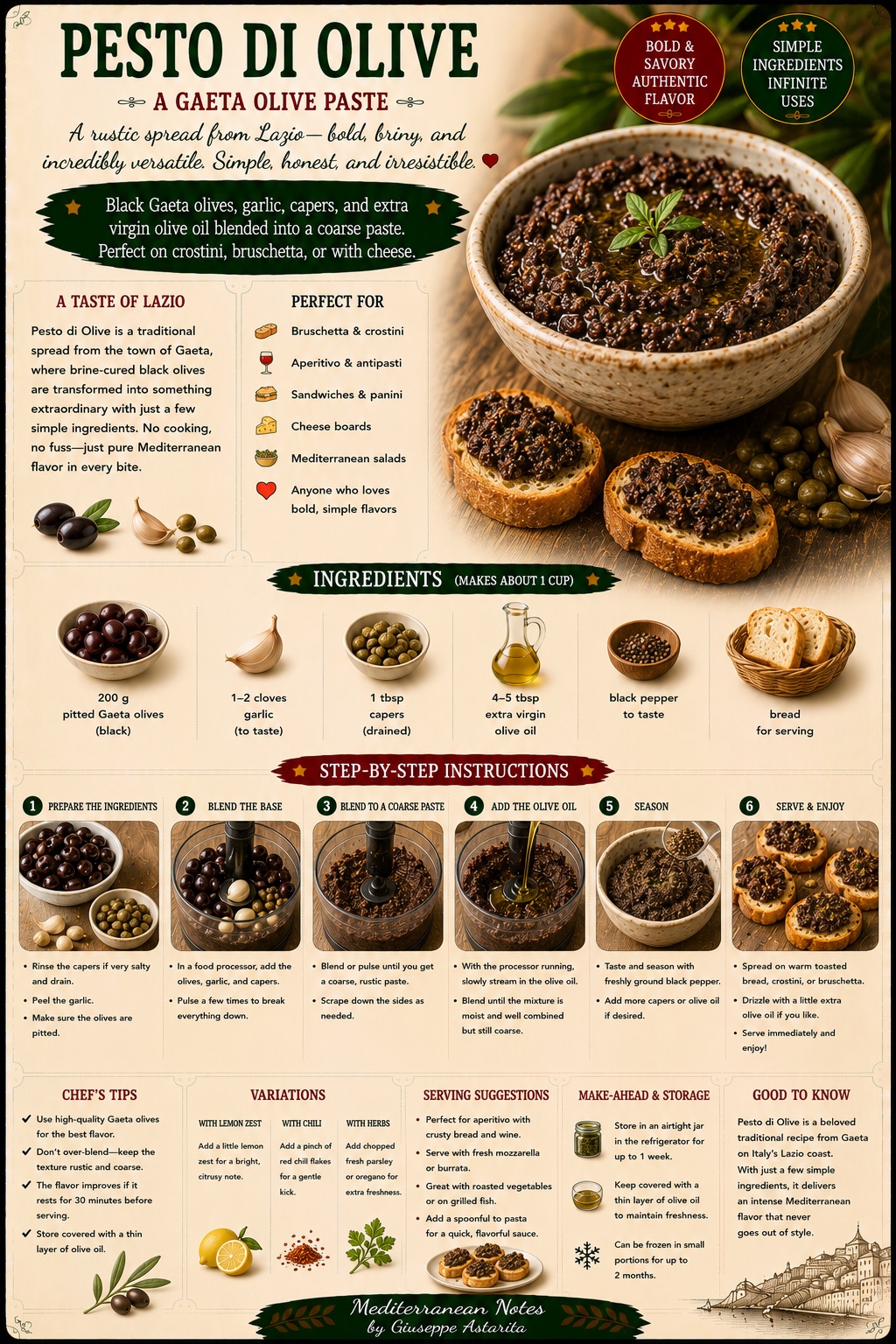
Gaeta olives, olive oil, a clove of garlic, a few capers — blended or pounded to a coarse, briny paste. No cooking, no tomato, no pasta. Just something to spread thickly on toasted bread.
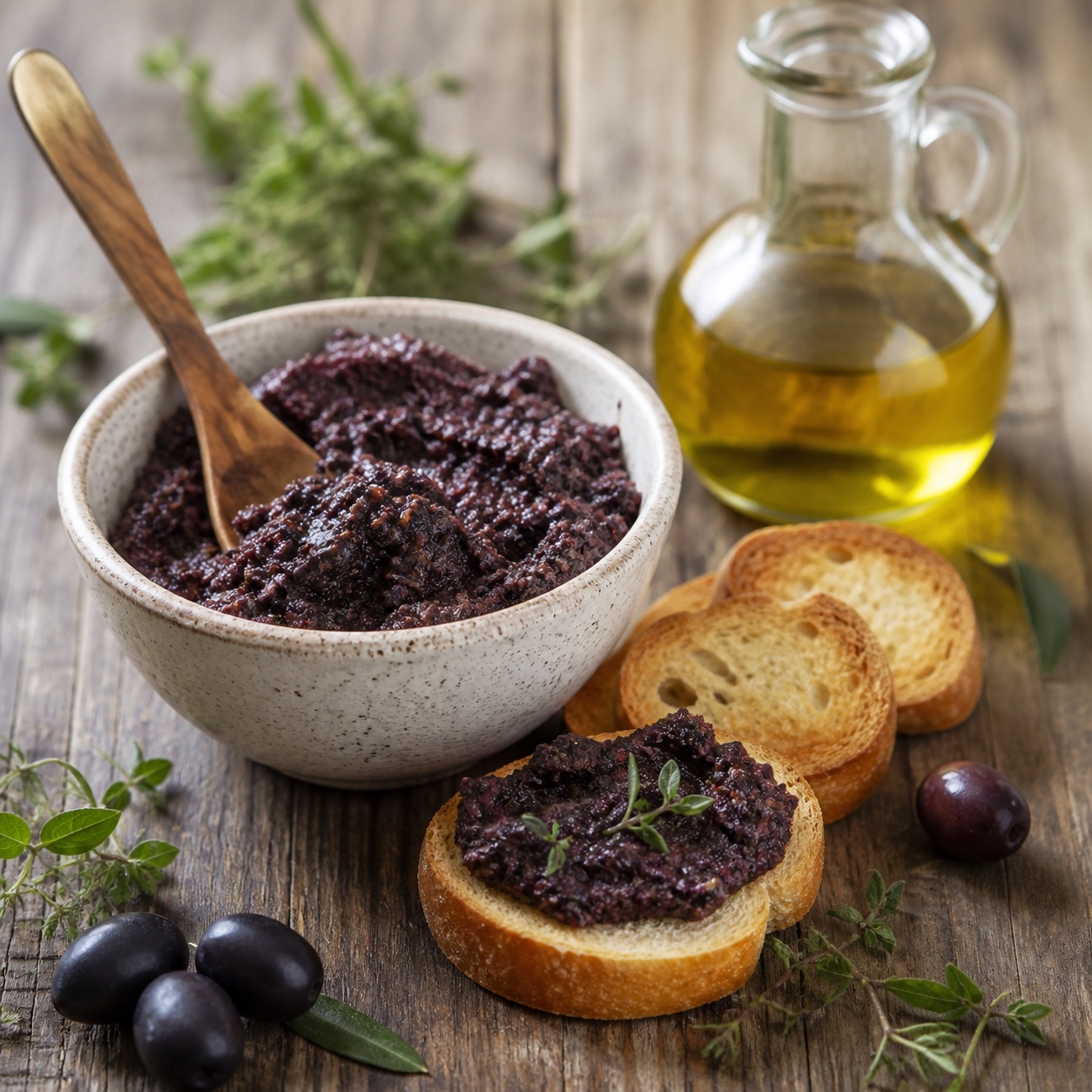
This is not a sauce for pasta — it is a spread, closer in spirit to a tapenade than to anything cooked. Gaeta olives, small and black and brine-cured rather than oil-cured, are blended with garlic, capers, and a good stream of olive oil into something coarse and intensely savory, meant to be spread thickly over a slice of toasted bread. Nothing here is simmered; the whole point is that it comes together in ten minutes with a food processor or a mortar and pestle.
It sits in the same pantry family as sauces like puttanesca or salsa verde — olives, capers, good olive oil — but where those are built into cooked sauces, this stays raw and stays a spread. It is the kind of thing that appears on an antipasto table, alongside bruschette and crostini, rather than something that ends up on pasta.
Gaeta olives are worth seeking out specifically: small, black, brine-cured, with a bitterness that is rounder and less sharp than a Kalamata. If you can't find them, any good black olive works, though the paste will taste a little different.
Olives are naturally bitter and inedible straight from the tree — brine curing draws out the bitter phenolic compounds slowly over weeks, leaving behind concentrated salt, some residual bitterness, and a firm, slightly fibrous flesh that never fully breaks down smooth the way an oil-cured olive can. Blending or pounding brine-cured olives with oil produces a coarse, slightly grainy paste rather than a silky puree — which is the texture you want here, so it holds onto bread rather than sliding off.
The capers add a second layer of salt and a sharp, slightly vegetal brightness (from mustard-oil compounds released during their own curing), which keeps the paste from tasting one-note. Streaming in the olive oil slowly, rather than dumping it in, lets it coat the olive fragments evenly instead of pooling at the bottom, so the finished paste is glossy but still holds its shape on a spoon.
The recipe
Makes about a cup — enough for a generous plate of bruschette or crostini for four to six as an antipasto.
Related
Buon appetito.