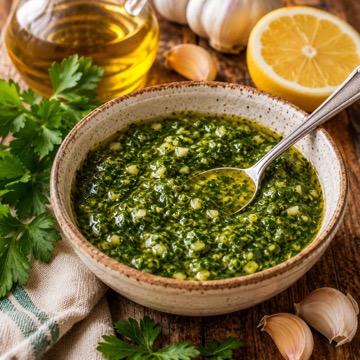
Salsa Verde
The green caper-and-anchovy sauce for boiled meat and fish
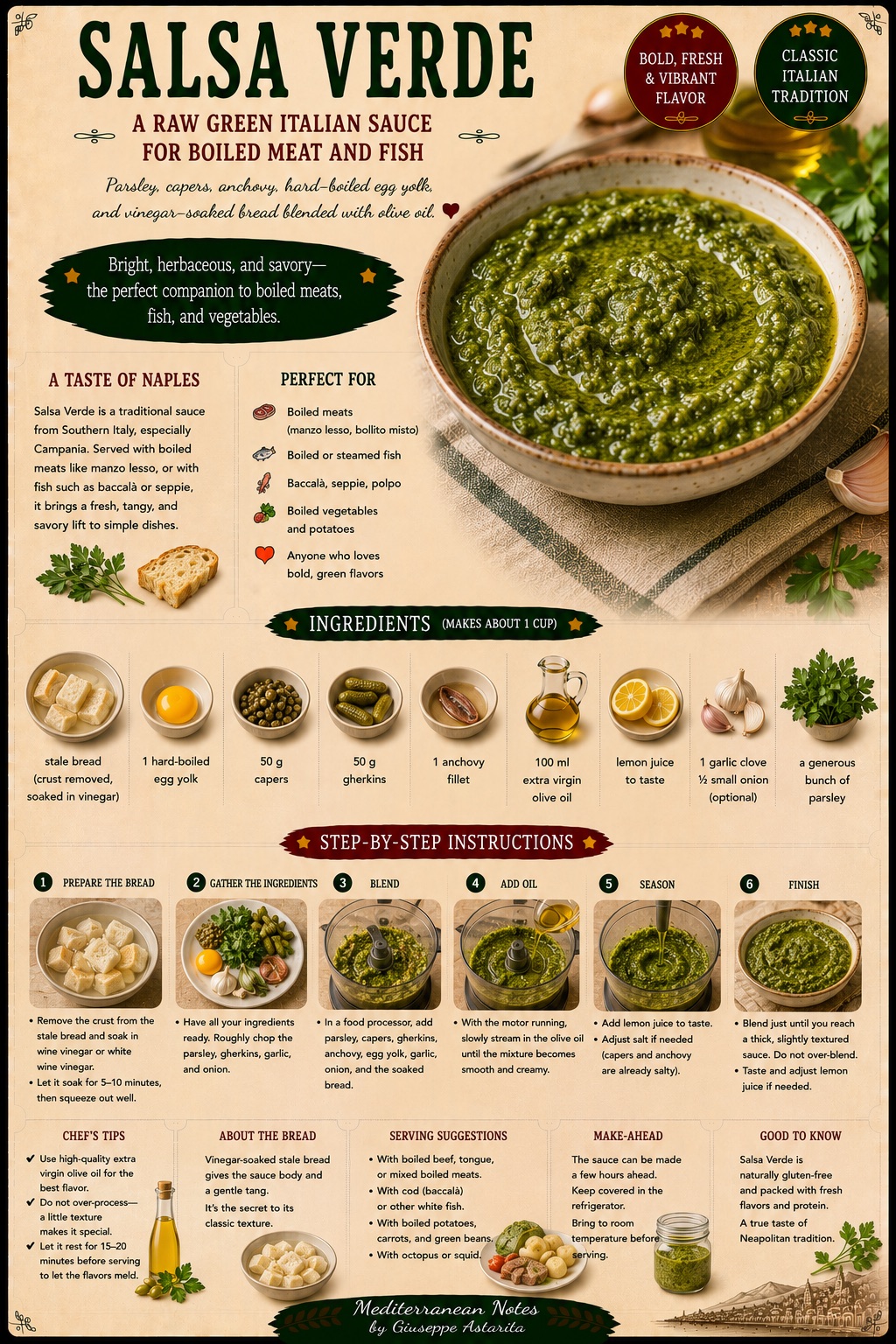
Bread soaked in vinegar, capers, gherkins, an egg yolk, garlic, anchovy, parsley, olive oil worked in slowly like a mayonnaise. No cooking at all — just chopping and emulsifying. Its whole job is to sit next to something plain and give it a reason to be interesting.
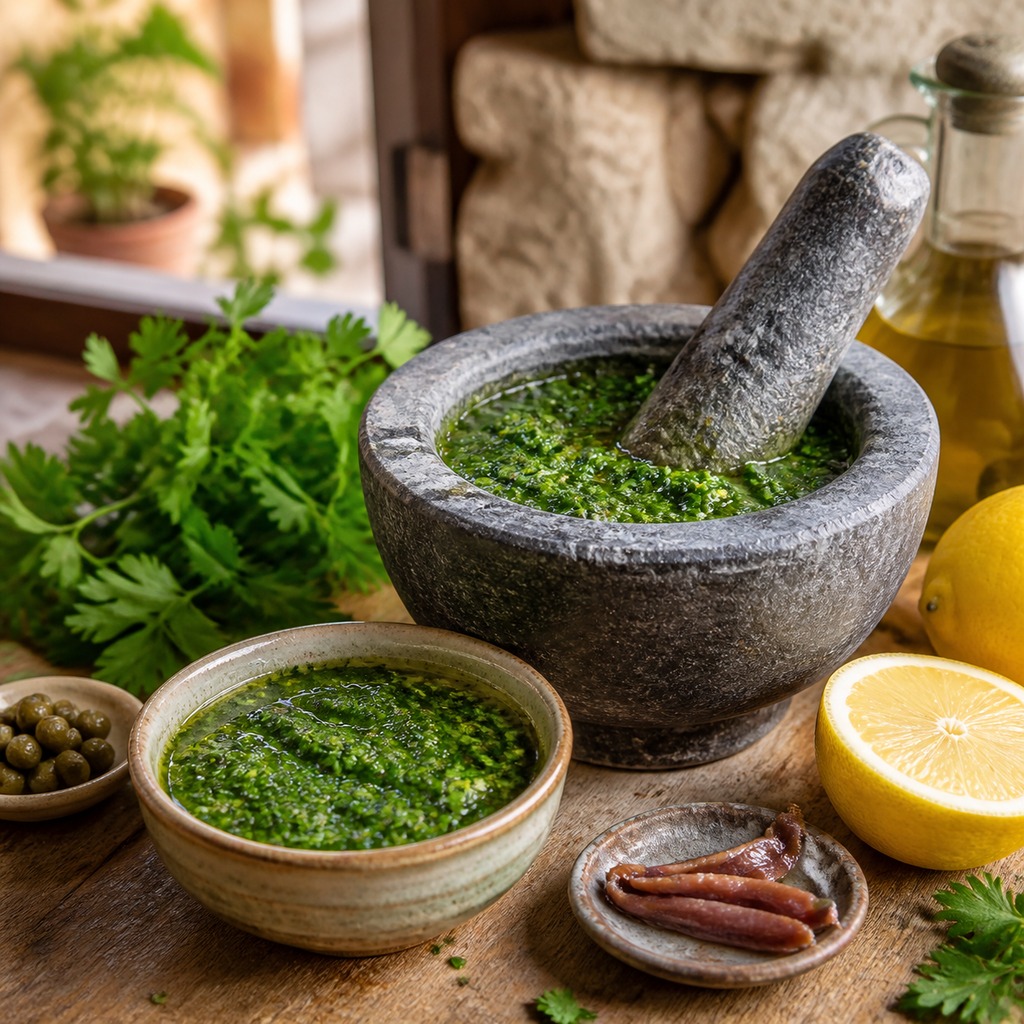
Salsa verde belongs to a category of Italian sauces built specifically to accompany something deliberately plain — boiled meat, poached fish, a simple platter of antipasti. It is raw, green, sharp, and entirely uncooked, which puts it in a different family from a sugo or a ragù. Its job is not to be the dish, but to be the thing that makes bollito misto or lesso di pesce worth eating on their own terms rather than requiring a heavier preparation.
The base is bread — a piece the size of an orange, soaked in vinegar and squeezed without wringing it fully dry, which gives the sauce body without any cooking. Into that goes an egg yolk (traditionally hard-boiled), dissalted capers, finely chopped gherkins, a little garlic and onion, a well-cleaned anchovy fillet, and a good amount of parsley. Blended or worked by hand into a paste, the olive oil is then added slowly, the same way you would build a mayonnaise, until the whole thing comes together into a spoonable green sauce.
It keeps for a few days in the refrigerator, though it is at its best made the same day, before the parsley loses its brightness and the garlic and onion start to dominate. Serve it alongside boiled beef, poached fish, or a plate of cold cuts and boiled vegetables — anywhere a sharp, herbal, faintly acidic note is welcome next to something simple.
Working olive oil into the blended base slowly, a little at a time, is the same emulsification technique used to make mayonnaise: the proteins in the egg yolk (and, here, the starch from the soaked bread) act as emulsifiers, coating tiny droplets of oil and keeping them suspended evenly through the water-based mixture rather than separating out. Add the oil too quickly and the emulsion breaks — the sauce splits into an oily layer and a watery one, because the emulsifiers present cannot coat the oil fast enough to keep so many droplets stable at once.
The soaked bread does double duty: it absorbs the sharp vinegar evenly through its starch structure, which is far more effective than trying to distribute a splash of raw vinegar through a chopped mixture, and it adds bulk and a slightly thickened texture without diluting the flavor the way more oil alone would. This is a genuinely old technique for thickening a sauce without heat — bread has served this purpose in Mediterranean cooking for centuries, long before flour-based roux thickening became common.
The recipe
Makes enough for 6, alongside boiled meat or fish. Best made and eaten the same day.
Related sauces
Buon appetito.