Pasta al pesto: summer in a bowl, from Genoa to Caserta
When basil is abundant and nobody wants to cook, there is pesto. Basil, pine nuts, Pecorino, Parmesan, extra-virgin olive oil — blended and tossed with pasta. Twenty minutes. The kids love it. Make it yourself; the jar is never quite right.
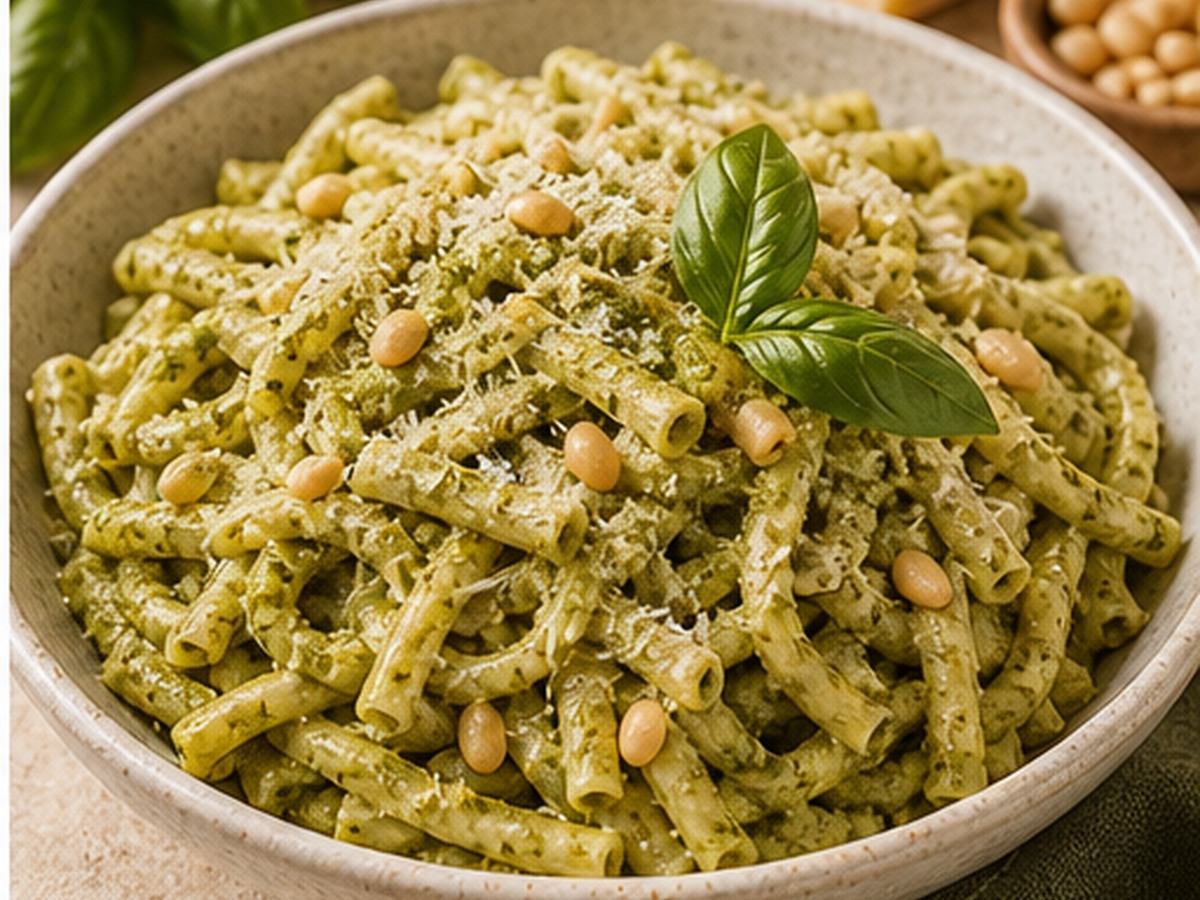
Pesto alla genovese belongs to Liguria the way the frittata belongs to Campania or the ragù belongs to Bologna — it is the defining sauce of a region, refined over centuries, inseparable from its origin. The authentic Ligurian version uses specific small-leafed Genovese basil grown in the hills above the city, a marble mortar, cold water, ice, and a technique designed to prevent oxidation and preserve the vivid green color. It also, in its traditional serving context, includes green beans and boiled potato cooked with the pasta in the same water — a full meal in a single pot.
In Caserta, we made pesto the simple way. No mortar. No green beans. No potatoes. Good basil from the garden or the market in summer, when it is fragrant and abundant and the leaves are large and soft, blended with pine nuts, Pecorino, Parmesan, olive oil, and a little garlic if you wanted it. Tossed with whatever pasta was in the house. That was it, and it was very good, and it is still what I make.
The difference between homemade pesto and the jarred version is not subtle. Homemade pesto is bright green, fragrant, slightly coarse in texture, with the volatile aromatic compounds of fresh basil still fully present. Jarred pesto — even good-quality jarred pesto — is darker, more cooked in flavor, and almost always made with inferior oil. The ingredient labels are instructive: most commercial pestos substitute sunflower oil or other refined vegetable oils for extra-virgin olive oil, which is the fat that carries the flavor of the basil and that defines the nutritional quality of the sauce. There is no version of jarred pesto that replicates what you make in ten minutes with a blender and fresh basil. When basil is in season, there is no reason to buy a jar.
My daughters eat pasta al pesto without any persuasion. This is one of the few pasta sauces in the family repertoire that does not require a strategy — it is green, which should in theory be a problem, but the smell and flavor override the color concern immediately. It is also cold-pasta friendly: pesto over room-temperature or slightly cold pasta, eaten in the summer with fresh cherry tomatoes on top and a drizzle of olive oil, is one of the best things you can eat on a hot evening with minimal effort. It is not hot pasta protocol; it is something else and it works on its own terms.
Basil, vitamin K, and what gets lost — and preserved — when you blend fresh herbs
Basil is nutritionally more interesting than its culinary role as an herb would suggest. Fresh basil leaves contain substantial quantities of vitamin K1 (essential for coagulation and bone metabolism — a single tablespoon of fresh basil provides approximately 10% of the adult daily requirement), vitamin A as beta-carotene, and a complex mixture of volatile aromatic compounds including linalool, eugenol, and β-ocimene that are responsible for the characteristic smell and that have documented antioxidant and anti-inflammatory activity in vitro. The chlorophyll that gives pesto its green color has been studied for its ability to bind potentially carcinogenic compounds in the gut and reduce their absorption — a property that explains some of the epidemiological association between high green vegetable consumption and reduced colorectal cancer risk. Pine nuts contribute monounsaturated and polyunsaturated fats, including pinolenic acid — an omega-6 fatty acid found almost exclusively in pine nuts with evidence for appetite-modulating effects through CCK stimulation. Pecorino and Parmesan provide calcium, glutamate (the umami compound that makes the pesto taste more savory than its ingredient list would predict), and fat-soluble vitamins. The extra-virgin olive oil in good homemade pesto — 100 ml for four portions — contributes the full complement of oleic acid, hydroxytyrosol, and oleuropein discussed throughout this blog. Commercial pesto made with sunflower or other refined vegetable oils substitutes a fat with a completely different fatty acid profile and essentially no phenolic antioxidants. The difference is not merely flavor; it is chemistry. Making pesto at home is one of the clearest cases in this collection where the homemade version is nutritionally superior to the commercial alternative, not marginally but substantially.
The recipe
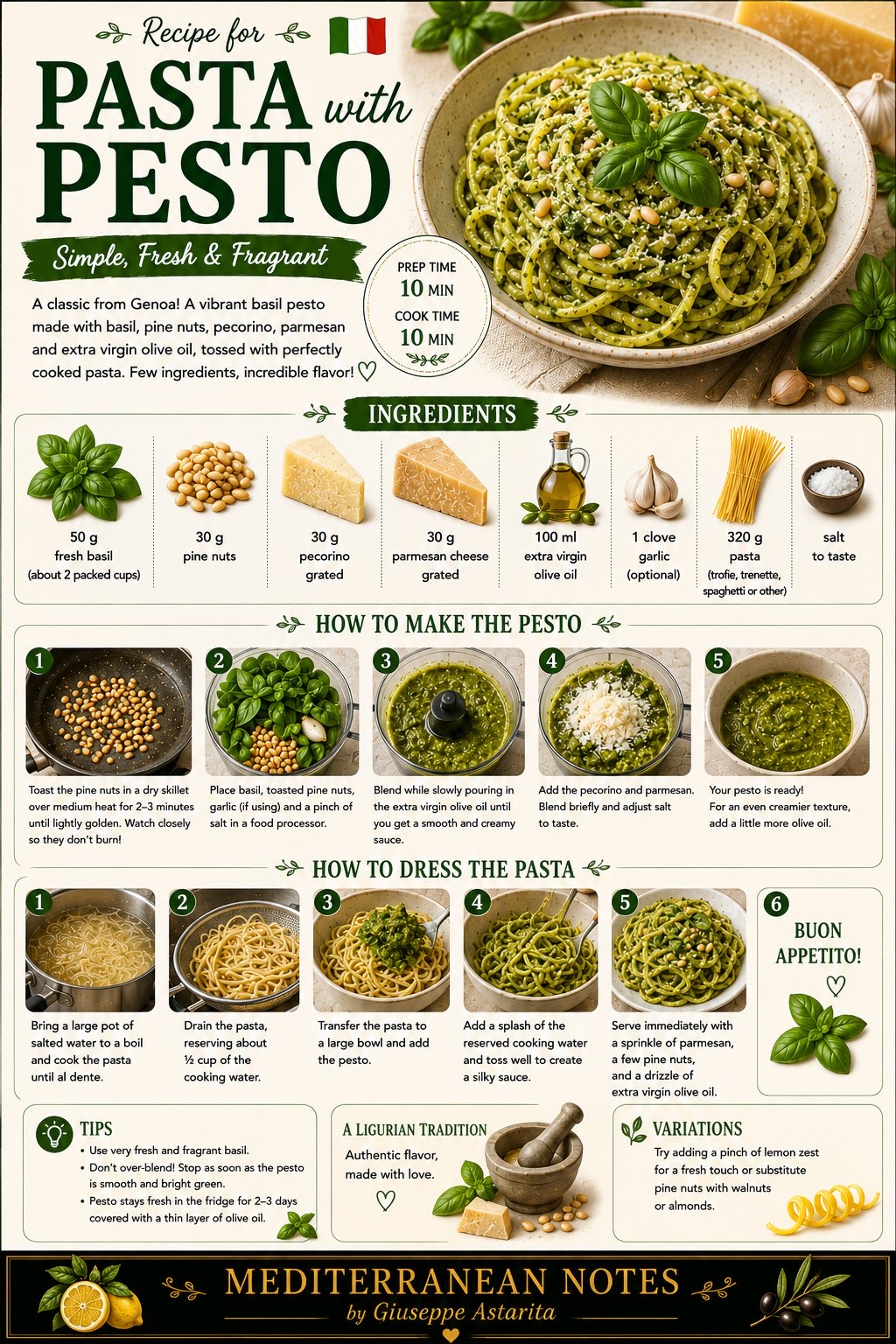
Ingredients · serves 4
Method — the pesto
Toast the pine nuts. Place the pine nuts in a dry skillet over medium heat for 2–3 minutes, stirring constantly, until lightly golden. Remove immediately — they go from golden to burnt in seconds and there is no recovering from burnt pine nuts. Let them cool.
Blend the pesto. Place the basil, toasted pine nuts, garlic (if using), and a pinch of salt in a food processor or blender. Pulse a few times to break everything down. Then blend while slowly pouring in the olive oil — add it gradually and stop as soon as the pesto is smooth and bright green. Do not over-blend: sustained high-speed blending heats the basil, accelerates oxidation, and turns the pesto from vivid green to army-brown. Pulse, pour, stop.
For an even brighter color, blend with a few ice cubes (added to the processor, not the oil) or chill the basil leaves in cold water first. The cold slows oxidation. Not essential, but the difference is visible.
Add the cheese. Transfer to a bowl. Stir in the grated Pecorino and Parmigiano by hand — do not add them to the blender, which can make the pesto gluey. Taste and adjust salt. The pesto is ready. It will keep in the refrigerator for 2–3 days covered with a thin layer of olive oil on the surface to prevent oxidation.
Method — dressing the pasta
Cook the pasta. Bring a large pot of well-salted water to a boil. Cook the pasta until al dente. Before draining, reserve about ½ cup of the cooking water — this starchy water is what makes the pesto coat the pasta smoothly.
Dress the pasta. Drain the pasta and transfer to a large bowl. Add the pesto and toss. Add a splash of the reserved cooking water — start with a tablespoon, add more as needed — and toss again until the pesto is evenly distributed and slightly loosened into a silky sauce. The starch in the cooking water emulsifies with the olive oil and creates a coat that clings rather than pools at the bottom of the bowl.
Never add pesto to pasta while the pasta is over heat or in the hot pot — the heat destroys the volatile aromatics that give fresh pesto its character. Drain, move to a bowl, let the temperature drop slightly, then add the pesto.
Serve. Immediately, with a sprinkle of Parmigiano, a few extra pine nuts if you like, and a drizzle of extra-virgin olive oil. Or cool completely and serve at room temperature with fresh tomatoes on top and another drizzle of oil. Both are correct; both are good.
A note on jarred pesto
Read the ingredient label on any commercial pesto before buying it. The first fat listed should be extra-virgin olive oil. If it says "sunflower oil," "vegetable oil," or any refined oil — even if extra-virgin olive oil appears lower on the list — you are buying a different product with a substantially inferior nutritional profile and flavor. Most supermarket pestos, including some well-known Italian brands, use cheaper refined vegetable oils as the primary fat. These oils contain no phenolic antioxidants, have a different fatty acid composition, and carry none of the flavor compounds that make good olive oil part of the recipe rather than just a medium for the basil. When fresh basil is available, make it yourself. When it is not, find the best jarred pesto you can and read the label first.
Ways to serve it
Warm pasta — the standard
Tossed with just-drained pasta and a splash of cooking water. Add extra Parmigiano on top, a few more pine nuts, a last drizzle of good olive oil. Eat immediately. This is the version for any day of the year when you have good pesto and 20 minutes.
Cold pasta — the summer version
Toss the pesto with fully cooled pasta — cooked, drained, rinsed with cold water, and left to dry. Dress generously, taste for salt, and serve at room temperature or cold from the refrigerator. Add halved cherry tomatoes on top, a drizzle of olive oil. A perfect summer dinner that requires almost no effort and improves slightly after an hour in the refrigerator.
With fresh tomatoes
Scatter halved cherry tomatoes or diced Cuore di bue over the dressed pasta — warm or cold — just before serving. The acidity and sweetness of the raw tomato against the richness of the pesto is one of the most straightforward and reliable summer flavor combinations. The tomatoes do not go into the pesto; they go on top.
With zucchini
Dice small zucchini and sauté briefly in olive oil until just golden, or slice thin and add raw to the cold pasta version. Zucchini and pesto have a natural affinity — they share a similar herbaceous quality that is amplified rather than masked by the basil sauce. This is the version to make when zucchini are at their peak and you have leftover pesto from yesterday.
The Ligurian original — with green beans and potato
Cook green beans and diced potatoes in the pasta water alongside the pasta. Trofie is the traditional shape. Everything cooked together and drained together, tossed with the pesto. A complete one-pot meal. More substantial than the plain version and worth making once to understand why Ligurians cook it this way — the potato absorbs pesto in a way pasta alone does not.
On bread — the simplest use
Spread on good bread, toasted or plain. Add a slice of tomato. That is a summer lunch. The pesto works as a spread in the same way it works as a sauce — it is a condiment as much as a pasta ingredient, and spreading it directly on bread with ripe tomatoes is one of the fastest and best things you can do with a jar of good homemade pesto.
Pesto is one of the recipes on this blog that belongs here not by geography — it is Ligurian, not Campanian — but by family habit and by season. When basil was abundant in summer, pesto appeared on the table in Caserta exactly as it appeared on tables all over Italy, each household making it slightly its own way, all arriving at the same bright green result. The version I make now is close to the one I grew up with: no mortar, no complications, the best olive oil I have, and enough cheese to make it taste properly savory. My daughters eat it without complaint, which in this household is a high benchmark.
Buon appetito — e viva il basilico.