Pasta al Pesto di Noci
Walnut Pesto
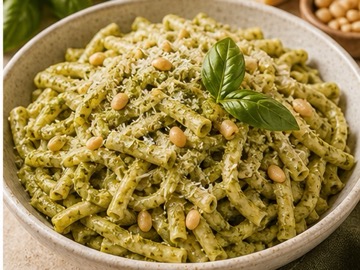
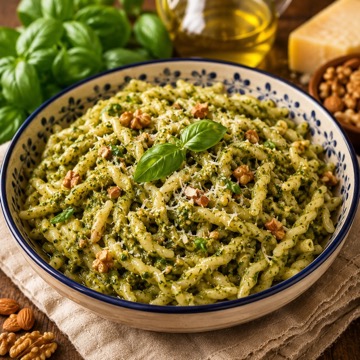
Walnuts, pine nuts, garlic, Parmigiano, and enough olive oil to bring it together into something rich and green-gold. My sister's favorite growing up — my mother made it occasionally, not often, which was part of what made it a treat.
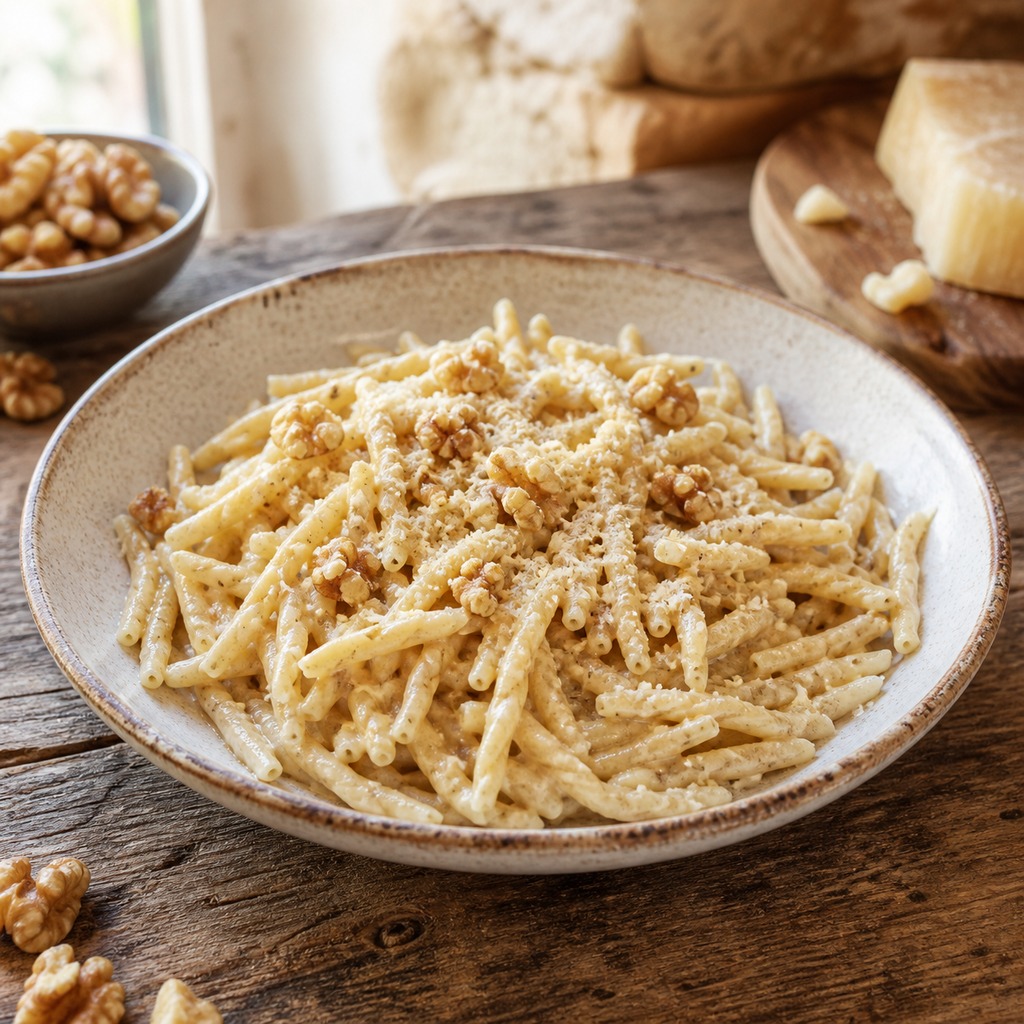
I should say plainly: this is not a traditional Neapolitan recipe. Pesto di noci belongs to the north — to Liguria, in the same family as pesto alla genovese, just with walnuts standing in for basil as the main body of the sauce. It found its way into our kitchen anyway, the way good ideas from other regions do, and my mother made it now and then rather than as a fixture. It was my sister's favorite among the pastas that appeared occasionally rather than every week, which in a house with a fairly fixed rotation of dishes gave it a certain status.
This page is the pasta dish. The sauce on its own — and everything else it is good on, from crostini to gnocchi to roasted vegetables — has its own page.
The method is simple and fast, whether you use a blender or the more traditional mortar and pestle: walnuts, a smaller amount of pine nuts, garlic, grated cheese, and olive oil, blended or pounded into a thick, creamy sauce. Blanching the walnuts first — a minute in boiling water, then peeling away the thin skin — is optional but worth doing; that skin carries most of the bitterness that can make a walnut pesto taste sharp rather than rich.
Naples being Naples, the sauce did not stay exactly as it arrived. Campanian versions often loosen it with ricotta — vaccina or di bufala — for something rounder and more delicate, especially good with paccheri or mezze maniche. A grating of Sorrento lemon zest and a little juice brightens it and cuts through the richness of the nuts, particularly welcome in summer. And a version with sun-dried tomatoes folded in gives it a more Mediterranean, savory edge. All three are things I have seen done to a pesto di noci at a Neapolitan table, and none of them are wrong.
The thin, papery skin on a walnut half is where most of its tannins are concentrated — the same class of bitter, astringent compounds found in tea and red wine. Left on, they give a raw walnut pesto a slightly sharp, mouth-drying edge. A brief blanch in boiling water softens the skin's grip on the nut meat, and rubbing the walnuts in a towel afterward removes most of it, leaving a rounder, sweeter, less bitter base for the sauce. It is a small step, easy to skip, and it makes a genuine difference in the final taste.
Walnuts are also naturally oily, which is why this pesto needs comparatively less added olive oil than a basil pesto to reach the same creamy consistency — the nuts are doing part of the emulsifying work themselves. Adding the oil slowly, in a thin stream while the blender or pestle is working, keeps the fat evenly distributed through the sauce rather than pooling, which is what gives a well-made pesto its smooth, cohesive texture rather than a grainy or split one.
The recipe
For four, as a sauce for about 350–400 g of pasta. Trofie, paccheri, or mezze maniche all work well — something that can catch a thick sauce.
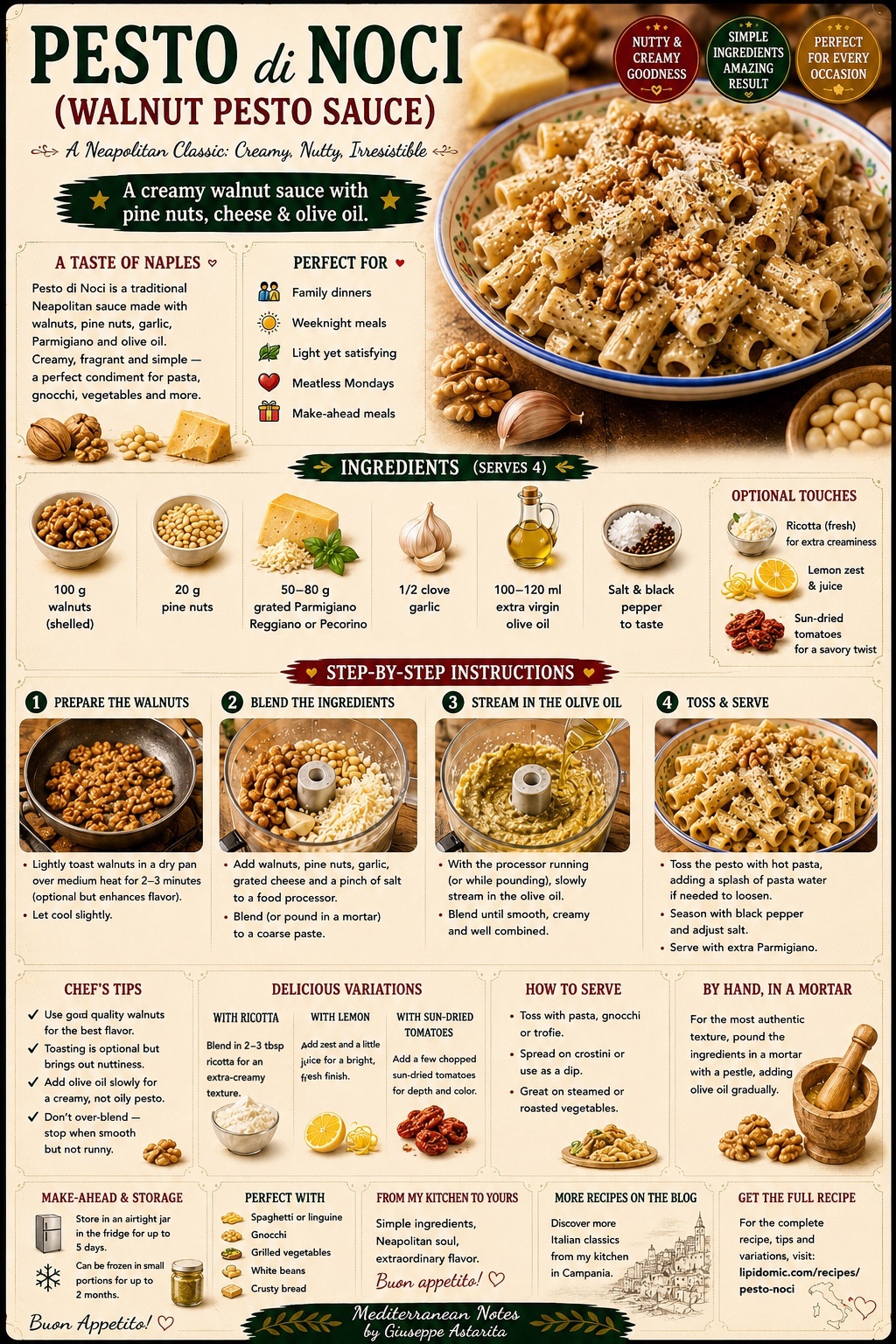
Variations — the Neapolitan touches
Non napoletano di nascita, benvenuto lo stesso.