Beet Pesto Pasta
Not a Naples dish — I learned it in the US — but the simplicity reminded me instantly of home: one roasted vegetable, nuts, garlic, lemon, cheese, oil. Naturally pink, and very good with goat cheese or pecorino.
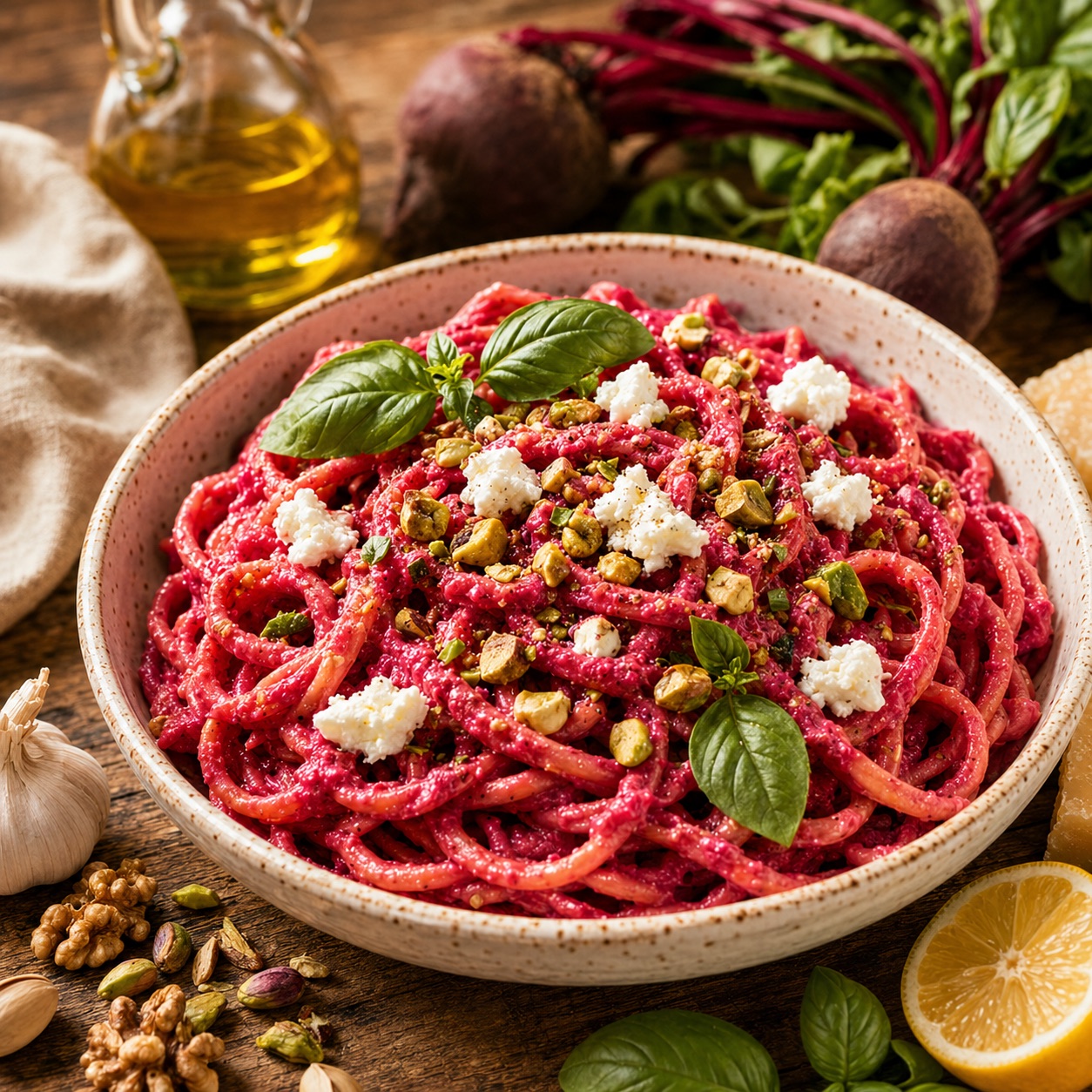
Honesty first, as always on this blog: beets are not a historical Naples ingredient, and I did not learn this dish from my mother. I learned it here, in the US — and the first time I made it, what struck me was how Italian it felt anyway. A vegetable roasted until sweet, blended with nuts, garlic, lemon, olive oil and aged cheese, tossed with pasta and finished with whatever good cheese is in the fridge: that is not an American formula. That is exactly the simplicity we grew up with in Campania, applied to a vegetable that happened to be in an American market. The result is delicious, and the color alone is worth the price of admission.
The pesto logic is the familiar one — the same architecture as the basil pesto or the pesto di Napoli: a base ingredient, nuts for body, garlic for edge, cheese for salt and depth, olive oil to bind. Roasted beets bring their earthy sweetness and that impossible magenta; lemon juice keeps the whole thing bright instead of muddy. Goat cheese crumbled on top is the classic finish here, and a sharp pecorino works beautifully if you want to pull the dish back toward home.
Why the color survives the toss
The magenta is betanin, the beet's signature betalain pigment — water-soluble and heat-sensitive, but protected here twice: the roasting concentrates rather than leaches it (unlike boiling), and the acidic lemon juice stabilizes it, since betalains hold their color best at slightly acidic pH. Toss the pesto with the pasta off the boil rather than frying it, and the bowl stays defiantly pink. Beets also bring folate, nitrates, and fiber — a nutrient-dense dish that needs no cream to be silky: the emulsion of oil, starch-rich pasta water, and puréed beet does that work.
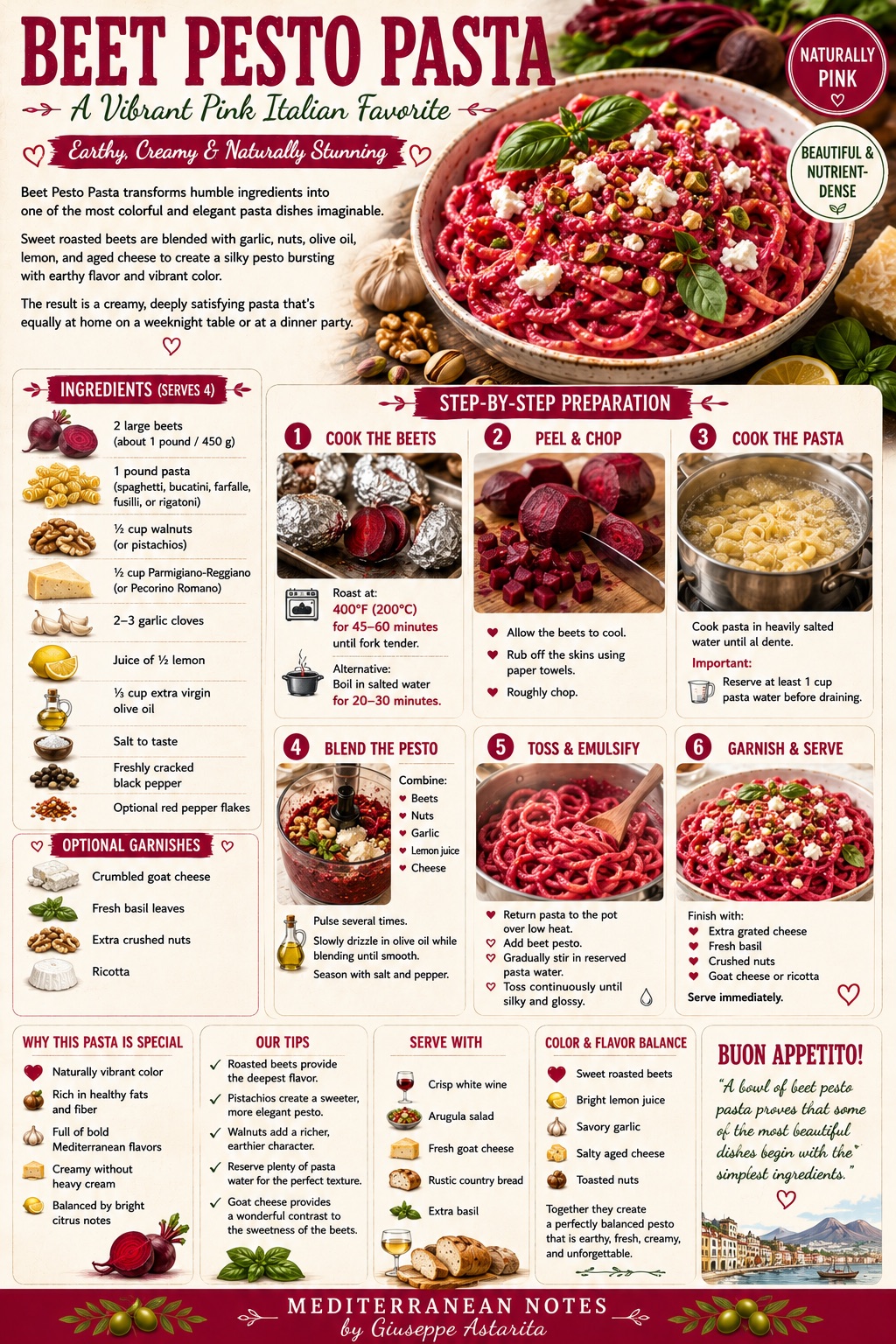
Tap to enlarge — Beet pesto pasta: method and balance
Recipe — Beet Pesto Pasta
Serves 4 · About 1 hour 15 minutes (mostly the beets roasting)
- 2 large beets about 450 g
- 450 g pasta spaghetti, bucatini, fusilli or rigatoni
- ½ cup walnuts or pistachios
- ½ cup Parmigiano-Reggiano or Pecorino Romano, grated
- 2–3 garlic cloves
- Juice of ½ lemon
- ⅓ cup extra virgin olive oil
- Salt and cracked black pepper
- Optional: red pepper flakes
- To finish: goat cheese or ricotta, basil, crushed nuts
This is the first recipe in this collection that comes from my American kitchen rather than my mother's — and it earns its place by spirit rather than geography. The method is Campanian to the bone: one vegetable, treated well, made into a sauce with nuts and cheese and oil. She would not have recognized the beet. She would have recognized everything else.