Zucca Grigliata
The long squash of Naples — 'a cucozza zuccarina — sliced thin, grilled hard, and dressed like scapece. Better the next day, if it survives that long.
At the market in Caserta the zucca lunga di Napoli did not sit in a crate — it hung, or it lay across the stall like something that had to be accommodated rather than displayed. A meter long, sometimes more, pale green outside and deep orange inside. The vendors sold it by the slice: you said how much you wanted and a piece was cut from the long body, wrapped in paper, the cut face glowing like the inside of a melon. In dialect nobody called it zucca. It was 'a cucozza — cucozza zuccarina, the sweet one — and the name told you what the vegetable was for.
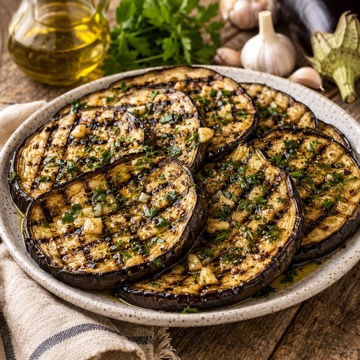
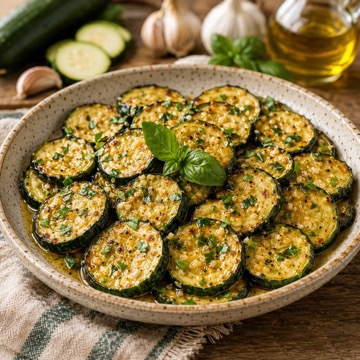
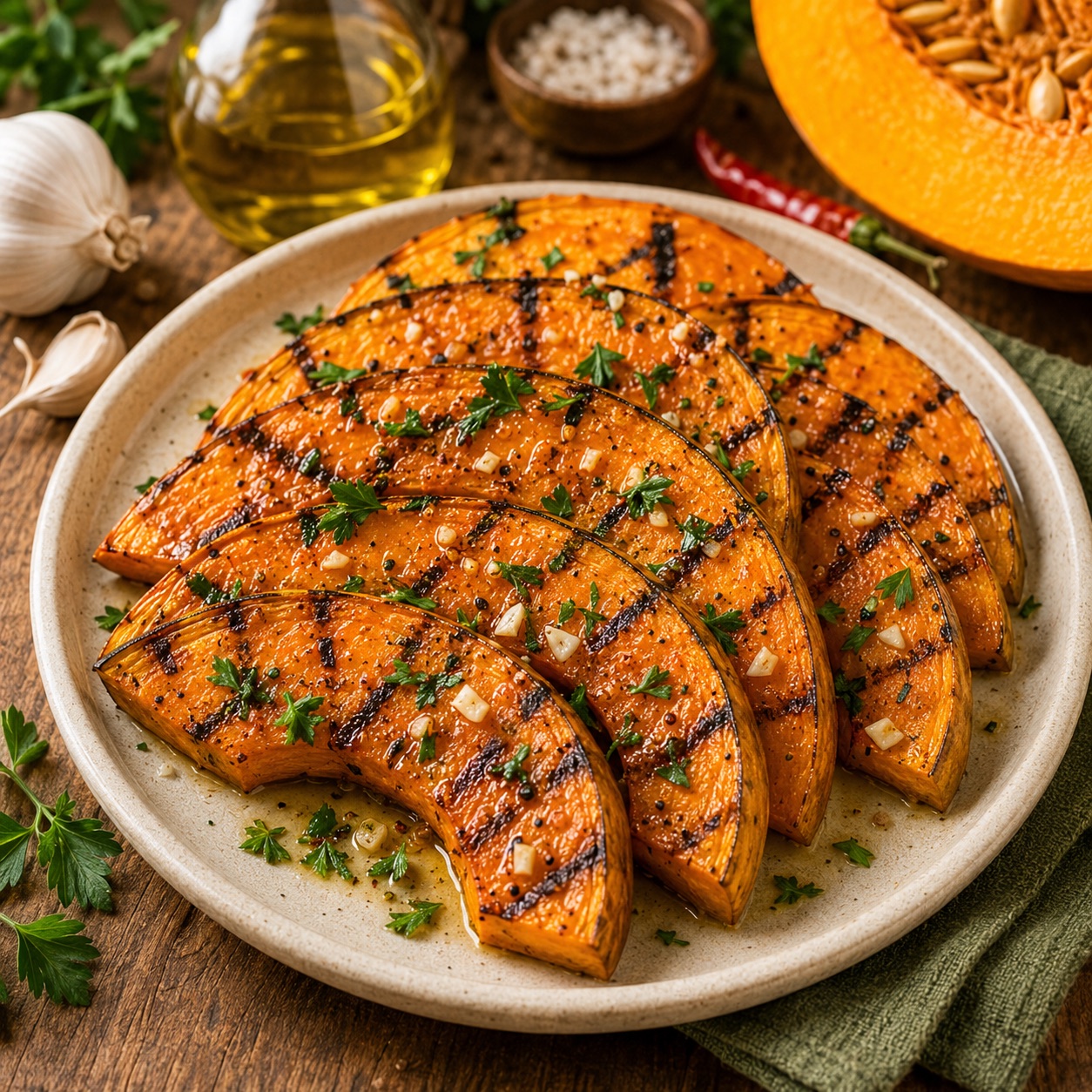
My mother treated it the way she treated the melanzane and the zucchine: thin slices, a screaming-hot grill pan, and then the dressing poured over while everything was still warm enough to drink it in. Oil, vinegar, garlic, a little chili or oregano. The same cast-iron pan, the same dark stripes, the same logic. The squash version is the sweetest of the three — the sugars in the flesh caramelize against the iron, and the vinegar exists to argue with that sweetness and lose, just barely.
This is the part of the recipe that cannot be rushed and cannot be skipped: the rest. An hour at minimum, on the counter, at room temperature. The slices go onto the platter in layers, each layer seasoned and dressed, and then the dish is finished — by waiting. Like the zucchine alla scapece, it is a preparation in which time is an ingredient. Made in the morning for lunch it is good. Made today for tomorrow it is better, and my mother usually made enough to test that theory and rarely got to.
Why grilled squash tastes sweeter than boiled
The flesh of winter squash is rich in sucrose and in carotenoids — the pigments that make it orange. Against the dry, intense heat of a grill pan, surface moisture evaporates fast and the sugars concentrate and caramelize where the flesh touches the iron: the dark stripes are flavor, not decoration. Boiling does the opposite, diluting sugar into the water.
The rest afterward is osmotic work. Warm plant tissue, its cell walls softened by heat, absorbs the dressing as it cools — the vinegar and garlic move into the slice instead of sitting on top of it. This is the same mechanism behind every scapece in the Neapolitan repertoire, and it is why the dish genuinely improves overnight.
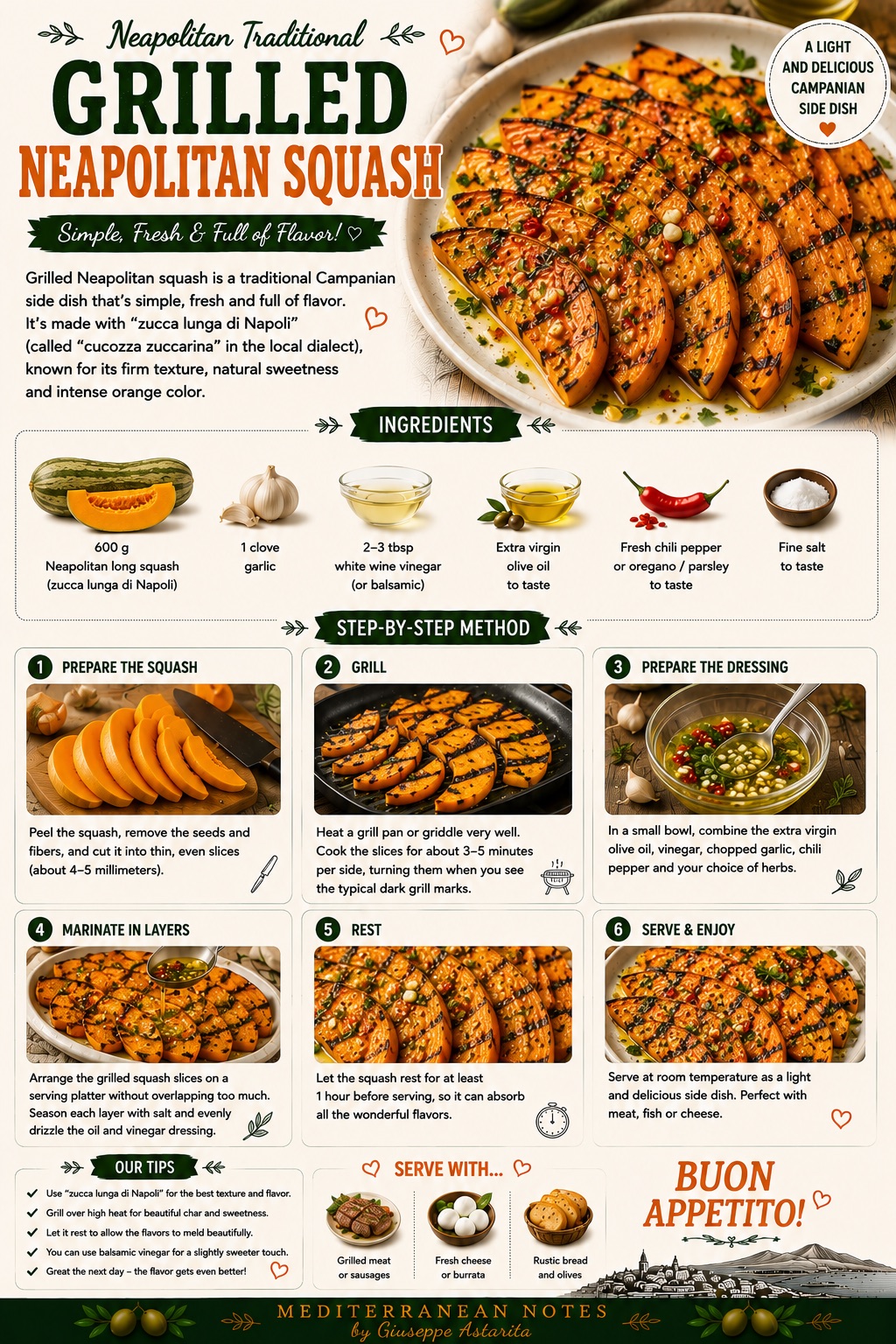
Tap to enlarge — Zucca grigliata: ingredienti, metodo, consigli
Recipe — Zucca Grigliata
Serves 4 as a side · 20 minutes cooking + at least 1 hour resting
- 600 g zucca lunga di Napoli or butternut squash — peeled, seeded
- 1 clove garlic finely chopped
- 2–3 tbsp white wine vinegar or balsamic for a sweeter dish
- Extra virgin olive oil generously
- Fresh chili pepper or oregano and parsley
- Fine salt to taste
Grilled vegetables dressed warm and left alone are one of the quiet structures of the Campanian summer and autumn table — the melanzane in August, the zucchine all summer, and the cucozza when the air turns and the long squash appears at the market. Same pan, same patience, different season. If the squash ends up in the pot instead of on the grill, it becomes pasta e cocozza — the other thing my mother did with the same slice of the same vegetable.