Melanzane Grigliate
Grilled eggplant — olive oil, garlic, parsley, and rest
Eggplant sliced lengthwise at the right thickness, grilled at high heat until tender and marked, then dressed warm with olive oil, garlic, and parsley. The rest period is where the dish finds itself. In Campania grilled eggplant is rarely just a side dish — it appears in antipasti, on bread, alongside mozzarella, or simply as one of several summer vegetables on the table.
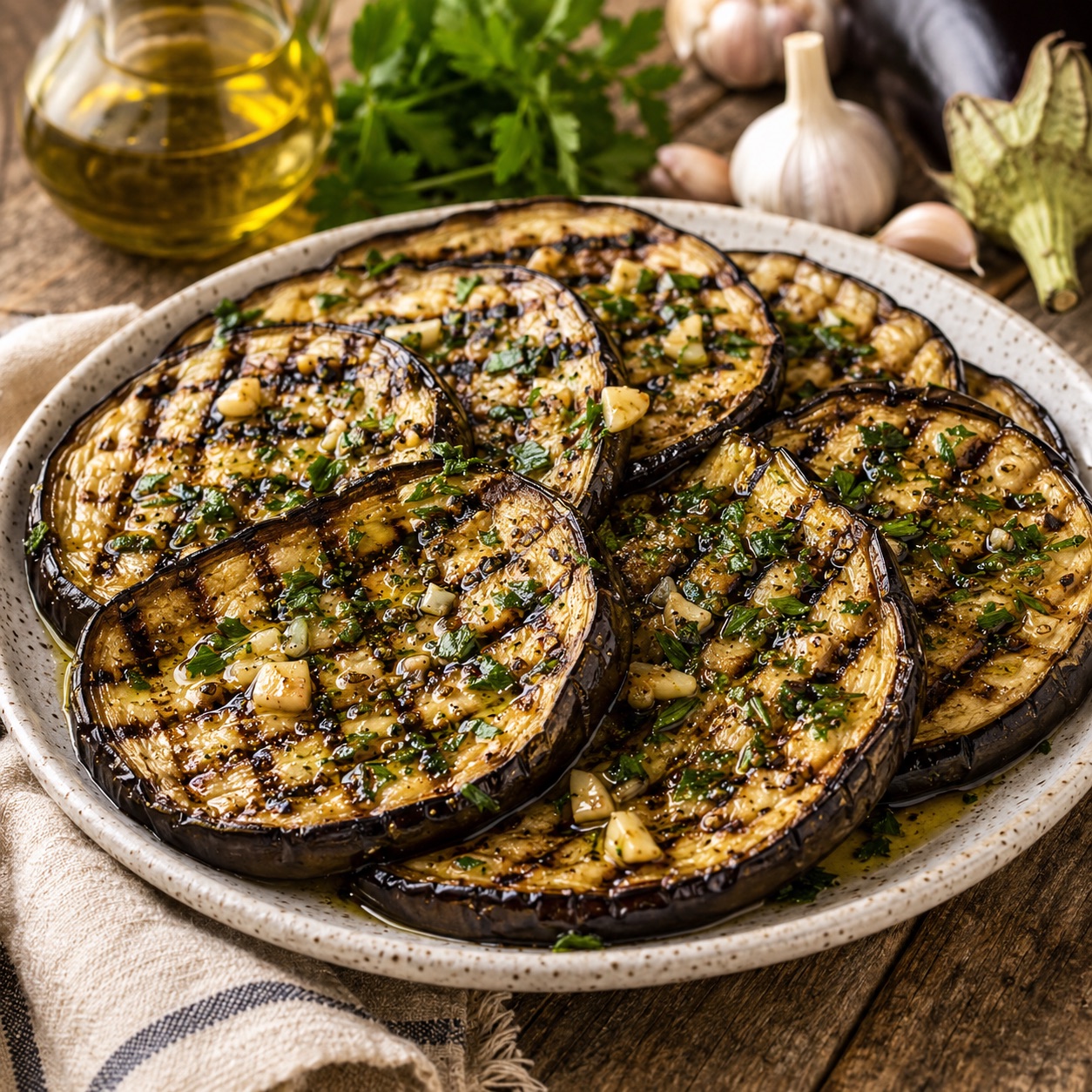
The eggplant is one of the defining vegetables of the Neapolitan summer kitchen — along with zucchini, peppers, and tomatoes it forms the quadrant of summer abundance that determines what is cooked from July through September. Grilled, it is the simplest preparation and in many ways the best: the high heat caramelizes the surface while the interior becomes soft and almost creamy, and the charred edges provide a slight bitterness that the olive oil and garlic in the dressing balance perfectly.
The thickness is not negotiable. The infographic says 7–10 mm for good reason: too thin and the eggplant dries out and turns leathery before the interior softens; too thick and the exterior burns before the center is cooked. At 7–10 mm the two processes happen at the right time — the surface colors and chars while the center reaches the soft, yielding texture that makes the dish worthwhile. A cast-iron griddle or grill pan is the correct tool: it holds heat evenly and makes the grill marks that concentrate flavor at the contact points. Do not salt the eggplant before grilling — it draws out water and makes it steam on the grill rather than char. Season after, with the dressing.
The dark grill marks on eggplant are the result of the Maillard reaction — the same browning mechanism that creates flavor in seared meat, toasted bread, and fried baccalà. At temperatures above 140°C, amino acids and reducing sugars in the eggplant surface react to produce hundreds of new flavor compounds with roasted, nutty, and bitter notes. These compounds are concentrated at the contact points between the eggplant and the hot grill surface, which is why grill marks taste different from the surrounding pale areas. The rest period after dressing matters because the olive oil and garlic need time to penetrate the warm eggplant surface — as the eggplant cools, it contracts slightly and draws the oil inward through the pores opened by cooking. An eggplant dressed and eaten immediately tastes of oil on the surface; one that has rested 10–15 minutes tastes of oil within the flesh.
The recipe
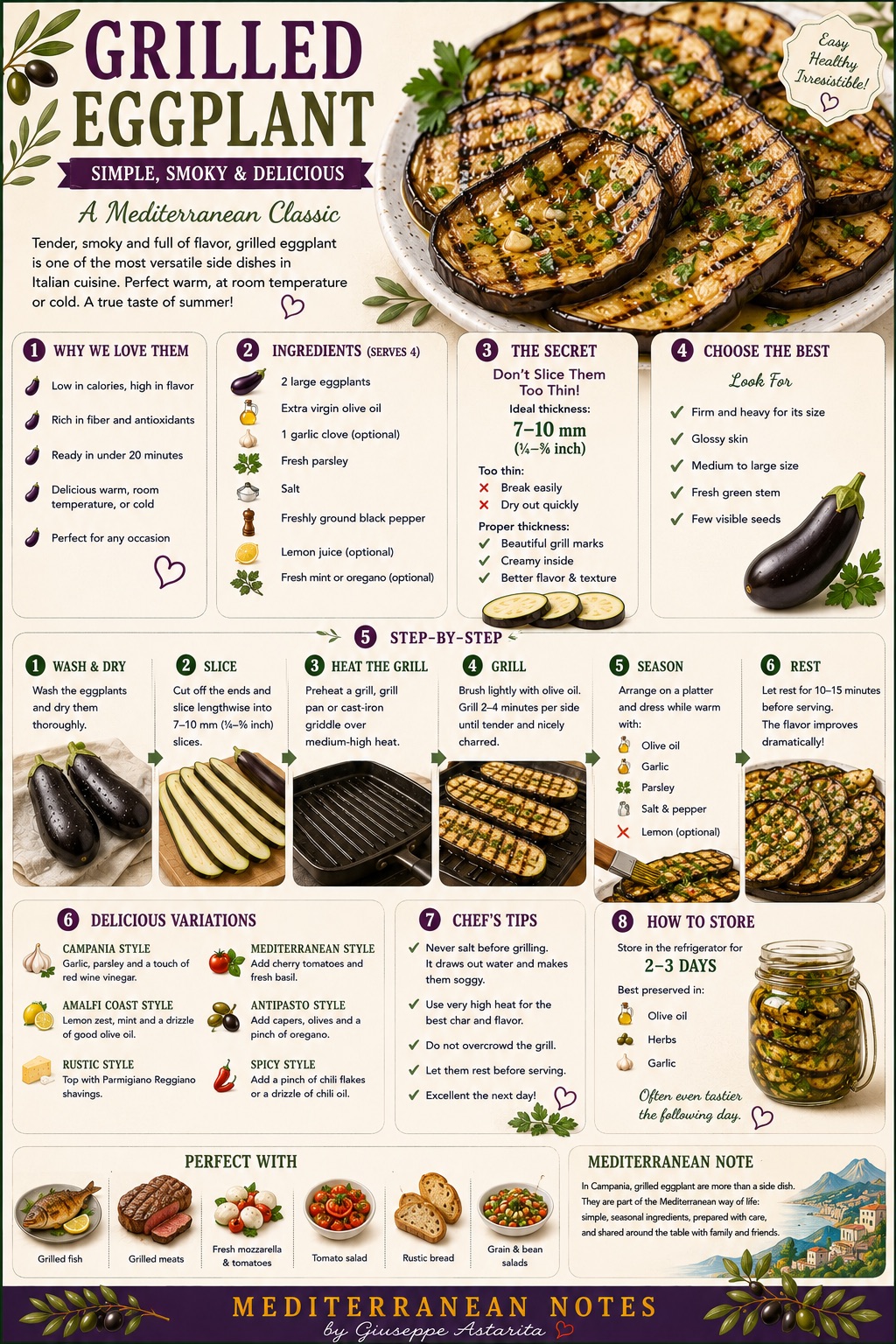
Variations: Campania style adds a touch of red wine vinegar and more garlic. Amalfi Coast style uses lemon zest, mint, and more olive oil. Antipasto style adds capers, olives, and oregano. Rustic style finishes with Parmigiano Reggiano shavings. All are worth trying; none is wrong.
Buon appetito.