Fagiolini all'Insalata
alla napoletana — the summer green bean side dish
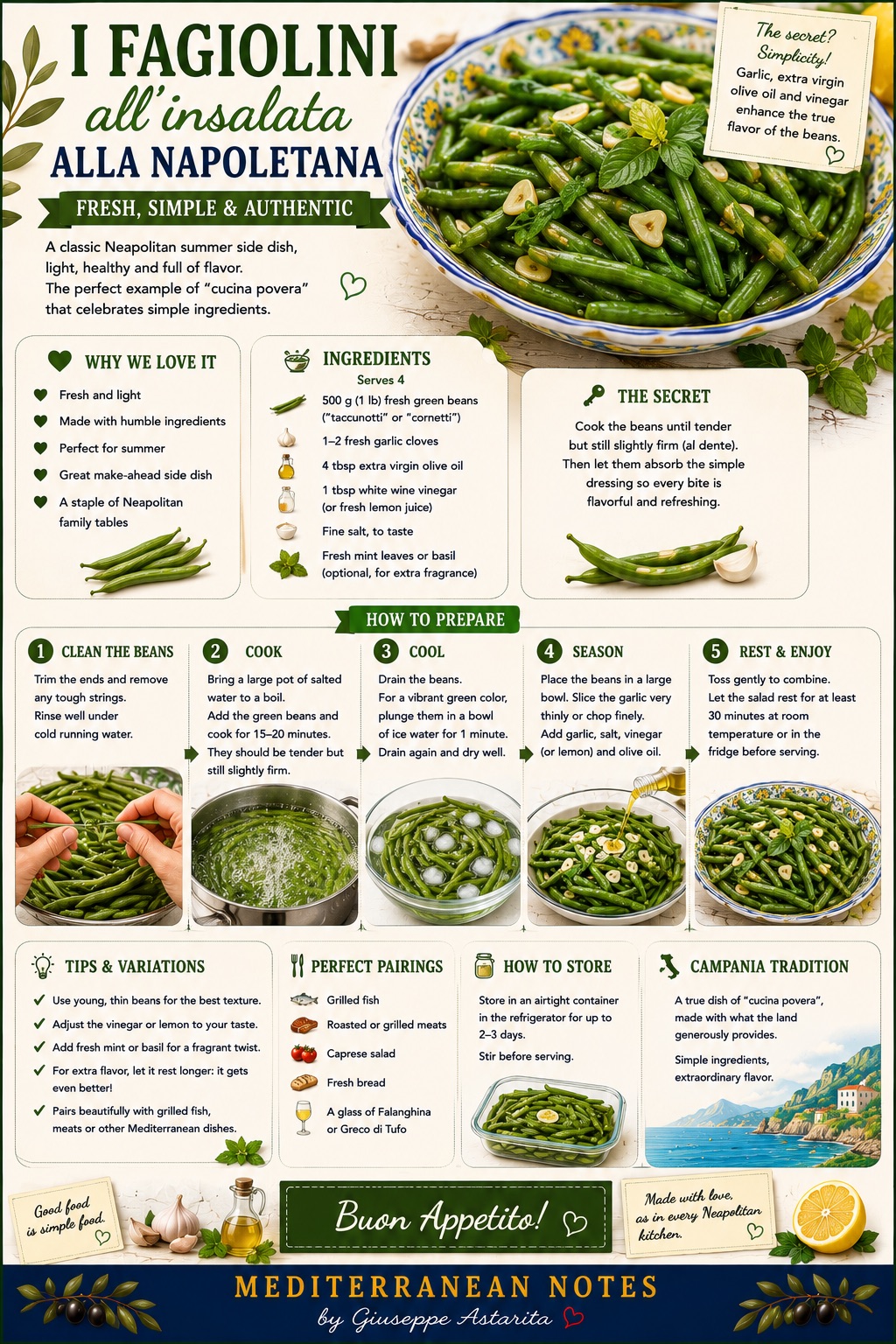
Green beans cooked until tender but still firm, cooled in ice water to preserve the color, dried and dressed with thinly sliced garlic, good olive oil, and white wine vinegar or lemon. A staple of the summer table in Campania. Better at room temperature than warm. Better the next day than the same day.
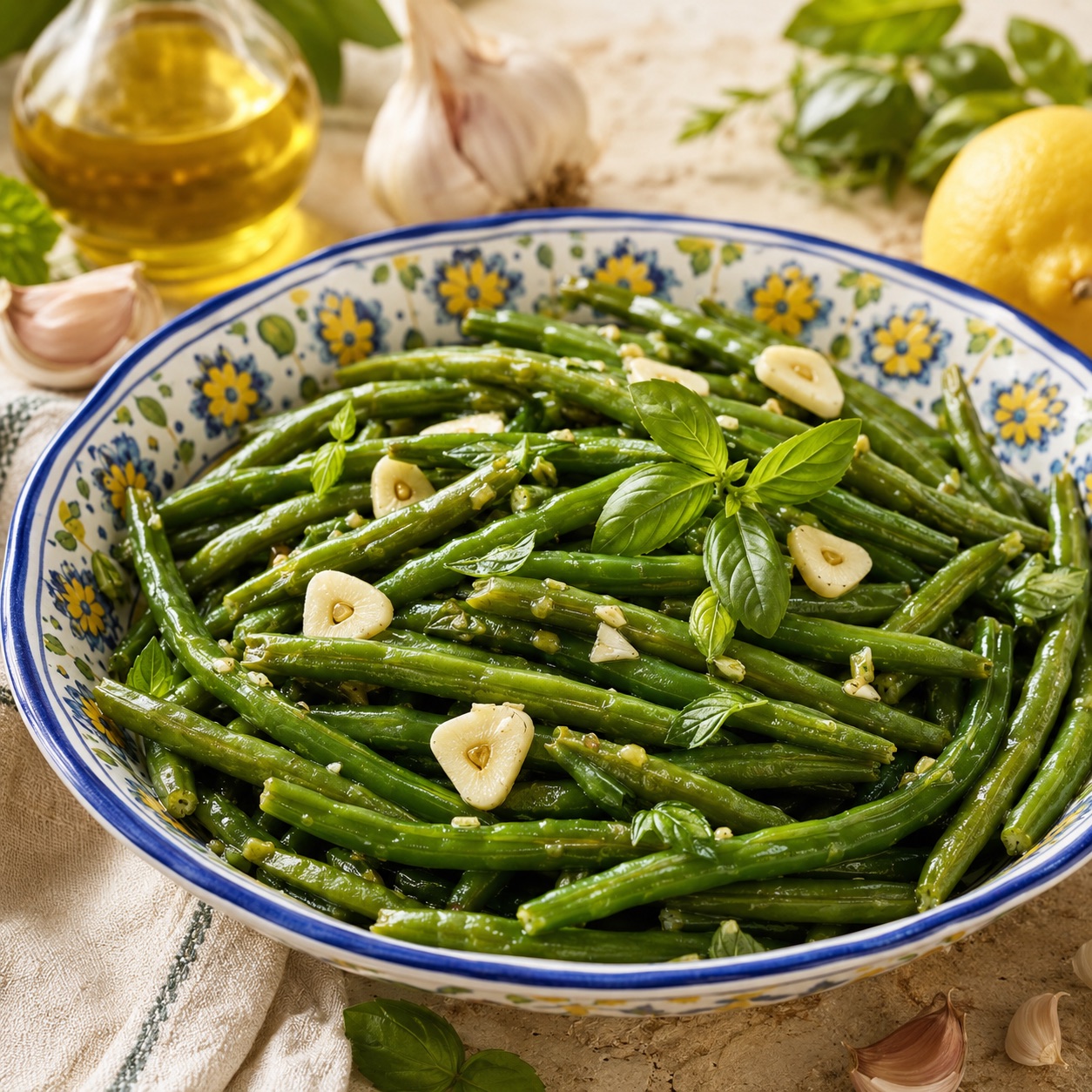
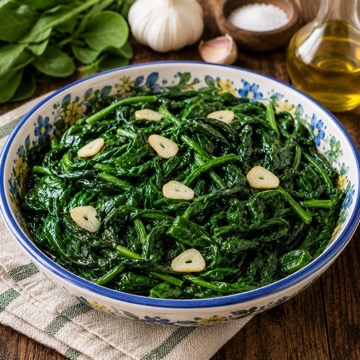
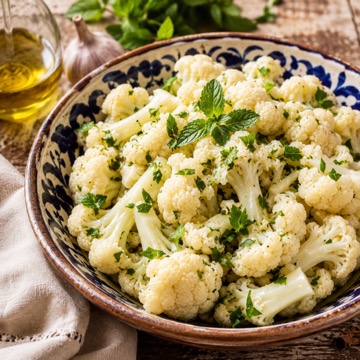
The fagiolini all'insalata belongs to the same family as the spinaci all'insalata and the cavolfiore all'insalata — the Neapolitan tradition of dressed cooked vegetables that are neither salads nor hot sides but something in between, prepared with the standard dressing of olive oil, garlic, and acid, and served at room temperature. In summer, when the taccunotti and cornetti beans were at the market — thin, young, tender — this appeared regularly at the table. The beans were cooked until just yielding, not soft, cooled quickly so they stayed green, dressed, and left to rest. The resting is the point: it is when the garlic and vinegar settle into the beans and the dish becomes coherent.
Use the youngest, thinnest green beans available. In Campania the preferred varieties are the taccunotti (flat pods) and the cornetti (thin round ones), but any fresh green bean works. Older, thicker beans take longer to cook and have less of the sweetness that makes this dish good. The cooking time varies — 15 to 20 minutes for standard beans, less for very thin ones. Test one before draining: it should be tender all the way through but spring back when you bite it, not collapse.
The bright green of fresh green beans comes from chlorophyll, concentrated in the chloroplasts of the cells. Boiling briefly opens the cells slightly and the green intensifies as trapped gases escape and chlorophyll becomes more visible — this is why vegetables briefly look brighter when first added to boiling water. Prolonged heat converts chlorophyll to pheophytin, producing the dull olive color of overcooked beans. The ice water bath arrests this conversion at the bright stage by rapidly lowering the temperature below the threshold where the enzyme chlorophyllase remains active. One minute in ice water is sufficient. The same technique applies to all green vegetables; the beans simply show it most clearly.
The recipe
Buon appetito.