Spinaci all'Insalata
Neapolitan style — garlic, olive oil, and a touch of vinegar
A contorno that asks nothing of you and gives everything back. Spinach blanched quickly in salted water, squeezed dry, chopped roughly, dressed while still warm with thinly sliced garlic, good olive oil, and white wine vinegar or lemon. Ready in twenty minutes. Better the next day.
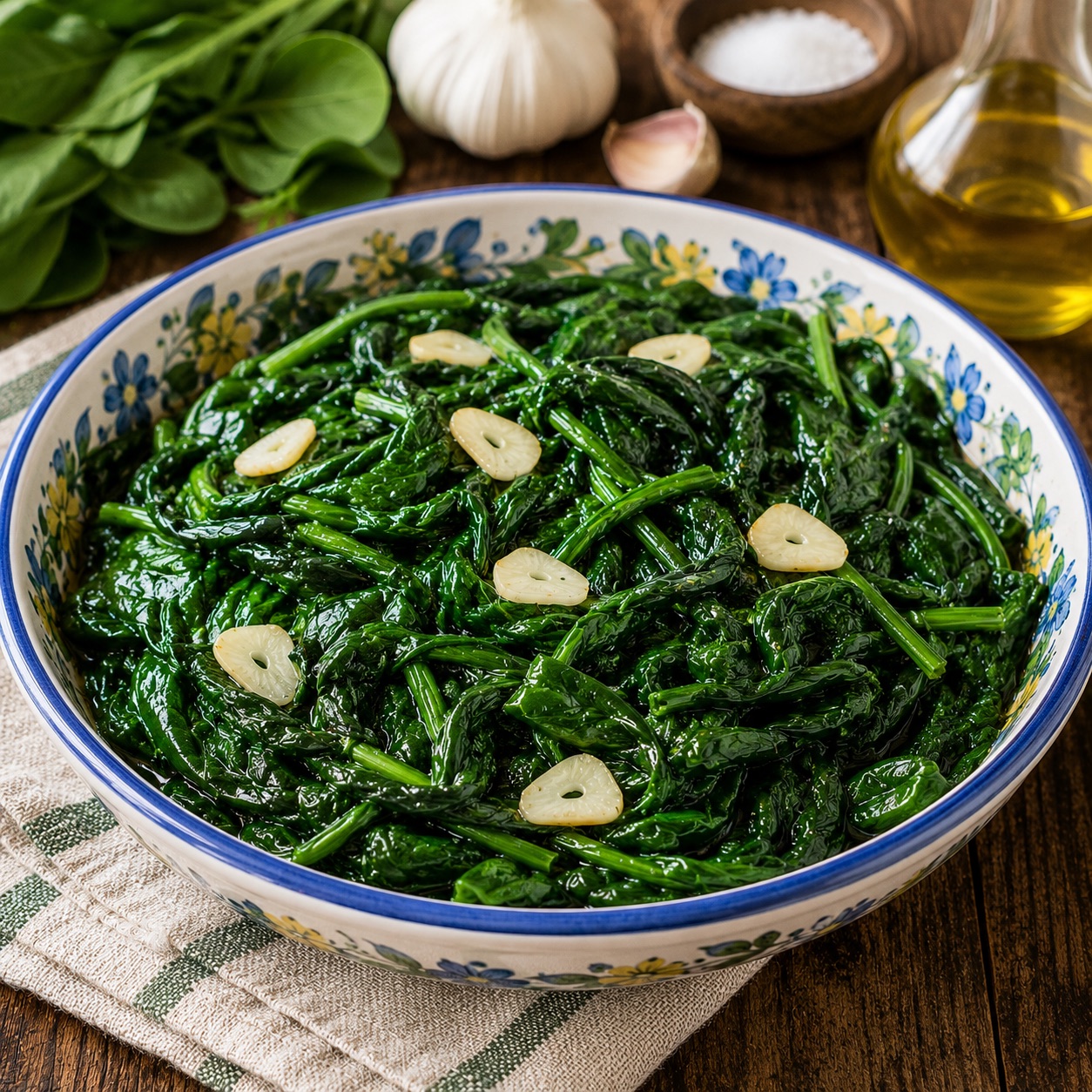
The Neapolitan table has always kept a category of dishes that are not quite salads and not quite cooked vegetables — dressed greens, mostly, prepared by a combination of brief cooking and cold dressing that produces something distinct from either raw or fully cooked. Spinaci all'insalata is the spinach version of this tradition. The spinach is blanched just until wilted and bright green, then shocked in ice water to stop the cooking and preserve the color, squeezed firmly to remove as much water as possible, chopped roughly, and dressed with raw garlic, olive oil, and vinegar. The result is a warm or room-temperature side dish with a bite that raw spinach does not have and an acidity that cooked spinach alone does not carry.
This was one of the contorni that appeared regularly at home, particularly alongside fish or roasted chicken, and one that my mother made without measuring anything. The garlic went in thin-sliced and raw — not cooked, not toasted — which means it retains its sharpness and permeates the dressed spinach as it rests. If you want a more delicate version, blanch the garlic briefly in the boiling spinach water for the last thirty seconds before adding it. If you want the authentic version, add it raw and let the dish rest fifteen minutes before serving. The rest period is not optional: it is when the garlic and vinegar settle into the spinach and stop being separate elements.
The ice water bath after blanching serves two purposes: it stops the cooking immediately and fixes the chlorophyll in its bright green state. Without it, residual heat continues to convert chlorophyll to pheophytin — the dull olive compound of overcooked greens. One minute in ice water is enough to drop the temperature below the threshold where this conversion continues.
Spinach is one of the richest vegetable sources of iron, but the iron is primarily in the non-heme form, which is less bioavailable than the heme iron in meat. The white wine vinegar or lemon juice in the dressing is not incidental: the ascorbic acid and organic acids in these ingredients reduce ferric iron (Fe³⁺) to ferrous iron (Fe²⁺), the form that intestinal cells absorb most efficiently. Dressing spinach with an acidic element is therefore a genuine nutritional enhancement, not just a flavor decision — it can increase iron absorption from the same dish by two to three times compared to eating the spinach plain.
The recipe
Serves 4 as a side dish. Better made ahead and served at room temperature — the flavors improve with 15–30 minutes of resting after dressing.
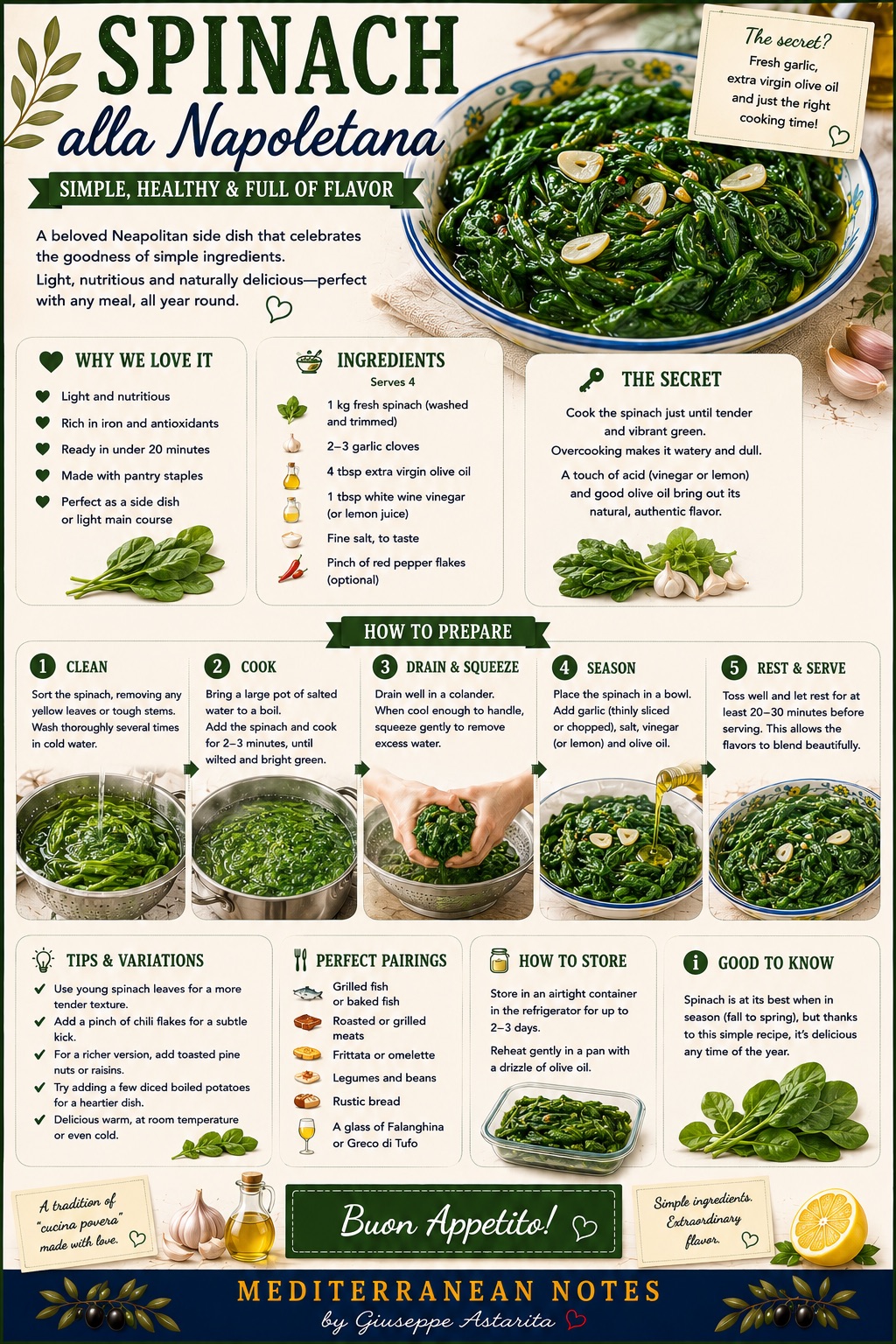
Variations that work without changing the character: a handful of pitted black olives, a few anchovy fillets laid on top, a small scatter of toasted pine nuts or raisins soaked in warm water (the Neapolitan agrodolce tradition applied to greens). Each of these additions is worth trying; none of them is necessary.
Buon appetito.