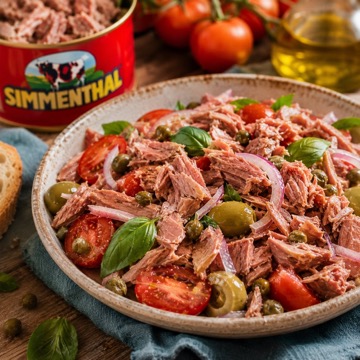
Il Tonno in Scatola
The pantry staple that fed generations of Neapolitan families
A jar of tuna packed in olive oil, always in the cabinet next to the pasta. Ready in seconds, useful in everything — salad, pasta, sandwiches, a cold loaf. The emergency dinner that never felt like an emergency.
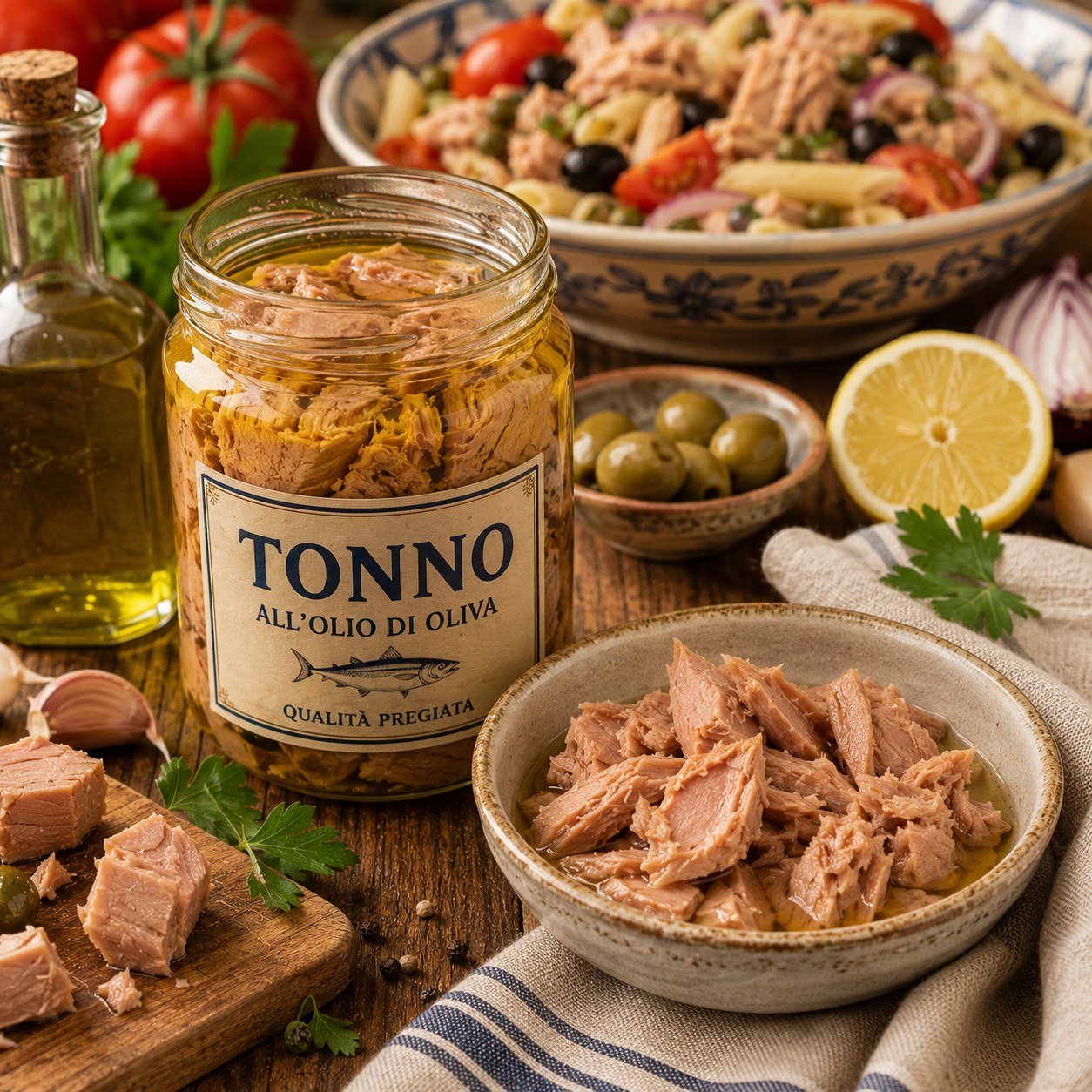
We always had tuna in the cabinet. Not as a backup, not as an emergency — it simply belonged there, the same way pasta belonged there and olive oil belonged there. A few cans, or in later years a few glass jars, lined up next to whatever else was in the pantry. In our house it sat next to the pasta, which was not coincidental. The two things went together so naturally and so often that it would have been strange to separate them.
Tonno sott'olio — tuna preserved in olive oil — was the version my family kept and the version still preferred throughout Southern Italy. Not in water, not in brine. In oil, because the flavor was better, because the texture stayed intact, because the oil itself was useful: poured over salad, added to the pasta water, used to dress the tuna when you opened the jar. Nothing wasted. The Neapolitan preference for tuna in olive oil is not snobbery — it is just good sense about flavor and about not throwing things away.
Next to the tuna in our cabinet was something else entirely: cans of Simmenthal — canned beef in vegetable gelatin. My father kept those for himself, because he could not eat tuna. He used the Simmenthal the same way I used the tuna: in salads, with tomatoes and oregano, dressed with oil and lemon. He tried for years to convert me to it, and I ate it with him more than a few times. It was good. But it was not tuna.
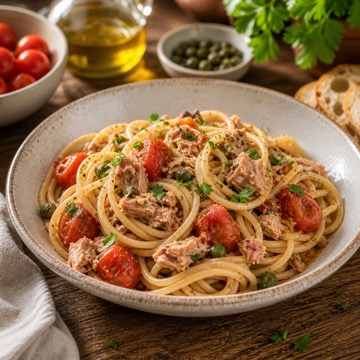
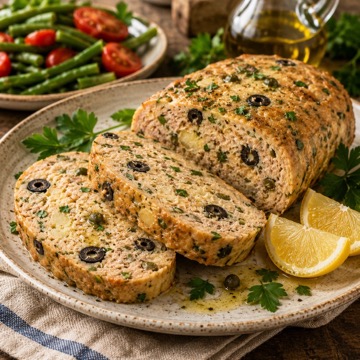
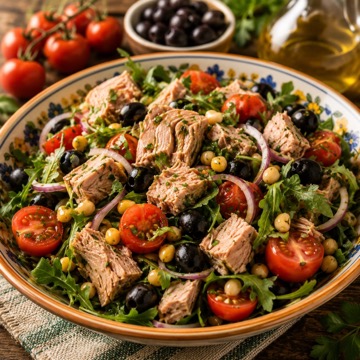
What made tonno in scatola so central to Neapolitan home cooking was its range. It could go in everything. Pasta al tonno — spaghetti with tuna, tomatoes, garlic, chili — was one of the fastest weeknight dinners in existence and one of the most satisfying. A tuna salad with tomatoes, olives, red onion, and a good amount of oregano was lunch in summer. Polpettone di tonno — a cold tuna loaf made with potatoes, egg, and Parmesan, pressed into shape and sliced — was the kind of thing that appeared on the table when it was too hot to cook and everyone was hungry at different times. It waited on the counter, ready. You cut a slice, you ate it standing at the kitchen counter, and it was enough.
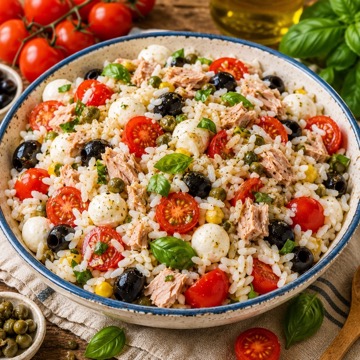
In bars and at the beach, the tramezzini — those crustless triangle sandwiches — almost always had tuna. Tuna with egg, tuna with lettuce and tomato, tuna with mayonnaise and olive. The rice salad that went to every summer picnic, to the beach, to the countryside on a day out — it had tuna too, mixed in with peas, pickled vegetables, and olives. Insalata russa, the mayonnaise and vegetable salad that appeared at Christmas and New Year's, was often made with tuna mixed in. Tuna turned up everywhere, in all seasons, at every kind of meal. It was the most useful thing in the house.
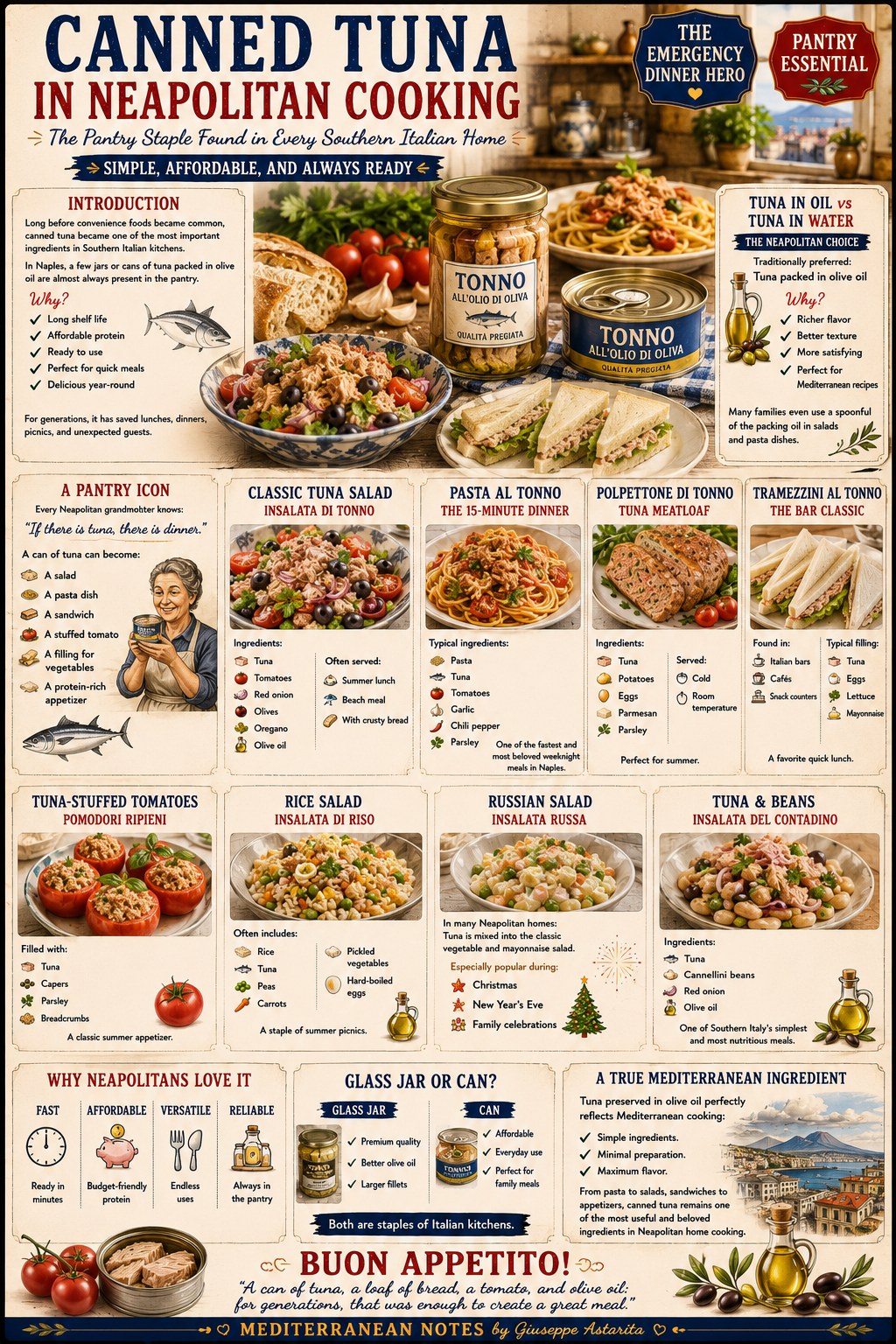
Tuna recipes on this site
These are the recipes elsewhere in the blog that use tonno in scatola — from the weeknight pasta to the beach salad to the cold summer loaf.