Polpettone di Tonno
The no-bake tuna loaf that meant summer was here
No oven, no heat, made the day before and kept cold. My mother made this when the Campanian summer made cooking impossible. We ate it at the table and sometimes carried it to the beach in paper.
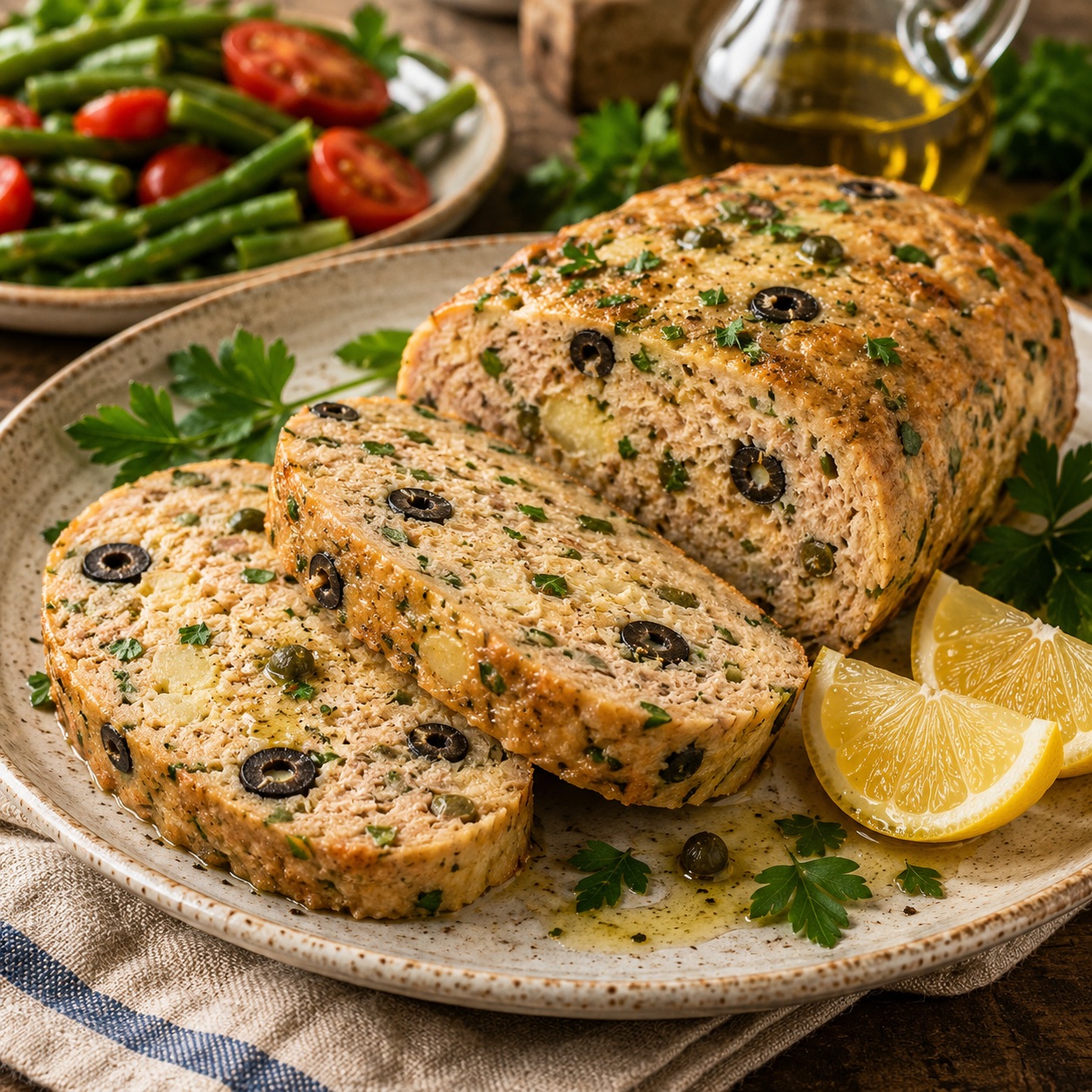
It has been roughly forty years since I last had this dish the way my mother made it, which puts it somewhere in the mid-1980s. She made it in summer, when July and August in Caserta meant a heat that made turning on the oven a serious commitment, and the kitchen already retained enough warmth from the previous day. The polpettone di tonno required no oven at all. It was cooked by boiling, which sounds strange for something called a loaf, but which produced a result that was firm, sliceable, and entirely suited to being eaten cold. You boiled it, you let it cool, you put it in the refrigerator overnight, and the next day it was ready.
My father did not eat this. Fish was not his category, and a cold tuna loaf would have confirmed everything he suspected about seafood. On nights when she made polpettone di tonno, he would have pasta with tomato, or something simple from what was in the kitchen. The rest of us ate the tuna loaf with mayonnaise and lemon, sometimes with a salad of green beans and tomatoes from the garden. There was something about the combination of cold tuna, the slight brininess of capers, the olives cut into the mixture, and the mayonnaise that worked very specifically in summer heat. Nothing about it would be improved by warmth.
The beach version was even simpler. My mother would wrap the slices in wax paper, pack them into the bag with everything else, and they survived the drive to the coast and the first hours on the beach without any trouble. A thermos bag if we were organized. Paper napkins, a lemon wedge in a small container. Eating cold polpettone di tonno on the beach with sand on your hands is one of the more specific sensory memories I have of those summers.
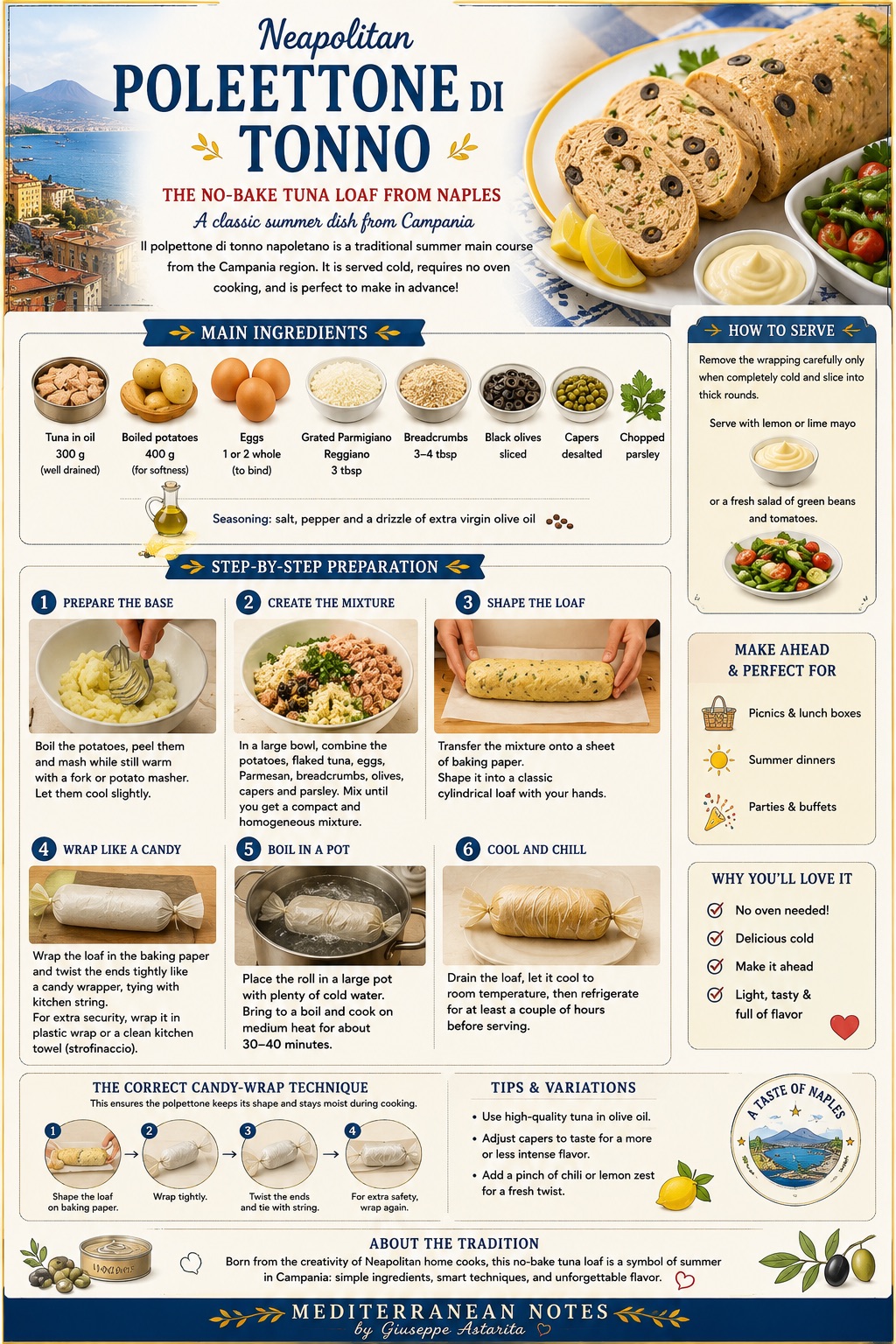
The technique is not complicated but it is specific. You combine mashed potato with well-drained canned tuna, eggs, Parmigiano, breadcrumbs, capers, black olives, and parsley. You mix it to a cohesive mass, shape it into a cylinder on a sheet of baking paper, wrap it tightly — twisting the ends like a large candy wrapper — and tie it with kitchen string. Then you lower it into a pot of cold water, bring it to a boil, and cook it at a steady but gentle simmer for thirty to forty minutes. The potato in the mixture gives it the starchy structure that holds together without drying out; the egg binds; the rest provides the flavor. You cool it completely before refrigerating, and you never slice it warm. Warm, it falls apart. Cold, it is its own thing entirely.
I have been trying to reconstruct this from memory and from the infographic below, which captures the preparation more faithfully than I could have on my own. The details I remember clearly: the capers had to be desalted and dried, the tuna had to be the kind in olive oil and properly drained or the mixture would be too wet, and my mother always added a small amount of grated lemon zest that I have not seen in other versions but that made it smell unmistakably of summer. I am not certain I have fully replicated her version since. I am getting close.
Cooking the loaf by boiling rather than baking keeps it surrounded by water vapor and liquid the entire time, which means moisture can only flow into the loaf, not out of it. Baking in a dry oven works the opposite way: the surface loses moisture rapidly, which is useful when you want a crust but counterproductive when you want a moist, sliceable cold preparation. The boiling method produces a texture closer to a terrine than to a meatloaf — firm but not dry, with a clean cross-section when sliced cold. The potato performs a specific structural role here. Mashed potato contains high levels of amylose and amylopectin — the two forms of starch that make up cooked potato's matrix. When the loaf cools, these starches retrograde (recrystallize), creating a firmer gel structure that holds the loaf together at refrigerator temperature. This is why cold polpettone slices cleanly and warm polpettone does not — the starch structure is only fully set once cold. The egg proteins contribute additional binding through coagulation during cooking, but the potato is the structural foundation. The canned tuna in olive oil adds fat-soluble aroma compounds — primarily aldehydes and esters from the fish oil — that are what gives this dish its specific cold summer character: savory, slightly briny, with that particular sweetness of good tuna in oil.
The recipe
How to serve it
My father never ate this, which meant there was always more for the rest of us. I remember that as a fact without any complaint attached to it. He had his pasta with tomato, we had the tuna loaf with mayonnaise, and that was summer dinner in Caserta in July. I have been making it for my daughters and getting close to the right result. The lemon zest is the detail I am most sure about. Everything else I am reconstructing from memory and from the smell when the paper wrapping comes off a cold loaf the next morning — which is its own kind of specific and recognizable thing.
Buon appetito — e portalo in spiaggia.