Sides & Vegetables · Festive · Christmas
Insalata Russa alla Napoletana
The cold starter that meant Christmas had arrived — creamy mayonnaise, diced vegetables, tuna, and boiled eggs arranged on top in their careful rings.
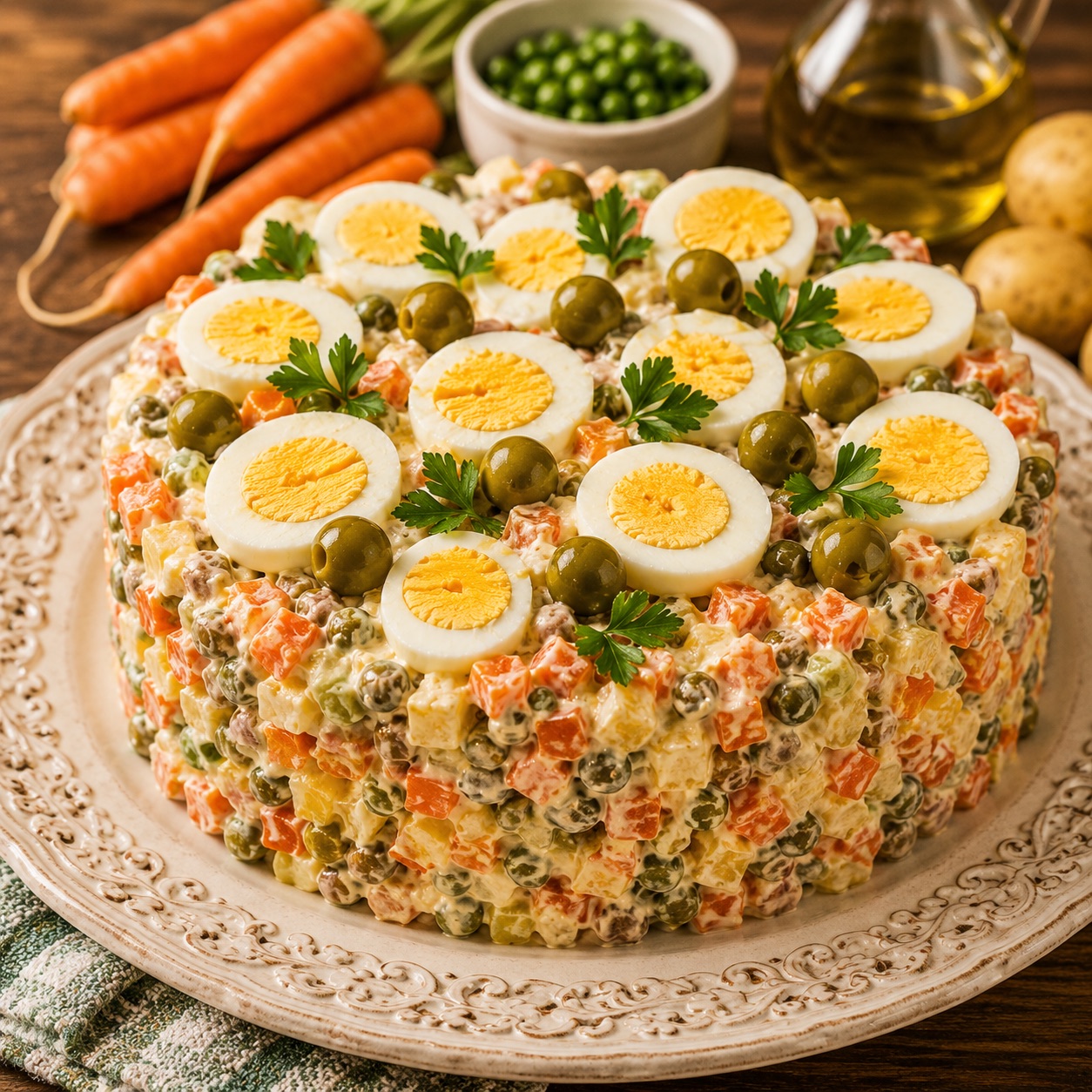
I always wondered why we called it Russian salad. It appeared every year at Christmas and New Year, always in a large bowl dressed with heavy mayonnaise, the boiled eggs arranged on top in a careful ring with sliced olives between them. Perché si chiama russa? I must have asked this at the table more than once. The answer was always a shrug. It was Russian. It was always there. Those were the same thing.
In Naples, the insalata russa is a traditional cold antipasto that belongs entirely to the festive calendar. It appears at Christmas Eve dinner, at New Year, at any gathering where the table needs to be set with something elegant, make-ahead, and able to feed many. It is not everyday food. It is the dish that signals the beginning of something.
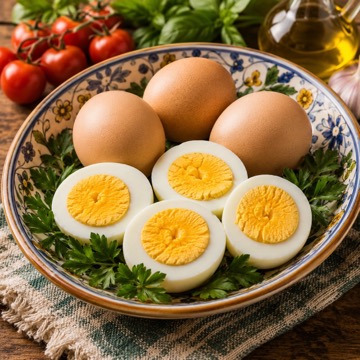
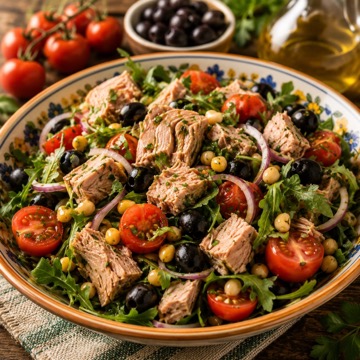
The Neapolitan version is distinguished by its creaminess — more mayonnaise than you might expect — and by the addition of giardiniera (pickled mixed vegetables) or sottaceti finely chopped through the mixture, which cuts through the richness and provides a sharp contrast. Tuna in olive oil is also standard here, adding protein and depth. The boiled eggs go on top as decoration: sliced in half or in rounds, arranged in a pattern that says this dish took time and care.
The dish originated in mid-19th-century Russia, credited to Lucien Olivier, a Belgian chef working in Moscow in the 1860s. His original recipe at the Hermitage restaurant was elaborate — grouse, crayfish tails, caviar — but the simplified version that spread across Europe replaced the luxury ingredients with potatoes, carrots, peas, and mayonnaise. By the early 20th century it had become a standard European cold buffet dish, and it arrived in Southern Italy through the same culinary channels that brought other northern and central European influences to the Neapolitan court and its aristocratic imitators.
The Neapolitan version kept the basic structure but added local character: tuna in olive oil (a Southern Italian pantry staple), sottaceti or giardiniera, and the theatrical egg decoration that became standard for the festive table. The name stuck — it was always "la russa," regardless of how far the recipe had drifted from its origins. This is common in food history: dishes travel, transform, embed themselves in a local culture so thoroughly that they become local traditions. In Naples, this very un-Russian dish is now inseparable from Christmas.
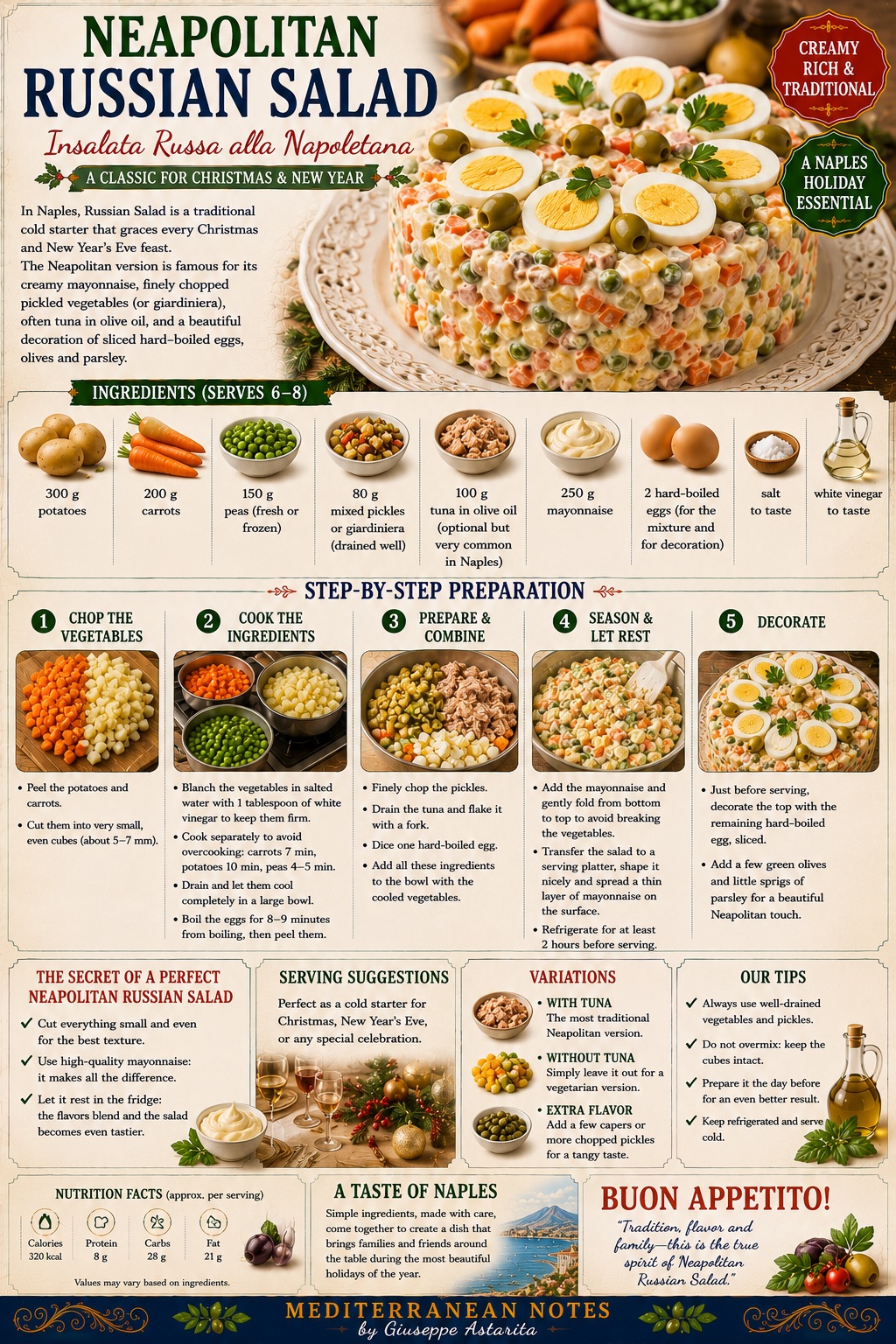
Tap to enlarge — Insalata russa: ingredienti, decorazione, varianti
Recipe — Insalata Russa alla Napoletana
Serves 6–8 as a starter · Make ahead
- 300 g potatoes waxy variety, boiled and diced small
- 200 g carrots boiled and diced small
- 150 g peas fresh or frozen, blanched
- 80 g giardiniera or mixed sottaceti well drained, finely chopped
- 100 g tuna in olive oil well drained, broken up
- 250 g good mayonnaise or more to taste
- 2 hard-boiled eggs for decoration
- Gaeta olives a few, for decoration
- Fresh parsley for decoration
- Salt and white wine vinegar to taste
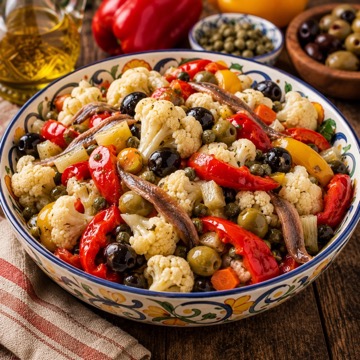
The insalata russa sits at the table at Christmas alongside the insalata di rinforzo and the other cold antipasti of the cenone. It is always made in more than can be eaten in one sitting, and it is always better the day after — which is part of the reason it exists. A dish designed to survive the feast and still be good at noon the day after, when the table is quieter and the celebration is over.