Frittate e uova · Campanian Home Cooking
Uova Sode a Napoli
The egg that appears in everything — salads, festive dishes, antipasti, packed lunches. A quiet ingredient that never quite gets the credit it deserves.
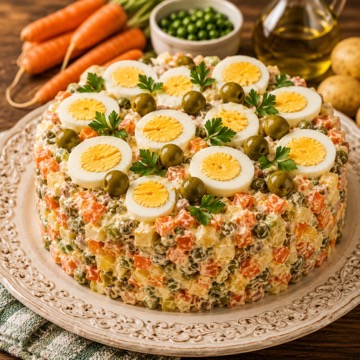
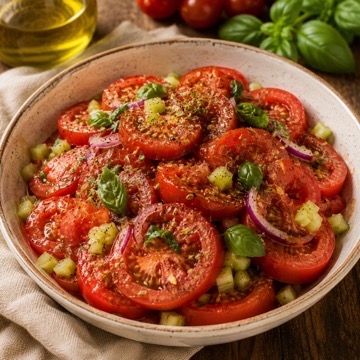
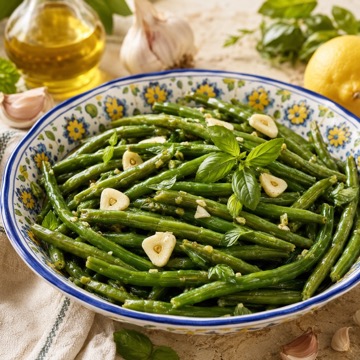
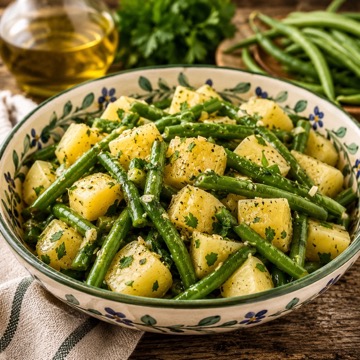
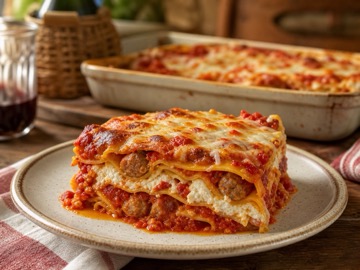
In our kitchen, uova sode were never the point. They were always alongside something else — tucked, without fail, into a bowl of insalata di fagiolini, halved over an insalata di pomodori of ripe summer tomatoes, layered into the lasagna napoletana, placed at the center of the insalata di rinforzo at Christmas. They decorated the top of the insalata russa in their neat concentric rings. And they sat alongside a tin of good tuna in olive oil on a hot summer evening when no one wanted to turn on the stove — a way to taste the sea, or at least to remember it.
The one exception I remember clearly: a hard-boiled egg eaten alone, still warm from the pot, with a pinch of salt on top. My mother did this, standing at the counter. It was a very good thing. Simple in the way that only things eaten in the right moment can be simple — not stripped of complexity, but not needing anything more.
This is not a recipe post in the traditional sense. It is a guide to an ingredient that Neapolitan cooking uses constantly and treats without ceremony. The uovo sodo is not exciting on its own. What it does is make other things better: it adds protein and richness to salads that would otherwise be purely vegetable; it provides a mild, creamy counterpoint to briny olives and capers; it gives the insalata russa its structure and the lasagna its Sunday weight.
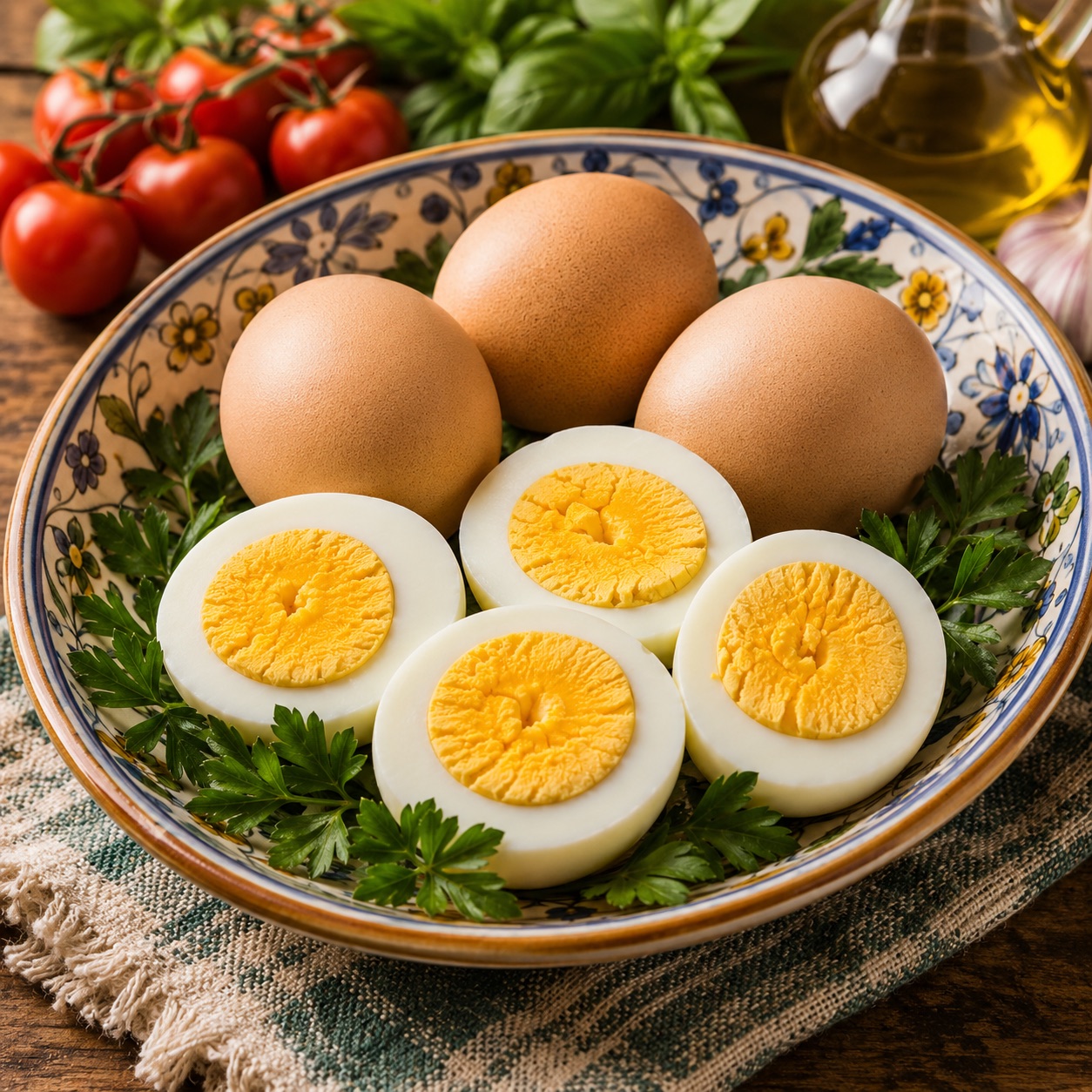
The grey-green ring that forms around an overcooked yolk is iron sulphide, produced when hydrogen sulphide (released from the egg white's sulphur-containing proteins) reacts with iron in the yolk. This reaction accelerates above 100°C and with prolonged heat exposure. It is harmless but signals that the egg has been cooked too long or cooled too slowly.
The prevention is in the cooling: transferring the egg immediately to cold water stops the cooking and prevents residual heat from driving the sulphur migration deeper into the yolk. Starting in cold water (rather than dropping into boiling water) also gives more control over timing — the gradual heat rise lets the white and yolk set more evenly. For the best colour and texture, 8–9 minutes from a cold-water start, then directly into ice water for at least 5 minutes.
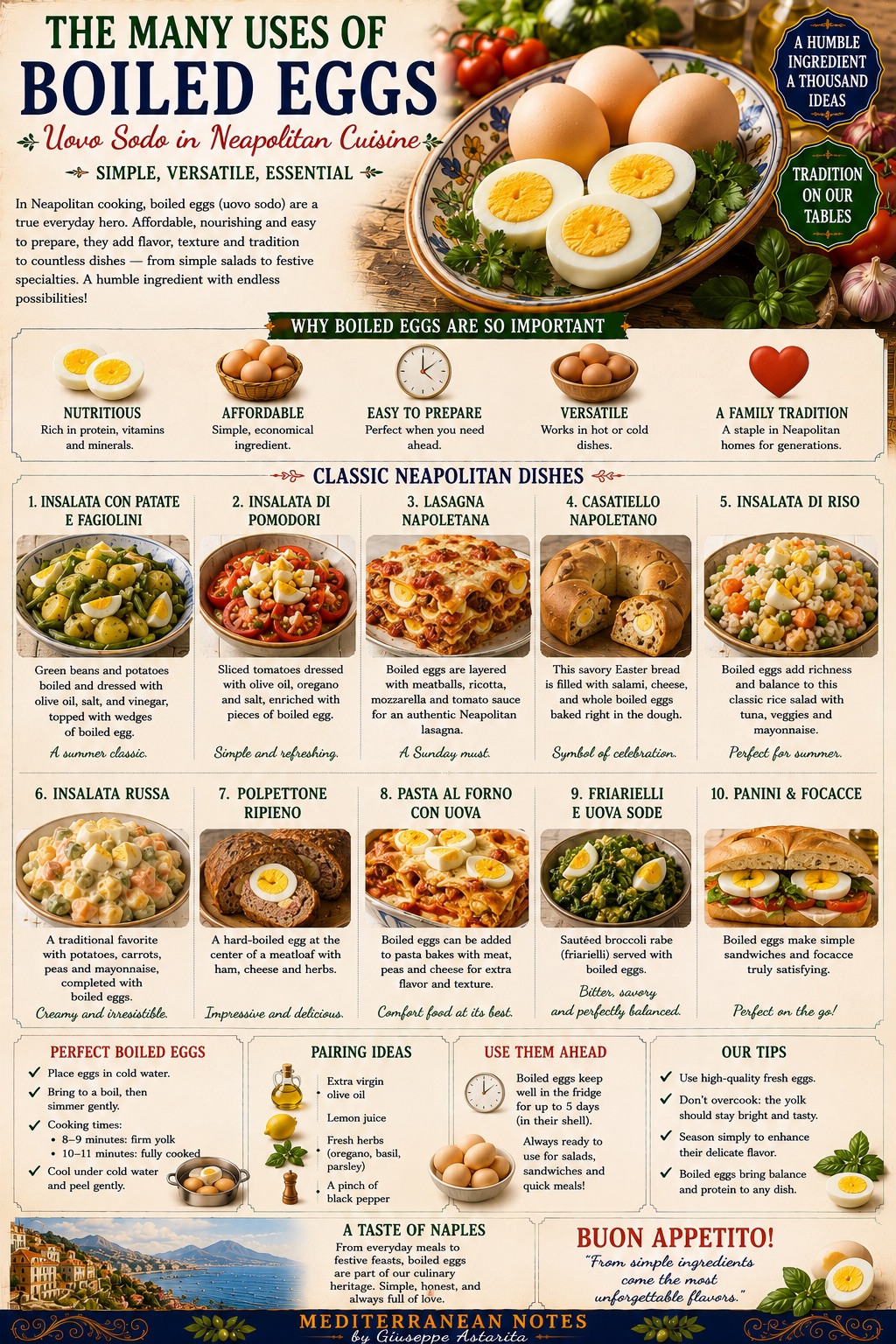
Tap to enlarge — Uova sode: dieci usi in cucina campana
Recipe — Uova Sode — The Neapolitan Way
As many as needed · 15 minutes start to finish
- Eggs as many as needed — the freshest available
- Cold water enough to cover by 2 cm
- A pinch of salt in the cooking water, optional
- Ice water or very cold water for cooling
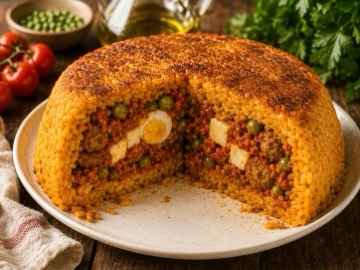
The uovo sodo appears in the insalata russa, in the insalata di patate e fagiolini, in the insalatona di tonno, and in the lasagna napoletana. It fills the inside of the tortano e casatiello at Easter, and is layered into the sartù di riso. It also appears, more quietly, eaten standing at the counter with a pinch of salt — which is sometimes exactly the right thing.