Tagliatelle alla Boscaiola
The pasta of the woods — autumn, mushrooms, sausage, cream or tomato
When the porcini arrive at the market — October, sometimes a few days into November, the season's brief window — this is the pasta. Egg tagliatelle with mushrooms and sausage in a sauce of white wine and cream (the white version) or tomato (the red). Rich, rustic, unmistakably autumnal. Boscaiola means of the woodsman, of the forest. The name tells you everything about when to make it.
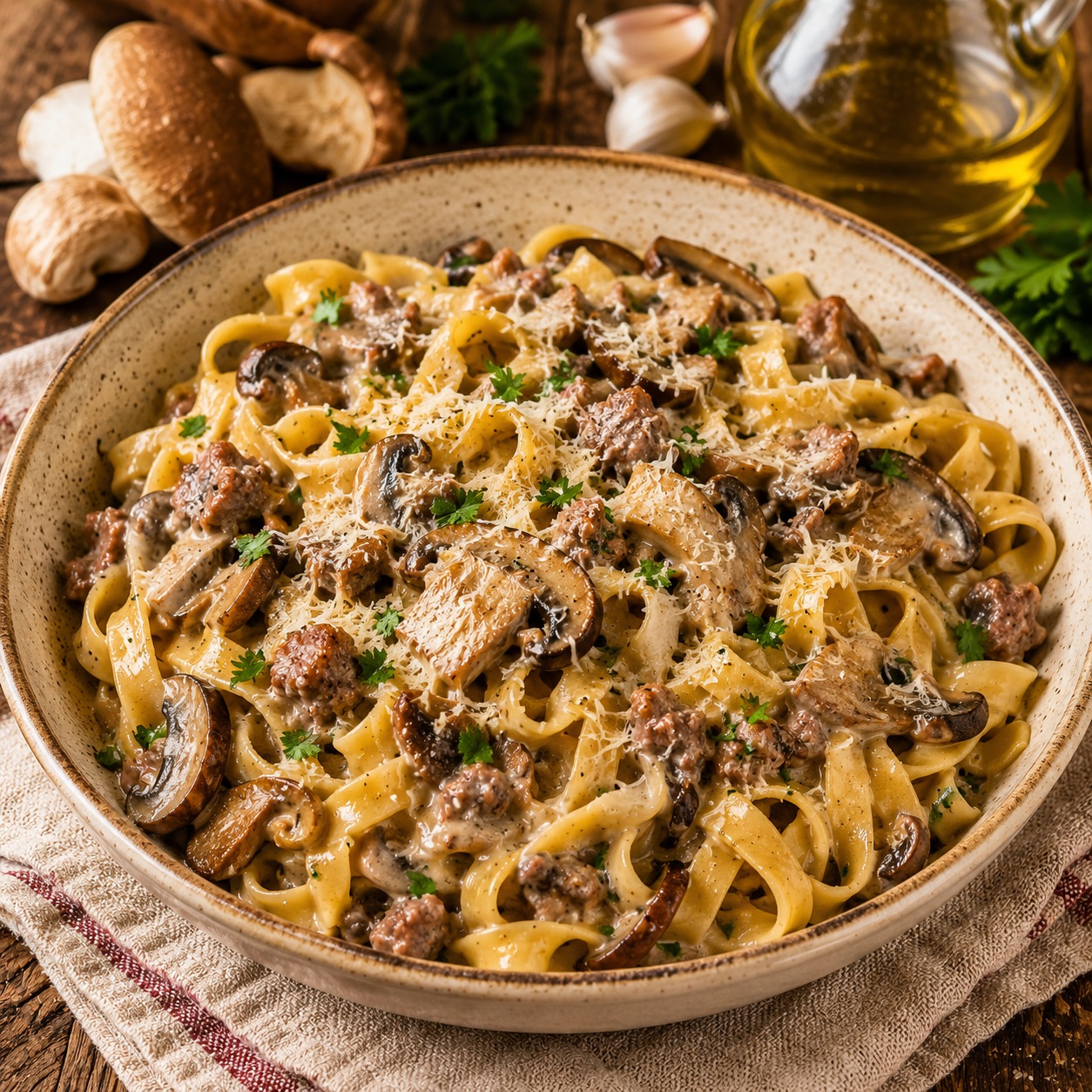
There are dishes that belong to a specific time of year so completely that making them out of season feels like a categorical error. The boscaiola is one of them. It is an autumn pasta — not because the recipe is impossible in spring or summer, but because its flavor profile belongs to the months when the forest floor is active, when the porcini and other wild mushrooms appear at the market in crates, when the air has turned cold enough that a rich, cream-sauced pasta feels appropriate rather than excessive. In the height of summer it would be wrong. In October with good fresh porcini it is one of the most satisfying pasta dishes in the Italian repertoire.
A note on origin: the boscaiola is not a Neapolitan dish. Egg tagliatelle, cream, and the woodcutter’s mushrooms-and-sausage style belong to central and northern Italy, not to Campania, where pasta is dried, sauces are built on olive oil and tomato, and cream almost never appears. It entered our kitchen the way a few other dishes did — not by tradition but by liking — and we made it gladly when the porcini came in.
The boscaiola comes in two main versions — bianca and rossa — and the choice between them is one of preference and occasion. The white version, with cream, is richer and more elegant; the mushroom flavor is amplified and softened by the dairy fat, and the result is a silky, pale sauce that coats the tagliatelle completely. The red version, with tomato instead of cream, is lighter and more acidic; the tomato cuts the richness of the sausage and provides a brightness that the cream version lacks. Both are correct. The white version is the classic and the one most Italians think of first when they hear the word boscaiola. It is the one presented here as the primary recipe, with the red version described as a direct alternative requiring only the substitution of tomato for cream.
The mushrooms are the point and the point is to use the best mushrooms available. Fresh porcini — Boletus edulis — produce a flavor that no other cultivated mushroom replicates: earthy, deep, slightly nutty, with an umami intensity that develops during sautéing. If you have fresh porcini, use them. If you have dried porcini, soak them in warm water for 20 minutes, drain (save the soaking water — it is extremely flavorful and should be strained and added to the sauce), and add them alongside whatever fresh mixed mushrooms you are using. In Massachusetts, where fresh porcini are genuinely difficult to source, I use a combination of cremini and a handful of dried porcini, and the result is very good. In Italy in October, use whatever the market has.
Porcini mushrooms are exceptionally rich in glutamic acid — the free amino acid that produces the savory, persistent umami flavor distinct from the saltiness of sodium or the bitterness of certain vegetables. Fresh porcini contain approximately 180 mg of glutamic acid per 100 g of dry weight, significantly more than cremini or button mushrooms. When sautéed at high heat, several things happen simultaneously: the cell walls rupture and the moisture evaporates, concentrating the glutamic acid and other flavor compounds; the Maillard reaction at the mushroom surface creates new aromatic compounds with toasted, nutty, forest-floor character; and some of the glucans — the polysaccharides in mushroom cell walls — are released into the oil, where they act as natural emulsifiers that help the cream sauce adhere to the pasta.
The instruction to sauté mushrooms in small batches at high heat without a lid is critical: mushrooms contain approximately 90% water by weight, and this water must evaporate before browning can occur. A crowded pan lowers the pan temperature and the water steams rather than evaporating — the mushrooms cook in their own liquid, turn grey and soft, and produce none of the Maillard products responsible for the characteristic sautéed mushroom flavor. High heat, small batches, and patience are the entire technique. The same principle applies to all high-moisture vegetables, from the baccalà fritto to the melanzane grigliate in this collection.
Serves 4. Use egg tagliatelle — fresh if possible, dried egg tagliatelle if not. The cream goes in at very low heat for just 2 minutes; anything longer and it reduces too far and the sauce becomes too thick before the pasta arrives.
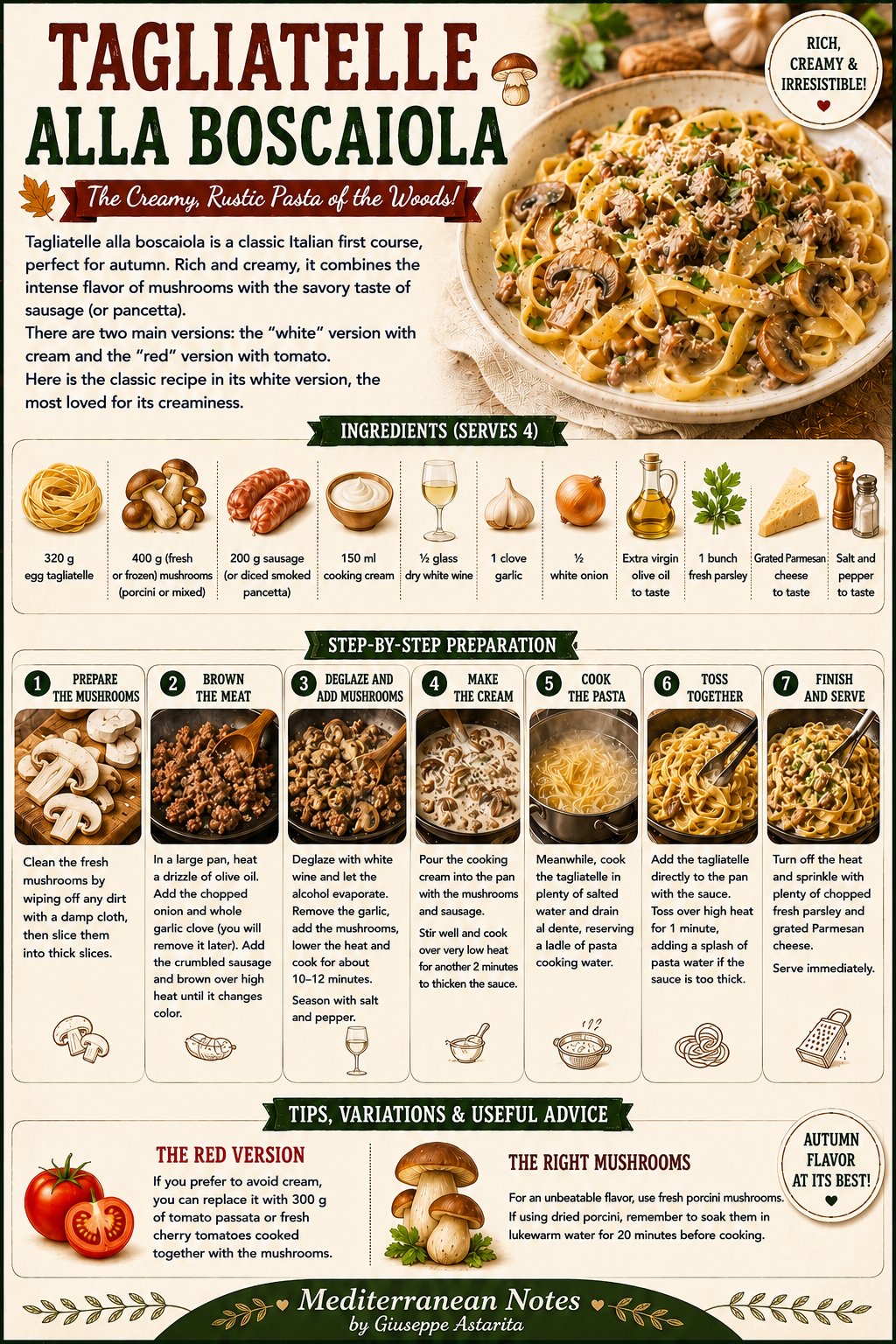
Replace the cream with 300 g of tomato passata or fresh cherry tomatoes, halved. After deglazing with wine and returning the mushrooms to the pan, add the tomato and cook for 15 minutes over medium-low heat until the sauce is thick and fragrant. No cream. Finish with parsley and Parmigiano as above. The red version is lighter and works better in warmer autumn weather; the white version is the one for the cold days of November when something rich and warming is the point.
Related
Buon appetito — e buon autunno.