Risotto con Verza
Savoy cabbage risotto — creamy, comforting, a winter dish of deceptive delicacy
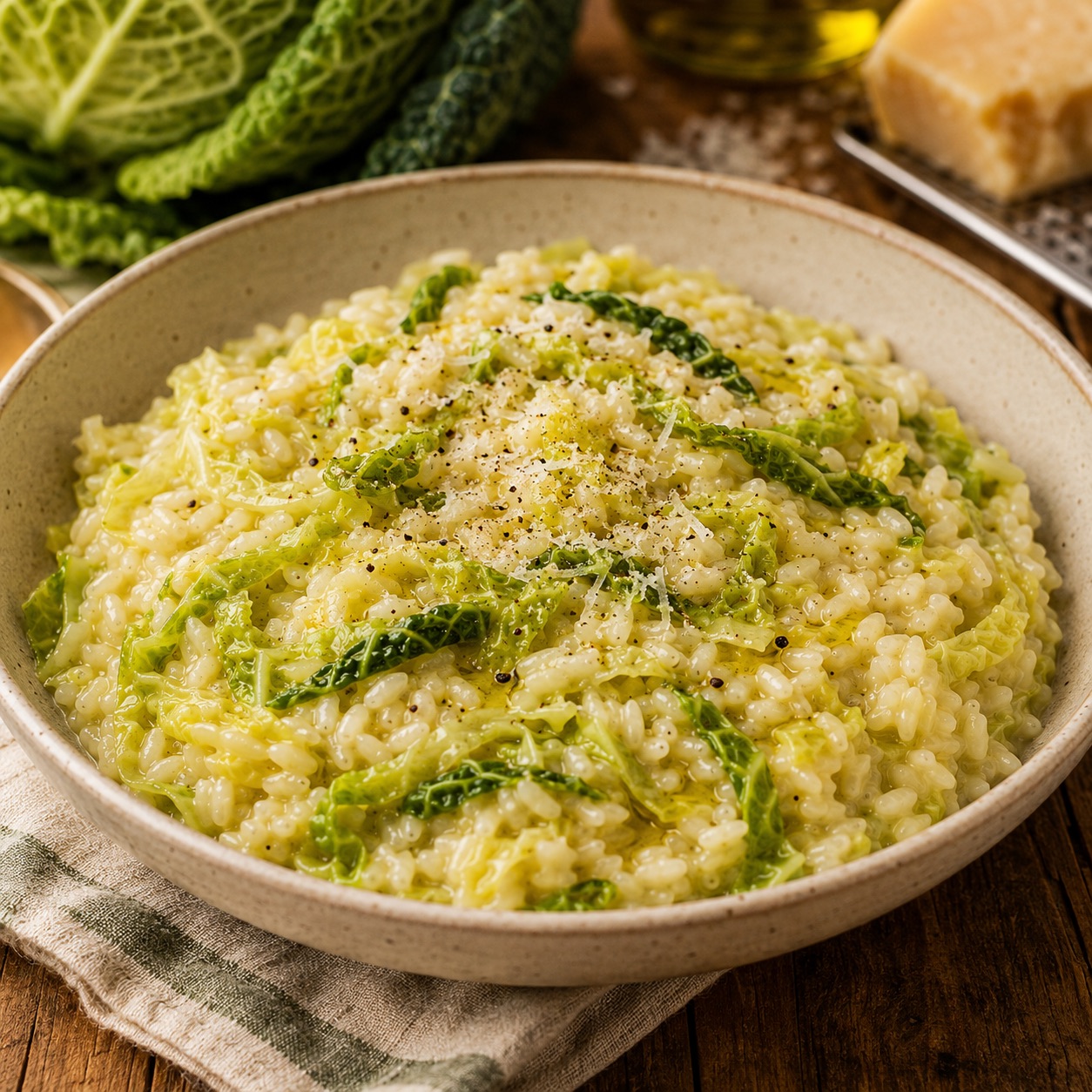
Savoy cabbage — verza — is one of the most underestimated vegetables in the winter kitchen. Raw, it is robust and slightly bitter; cooked slowly in a little olive oil and butter until collapsed and concentrated, it becomes almost sweet, developing a depth that is hard to place but immediately recognizable. In this risotto it is cooked directly in the base alongside the shallot, then the rice is added and the whole thing builds together. By the time the mantecatura is done, the cabbage has partially dissolved into the starch released by the rice, producing a creamy, pale green result that is both lighter than it tastes and more satisfying than its ingredients suggest.
This risotto belongs to the cucina povera tradition of northern and central Italy — a dish born from the need to make something substantial from winter vegetables that were cheap and abundant. It has made its way south into Campanian kitchens, where it sits alongside the artichoke and asparagus risotti in the winter repertoire. The sausage variation — a little Italian sausage browned with the shallot before the cabbage goes in — makes it richer and more filling, the right choice when the weather is very cold and the meal is the main event of the day.
Savoy cabbage contains significant quantities of pectin in its cell walls. During the 10-minute covered cook with the shallot and a ladle of broth, heat softens the pectin-calcium bonds and the cabbage collapses and partially dissolves into the cooking liquid. This thickened cabbage liquid is then absorbed by the rice along with the broth, which is why the finished risotto has a creamier texture than a plain Parmiganio risotto of the same Arborio quantity. The starch released by the rice during the progressive broth addition further thickens the liquid. The mantecatura — cold butter and Parmigiano stirred vigorously off the heat — creates a stable emulsion between these starches, the fat from the butter and the milk proteins from the cheese, producing the glossy, all'onda finish that defines a correctly made risotto.
The recipe
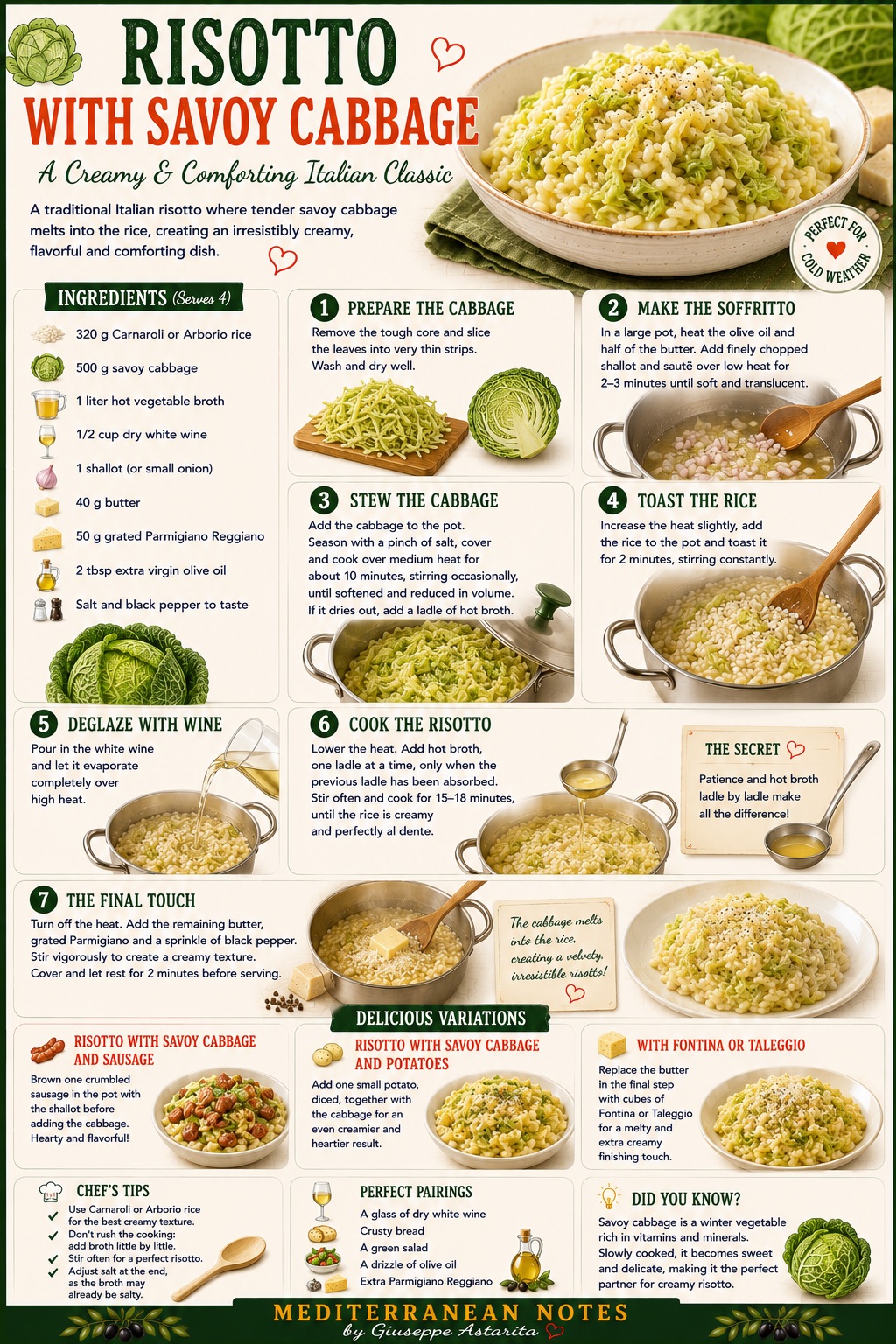
Variations: Brown 200 g of Italian sausage with the shallot before adding the cabbage for a richer, more substantial version. Add cubes of Fontina or Taleggio in the last minute for a melty, extra-indulgent finish.
Buon appetito.