Pasta con Asparagi e Guanciale
The quick version — high heat, rendered fat, Pecorino, twenty minutes
My mother cooked asparagus as long as they were there and stopped when they were gone — the way she cooked fava beans in May, zucchini in summer, artichokes in spring. When asparagus arrived at the market, this pasta was one of the answers: fast, direct, the rendered guanciale fat becoming the sauce.
The Italian approach to seasonal vegetables is not a philosophy or a trend — it is simply the way a kitchen ran before refrigeration and global supply chains made every ingredient available in every month. Growing up in Campania, what appeared at the market determined what appeared at the table. Asparagus in spring. Fava beans and artichokes through April and May. Zucchini and eggplant and tomatoes through the summer. Pumpkin and cauliflower and broccoli rabe when the cold came. The calendar of the kitchen was the calendar of the season, and the recipes that resulted were not about creativity or invention — they were about using what was there, fully, before it was gone.
My mother cooked asparagus in the way that made sense to her, which was the way her mother had cooked them: the tough ends broken off and saved for a broth, the stems cut thinly and cooked until tender, the tips barely touched — added last, kept bright green rather than collapsed into the sauce. Nothing was wasted. The asparagus tasted of itself throughout the dish because every part of it had been used. The tough ends that most people discard went into the pot for stock; the tips stayed whole and visible at the end as evidence of what the dish was made of.
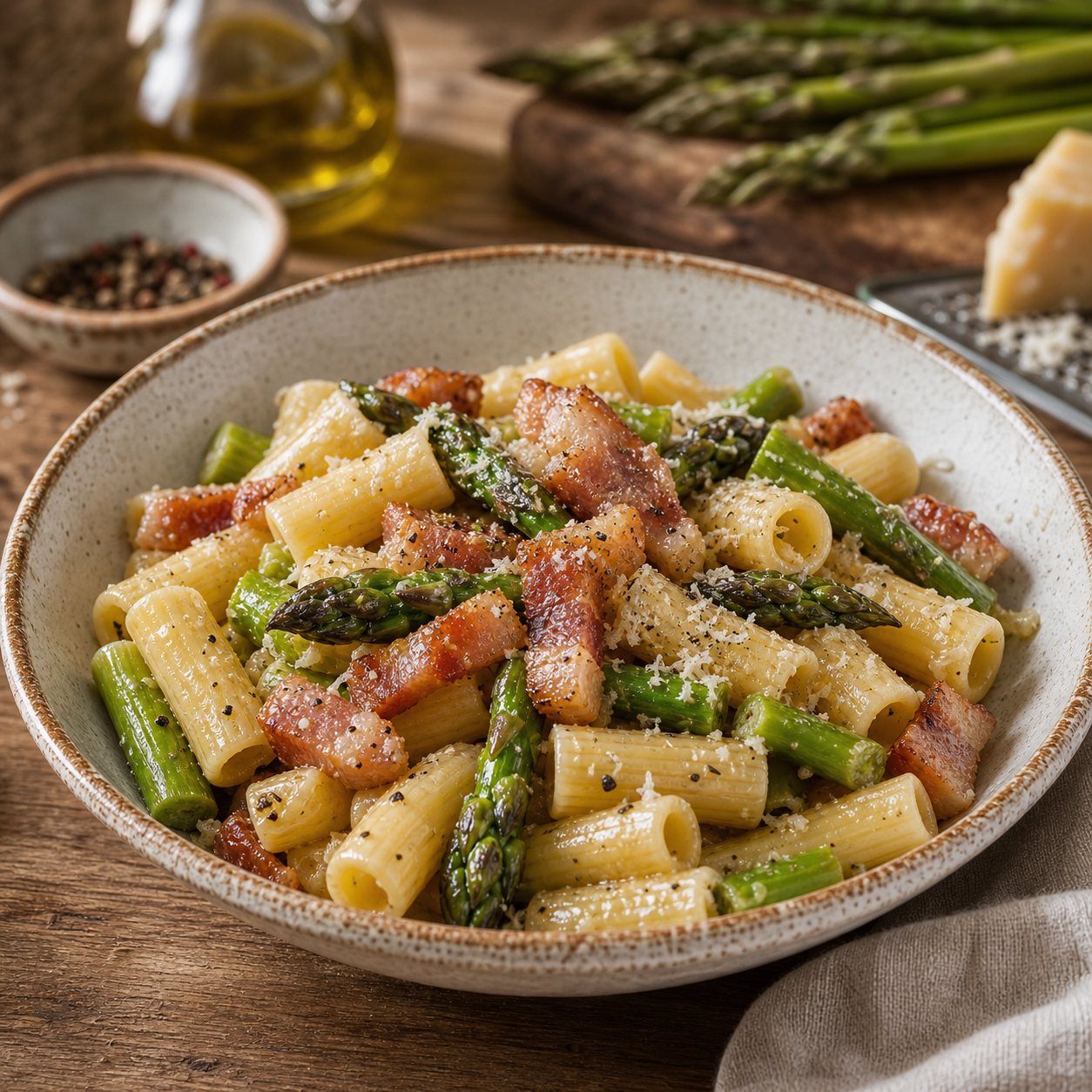
This pasta is fast and direct. Asparagus goes into the pan at high heat with garlic and the rendered fat of the guanciale, which has been cooked separately until crisp. That fat is the sauce — not an olive oil base, not a tomato base, but pork fat carrying asparagus aromatics and emulsified with pasta water into something silky and coherent. Pecorino Romano finishes it: salt, sharpness, the particular dry tang that cuts through the richness of the guanciale without overpowering the asparagus. The whole thing takes about twenty minutes from the moment you start cutting.
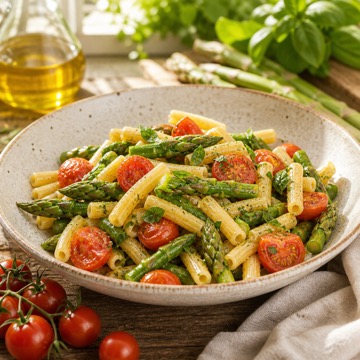
The guanciale can be replaced with pancetta tesa if that is what you have — the flavor is slightly different, less gelatinous, less sweet, but the technique is identical. What cannot be replaced is the rendered fat remaining in the pan: do not drain it. It is not a byproduct; it is the sauce. A version of this dish without the guanciale is also good — garlic, olive oil, asparagus, pasta water, Parmigiano — but it is a different dish, quieter and lighter. The pasta with asparagus, onions and cherry tomatoes is that version. This one has the weight and savory depth that the pork brings, and it is the more specifically Campanian preparation.
The characteristic flavor of asparagus comes primarily from asparagusic acid and its sulfur-containing derivatives — volatile compounds unique to this vegetable that are released during cooking and that degrade quickly with prolonged heat. The tips, which are the most concentrated in these aromatic compounds, are added at the last moment in both the pasta and the risotto versions for this reason: a few minutes in residual heat is enough to cook them through while preserving the volatile flavor compounds that would evaporate if the tips were in the pan from the beginning. The stems, which are tougher and less delicate, can withstand longer cooking and are sliced thin to cook evenly in the same time as everything else.
The rendered guanciale fat is a mixture of oleic acid (the same primary fatty acid as olive oil), palmitic acid, and smaller amounts of other fatty acids, along with the water-soluble flavor compounds released from the pork during cooking. When pasta water is added to this fat in a hot pan and the mixture is tossed rapidly, the starch released by the pasta during boiling acts as an emulsifier — binding the fat and water into a stable emulsion that coats each piece of pasta rather than pooling at the bottom of the dish. This is the same mechanism behind the sauces of aglio e olio and vongole. The Pecorino Romano, added off the heat, contributes protein and calcium in addition to its salt, and its sharp, slightly acidic character comes from the short-chain fatty acids produced during the aging process — the same compounds responsible for the pungency of aged sheep's milk cheeses generally.
The recipe
Serves 4. Penne, fusilli, or spaghetti — short shapes with ridges hold the sauce better, but long pasta works. Use guanciale if you can find it; pancetta tesa is the substitute. Season carefully at the end — both guanciale and Pecorino are already salty.
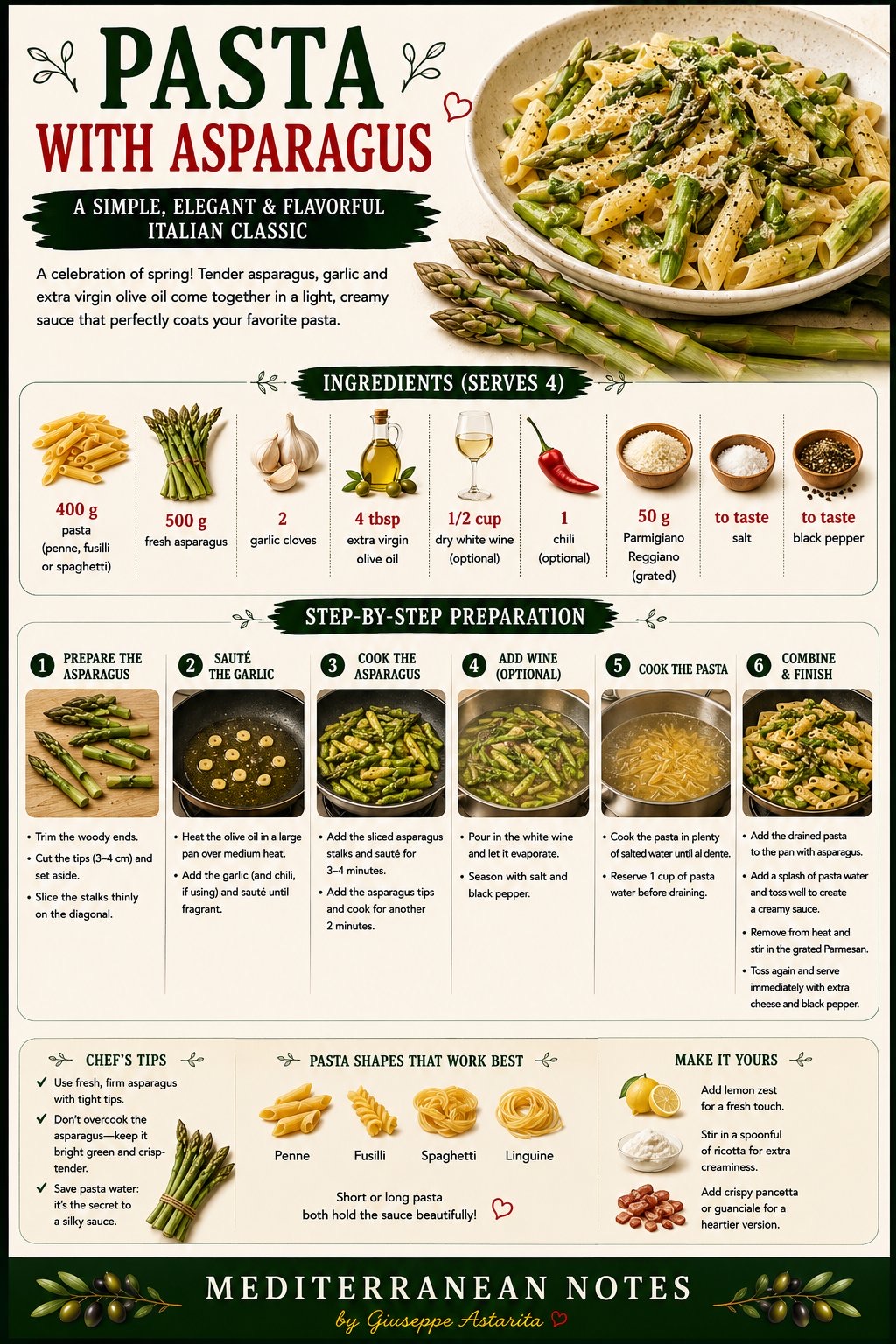
Asparagus season in Italy is short — typically March through May, with the peak weeks in April. The window for fresh local asparagus in the US is similarly brief. When they are there, cook them. When they are gone, wait for next year. This is what it means to eat seasonally — not a principle or a rule but the simple observation that things taste best when they are in the right moment, and that the right moment passes.
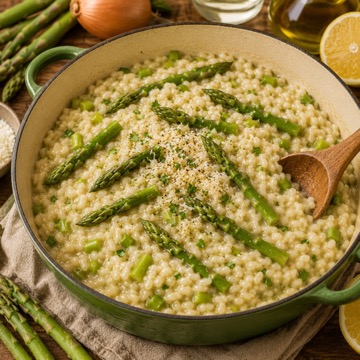
If you want the risotto version — slower, more immersive, every part of the asparagus blended into the rice — it is at Asparagi in due modi, where the two preparations were originally written together.
Buon appetito — e buona primavera.