Campanian kitchen · Pasta · Fast · Spanish Quarters · Year-round
Pasta allo scarparielloThe shoemaker's pasta
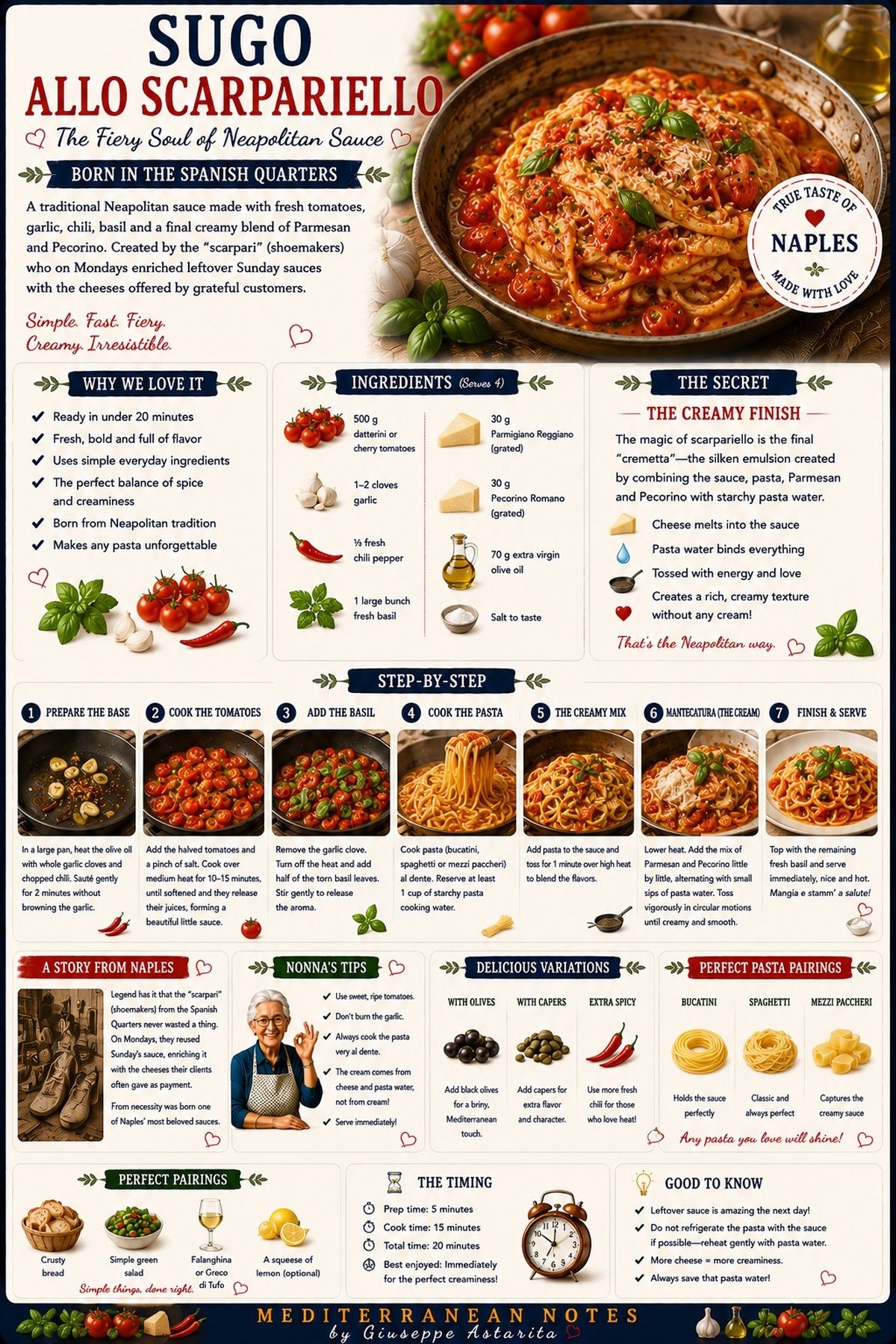
Cherry tomatoes burst in olive oil with garlic and chili, a handful of basil torn off the heat, Parmigiano and Pecorino stirred in with pasta water until the sauce turns creamy without a drop of cream. Twenty minutes. No negotiation. Born in the Spanish Quarters of Naples from shoemakers who wasted nothing.
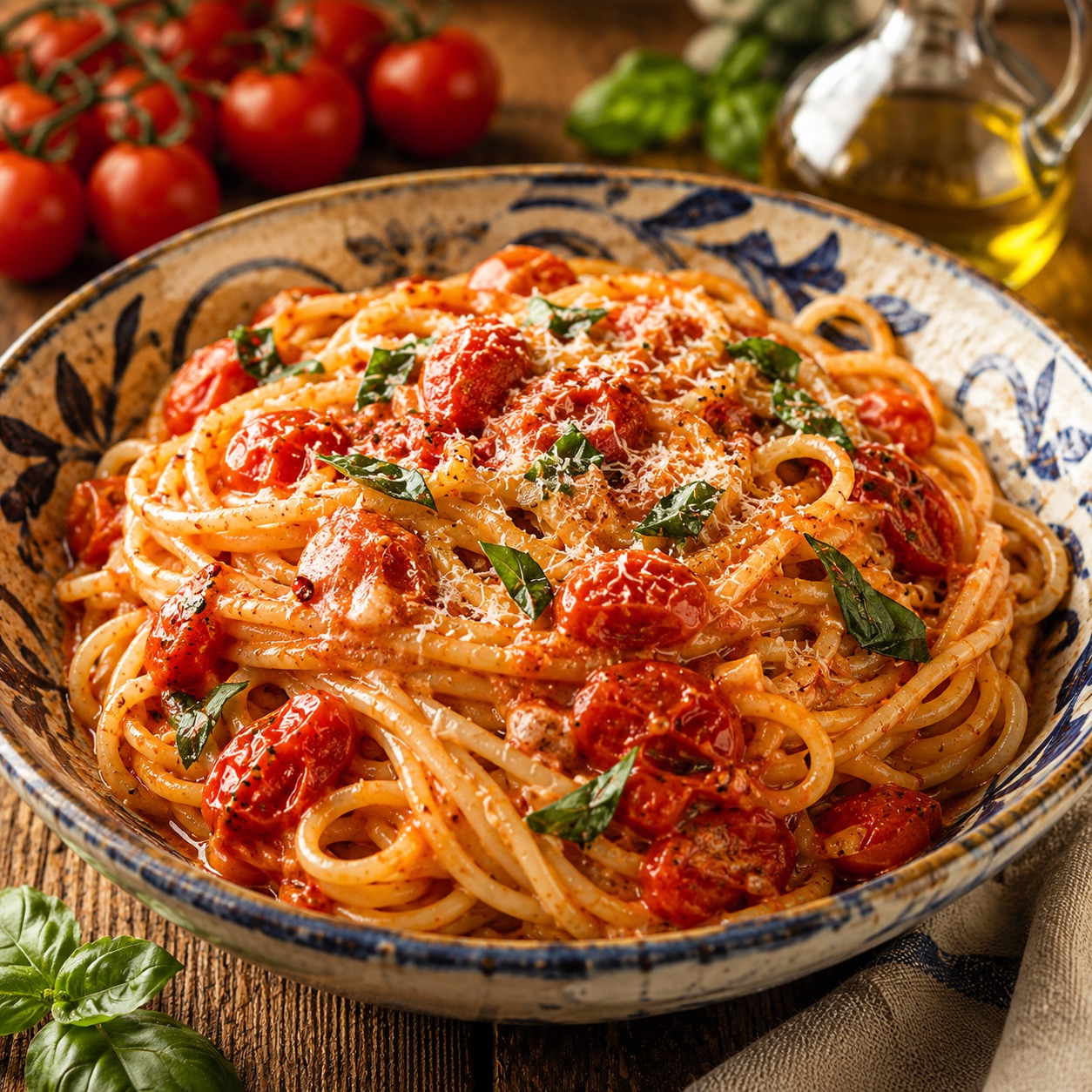
My father was not a patient cook. He was not an impatient one either — he was a precise one, which is different. He knew exactly what a sauce needed and how long it needed it, and he did not add time or steps that served no purpose. The scarpariello was his kind of sauce: quick, direct, made from things always in the kitchen, finished with a logic that produces something richer than the ingredients suggest. He made versions of it without ever calling it scarpariello — cherry tomatoes in the pan, garlic, some heat from chili, basil, the cheese stirred in at the end. A sauce that looked improvised and tasted considered. This is how the best Neapolitan sauces work.
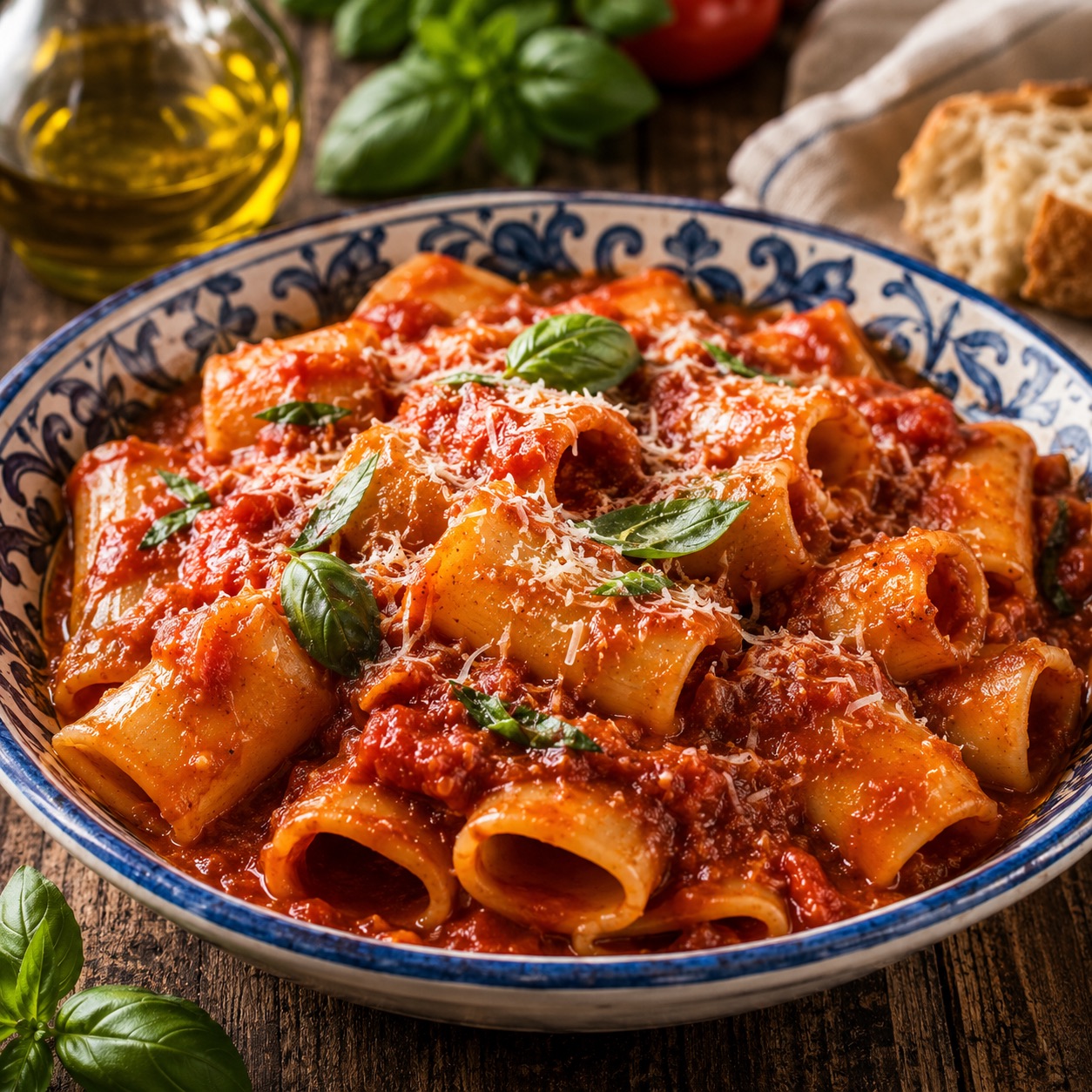
My mother made it too. They both did, and the versions were slightly different in the way that two people who have cooked the same dish for decades develop different hands for it without discussing it. My father's version was faster and had more chili. My mother's was slightly longer in the pan and the cheese went in more carefully, off the heat. The result at the table was the same: a sauce you could put on spaghetti, on bucatini, on paccheri, on whatever pasta was open, and it worked every time. This is a sauce that does not depend on the pasta shape. It is generous in that way.
The name comes from the scarpari — the shoemakers of the Spanish Quarters in Naples, the dense, layered neighborhood above the port that has been working-class for five centuries. Literally, pasta allo scarpariello is the shoemaker's pasta. The legend is that on Mondays they reused leftover Sunday sauce, enriching it with the cheeses their grateful customers sometimes gave them as payment. Whether this is literally true or the kind of story that attaches itself to popular dishes, the result is a sauce with a clear identity: quick ingredients made creamy by cheese and pasta water, fiery with chili, bright with fresh tomato and basil. It is not a complicated sauce. It is a precise one.
There is a version of this in almost every Neapolitan kitchen, going by various names or by no name at all. It is the sauce you make when you want something good and fast, when the tomatoes are ripe and the basil is on the windowsill and the cheese is in the refrigerator. Like a caprese salad — you do not always call it by name, you do not always follow a specific recipe, but you make it all the time in one form or another, because it is one of those combinations that Campanian cooking arrived at and never needed to improve.
Why the cremetta forms — cheese, starch, and the emulsion without cream
The creamy finish of scarpariello — the cremetta — is an emulsion of fat, protein, and starch, not cream. The cherry tomatoes release water and pectin as they cook; the olive oil provides fat; the pasta water contributes dissolved starch from the cooking pasta. When grated Parmigiano and Pecorino are added off the heat and stirred vigorously, the proteins in the cheese (primarily casein) partially dissolve into the warm liquid, and the fat from the cheese distributes through the water-starch mixture to form a stable emulsion. The key conditions: the sauce must be off direct heat (above 85°C, the cheese proteins aggregate rather than dissolve, producing a grainy texture), the pasta water must be genuinely starchy (from a pasta cooked in a relatively small amount of water), and the stirring must be vigorous enough to maintain the emulsion as it forms. The result is a sauce with the mouthfeel of a cream sauce produced entirely by the interaction of cheese fat, tomato pectin, and pasta starch — the same principle that makes cacio e pepe cohere. The chili's capsaicin dissolves in the olive oil from the beginning of cooking and infuses the entire sauce; the basil's volatile aromatic compounds (linalool, eugenol, estragole) are added off the heat to preserve them, since they evaporate rapidly above 60°C.
Recipe — serves 4
Ingredients
Method
Build the base. Heat the olive oil in a wide pan over medium heat. Add the whole crushed garlic cloves and the chopped chili. Sauté gently for 2 minutes without browning the garlic — you want it to infuse the oil, not colour it.
Cook the tomatoes. Add the halved tomatoes and a pinch of salt. Cook over medium heat for 10–15 minutes, pressing them gently with a spoon as they soften and burst. The sauce should thicken and the tomatoes should lose their raw edge entirely. Add half the basil leaves halfway through.
Do not rush this step. The 10–15 minutes are what concentrates the tomato flavor and reduces the water. A shorter cook produces a thinner, sharper sauce.
Cook the pasta. Meanwhile, cook the pasta in well-salted boiling water until al dente. Reserve at least 1 full cup of pasta water — starchy, cloudy water from halfway through the cook. Drain the pasta two minutes before the package time.
Finish the pasta in the sauce. Remove the garlic from the tomato sauce. Add the drained pasta directly into the pan. Toss over high heat for 1 minute to blend the flavors. Add splashes of pasta water if needed to loosen.
Make the cremetta — off the heat. Turn off the flame completely. Wait 30 seconds. Add the grated Parmigiano and Pecorino in two or three additions, alternating with small sips of pasta water. Stir vigorously in circular motions — the sauce will turn creamy and glossy. Add the remaining basil, torn.
Off the heat. Not reduced heat — completely off. This is the step that separates creamy from grainy. If it seizes, add a little more warm pasta water and stir again.
Serve immediately. Plate and eat at once. The cremetta does not wait — it continues to thicken as it cools. No extra cheese at the table needed; it is already inside the sauce.
The scarpariello is one of those sauces that reveals something about Neapolitan cooking — that the most satisfying results often come from the most direct technique, that the richness is produced by chemistry rather than by adding rich ingredients, and that a sauce born from necessity in a working-class neighborhood of Naples can be more interesting than something labored over for hours. My father understood this intuitively without thinking about it in those terms. He made it quickly and well, the way people who have cooked the same things for a long time make things quickly and well. I have been making it ever since.
Mangia e stamm' a salute — subito, finché è cremoso.