Pasta con zucchini e uova: the Neapolitan carbonara that nobody calls carbonara
Zucchini cooked down until sweet and yielding, pasta finished in the same pan, eggs and Pecorino folded in off the heat until they just set around everything. The technique is carbonara. The dish is Campanian, refreshing and nourishing and full of summer. Lot of Parmigiano — and this time it is allowed.
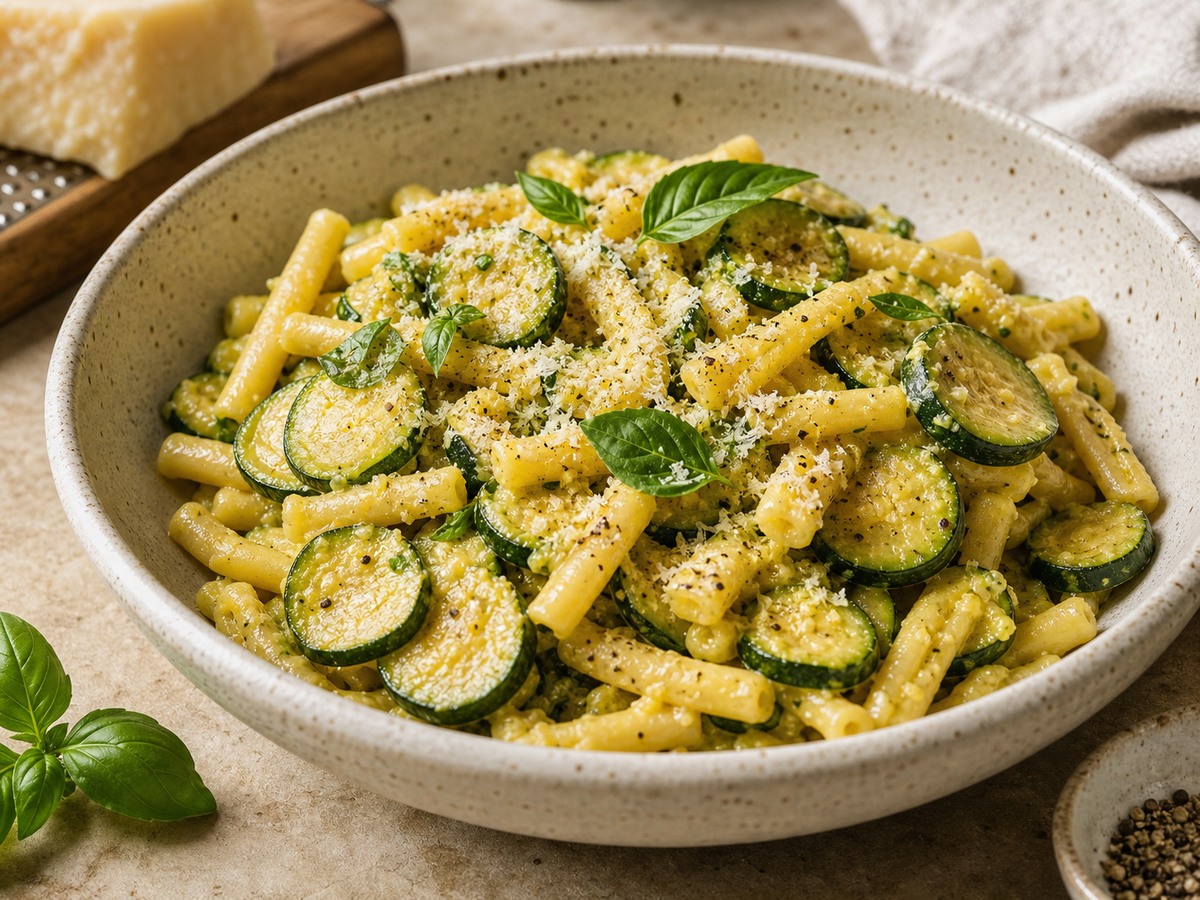
There is a family of Neapolitan pasta dishes that occupies a space adjacent to carbonara without ever being called that — preparations where egg and cheese are folded into hot pasta off the heat, where the residual temperature does the cooking, where the goal is a creamy coating that is neither runny nor scrambled but something in between. Pasta e piselli, pasta e fagioli with egg, pasta e patate — these dishes share a technique without sharing a name. This is the zucchini version, and it is one of the most satisfying and refreshing of the group.
The connection to spaghetti alla Nerano is clear: the Nerano — from the village near Sorrento where it was invented or at least perfected — is zucchini fried in oil until golden, tossed with spaghetti, finished with provolone del Monaco and basil. No egg. The Campanian peasant version adds the egg, omits the frying step in favor of slow cooking in olive oil until the zucchini softens and sweetens, and uses whatever short pasta or broken spaghetti is in the house. The result is richer, more substantial, more filling — the egg adds protein and the creamy-scrambled texture that distinguishes this from a simple pasta with vegetables.
The texture goal — named explicitly in the infographic as "not carbonara" — is the creamy-scrambled register: the egg should set gently around the pasta and zucchini, becoming soft and yielding rather than liquid or fully cooked. This requires heat management: the pasta finishes cooking in the zucchini liquid (the risottata method, adding water ladle by ladle), and then the heat goes off before the egg mixture goes in. Thirty seconds of vigorous stirring, and the residual heat of the pasta and pan does the rest. Too much heat produces scrambled eggs in pasta, which is not the dish. Too little produces a raw egg coating, which is also not the dish. The window is narrow and comes with practice.
The Campanian zucchini matters here. The light green, tender zucchini of Campania — smaller, less watery than the large dark variety more common in supermarkets — cook faster, release less water, and have a sweeter, more delicate flavor that works with the egg without competing. If you can find them, use them. If not, use the smallest, firmest zucchini available and cut them into small cubes that will cook to tenderness without becoming watery.
Eggs, zucchini, pasta — why this combination is the most complete vegetarian bowl here
This dish is nutritionally one of the most complete in the collection for a vegetarian pasta — the combination of pasta (carbohydrate and some protein), egg (complete protein, choline, fat-soluble vitamins, lutein, zeaxanthin), Pecorino Romano (calcium, fat-soluble vitamins, glutamate, conjugated linoleic acid from sheep's milk), olive oil (oleic acid, phenolic antioxidants), and zucchini (vitamin C, potassium, folate, carotenoids) provides all macronutrient classes and a broad spectrum of micronutrients in a single bowl. The egg's role in this dish is both culinary and nutritional: the lecithin in egg yolks emulsifies the olive oil and pasta starch into a creamy sauce (the same emulsification mechanism as in carbonara and cacio e pepe), while the proteins begin to coagulate at approximately 63–65°C — which is why the off-heat technique works, and why precise temperature management is the skill the dish requires. Zucchini is one of the most nutritionally underrated vegetables — its carotenoid content (lutein and zeaxanthin principally, which accumulate in the retinal macular pigment) is meaningful per serving, and its folate content is significant for pregnant women and anyone with elevated homocysteine. The Pecorino Romano, made from sheep's milk, has a fatty acid profile distinctly different from cow's milk cheese: higher in conjugated linoleic acid (CLA, associated with anti-inflammatory and body-composition benefits in the literature), branched-chain fatty acids, and short-chain fatty acids including butyrate — the primary fuel of colonocytes and a key regulator of gut barrier integrity. The risottata cooking method — pasta cooked in the vegetable liquid with water added gradually — retains the water-soluble vitamins and potassium leached from the zucchini during cooking, rather than discarding them in pasta water. This is the same nutritional argument made in the minestrone, cavolfiore, and zucca posts: cooking the pasta in the vegetable is nutritionally superior to cooking them separately.
The recipe
Ingredients · serves 4
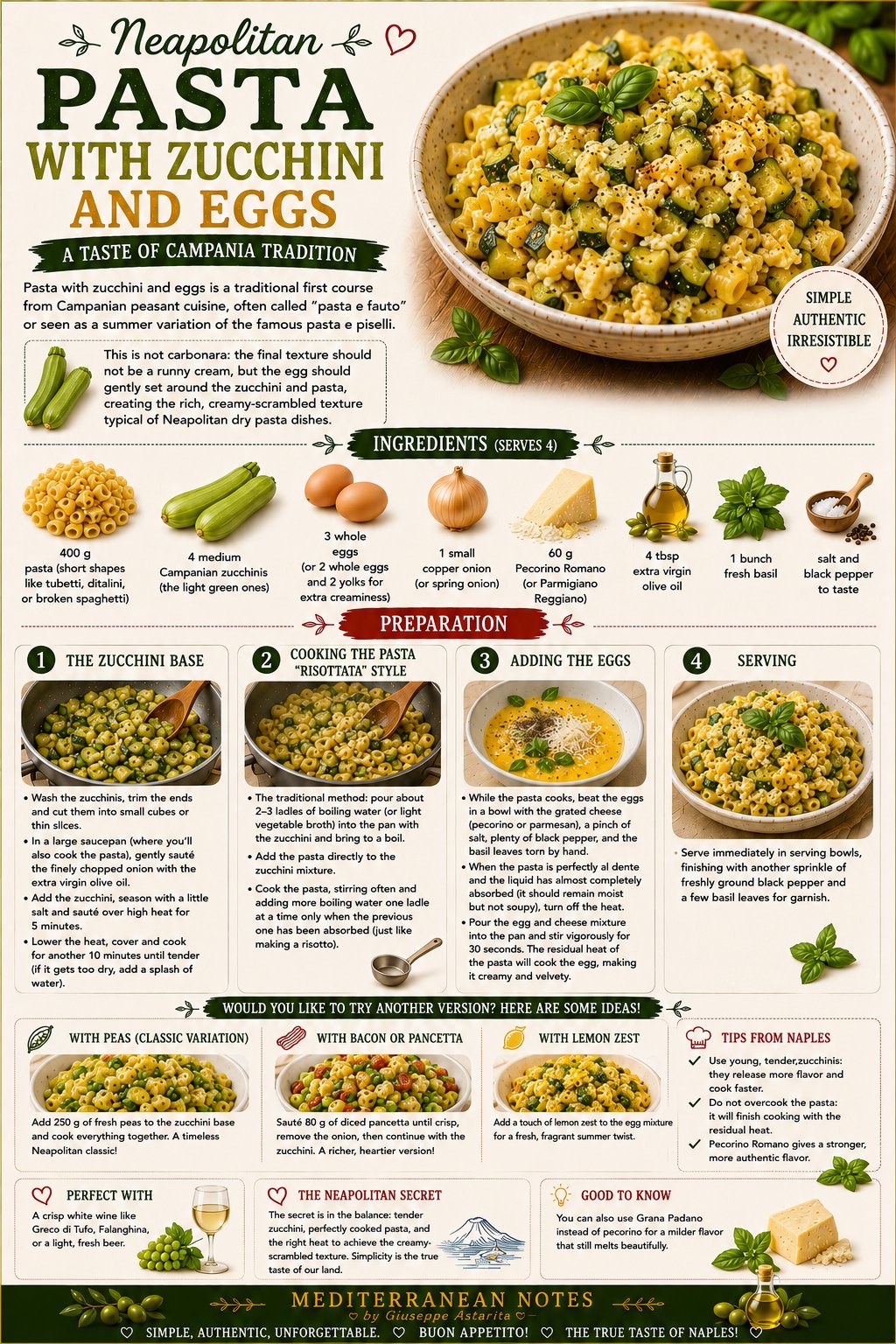
Method
Cook the zucchini base. In a large, wide saucepan (the pan you will finish the pasta in), heat the olive oil over medium heat. Sauté the finely chopped onion until soft and translucent. Add the zucchini cubes, season with a little salt, and cook over high heat for 5 minutes, stirring often, until lightly golden. Lower the heat, cover, and cook for another 10 minutes until very tender. Add a splash of water if the pan gets too dry.
Use young, small zucchini — they have less water and more flavor. Large dark zucchini release too much liquid and the texture suffers.
Cook the pasta risottata. Add 2–3 ladles of boiling water to the zucchini pan. Add the pasta directly. Cook over medium heat, stirring frequently, adding boiling water one ladle at a time as it is absorbed — exactly like making a risotto. The pasta absorbs the zucchini flavor as it cooks, and the starch thickens the liquid into a creamy base. Cook until the pasta is very al dente — it will finish with the egg.
The liquid should be almost completely absorbed by the time the pasta is nearly cooked — slightly moist but not soupy. This is the moment to turn off the heat.
Add the eggs — off the heat. Beat the eggs in a bowl with the grated Pecorino, a pinch of salt, and plenty of black pepper. Tear in the basil leaves. Turn off the heat completely. Pour the egg mixture into the pan and stir vigorously for 30 seconds — the residual heat of the pasta and pan will cook the egg gently, producing the creamy-scrambled texture. The egg should set softly around the pasta, not scramble into pieces. If the pan is too hot, lift it off the hob; if too cool, put it back briefly.
This is the carbonara moment. Speed and confidence: stir continuously, assess the texture as you go, and stop when the egg has just set. Ten seconds too long and it scrambles. The window is real and narrow.
Serve immediately. Portion into warm bowls. Finish with an extra dusting of Pecorino or Parmigiano, freshly ground black pepper, and a few more torn basil leaves. Eat immediately — this dish does not wait and does not reheat well. The egg continues to set as it cools.
Variations
Con i piselli — the Neapolitan classic
Add 250 g of fresh or frozen peas to the zucchini base and cook everything together. Pasta e piselli with egg is an older Neapolitan preparation than the zucchini version — the peas add sweetness and a slightly different texture, and the color becomes more vibrantly green. Same egg finish, same off-heat technique.
Con la pancetta — richer
Sauté 80 g of diced pancetta until lightly golden and crispy before adding the onion. Remove the pancetta and set aside. Continue with the zucchini. Add the pancetta back when the egg goes in. The fat from the pancetta contributes to the creaminess of the egg sauce. Closer to carbonara in spirit, still not carbonara.
Con il limone — summer version
Add a little lemon zest to the egg mixture before folding it in. The lemon lifts the richness of the egg and Pecorino and makes the dish taste lighter and more appropriate for very hot days. A small detail with a significant effect. Do not add juice — only zest, which provides the aromatic compound without the acidity.
Alla Nerano — without egg
The Nerano version without egg: fry the zucchini slices in olive oil until deep golden (not sautéed — fried). Toss with spaghetti, provolone del Monaco or scamorza, olive oil from the frying, and fresh basil. The melting cheese replaces the egg as the binding element. A different dish and a magnificent one — the fried zucchini flavor is more intense and the cheese more prominent.
Buon appetito.