Pasta e Piselli
One pot. Six ingredients. Twenty minutes. And more molecular nutrition than most supplements.
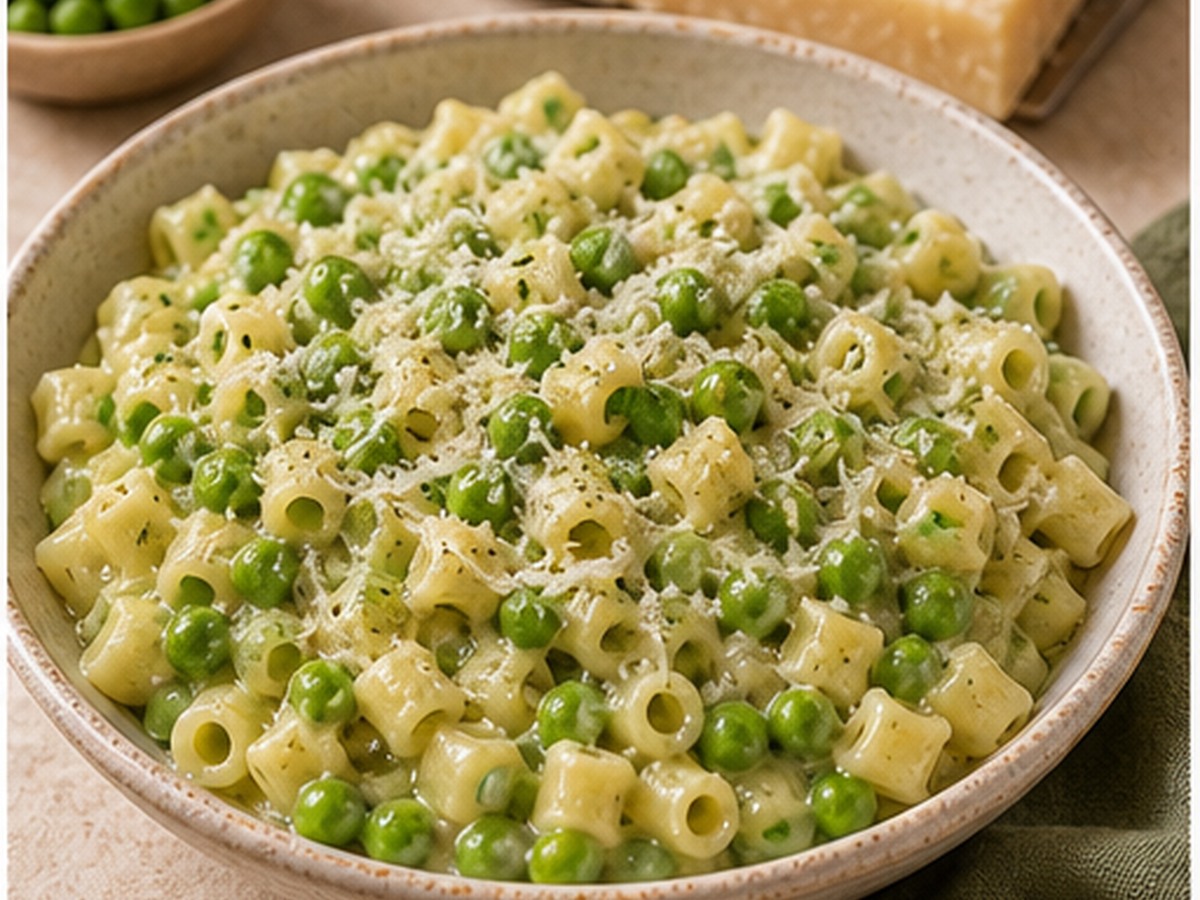
Pasta e Piselli is one of those dishes that every Neapolitan child grows up eating. It is not fancy. It requires almost nothing. And it is, by any honest measure, one of the most comforting things you can put in a bowl.
The version from Campania — the version I grew up with — uses ditalini, frozen peas, olive oil, onion, and Pecorino Romano. The trick that makes it extraordinary is blending half the peas into a thick green cream that coats every piece of pasta. One pot. Twenty minutes. Science in every ingredient.
There was work before the pasta, and the work was given to children. Shelling fresh peas — sitting with a bowl in your lap, splitting the pods along their seam, running your thumb down the inside to send the peas rolling out — was a task given to whoever was small and available and could be kept occupied near the kitchen without getting in the way. The pile of empty pods grew. The bowl of peas filled. And you ate the dish afterwards with a slightly different relationship to it, knowing what had gone in and how long the pods had taken. It was not a chore, exactly. It was an invitation to participate — a slow induction into the kitchen's logic before you were old enough to be trusted with the stove.
My children went to pick snow peas and snap peas today, coming back with a bag of them, pulling them off the plant one by one. They will eat pasta e piselli tonight — it is already one of their favorites — and they did enough of the work to understand that the peas did not appear in the bowl by themselves. This is the same lesson, transferred across an ocean and thirty years, and it still works the same way. The bowl fills. You eat what you helped make. You understand it differently.
Not all peas are the same thing, and it is worth knowing the difference. Sweet peas — the classic Italian piselli — are the round green balls inside a tough pod that you do not eat. You shell them; the pod goes. Snow peas (taccole) are flat and thin, mostly pod, eaten whole — the peas inside are tiny and barely formed. Snap peas are the plump round ones where pod and peas are both good: you eat the whole thing, raw or cooked, and they snap cleanly when bent. In Italian both snow and snap peas fall under mangiatutto — eat everything. The recipe here works with any of them, but sweet peas, shelled, give the creamiest result when blended.
Some of those peas never reached the pot. Snap peas and snow peas eaten straight off the plant, or straight from the bag on the way home — raw, cold, crunchy — are one of the small unrepeatable pleasures of the season. Sweet peas too, popped from the pod and eaten one by one while shelling. The sweetness of a freshly picked pea is not the same thing as the sweetness of a pea that has been sitting for two days; the sugar converts to starch quickly after picking, which is why frozen peas — blanched and frozen within hours of harvest — are often better than "fresh" peas at a supermarket. If you grow your own or have access to peas picked the same day, use them immediately. Otherwise, frozen is the honest choice.
The pods of snap peas and snow peas — tender, thin-walled, still bright green — were not always thrown away. Blended lightly with a little onion and water, not too much, just enough to break them down, they give a pale green liquid with concentrated pea flavor that can be added to the cooking water for the pasta. Sweet pea shells are too fibrous for this — their outer skin is tough and the result would be stringy and bitter. But the thin pods of the mangiatutto varieties, when fresh and young, have enough delicate sweetness to be worth using. It is the kind of thing that was never written in a recipe, just done, because nothing soft and green and still good went to waste.
Unshelled in pods: refrigerate in a bag, use within 2–3 days. Shelled: refrigerate and use within 1–2 days — sugar converts to starch fast once shelled. Best long-term: blanch 90 seconds in boiling water, cool immediately in ice water, freeze. Better than most bought frozen. Snap and snow peas: refrigerate in a bag, use within 3–5 days; eat raw while they are still crisp.
Ingredients · serves 4
Method
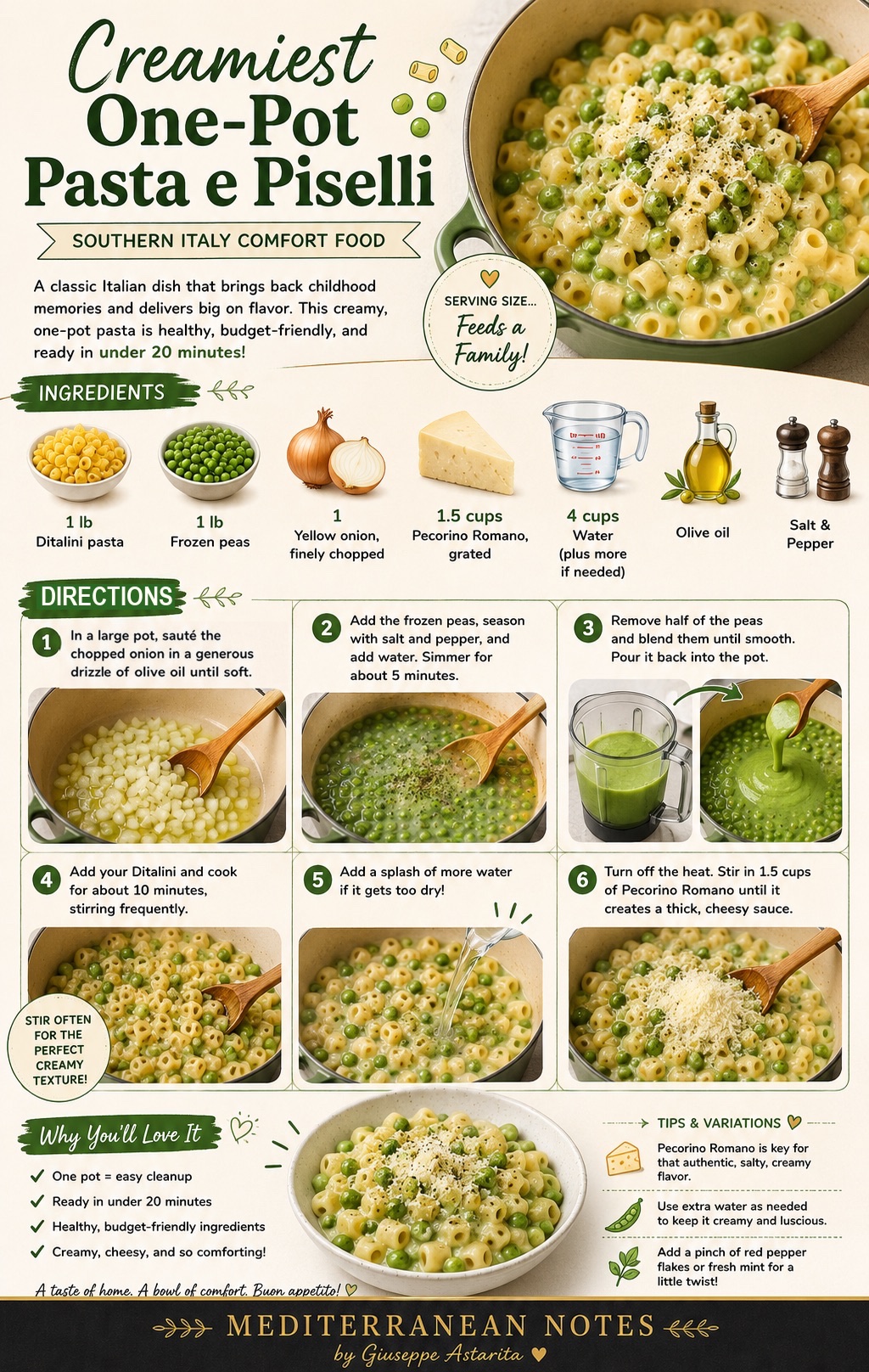
In a large pot, heat a generous drizzle of extra virgin olive oil over medium heat. Add the finely chopped onion and sauté until soft and translucent, about 5–7 minutes.
Don't rush this — a well-cooked onion is the flavor foundation of the whole dish.
Add the frozen peas. Season with salt and black pepper. Pour in 4 cups of water. Bring to a simmer and cook for about 5 minutes until the peas are tender.
Remove about half the peas with a ladle and blend them until completely smooth — either in a blender or with an immersion blender. Pour the green cream back into the pot.
This is what makes it creamy without any cream. Don't skip it.
Add the ditalini directly to the pot. Cook over medium heat, stirring frequently, for about 10 minutes. The pasta will absorb the liquid and release starch, thickening everything naturally.
Add a splash of water if it gets too thick — it should be all'onda, almost wavy and loose.
Turn off the heat. Stir in the grated Pecorino Romano until it melts into a thick, glossy, salty sauce that coats every piece of pasta.
Always off the heat before the cheese — adding it to boiling pasta breaks the proteins and makes it grainy.
Serve immediately in shallow bowls. Finish with a drizzle of your best extra virgin olive oil, a twist of black pepper, and extra Pecorino if you like.
Eat it hot — it thickens considerably as it sits.
Buon appetito.