Spaghetti alla Nerano: fried zucchini, Provolone, and the scarpetta at the end
Fried zucchini, Provolone del Monaco, butter, basil, and abundant starchy pasta water — tossed until silky and green-tinged and inseparable. A dish from a small village on the Sorrento peninsula that somehow traveled the world. The olive oil and zucchini left in the plate at the end were cleaned with bread. The plate ended clean. This was mandatory.
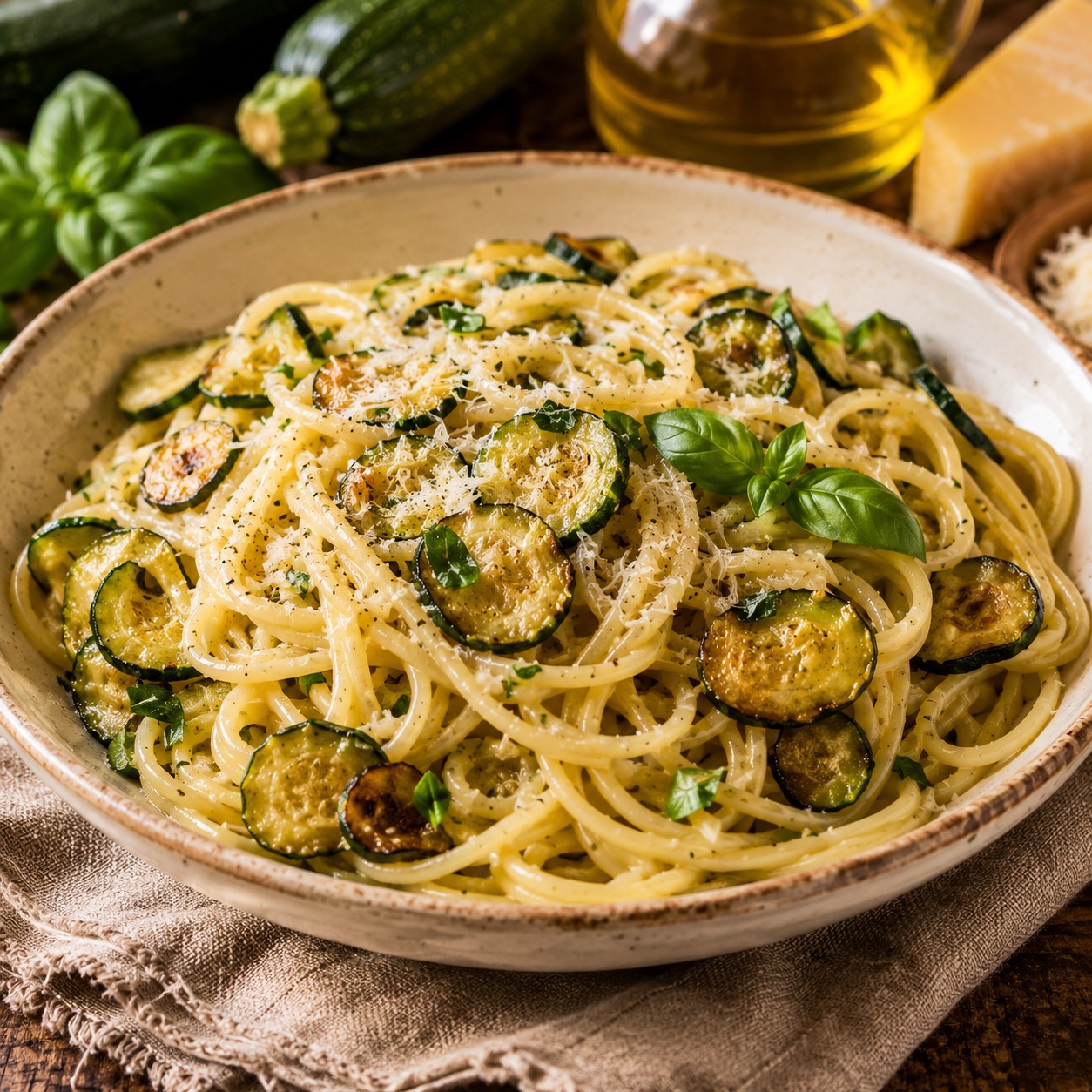
Nerano is a small fishing village on the Sorrento peninsula, at the tip of the land that separates the Gulf of Naples from the Gulf of Salerno. In the 1950s, a restaurant there called Maria Grazia — still open, still serving the same dish — invented or perfected the spaghetti that would eventually become one of the most talked-about pasta dishes in Campania and, after Stanley Tucci included it in his television series Searching for Italy, in the English-speaking world as well. The dish is not complicated. It is fried zucchini, Provolone del Monaco, butter, basil, and pasta water. The technique that makes it is the vigorous mantecatura — the tossing — that emulsifies the fat and starch into a sauce that coats the spaghetti completely and turns the whole bowl a pale, beautiful green-gold.
The frying is the step that distinguishes this from every other zucchini pasta. The zucchini are sliced thin — 2–3 mm — and fried in abundant olive oil until golden and lightly crispy at the edges. This develops Maillard flavors that cannot be produced by sautéing: the caramelized, slightly nutty sweetness of properly fried zucchini is different from the flavor of steamed or sautéed zucchini in a way that is fundamental to the dish. The frying oil — infused with zucchini flavor and color — is also used in the final sauce, which is why the color of the finished spaghetti has that particular green-gold tinge.
The Provolone del Monaco is a semi-aged cow's milk cheese from the Lattari mountains above the Amalfi and Sorrento coasts — piquant, slightly sharp, with a flavor that is more complex and assertive than the mild provolone found elsewhere. It is, with the San Marzano tomato and the mozzarella di bufala, one of the three DOP products most strongly identified with the area around Naples. Outside Campania it is difficult to find, and the substitution of Parmigiano and Pecorino Romano together (as in the pasta con mozzarella e basilico and the pasta con zucchini e uova) produces a very good approximation — the Pecorino providing sharpness, the Parmigiano providing depth and glutamate. A small amount of unsalted butter goes in at the end alongside the cheese and pasta water, which provides additional fat for the emulsification and a slight richness that rounds the sauce.
The scarpetta — from scarpa, shoe — is the Italian practice of cleaning a plate with bread at the end of a meal, sweeping up the remaining sauce and oil. It is considered informal, and in formal settings it is not done. In a family kitchen, on a Sunday at home with a bowl of spaghetti alla Nerano in front of you, it is not informal — it is the correct conclusion to the meal. The olive oil at the bottom of the bowl, infused with fried zucchini and Provolone and basil, is too good to leave. The bread exists for this purpose.
Pasta starch, cheese fat, and the emulsification behind the Nerano cream
The emulsification that produces the silky, creamy sauce of the spaghetti alla Nerano is a classic pasta-finishing technique that relies on the interaction between pasta starch, cheese fat, and the mechanical energy of vigorous tossing. When the drained spaghetti is added to the pan with the fried zucchini and a quantity of reserved pasta water is added gradually, the amylose and amylopectin from the pasta starch form a colloidal network in the liquid. The butter and cheese fat are then dispersed into this starch network through vigorous agitation — the tossing motion — producing an oil-in-water emulsion that is stable at serving temperature. This is the same mechanism as cacio e pepe and carbonara: pasta starch as emulsifier, mechanical energy as the driving force, temperature management as the critical variable. The technique fails when the pan is too hot (fat separates), too cold (starch does not hydrate properly), or not tossed vigorously enough (emulsion does not form). The green-gold color of the finished dish comes from the chlorophyll leached from the zucchini skin during frying into the olive oil, which then transfers to the sauce during the mantecatura. Chlorophyll in olive oil is stable at moderate temperatures but degrades rapidly with sustained high heat — which is why the final tossing is done at medium-high heat rather than high heat, and why the dish retains its color when made correctly. Nutritionally, the fried zucchini contribute potassium, vitamin C (partially reduced by frying), carotenoids (lutein, zeaxanthin, beta-carotene), and vitamin K. The Provolone del Monaco or Parmigiano-Pecorino blend provides calcium, fat-soluble vitamins, glutamate, and protein. The olive oil — used generously in frying and in the sauce — contributes oleic acid, vitamin E, and phenolic antioxidants. The butter contributes fat-soluble vitamins A and K2 and saturated fatty acids including butyrate precursors. The pasta water's starch contributes slowly digestible carbohydrate and lowers the overall glycemic response relative to plain pasta water. This is, in the end, a nutritionally complete first course that tastes like the result of considerably more effort and considerably more ingredients than it actually requires.
The recipe
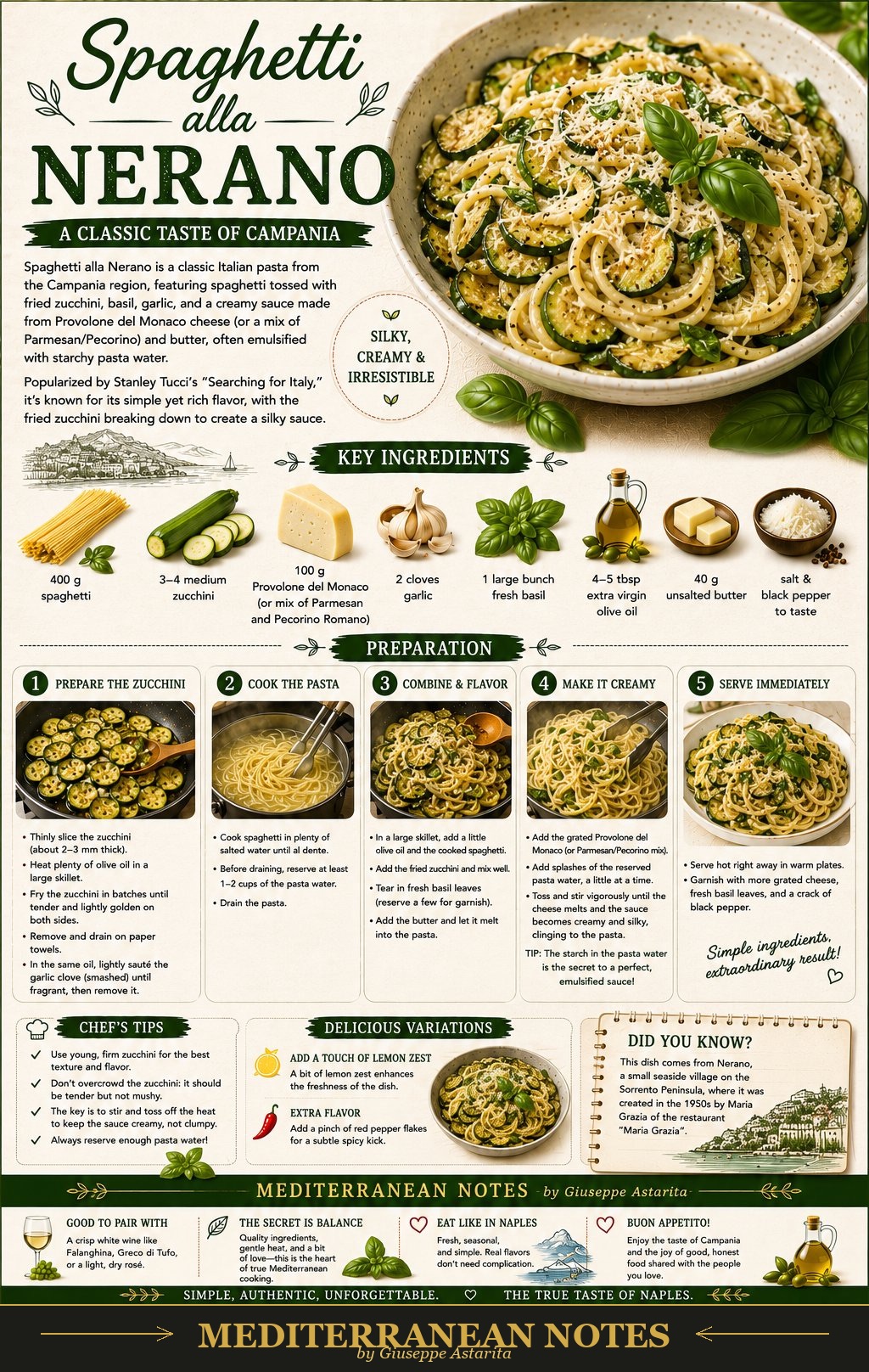
Ingredients · serves 4
Method
Fry the zucchini. Heat a generous amount of olive oil in a large skillet over medium-high heat. Add the smashed garlic cloves and let them flavor the oil for 1–2 minutes, then remove. Fry the zucchini slices in batches — do not crowd the pan — until tender and golden at the edges, about 2–3 minutes per batch. Drain on paper towels. Season lightly with salt. Reserve the frying oil.
Do not rush this step or crowd the pan. Crowded zucchini steam rather than fry and never develop the flavor that defines the dish. Fry in batches, take your time.
Cook the pasta. Bring a large pot of well-salted water to a boil and cook the spaghetti until very al dente — 2 minutes before the package time. Before draining, reserve at least 1–2 cups of pasta water. Drain.
The pasta water is the most important ingredient in the sauce. Reserve more than you think you need. Starchy, hot, and abundant — you will use it.
Combine in the pan. In a large skillet (or the same frying pan with a little of the reserved zucchini oil), add the drained spaghetti and the fried zucchini. Tear in a generous handful of basil leaves. Add the cold butter in cubes. Begin adding pasta water a ladle at a time, tossing vigorously — the tossing motion is what creates the emulsion. Keep tossing and adding water until the pasta is al dente and the sauce is creamy and coats every strand.
Add the cheese and mantecare. Remove from the heat or reduce to very low. Add the grated Provolone del Monaco (or Parmigiano-Pecorino mix) and continue tossing vigorously with more pasta water as needed. The sauce should become silky, creamy, and cling to the spaghetti — pale green-gold, glossy. Taste for salt. A final crack of black pepper.
Add the cheese off or away from high heat to prevent it from clumping. The starch in the pasta water keeps the emulsion stable — if the sauce breaks, add a splash of hot pasta water and toss again. It recovers.
Serve immediately. Into warm bowls, with more grated cheese, fresh basil leaves, and a crack of black pepper. The spaghetti should be stretchy and silky and the zucchini soft and sweet inside their slightly golden surface. Eat immediately. And when the pasta is finished — the scarpetta with good bread, sweeping up the oil and the last fragments of zucchini from the bowl. The plate ends clean.
This dish was popularized internationally by Stanley Tucci's Searching for Italy series, which devoted time to the original restaurant in Nerano. The attention was deserved — but the dish existed in Campanian kitchens long before the television camera found it, and the version made at home with good summer zucchini and patience is as good as anything served in a restaurant. The scarpetta at the end is not optional.
Buon appetito — e buona scarpetta.