Merluzzo all'insalata
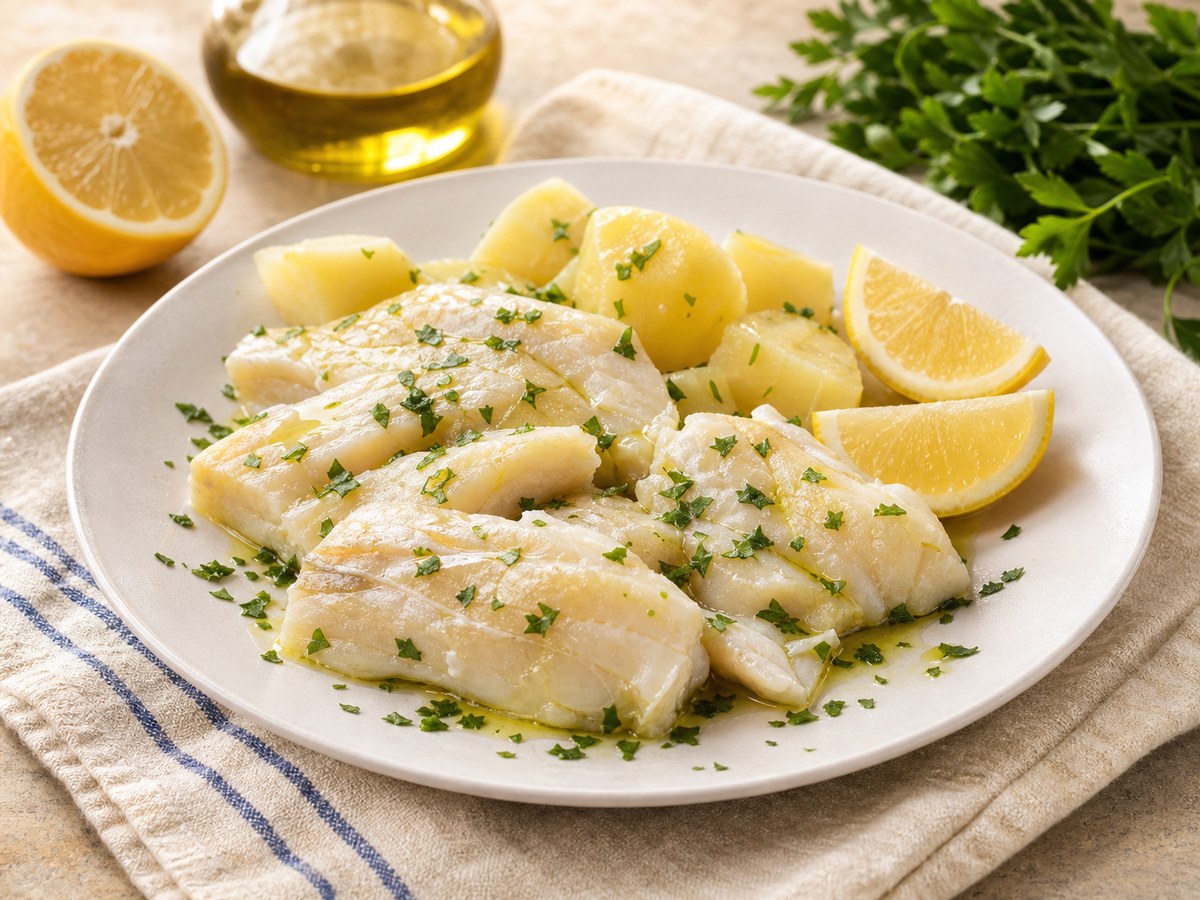
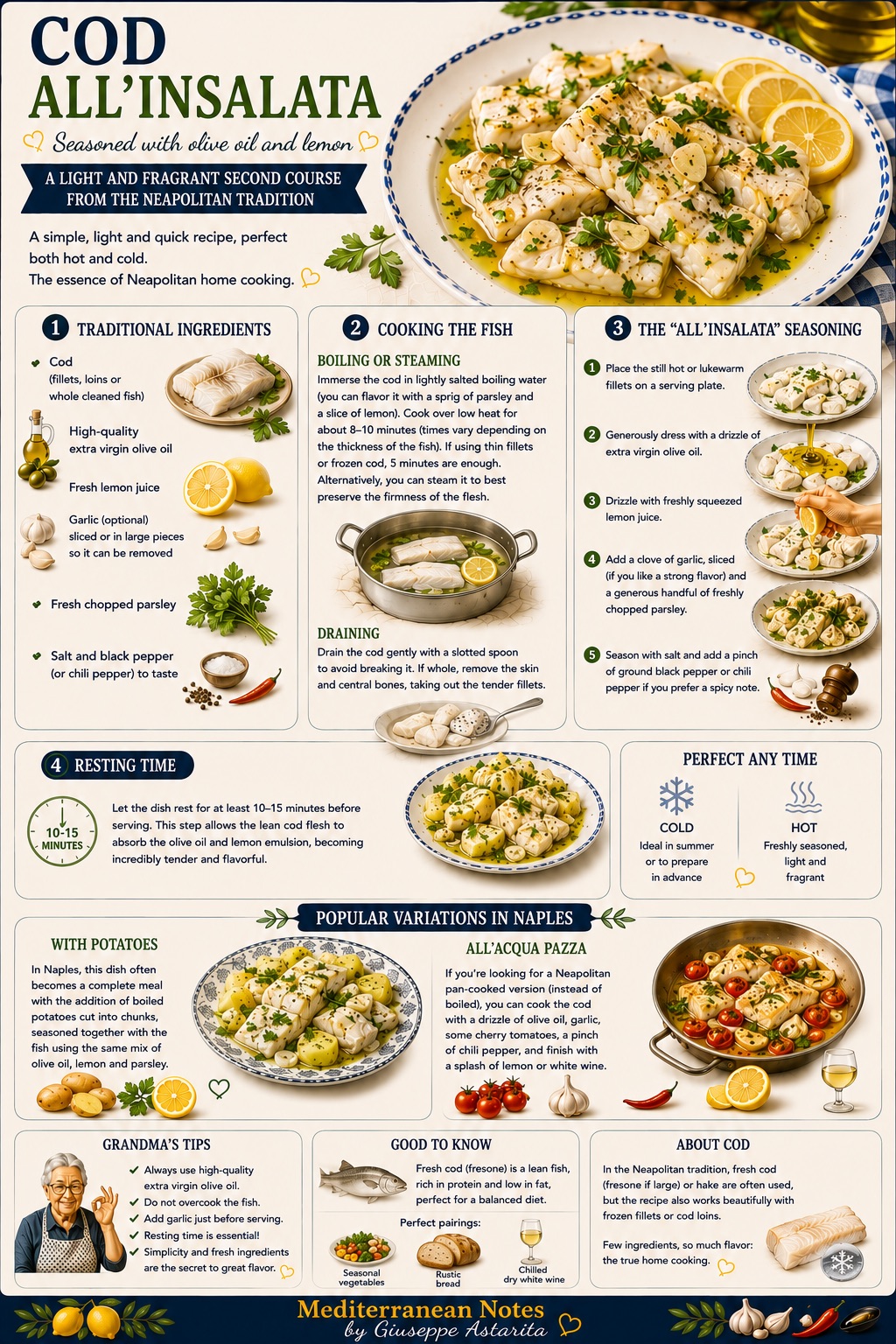
Poached in lightly salted water, lifted out carefully, dressed warm with a generous pour of extra-virgin olive oil, fresh lemon, and parsley. The same fish as baccalà — bought fresh instead of salted. No soaking, no waiting. On the table in fifteen minutes.
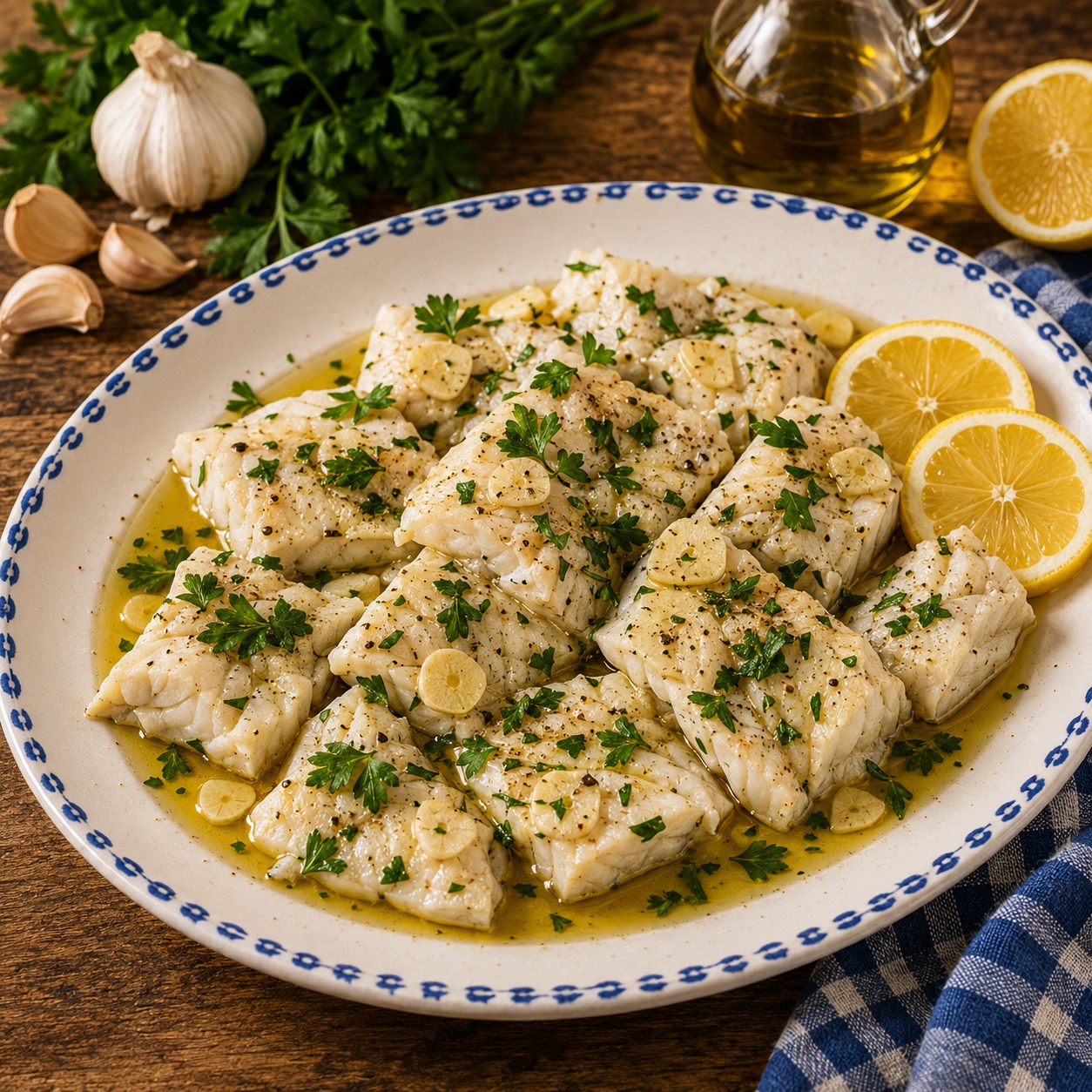
My mother bought merluzzo the same way she bought every other fish — at the market on the days when it looked right, which meant the eyes were clear and the flesh was firm and it smelled of the sea rather than of fish. She used fresh fillets when they were available and frozen fillets when they were not, and she maintained no strong preference between them for this particular preparation. The dressing was what mattered, she said: good olive oil, a real lemon, enough parsley. The fish was the vehicle.
The connection to baccalà was one she made explicitly. Merluzzo and baccalà are the same animal — Atlantic cod, Gadus morhua — in different states. The baccalà has been heavily salted and dried, which transforms its protein structure and requires forty-eight hours of soaking before it is edible. The fresh merluzzo requires nothing except gentle poaching. The flavor relationship is there if you know to look for it: the same white, slightly flaky flesh, the same mild character that absorbs the olive oil and lemon dressing without competing. But the fresh fish is lighter, more delicate, ready in minutes. She made baccalà when there was time and planning; she made merluzzo when there was neither. On the baccalà pages the transformation is explained in detail. Here the fish arrives already itself, needing only to be cooked briefly and dressed well.
The all'insalata preparation — dressed like a salad, meaning with raw olive oil and lemon added after cooking rather than cooked into a sauce — is the simplest and most common version in Neapolitan home cooking. It works equally well with fresh or frozen fillets, warm or at room temperature, eaten immediately or cold from the refrigerator an hour later. The rest period of ten to fifteen minutes after dressing is not optional: the lean flesh of the merluzzo absorbs the oil and lemon emulsion as it cools, becoming more moist and flavored than it would be if eaten immediately. This is the step most people skip and the one that most improves the dish.
Why merluzzo and baccalà taste related — and what the olive oil dressing does to lean fish
Merluzzo (Gadus morhua, Atlantic cod) is an extremely lean white fish — typically less than 1g of fat per 100g of flesh, with almost all of it polyunsaturated. This leanness is what makes it leggero: it digests easily, it does not feel heavy, it is genuinely light in the stomach. It is also why the olive oil dressing matters structurally rather than just for flavor. Lean fish flesh has very little intrinsic fat to carry aromatic compounds and provide mouthfeel; the olive oil fills this role, coating the protein fibers and distributing the volatile aromatics from the lemon zest and parsley. Dressing while warm is important: the fish's residual heat keeps the olive oil fluid enough to penetrate the surface of the flesh rather than sitting on top. By the time the fish has cooled to room temperature, the oil has been partially absorbed — the flesh feels moister and tastes more integrated than undressed or cold-dressed fish. The lemon's citric acid modulates the perception of any residual fishiness by binding with trimethylamine compounds at the surface, and its volatile limonene compounds add the characteristic bright aromatic note. The ten-minute rest allows these processes to complete.
Preparation one — all'insalata
The classic. Poached, dressed warm, rested before serving. Works with fresh or frozen fillets. Eat warm, at room temperature, or cold.
Ingredients · serves 4
Method
Poach the fish. Bring a wide pan of lightly salted water to a gentle simmer — not a rolling boil. You can add a parsley stem and a slice of lemon to the water to perfume it. Lower the fillets in carefully. Cook at a gentle simmer for 8–10 minutes for thicker fillets, 5 minutes for thin or frozen ones. The fish is done when it turns opaque throughout and flakes when pressed gently at the thickest point.
Gentle simmer, not boiling. A full boil agitates the water and breaks the fillets apart. You want the fish to poach quietly.
Lift and drain carefully. Use a wide slotted spoon or fish spatula to lift the fillets from the water. They will be fragile. If cooking a whole cleaned merluzzo, remove the skin now and separate the flesh from the central bone. Arrange on a serving plate or shallow dish.
Dress while warm. Pour the olive oil generously over the still-warm fish. Squeeze the lemon over the top. Scatter the chopped parsley. Add the sliced garlic if using. Season with black pepper. Do not stir — let the dressing settle over the fish naturally.
Dress while warm. The fish absorbs the oil into its flesh while it still has residual heat. Cold fish only has oil sitting on its surface.
Rest for 10–15 minutes before serving. Cover loosely and leave at room temperature. This is when the flesh absorbs the emulsion and the flavors integrate. The dish can also be refrigerated at this point and eaten cold — it is genuinely good cold, with a small amount of fresh parsley added again at serving.
Preparation two — acqua pazza in padella
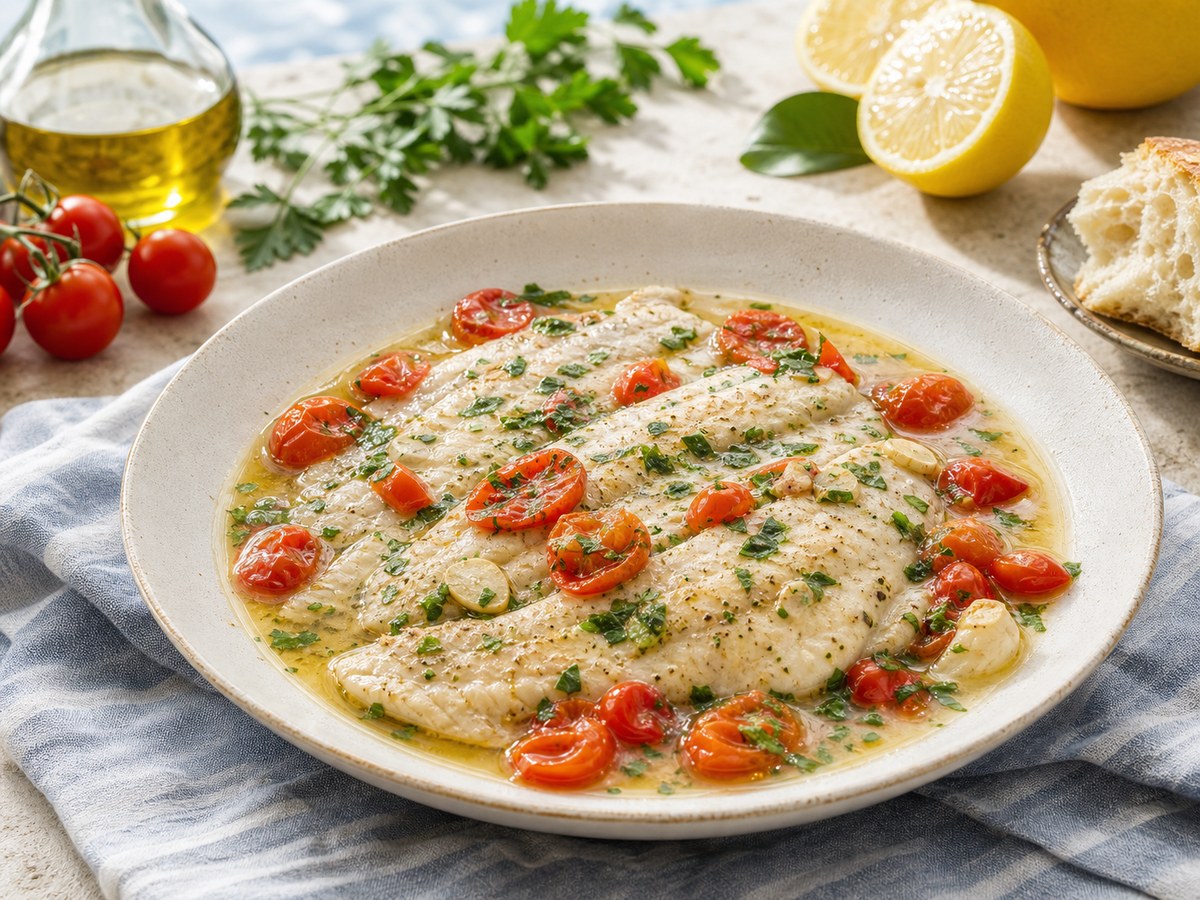
The pan version — garlic oil, a few cherry tomatoes, a splash of chili, white wine or lemon to finish. More assertive than the insalata version, ready in the same time.
Ingredients · serves 4
Method
Build the base. Heat the olive oil in a wide skillet over medium heat. Add the crushed garlic and chili if using. Infuse for 90 seconds until the garlic is golden — do not brown it. Remove the garlic. Add the cherry tomatoes if using and cook over high heat for 3 minutes, pressing them lightly to release their juices.
Add the fish. Season the fillets lightly. Lay them in the pan. Add the wine and let it evaporate for 1 minute. Cover with a lid and cook over medium-low heat for 6–8 minutes depending on thickness, until the flesh is just opaque throughout.
Merluzzo is more robust than sole and holds together better in the pan. But it can still overcook quickly — check at 6 minutes.
Finish and serve. Remove from heat. Scatter chopped fresh parsley over the top. Serve directly from the pan with the pan juices spooned over each portion. Crusty bread alongside to work through the sauce.
My mother made both versions depending on what the evening called for. The insalata version was the more frequent one — faster to prepare, lighter in the stomach, good cold the next day if there was any left. The acqua pazza version appeared when there were cherry tomatoes on the counter that needed using, or when the evening wanted something with more presence. Both are honest, quick, genuinely Neapolitan Friday fish. Neither requires skill beyond patience with the heat and a good bottle of olive oil.
Leggero, semplice, e buono — il pesce del venerdì.