Sogliola impanata
Sole in egg and breadcrumbs — baked in the oven or pan-fried in olive oil. The version my mother made most often, because it was the one everyone ate without any negotiation. The oven version was her preference: lighter, less oil in the pan, the crust still golden. A lemon at the table and nothing else needed.
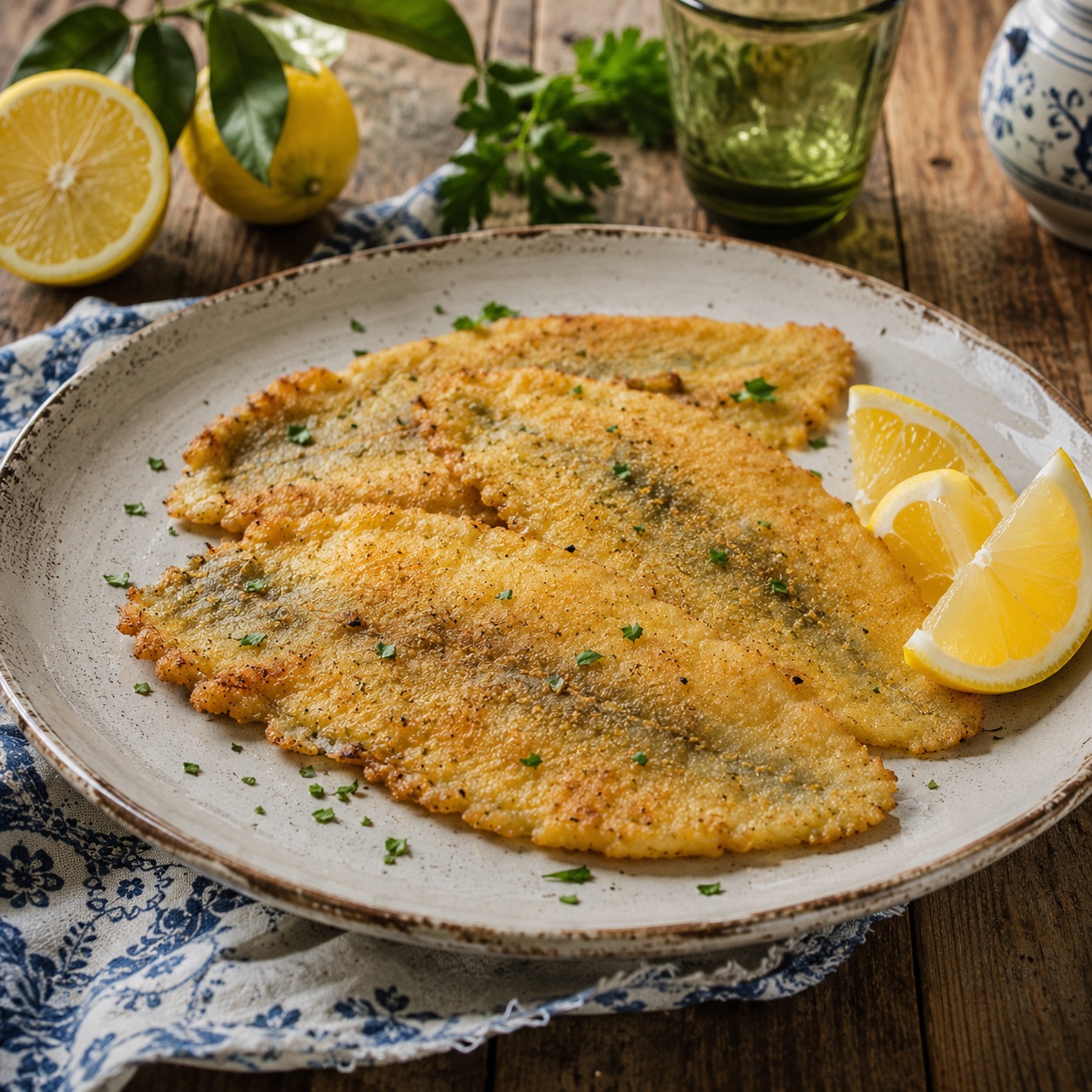
Of the three ways my mother cooked sole — in acqua pazza, all'alacciata with tomatoes and olives, and impanata — the impanata was the one that produced no objections from anyone at the table. The other versions required a certain disposition toward the fish, toward the clean mineral flavor of the acqua pazza or the assertive southern pantry of the alacciata. The impanata required nothing except an appetite. The breadcrumb crust absorbed the olive oil as it cooked, turned golden, and gave the delicate sole flesh a texture and presence it did not have in the other preparations. Children ate it. Guests who were uncertain about fish ate it. It was the reliable version.
My mother's preference was the oven. This was consistent with her approach to cooking generally — she was drawn to preparations that produced good results with less oil in the pan, that were less demanding to watch, that you could put in and attend to other things. The oven version of the sogliola impanata goes in at 180°C, a thread of olive oil brushed over the breadcrumb surface, and comes out in fifteen to twenty minutes with a crust that is genuinely golden if you have not cut the temperature. It is not identical to the pan-fried version — the pan-fried crust is more uneven, crispier at the edges, with more direct browning from the oil contact — but it is lighter and for everyday use it is the better choice. The pan-fried version is for when you want the crust more than you want the lightness.
The one technical requirement that applies to both versions is the same: dry the fillets thoroughly before they touch the egg. A wet fillet produces a wet breadcrumb coating that steams rather than crisps and slides off the fish. Pat dry with kitchen paper, season, then egg, then breadcrumb, pressing gently to make the coating adhere. From there the fish is forgiving — the breadcrumb protects the flesh from direct heat, slowing the cooking slightly and giving you a wider window than the uncoated preparations.
Why breadcrumbing protects the fish — and what the oven does differently from the pan
The breadcrumb and egg coating serves as an insulating layer around the sole fillet. Egg proteins coagulate at around 70°C, forming a semi-permeable membrane that holds the breadcrumb in place and moderates the rate of heat transfer to the fish beneath. The breadcrumbs themselves undergo Maillard browning — the reaction between amino acids in the egg proteins and reducing sugars in the flour component of the breadcrumb — producing the golden color and the toasted, savory aromatic compounds that constitute the flavor of a good crust. In the pan, this browning happens rapidly through direct oil contact; in the oven at 180°C, it happens more slowly and evenly across the surface. The practical difference: pan-frying gives a more uneven, slightly crispier crust with more browning on the contact side; oven-baking gives a more uniform crust with the fish retaining slightly more moisture. For a fish as delicate as sole, the oven's gentler and more even heat reduces the risk of the flesh drying before the crust is done. A brush of good olive oil over the surface before it goes in ensures the Maillard reaction proceeds — without fat, the surface dries and browns poorly.
Recipe — serves 4
Ingredients
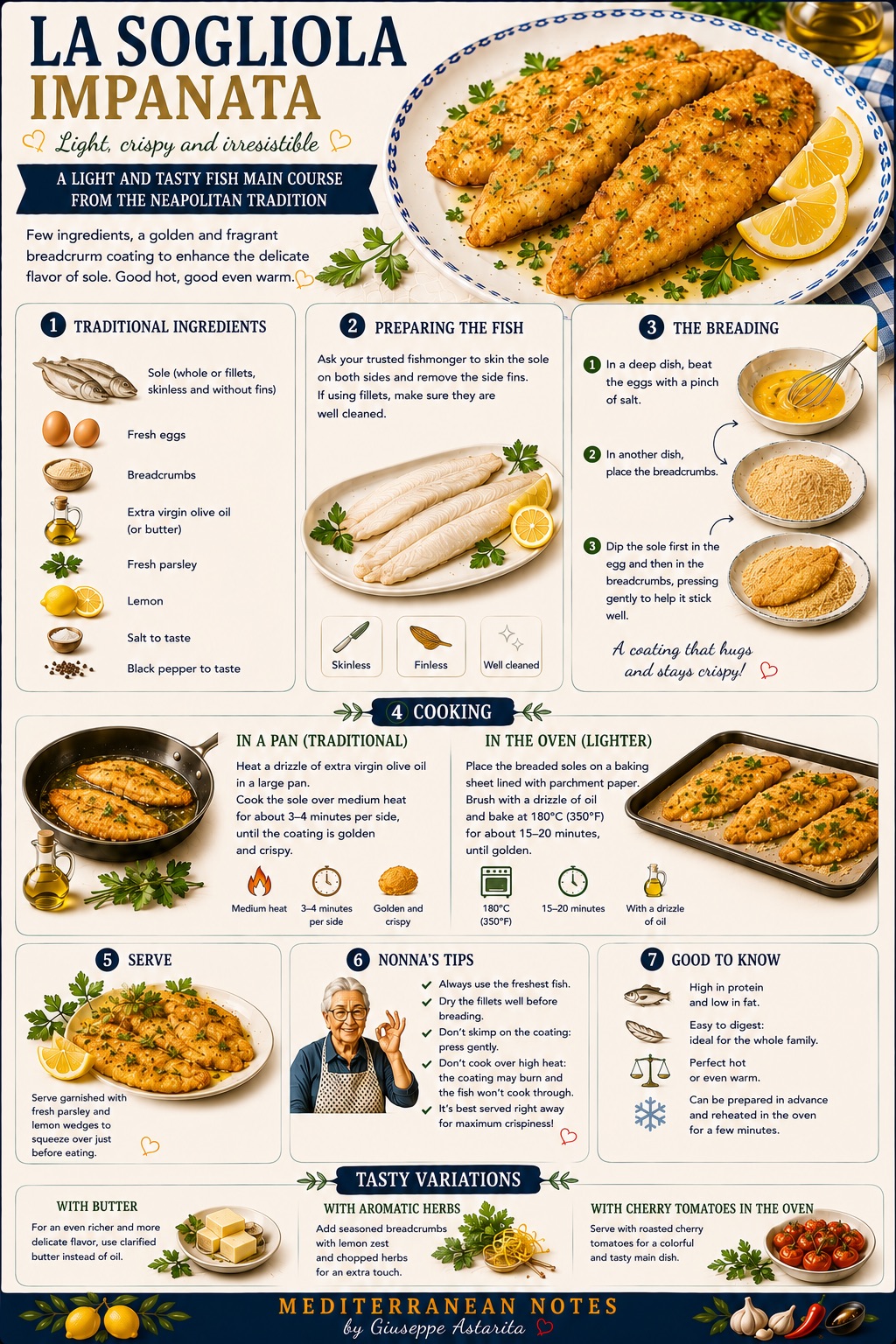
Method
Prepare the fillets. Ask your fishmonger to skin the sole on both sides and remove the lateral fins. If using fillets, ensure they are clean and dry. Pat each fillet firmly with kitchen paper until completely dry. Season lightly with salt and black pepper on both sides.
This step matters more than it looks. A wet fillet means a wet coating. Take the extra thirty seconds.
Bread the fillets. Set up two shallow dishes: one with the beaten eggs and a pinch of salt, one with the breadcrumbs. Dip each fillet first in the egg, letting the excess drip off, then press firmly into the breadcrumbs on both sides. The coating should be even and adhere completely. Set on a clean plate and do not stack them.
Press the breadcrumbs on — don't just dip. The pressure is what makes the coating stay on during cooking.
Oven method (my mother's preference). Preheat the oven to 180°C. Line a baking tray with parchment. Lay the breaded fillets on the tray without overlapping. Brush the surface of each fillet generously with olive oil — the breadcrumbs should look visibly oiled, not dry. Bake for 15–20 minutes until the crust is golden and the fish flakes easily when pressed at the thickest point. Do not turn them.
The olive oil brush is not optional. Without it the surface dries rather than browns and the Maillard reaction doesn't proceed properly. Be generous.
Pan method (for the golden crust). Heat 4–5 tbsp olive oil in a wide skillet over medium heat. The oil should be hot but not smoking. Add the fillets without crowding — work in batches if necessary. Cook 3–4 minutes on the first side without moving until the crust is deep golden. Turn carefully with a wide spatula and cook 2–3 minutes on the second side. Drain briefly on kitchen paper.
Don't move the fillets while the first side is cooking. Let the crust form completely before you attempt to turn them, or it will detach.
Serve. Transfer to a warm plate. Scatter chopped fresh parsley over the top. Serve immediately with lemon wedges at the table — each person squeezes their own. The lemon goes on at the table, not in the kitchen.
The sogliola impanata is good warm, and it is also good tepid — cooled to room temperature, with the crust slightly softened from resting, still with a squeeze of lemon. This is not a dish that needs to arrive piping hot. It is honest food, made well, eaten without ceremony. My mother served it with a simple green salad alongside and nothing else, and the combination was always exactly right.
Semplice, leggera, e sempre buona — così la faceva lei.