Insalata di Carote
Carrot salad, two traditional ways — raw and julienned with lemon, or boiled and marinated with garlic. The steady contorno beside the fish, and the coral pool the lemon left in the plate.
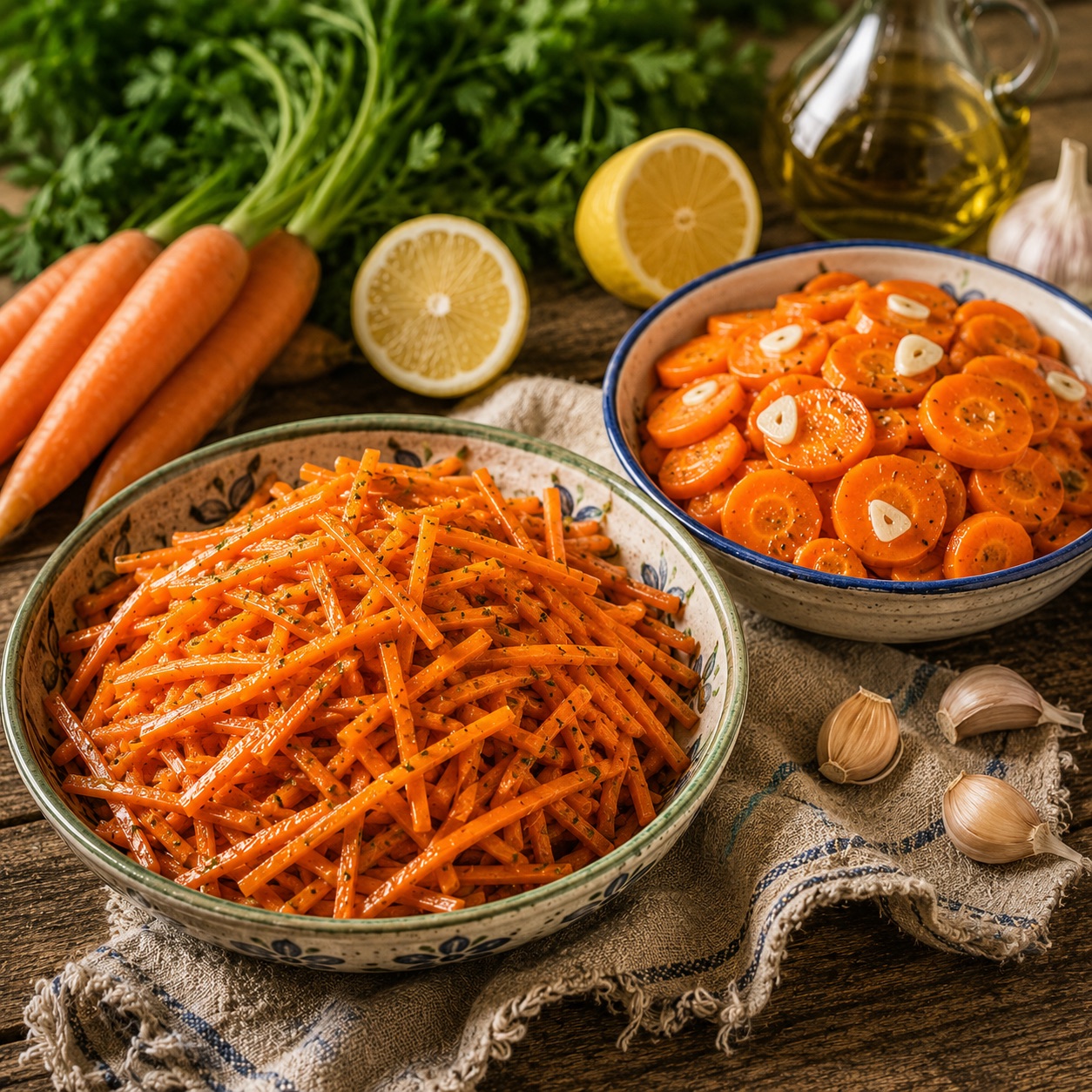
Carrots were one of the steady contorni of our table — not a dish anyone announced, just a bowl that appeared beside the fish more often than not. There were two versions, and the choice told you what kind of meal it was. For a big lunch with guests my mother often made the boiled one, the carrots sliced into rounds, simmered until soft and then marinated with garlic, vinegar and oil — a dish that could be made ahead and only got better while everyone arrived. But the everyday version, the one I remember most, was raw: carrots cut all'insalata, julienned thin, dressed with lemon or vinegar and good oil.
I remember the color. If the raw carrots sat a while in their dressing, the acid would draw the orange out of them and tint the oil and the plate — a faint coral pool the julienne left behind, the lemon or vinegar slowly melting the color into the dressing. As a child I noticed that before I noticed the taste. It is one of those small kitchen images that turns out to be chemistry, and that has stayed with me longer than most things I was told to remember.
Both versions are almost nothing: carrots, oil, acid, salt, a little parsley or garlic. That is the point of a contorno — it sits beside the grilled fish or the chicken and brightens the plate without competing. The raw one is faster, crunchier, a summer reflex; the boiled one is softer, sweeter, more aromatic, and the better choice when you want something waiting in the fridge before a crowd. We made both, depending on the day.
She always said so, and she had a point. Carrots are rich in beta-carotene, which the body converts into vitamin A — and vitamin A is the raw material the retina uses to make rhodopsin, the light-sensitive pigment behind night vision. A real deficiency genuinely causes night blindness, and reversing it restores sight; this is not folklore. (The one exaggeration is wartime British propaganda, which credited carrots for pilots' success to hide the invention of radar — but the underlying biology my mother was repeating is sound.)
And the way we ate them made the vitamin more available, not less. Beta-carotene is fat-soluble — which is also why the lemon left that coral pool in the plate: the pigment leaches into the olive oil, not the juice, tinting the dressing orange. That same oil is what lets the gut absorb the carotenoids in the first place. So dressing raw carrots in olive oil was not just flavor; it was, unknowingly, the step that delivered on my mother's promise about our eyes.
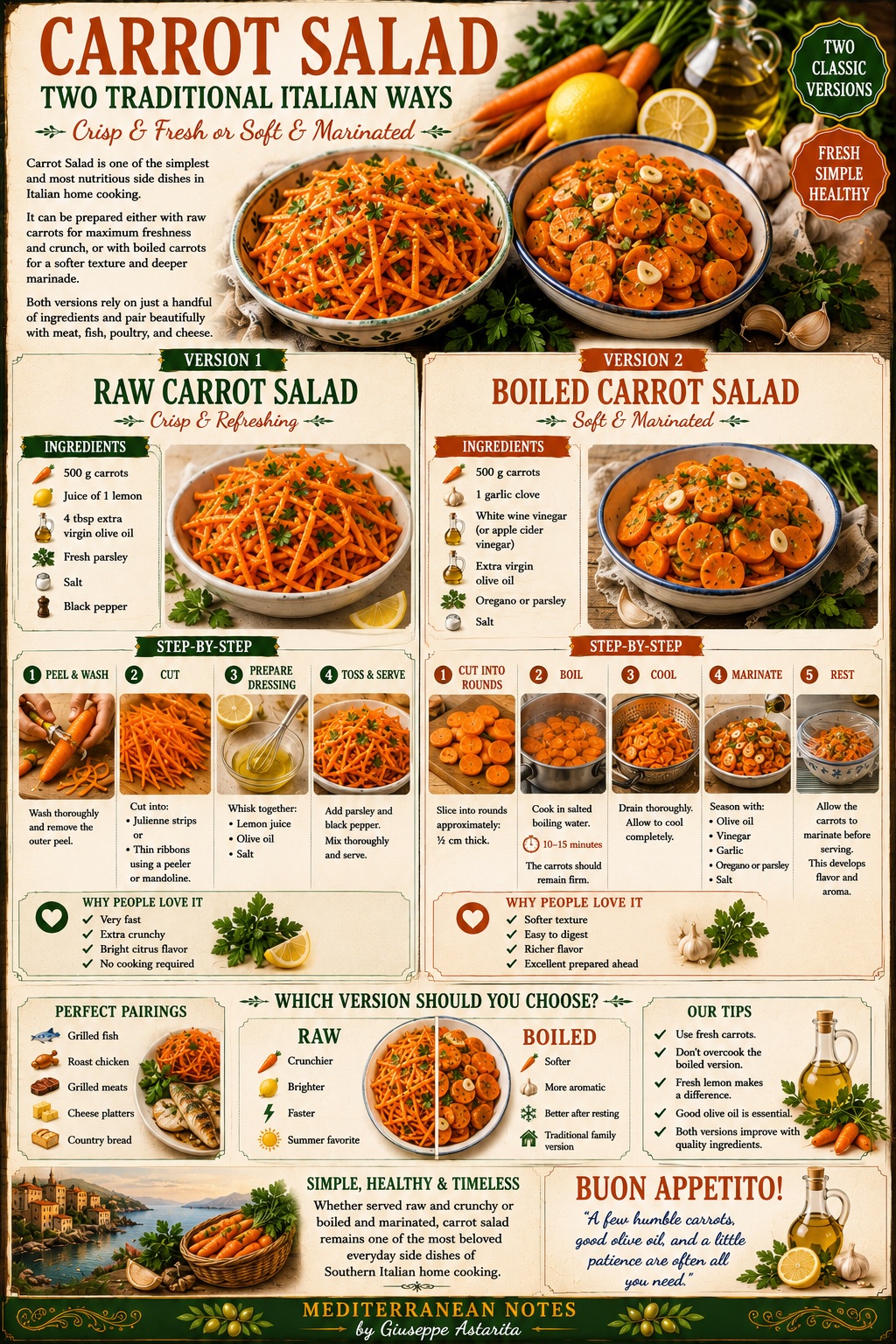
Insalata di Carote — raw julienne and boiled marinated carrot salad, both methods step by step.
Two Ways
Raw and crisp, or boiled and marinated — same four ingredients
Raw — insalata di carote alla julienne
- 500 g carrots, peeled
- Juice of 1 lemon (or white wine vinegar)
- 4 tbsp extra virgin olive oil
- Fresh parsley, salt, black pepper
Boiled — carote marinate alla napoletana
- 500 g carrots, peeled and sliced into ½ cm rounds
- 1 garlic clove, sliced
- White wine (or apple cider) vinegar
- Extra virgin olive oil, oregano or parsley, salt