Coniglio all'Ischitana
The signature dish of Ischia — rabbit stewed slowly in terracotta with cherry tomatoes, white wine and wild herbs. Two courses from one pot, and a child asleep at the table by the end.
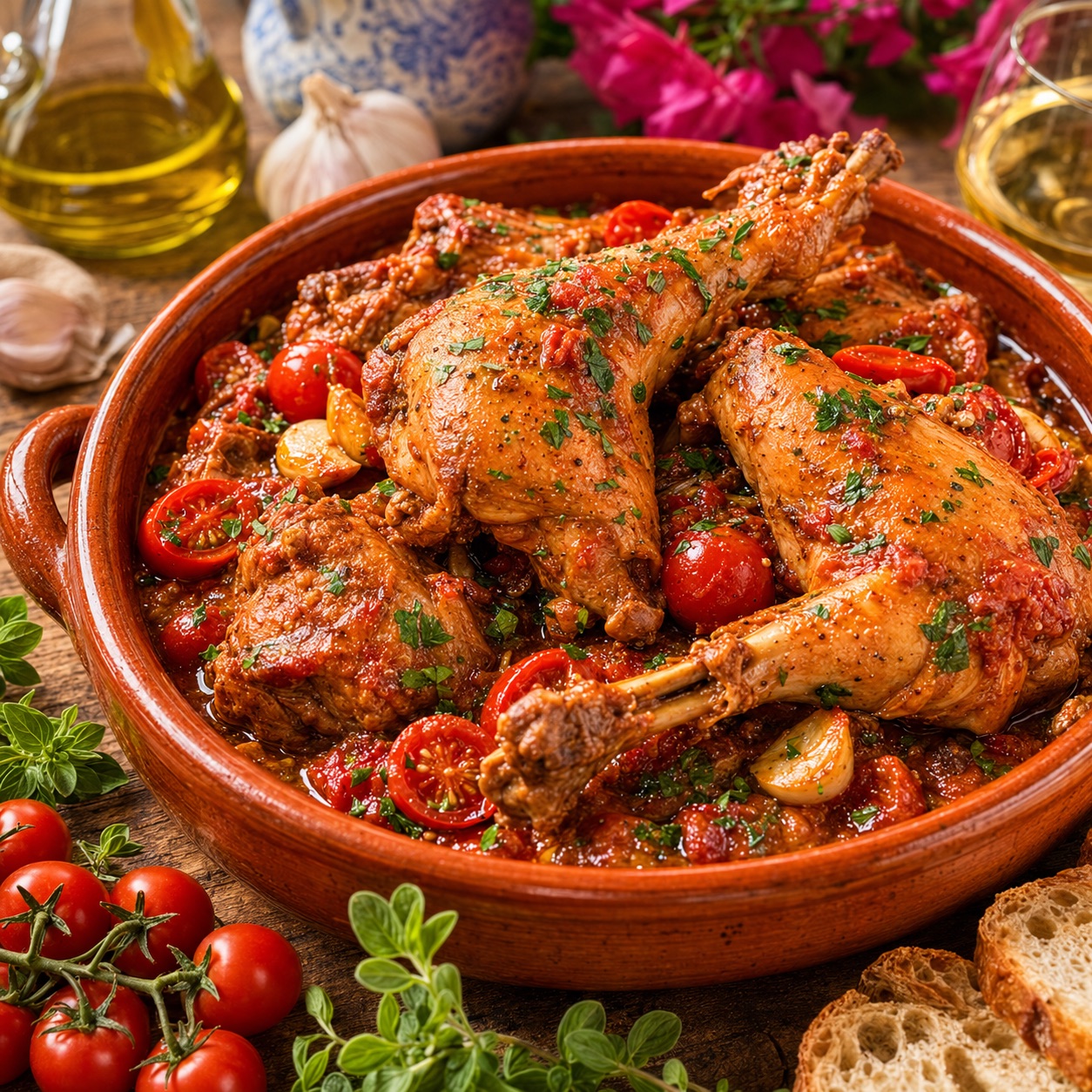
We went to Ischia at least once a year — family friends lived on the island, and in summer we took the ferry from Naples, which was half the event in itself. And on Ischia, the dish was rabbit. I know this would make many kids here in the US sad to hear: yes, we ate rabbit, cooked in various ways, and on the island it was simply what one ate — raised for generations in small hillside enclosures carved into the volcanic rock. Practically speaking it cooks much like chicken, with the difference that the meat is leaner; culturally speaking it is the culinary symbol of the island, and the coniglio all'ischitana is its definitive form.
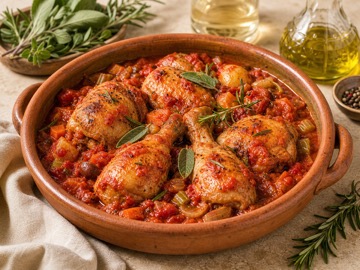
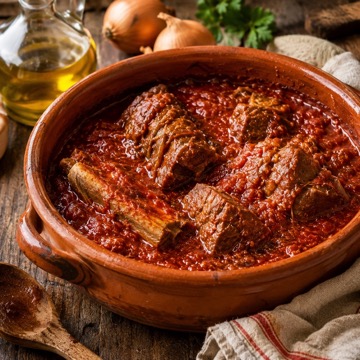
The dish is countryside cooking elevated by geography: locally raised rabbit browned in olive oil, then stewed slowly — traditionally in 'u tiano, the terracotta pot — with cherry tomatoes, white wine, garlic, chili, and the island's herbs: marjoram, parsley, and above all piperna, the wild thyme that grows on Ischia's volcanic slopes and exists nowhere else in quite the same form. Sixty to ninety minutes later the rabbit is tender, the sauce has thickened, and the kitchen smells like the island.
That two-act structure is the real Ischian institution. Before serving, families remove part of the dense, perfumed sauce from the bottom of the tiano and toss it with bucatini or fettuccine as the primo — many shred some of the tender meat directly into the sugo to give it body — and then the rabbit pieces arrive as the secondo, with fried potatoes or a simple salad. One pot, one long lunch. The same logic as the ragù napoletano, translated into island dialect.
My clearest memory of it is not the recipe but its consequence: a dinner out with my parents on the island, course after course of coniglio in its various forms, the talking going on and on above me — and me, at some point, simply falling asleep with my head on the table. A long Ischian dinner does that to a child. I consider it the highest review I have ever given a restaurant.
Why rabbit rewards the slow stew
Rabbit is leaner than chicken — very little intramuscular fat — which makes it unforgiving over dry heat but excellent braised: the gentle simmer converts its abundant collagen to gelatin, which both tenderizes the meat and gives the tomato-wine sauce its prized body. That gelatin is exactly why the sugo clings to bucatini so well, and why the two-course tradition exists at all: the sauce is not a byproduct, it is half the harvest.
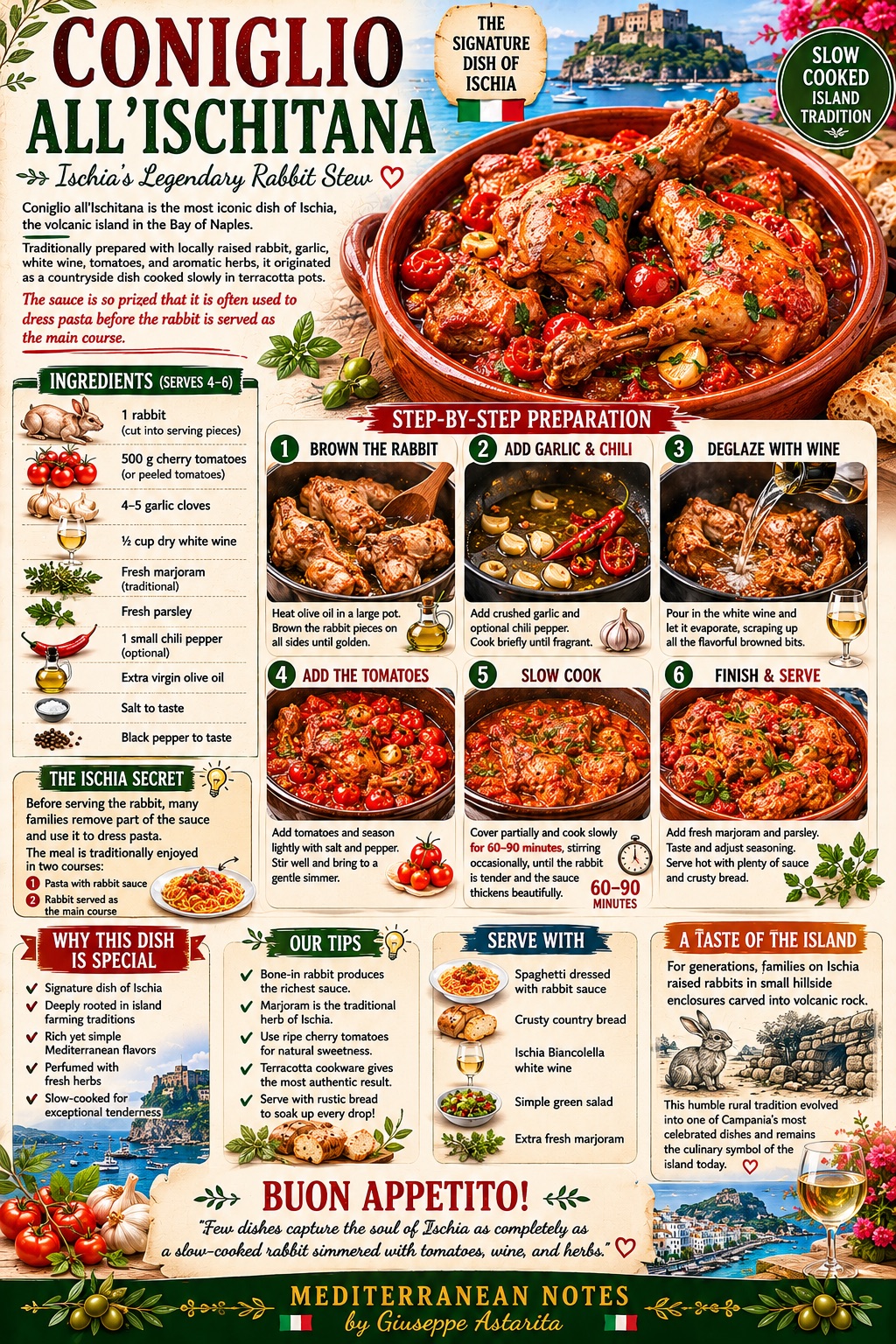
Tap to enlarge — Coniglio all'ischitana: the island method
Recipe — Coniglio all'Ischitana
Serves 4–6 · About 1 hour 45 minutes
- 1 rabbit cut into serving pieces
- 500 g cherry tomatoes or peeled tomatoes
- 4–5 garlic cloves
- ½ cup dry white wine
- Fresh marjoram the traditional herb — piperna if you find it
- Fresh parsley
- 1 small chili pepper optional
- Extra virgin olive oil
- Salt and black pepper to taste
If the rabbit gives you pause, everything in this method works on chicken — same pot, same wine, same herbs, a cousin of the pollo alla cacciatora. But on the island, with the piperna in the air and the ferry home not until tomorrow, it was always the rabbit. Few dishes capture the soul of Ischia so completely.