Calamari e Patate in Umido
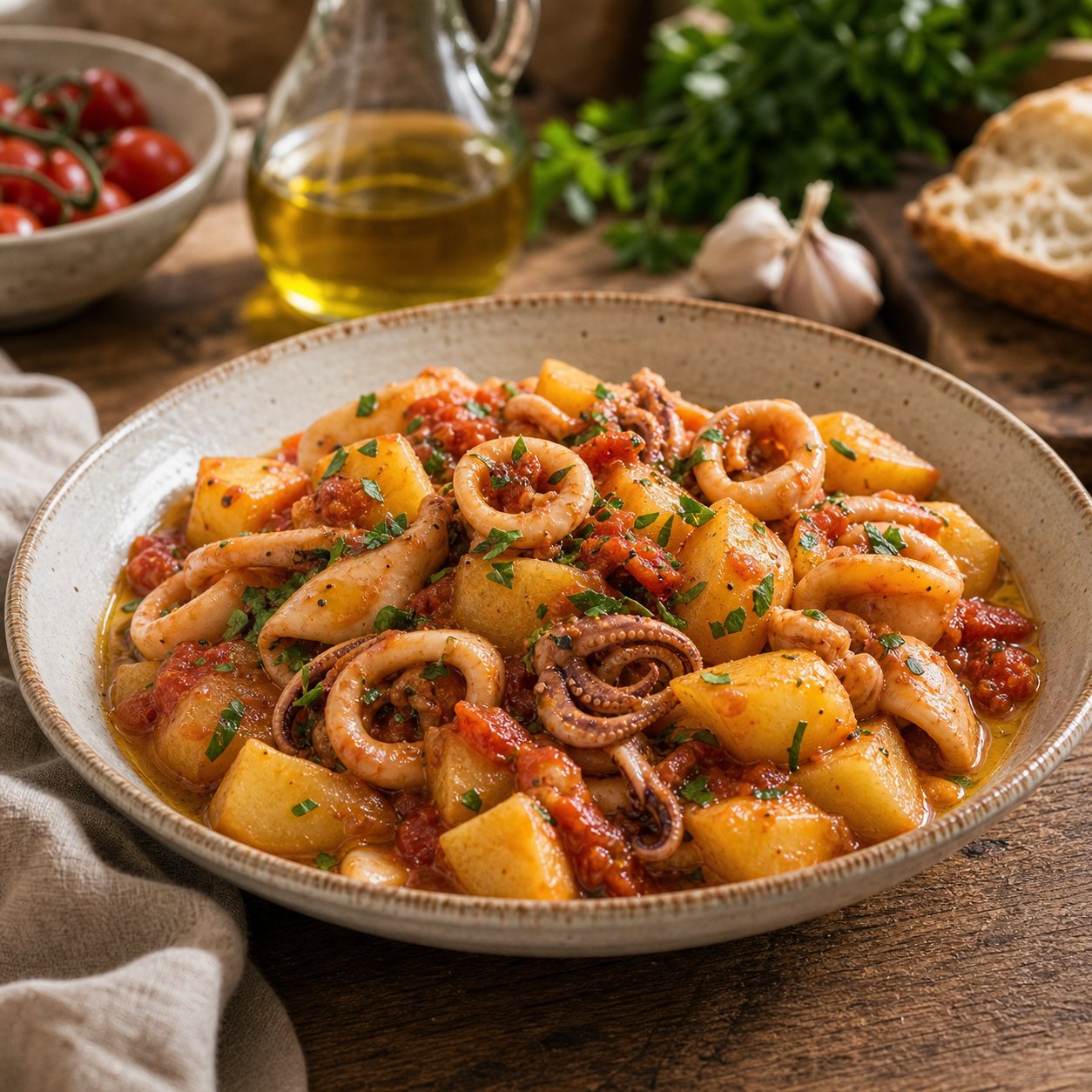
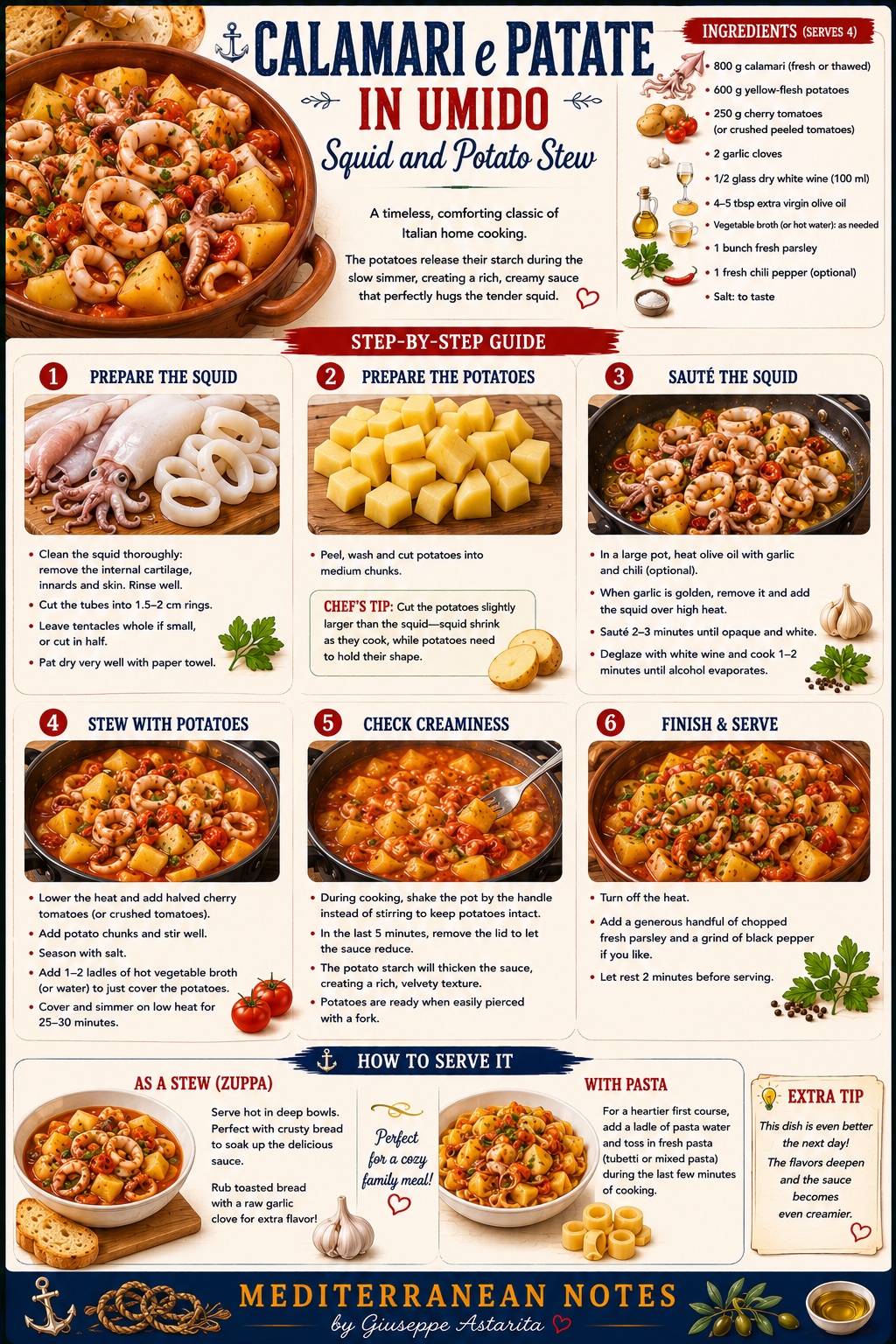
A southern Italian stew of calamari, potatoes, tomato, white wine, garlic, parsley, and olive oil.
Ingredients · serves 4
Method
1. Prepare the squid. Clean thoroughly — remove the internal cartilage, innards and skin, and rinse. Cut the tubes into 1.5–2 cm rings; leave small tentacles whole. Pat very dry.
2. Prepare the potatoes. Peel and cut into medium chunks, slightly larger than the squid rings — squid shrink as they cook while the potatoes need to hold their shape.
3. Sauté the squid. Heat the oil with the garlic (and chili). When the garlic is golden, lift it out and add the squid; sauté 2–3 minutes until opaque. Deglaze with the wine and cook 1–2 minutes until the alcohol evaporates.
4. Stew with potatoes. Lower the heat, add the halved cherry tomatoes, then the potatoes; stir and salt. Add a ladle or two of hot broth (or water) to just cover, cover, and simmer gently 25–30 minutes.
5. Check the creaminess. Shake the pot by the handle rather than stirring, to keep the potatoes intact. In the last 5 minutes, lift the lid to let the sauce reduce — the potato starch thickens it to a velvety texture.
6. Finish & serve. Off the heat, stir in chopped parsley and a grind of black pepper. Rest 2 minutes before serving.
I first had this at a small restaurant near Pozzuoli on a cold November evening — the kind of place with paper tablecloths and no menu on the wall, where you were told what was good that day. The calamari had come in that morning. The stew arrived in a deep ceramic bowl with a piece of bread on the side, and the potatoes had been in the sauce long enough to taste entirely of it. I was maybe twelve, and I remember it clearly because it was the first time I understood that a stew could taste of the sea.
Calamari e patate is a cold-weather dish, which surprises people who associate squid with summer. Summer squid is the fried kind — light and quick, eaten standing up at a beach bar. This is different: a slow braise built on tomato and white wine, where the calamari release their liquid into the sauce and the potatoes absorb it over the course of an hour. It belongs in November, in a deep plate, with the bread already waiting.
The squid here must cook long — not briefly. A brief sauté keeps calamari tender, but a brief braise makes it tough. The rule is: flash or slow, nothing in between. Forty-five minutes to an hour in the covered pot and it comes back soft again, the rings almost melted into the sauce. The potatoes, added midway, soak everything up. By the time you serve, they taste more of the sea than of themselves.
Squid mantle muscle is composed of tightly packed protein fibers with relatively little connective tissue between them. At low temperatures — up to about 55°C — these fibers remain tender. Between 60 and 80°C, the muscle proteins denature rapidly and the fibers contract and expel water, producing the rubbery texture of overcooked squid. This happens within two to three minutes of hitting a braising liquid. If you continue cooking past this window — beyond forty minutes at a gentle simmer — a different process takes over: the collagen that does exist in the squid's skin and connective tissue begins to hydrolyze into gelatin, the contracted muscle fibers start to relax under sustained heat, and residual moisture re-distributes through the tissue. The result is not the same tenderness as a quick sauté, but a softer, slightly yielding texture that works well in a braise. The window between "just right" and "rubbery" is roughly two to thirty-five minutes — which is why this recipe commits fully to the slow route and skips the dangerous middle entirely.