'Ova 'mpriatorio
Uova al Purgatorio — my father's favorite
In Neapolitan dialect: 'ova 'mpriatorio — eggs in purgatory. Fresh eggs cracked directly into a thick, concentrated tomato sauce and cooked on the lowest heat with a lid until the white sets and the yolk stays creamy and runny. The bread is not optional. The scarpetta at the end is the point.
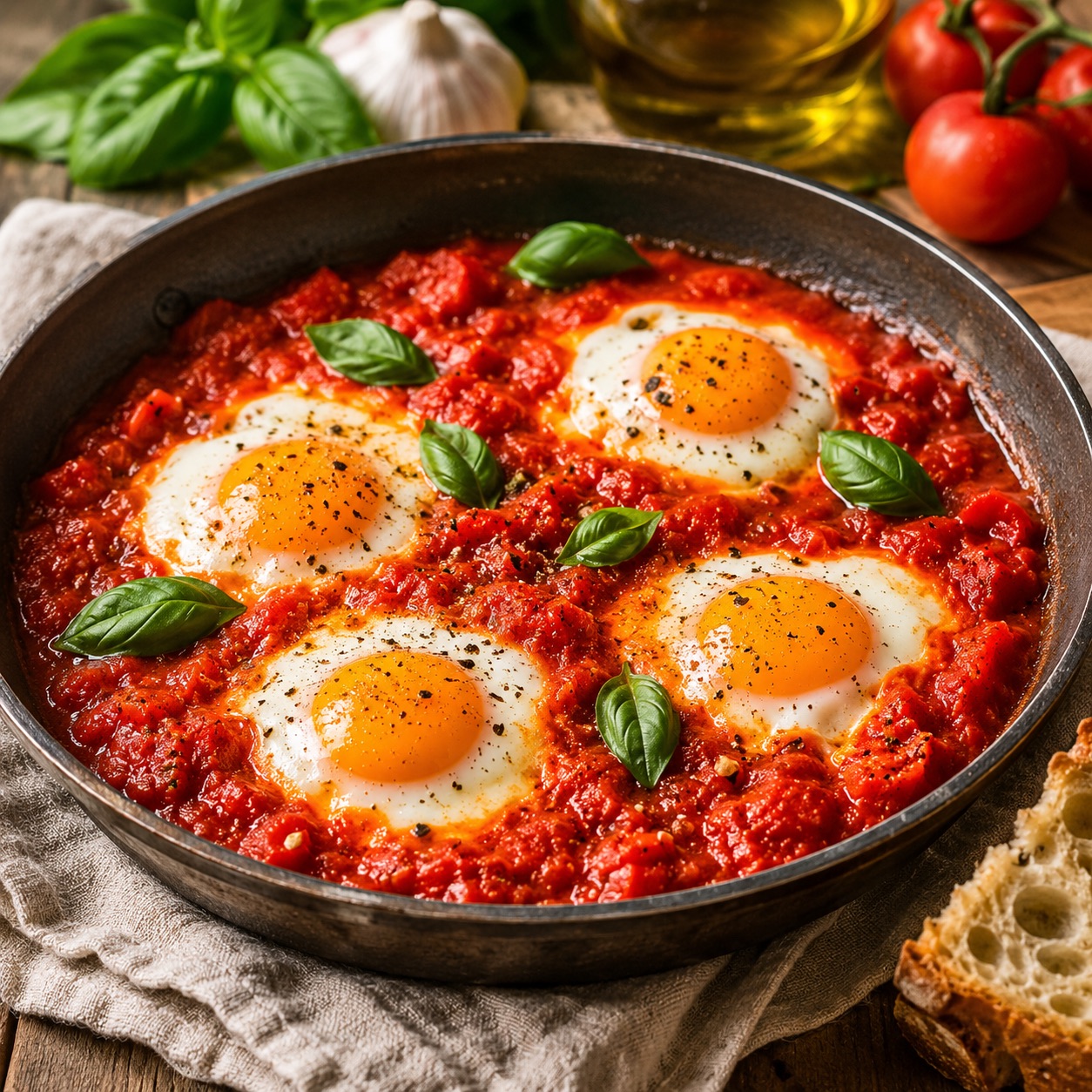
My father did not eat fish. On the evenings when my mother made baccalà or vongole, he ate something else — usually a pasta or, if he was in the mood, this: eggs in purgatory. It was one of the dishes he made himself, or ate gladly when it appeared. The Neapolitan name — 'ova 'mpriatorio — comes from the visual: the egg whites set white against the deep red of the tomato sauce, the yolks sitting above like something suspended between states. The image is of souls in purgatory surrounded by the flames of the sauce. It is a good name for a dish that is simultaneously humble and dramatic-looking.
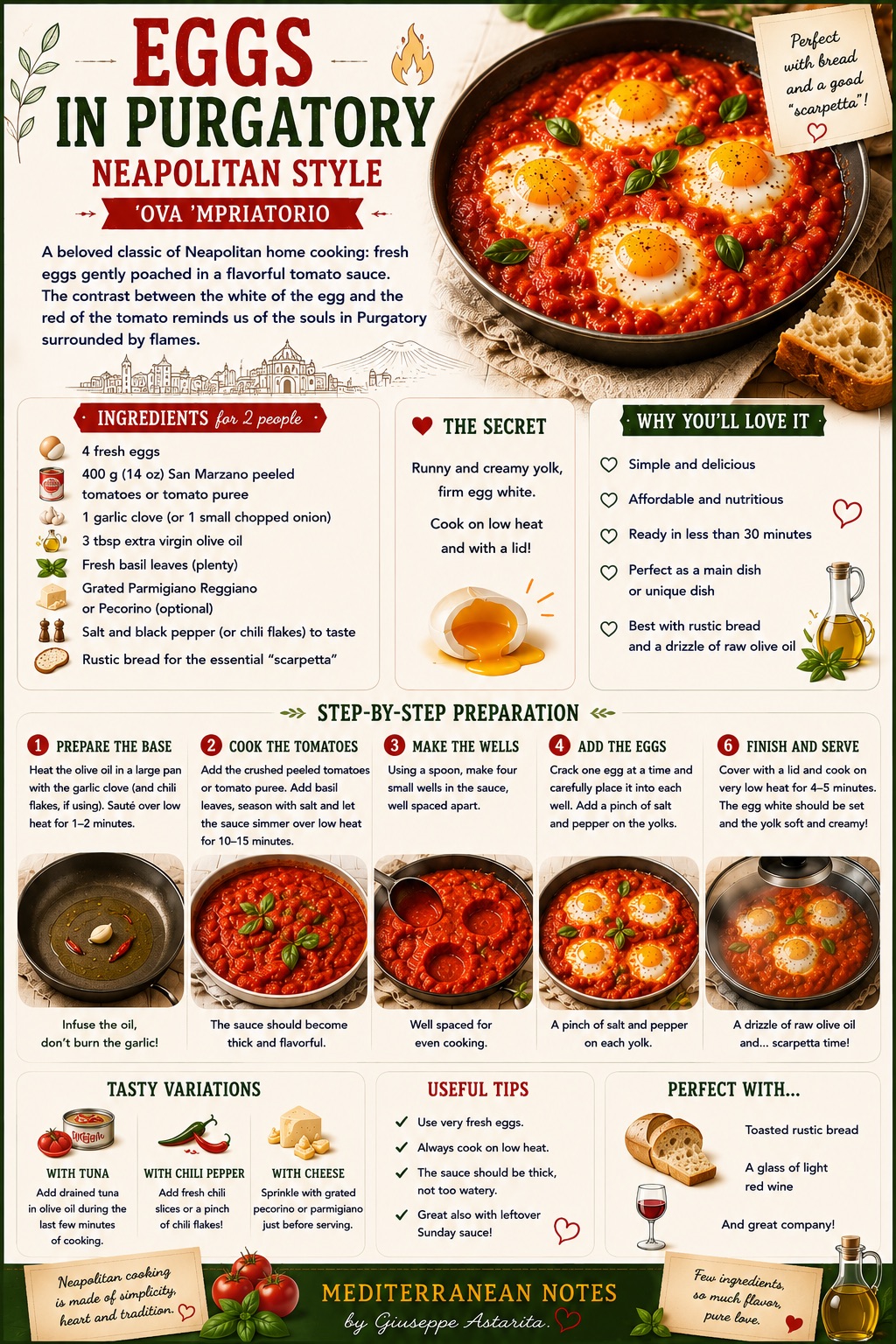
The dish requires two things to be correct: a good tomato sauce and correct timing on the eggs. The tomato sauce should be properly concentrated — not a thin fresh sauce but something that has cooked for ten to fifteen minutes and has body. A watery sauce does not support the eggs properly and the whites spread and thin rather than setting cleanly. San Marzano tomatoes, crushed and cooked with garlic and basil in olive oil until thick and fragrant, produce the right base. The leftover Sunday ragù, slightly diluted if too thick, works even better — it is richer and more complex, and my father would have used it on the occasions when it was available.
The eggs go in after the wells are made — a spoon pressed gently into the sauce to create a seat for each egg, then the egg cracked in carefully so the yolk lands whole. The heat drops to the lowest possible setting. The lid goes on. Four to five minutes is usually enough: the white should be fully set, opaque, and firm enough to hold its shape on a spoon; the yolk should still tremble when you move the pan. A pinch of salt and pepper on each yolk before the lid goes on, a drizzle of raw olive oil to finish, and the bread already on the table.
Egg whites and yolks coagulate at different temperatures because they have different protein compositions. Egg white proteins — primarily ovalbumin — begin to set at around 62°C and are fully coagulated by 65°C. Egg yolk proteins coagulate at slightly higher temperatures: they begin to thicken around 65°C and fully set around 70°C. The practical window for a runny yolk and set white is therefore narrow but achievable: heat the eggs gently and stop cooking when the white is opaque and firm but before the yolk reaches 70°C. The lid during cooking creates a steaming environment above the eggs, which sets the top of the white — the part not in contact with the hot sauce — without requiring the pan temperature to be high enough to overcook the yolk from below. This is why the lid is essential and the heat must be very low: it completes the white from above gently, while the sauce does the same from below.
The recipe
Serves 2. Use the freshest eggs available — fresher eggs hold their shape better in the sauce. Use the best tomatoes you have: San Marzano DOP peeled tomatoes are the classic choice. Leftover Sunday ragù, slightly loosened with a splash of water, is even better.
Buon appetito — e buona scarpetta, papà.