Uova alla Coque
Soft-boiled eggs — a childhood classic we still make for the girls
Four minutes from boiling water to egg cup. The yolk creamy and just set at the edges, the white firm but tender. Toasted bread cut into strips — the soldiers — for dipping. A pinch of salt. This is one of the first things I remember eating as a child in Caserta, and one of the first things Anna and her sister reach for when they are asked what they want for breakfast.
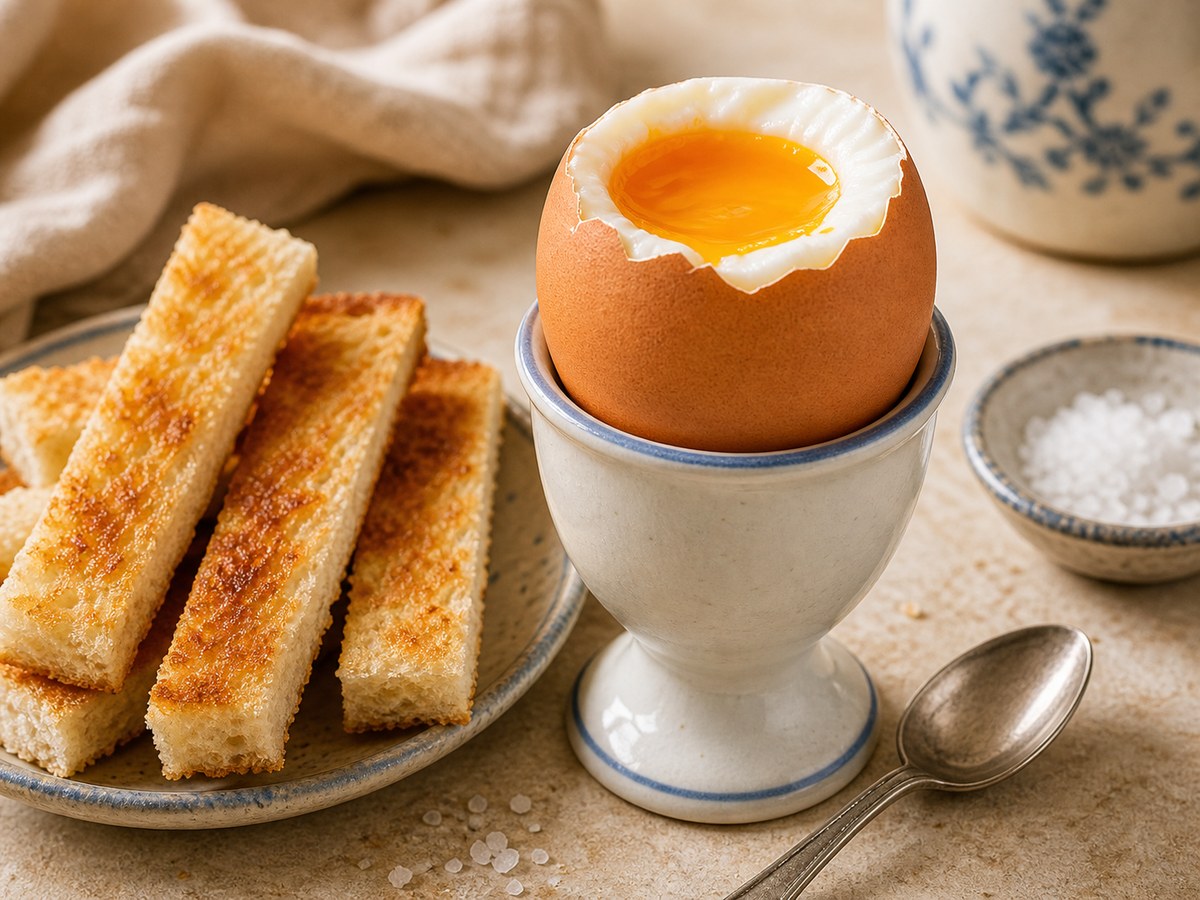
The soft-boiled egg is one of the most precisely time-dependent preparations in the kitchen. The difference between three minutes and five is the difference between a completely liquid yolk and a yolk that is set but still soft — and the difference between four and six is the difference between perfect and slightly overdone. The exact timing depends on the size of the egg, its starting temperature, and the altitude where you are cooking (water boils at a lower temperature at altitude, extending the required time). The numbers below are for medium eggs at room temperature at sea level; refrigerator-cold eggs need an extra 30–60 seconds.
Growing up, this was the meal for mornings when someone was not feeling well, or for a light lunch, or simply because it was fast and good and required almost nothing from the kitchen. The egg cup is not a decoration — it is necessary. A soft-boiled egg without an egg cup is difficult to manage; the shell needs to be tapped and removed from the top without the egg tipping, and for a child this requires the stability the cup provides. The soldiers — strips of toasted bread, thin enough to fit into the opening — are dipped into the yolk one by one. This is the correct way to eat a soft-boiled egg and there is no other.
The recipe
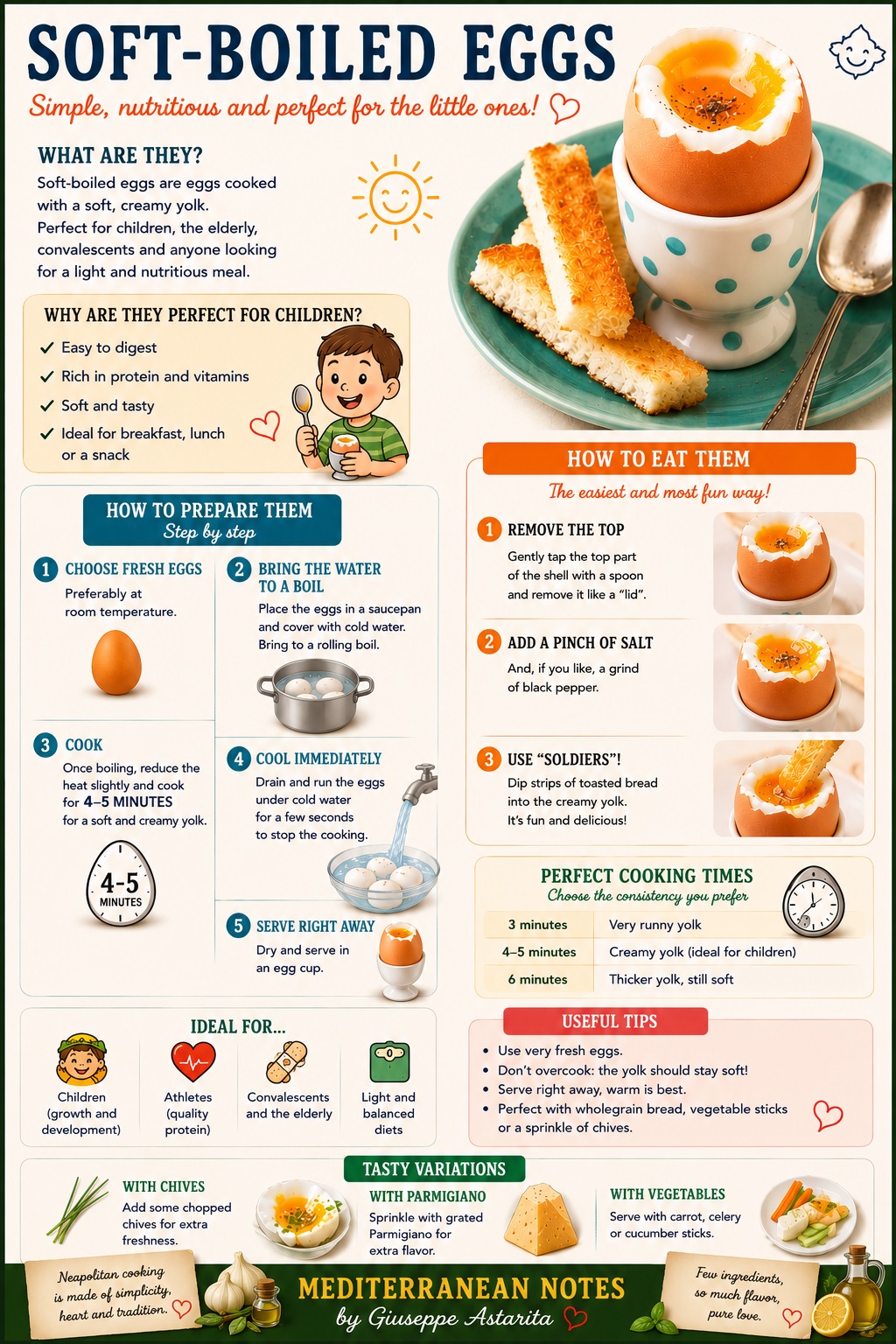
The egg cup matters. It is one of those pieces of equipment that seems unnecessary until you have used one and realize that a soft-boiled egg without it is a much less pleasant experience to manage at the table. We have a collection of egg cups in Massachusetts that came from various Italian trips and market finds. The girls have their own.
Buon appetito — per Anna, per la sorellina, e per i bambini di ogni età.