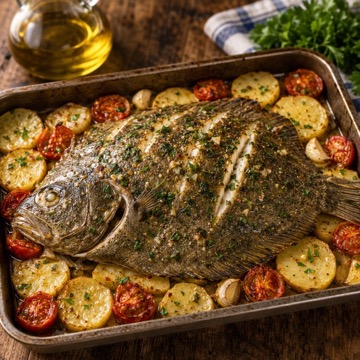
Campanian kitchen · Fish · Special occasion · Six preparations
La Spigola
European sea bass — six Neapolitan preparations
Oggi ho fatto la spigola. My mother announced it with a particular satisfaction — as if the choice of fish alone had upgraded the evening. She was not wrong. Spigola was the occasion fish: whole, carefully cooked, the table set with more intention than usual.
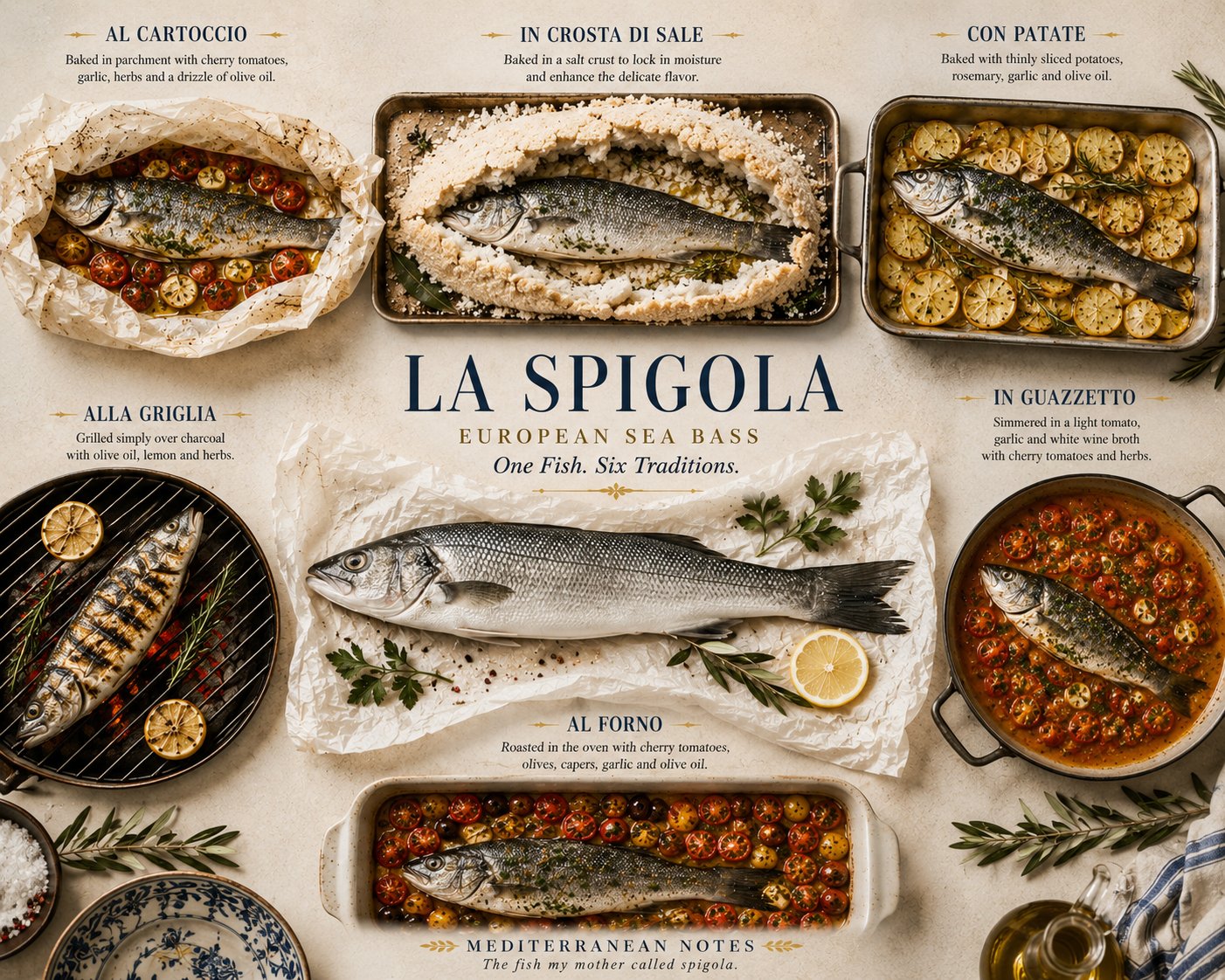
The question I never asked her, and the one my daughter asked me: what is the difference between spigola and branzino? My mother's answer, if she had one, would have been that branzino was the northern name for a northern fish, and spigola was what grew in the sea near us — a matter of geography and therefore of flavor, of a specific water and a specific season. She was partially right about the geography and entirely right about it being a different experience at the table. But the scientific answer is simpler than she imagined: they are the same fish.
Spigola and branzino are both names for Dicentrarchus labrax, the European sea bass. In Campania and most of southern and central Italy, it is called spigola. In Piedmont, Lombardy, Liguria, and much of northern Italy, the same fish is called branzino. In Tuscany, ragno. In France, loup de mer — sea wolf. In Spain, lubina. In Greece, lavraki. The same animal from the Atlantic coast to the eastern Mediterranean, carrying a different name in every kitchen along the way.
The reason my mother's spigola felt fancier than a generic branzino has nothing to do with species and everything to do with origin and farming. What is sold as branzino in supermarkets in northern Italy and in restaurants in New York is almost always farmed — aquaculture fish raised in sea cages in the Adriatic, the Aegean, or the Atlantic coast of Spain and Portugal. Farmed branzino is a fine fish: reliable, available year-round, consistent in size. But it eats pellets, grows in a controlled environment, and accumulates the uniform fat profile and mild flavor of a domesticated animal. The spigola my mother bought from the fishmonger in Caserta was wild: it had been feeding on smaller fish, crustaceans, and whatever the Tyrrhenian sea offered, and it tasted like it. Firmer flesh, more pronounced flavor, less predictable — and more expensive when available.
Branzino vs spigola — same species, different lives, different flavor
Dicentrarchus labrax is a euryhaline predator — it tolerates a wide range of salinity, moves between estuaries and open sea, and feeds opportunistically on whatever is available. Wild specimens in the Mediterranean eat a varied diet of small fish, crustaceans, cephalopods, and invertebrates, and accumulate a complex, varied fatty acid profile in their muscle tissue. The intramuscular fat is low (typically 2–4% by weight) and predominantly polyunsaturated, with meaningful EPA and DHA content from the marine food chain. Farmed specimens are fed standardized fishmeal and fish oil pellets; their fatty acid profile is controlled but flatter, their flesh slightly softer from less muscle use, and their flavor more neutral. The distinction is not unique to branzino — it applies to every farmed vs wild comparison for the same species. The practical effect at the table is that wild spigola has a more pronounced, slightly mineral flavor and a firmer texture that holds up better to baking and holds moisture better on the bone. For all three preparations on this page, wild fish is the better choice where available. Where it is not, a good farmed branzino is still a good dinner.
The name — where you are determines what you call it
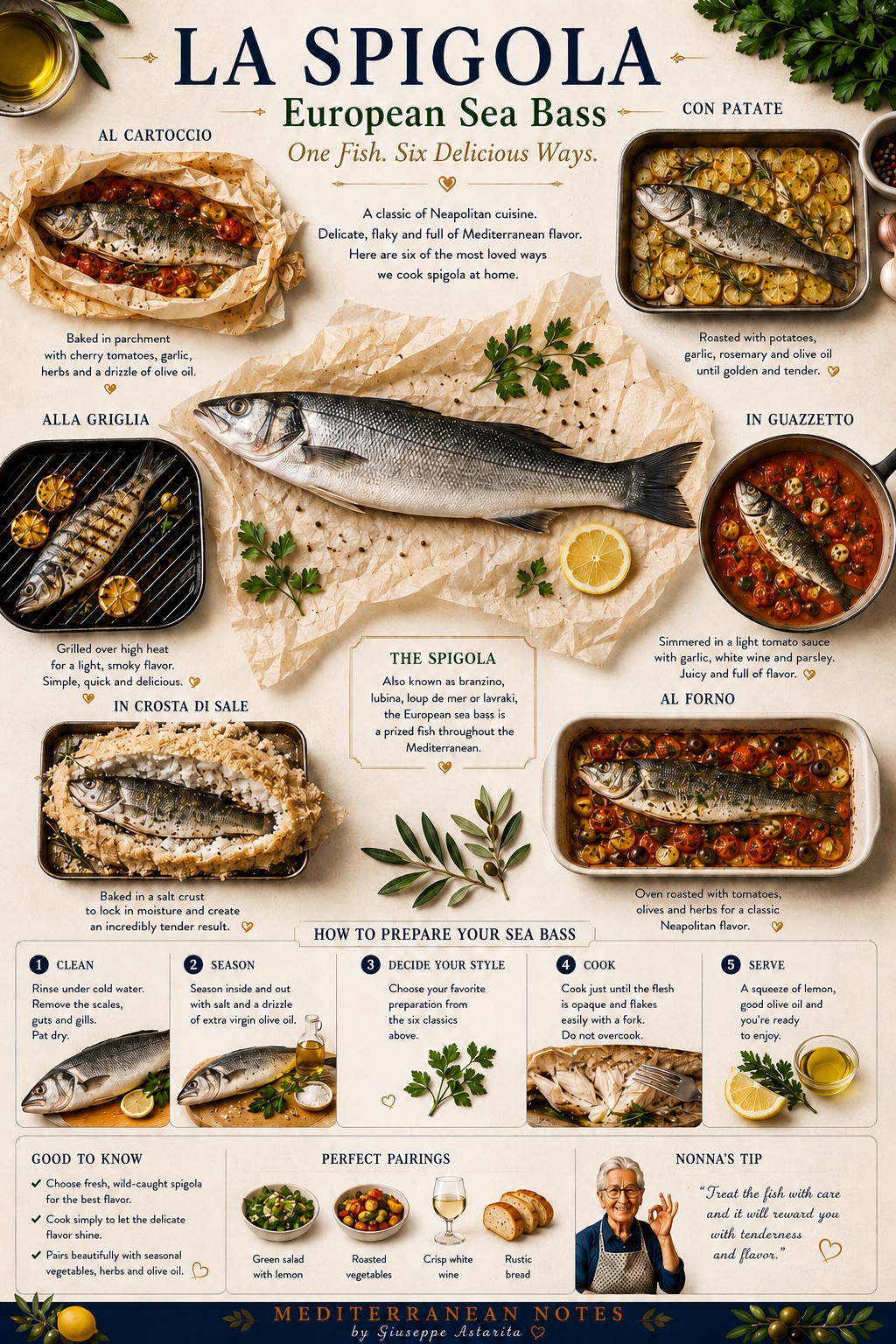
Choose a preparation
Six preparations, one fish. Three are occasion dishes — assembled with intention, brought to the table as the main event. Three are everyday — fast, direct, the fish as protagonist without theatre.
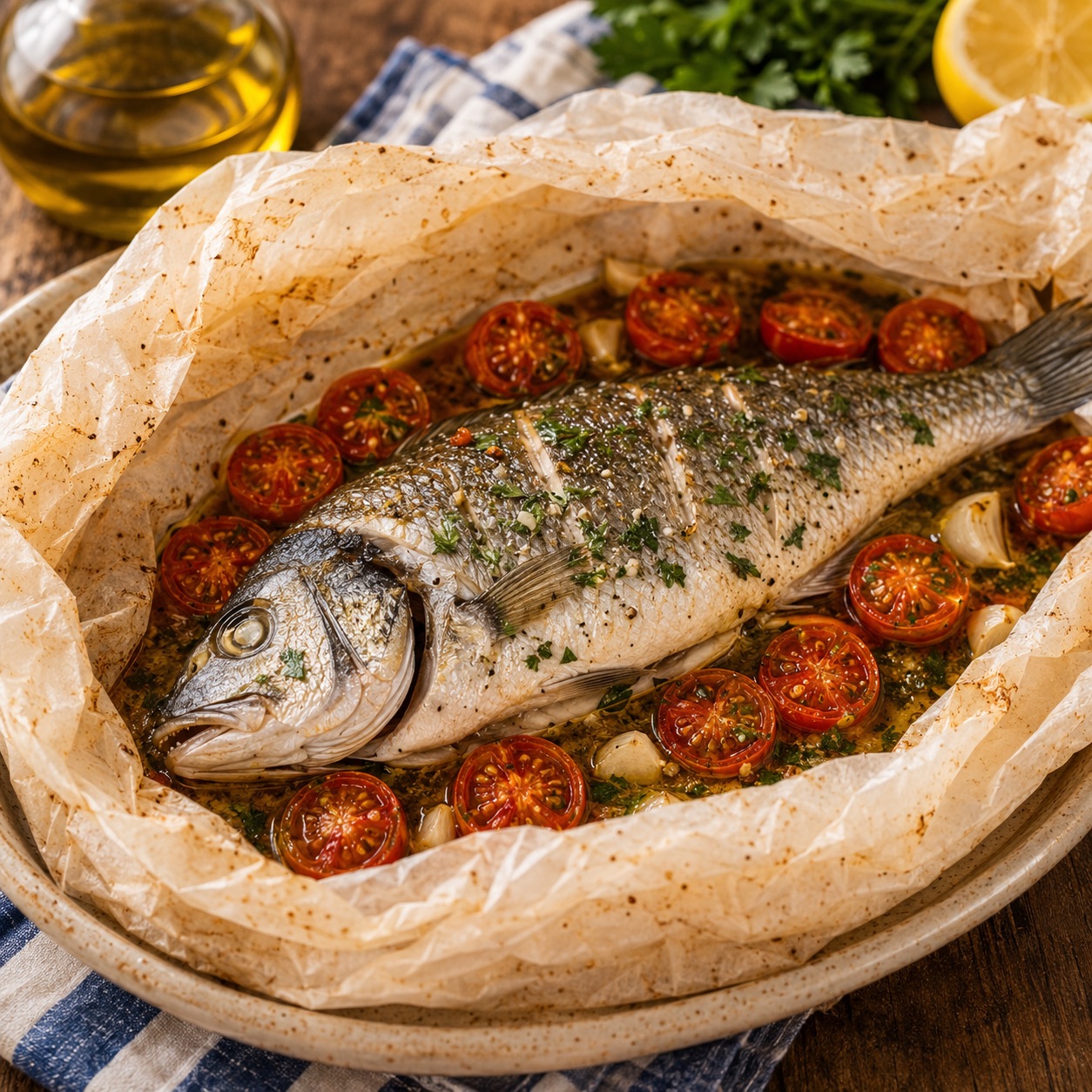
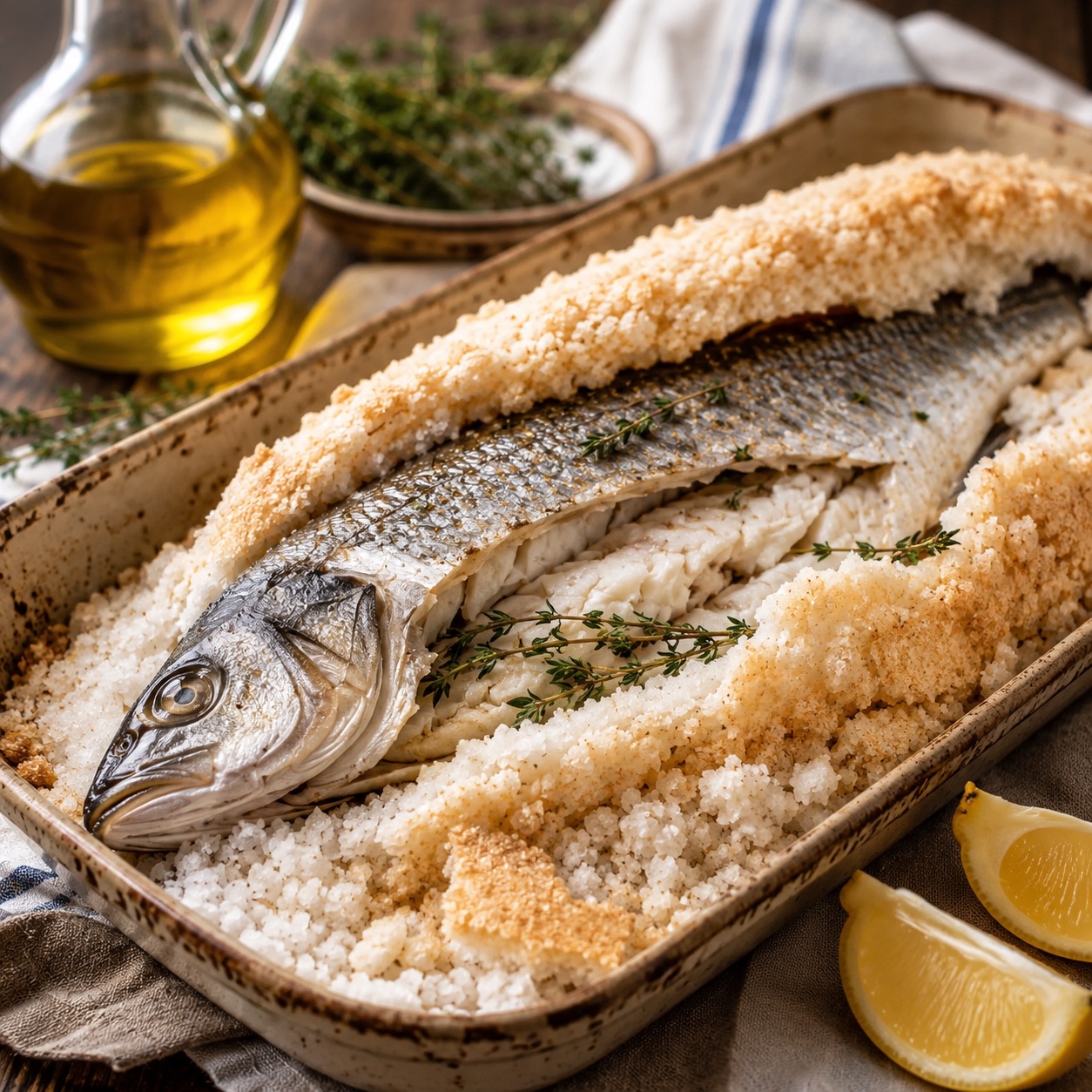
The occasion preparations
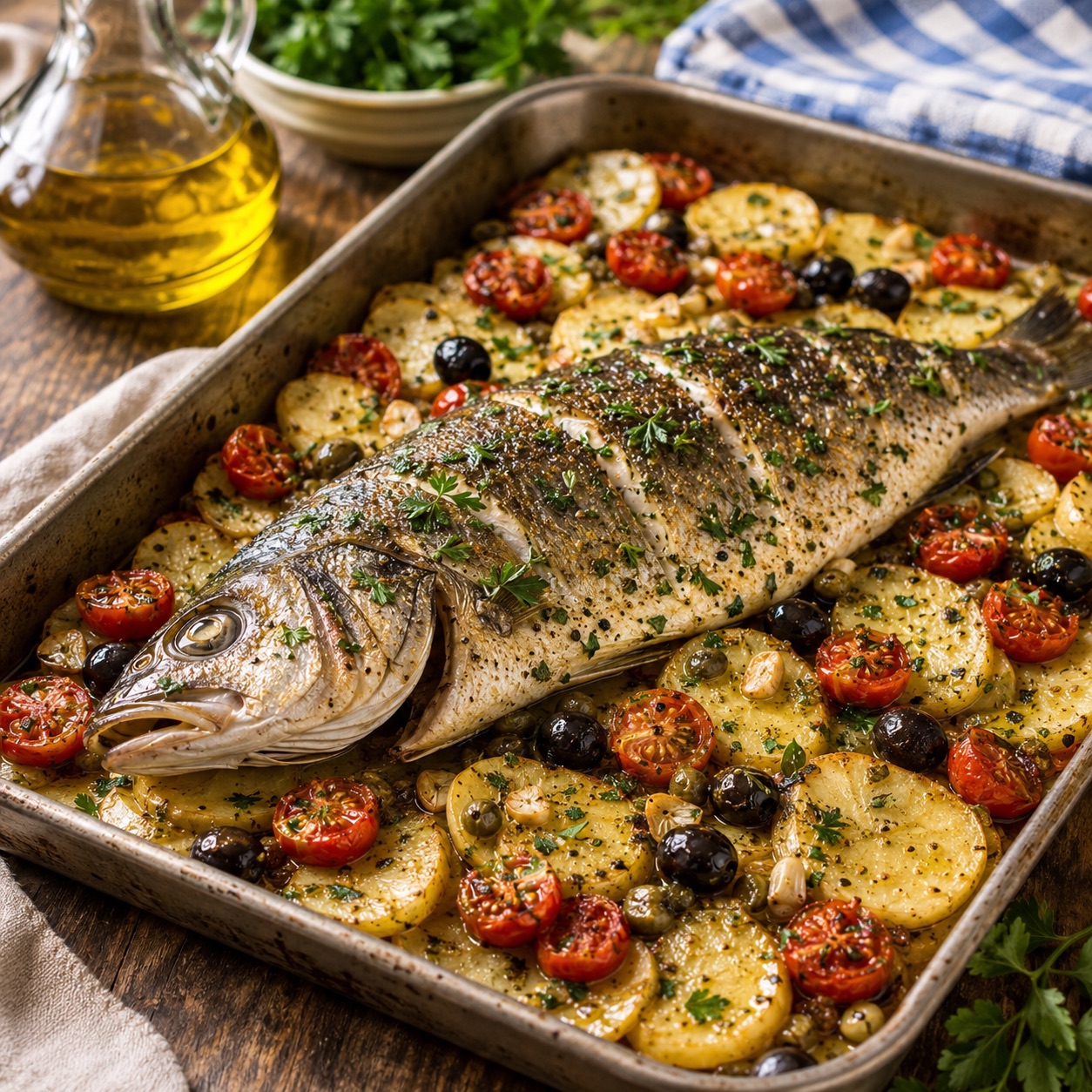
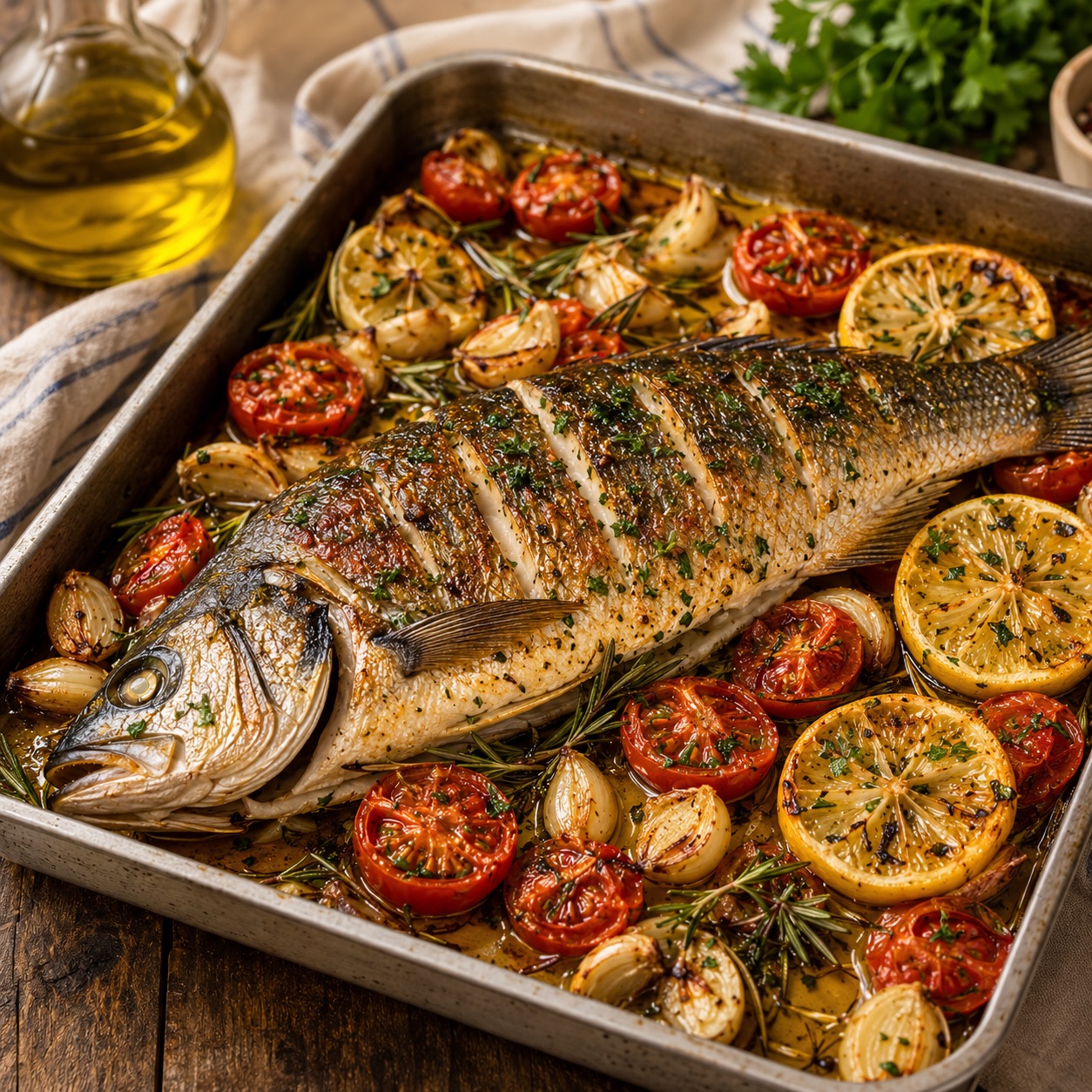
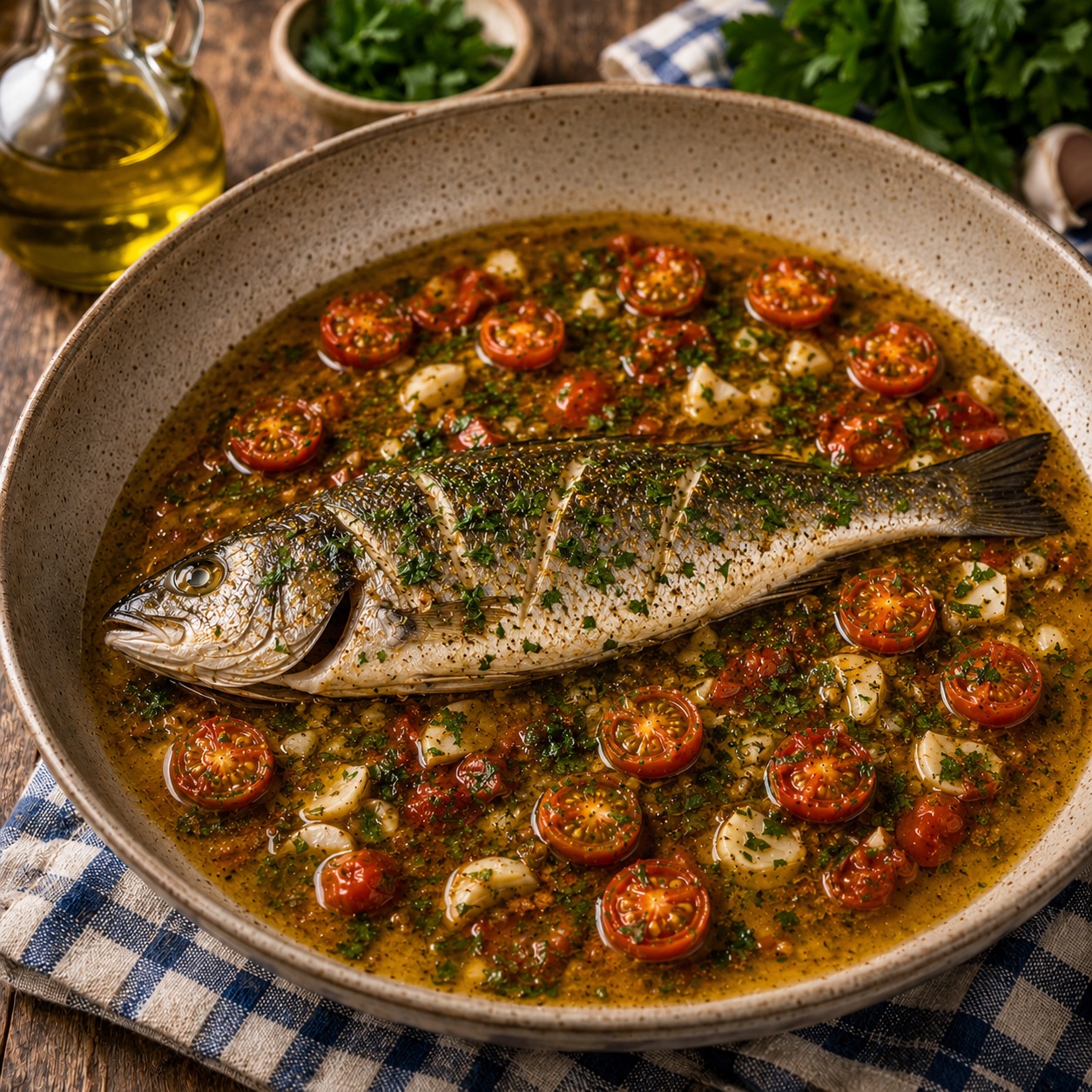
The everyday preparations
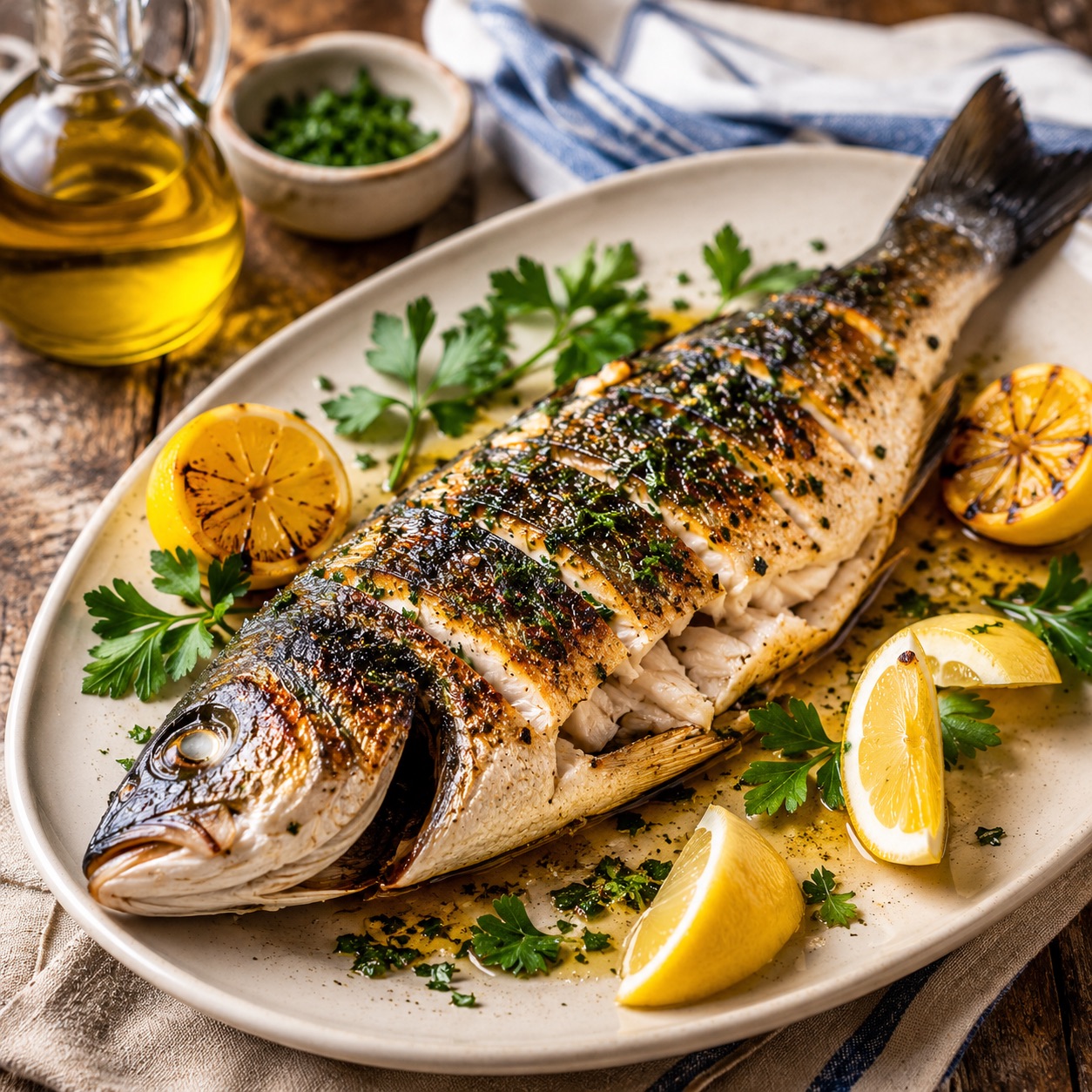
Oggi ho fatto la spigola — e l'ha notato tutti.