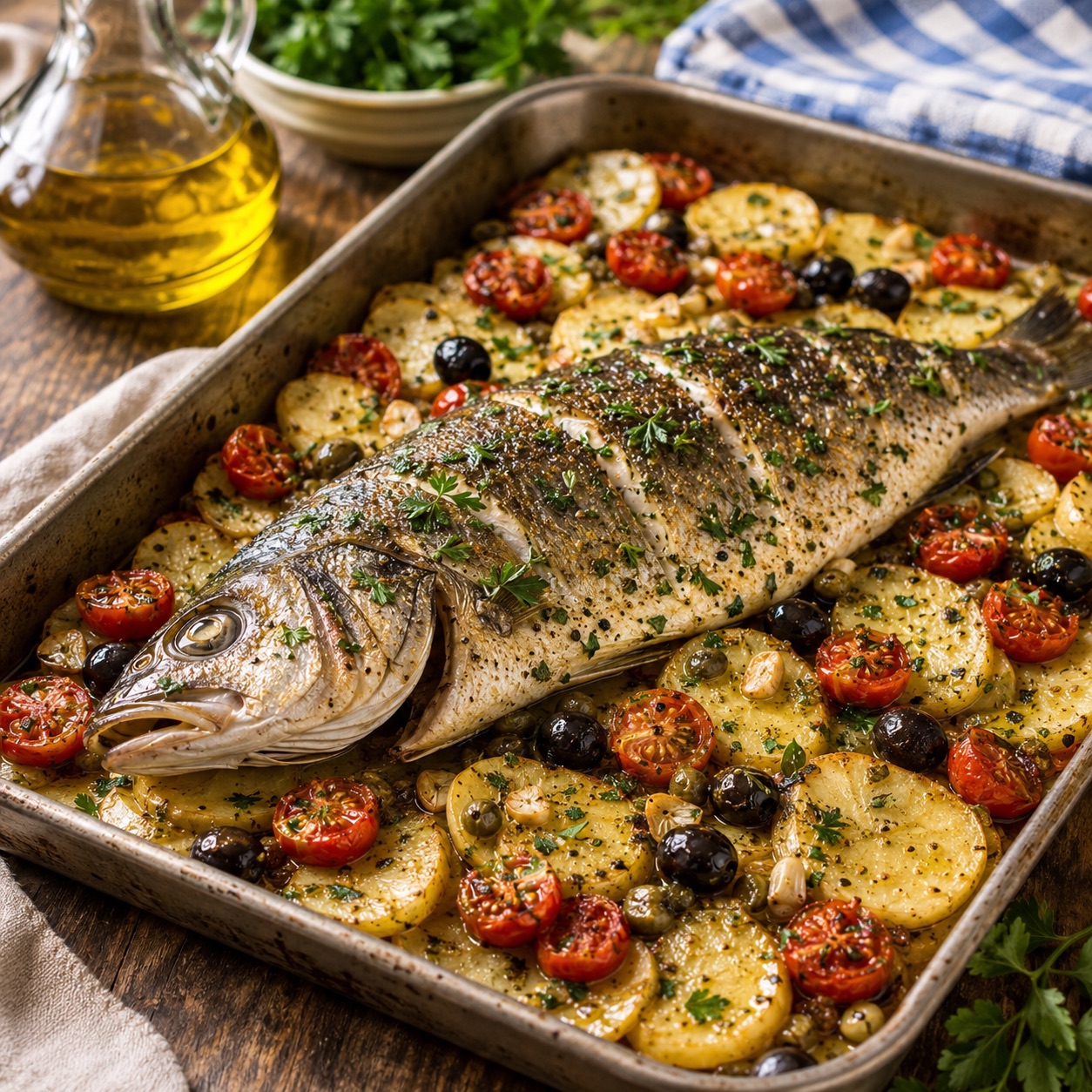
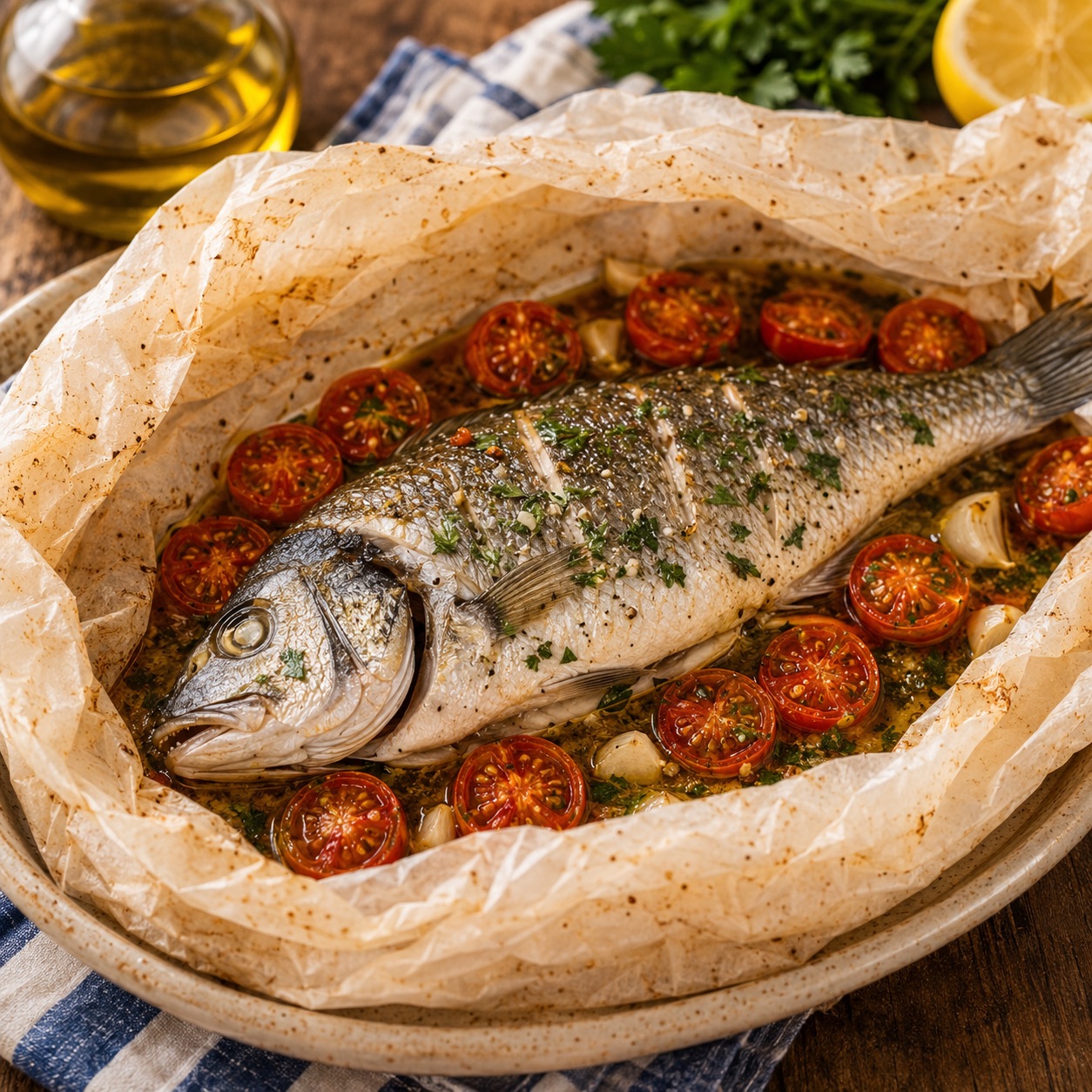
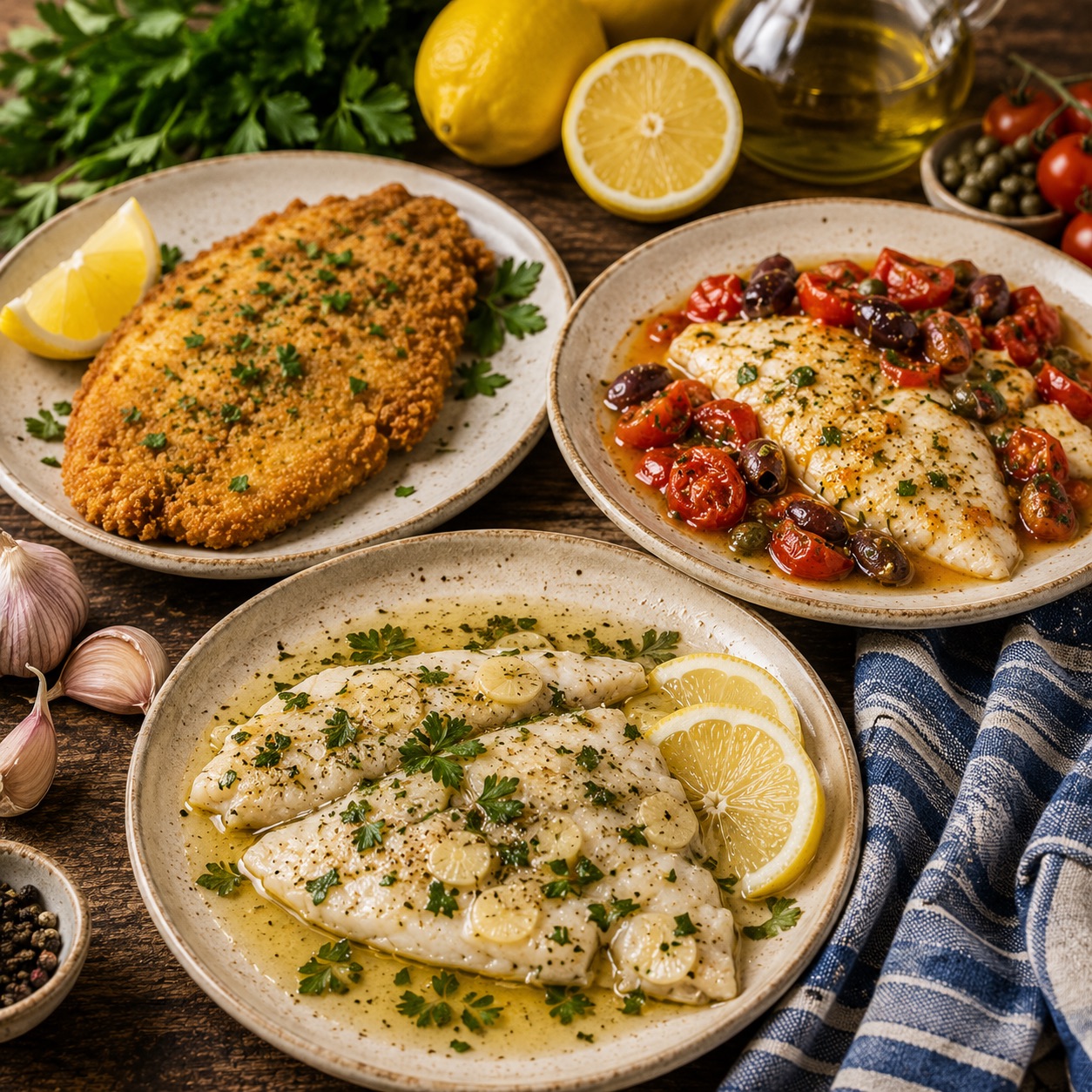
Rombo con patate al forno
The flatfish that meant a real occasion. Not the spigola of a good Friday — something above that. My mother made the rombo rarely, when the fishmonger had a good one and the table deserved it. Laid on a bed of thin potato slices with cherry tomatoes and white wine, the knobby brown skin facing up, the white belly resting on the potatoes. The most prized flatfish of the Mediterranean.
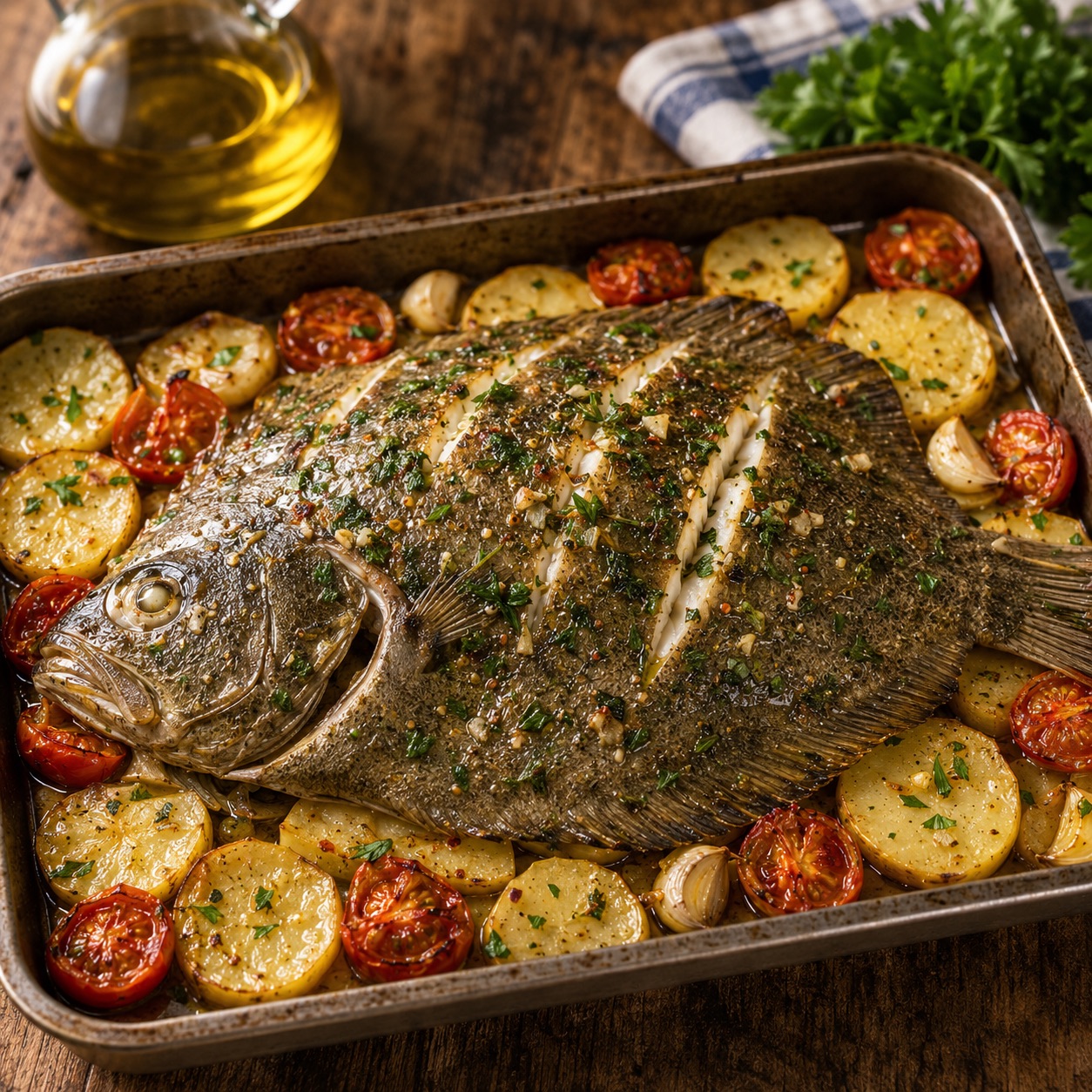
The rombo is not the same fish as the spigola, and my mother knew this even if she could not have explained the taxonomy. The spigola — the European sea bass — is a round fish, a predator, swimming upright through the water column. The rombo is a flatfish: it lies on the seabed, one side facing up, the other facing down, both eyes migrated to the same side of the head during development. The two species are entirely unrelated, occupy different ecological niches, and taste completely different. What they share is the potato bed treatment, because the potato bed works for any large whole fish and my mother's kitchen was consistent in its logic.
The rombo she bought was almost certainly rombo chiodato — turbot, Psetta maxima — the larger and more prized of the two Italian rombo species. It is named for the bony bumps on its dark upper side that resemble nail heads: chiodato, nailed. The dark skin is rough and knobby; the white belly is smooth. It is a large fish — a good one runs 1.2 to 1.5 kilograms — with white, dense, slightly sweet flesh that has more fat and more flavor than sole or sea bass. When it was on the table it was an event. My father, who ate his pasta on fish nights, occasionally made an exception for the rombo. That was a measure of something.
The other Italian flatfish is the rombo liscio — brill, Scophthalmus rhombus — which is similar in shape but smaller (up to 60 cm vs the turbot's 80 cm) and considered by some to have more delicate flesh. Either works for this preparation. If you find a good brill and not a turbot, use it. The cooking method is identical; reduce the time by a few minutes.
Turbot vs sea bass — why flatfish taste different and why the potato bed suits both
Turbot (Psetta maxima) and European sea bass (Dicentrarchus labrax) differ fundamentally in muscle physiology and fat distribution. Sea bass is a pelagic predator with predominantly white fast-twitch muscle and very low intramuscular fat (2–4% by weight). Turbot is a demersal flatfish — it lives on and near the seabed — and has denser, more tightly packed muscle fiber bundles with higher fat content (typically 3–6%) and more connective tissue, which produces a firmer, more substantial texture at the table. The fat in turbot muscle is higher in monounsaturated fatty acids relative to sea bass, which gives the flesh a richer mouthfeel and slightly sweeter flavor. The skin of the turbot's dark upper side contains a higher concentration of melanin pigments and fat-soluble aromatic compounds than the white belly, which is why baking dark-side up allows these compounds to render into the cooking juices during baking. The potato bed captures these rendered juices from below, which is why rombo con patate produces a richer-tasting potato layer than spigola con patate from the same preparation method.
Recipe — serves 4
Ingredients
Method
Prepare the potatoes. Peel and slice very thin — 2–3 mm with a mandoline. Rinse in cold water to remove excess starch, drain, and pat dry. Toss with salt, pepper, the sliced garlic, and 2 tbsp olive oil.
Build the tray. Line a large baking tray (the turbot is wide — use the largest tray you have) with parchment. Spread the potato slices evenly, overlapping slightly. Drizzle with a little more olive oil.
The turbot is a wide, flat fish — it needs a tray that can accommodate its full span. A standard roasting tin works; a large gratin dish works better.
Prepare the turbot. Rinse under cold water and pat dry. Score the dark upper skin with 2–3 shallow diagonal cuts — enough to help heat penetrate, not deep enough to reach the bone. Season with salt and pepper on both sides.
Place dark side up. Lay the turbot on the potato bed with the dark knobby skin facing up and the white belly resting on the potatoes. Scatter the halved cherry tomatoes around the fish. Scatter chopped parsley over everything. Drizzle generously with olive oil. Pour the white wine over the entire tray.
Dark side up is not optional — the fat in the dark skin renders downward into the potato bed as the fish cooks. If you lay it white side up, you lose this.
Bake. Preheat oven to 190°C fan. Bake for 25–30 minutes. The turbot is done when the flesh at the thickest point — the central ridge — comes away cleanly from the bone when pressed, and the skin on top is lightly coloured. The potatoes should be golden at the edges.
Do not open the oven for the first 20 minutes. The turbot is a thicker fish than the spigola and needs the initial steam phase to cook evenly through the dense central flesh without drying the thinner edges.
Rest 5 minutes and serve in the tray. Scatter fresh parsley over the top. At the table, use a wide spatula and spoon to lift the fish from the bone and onto plates — the turbot bones are large and easy to see. Serve the potatoes and pan juices alongside. Lemon wedges for those who want them.
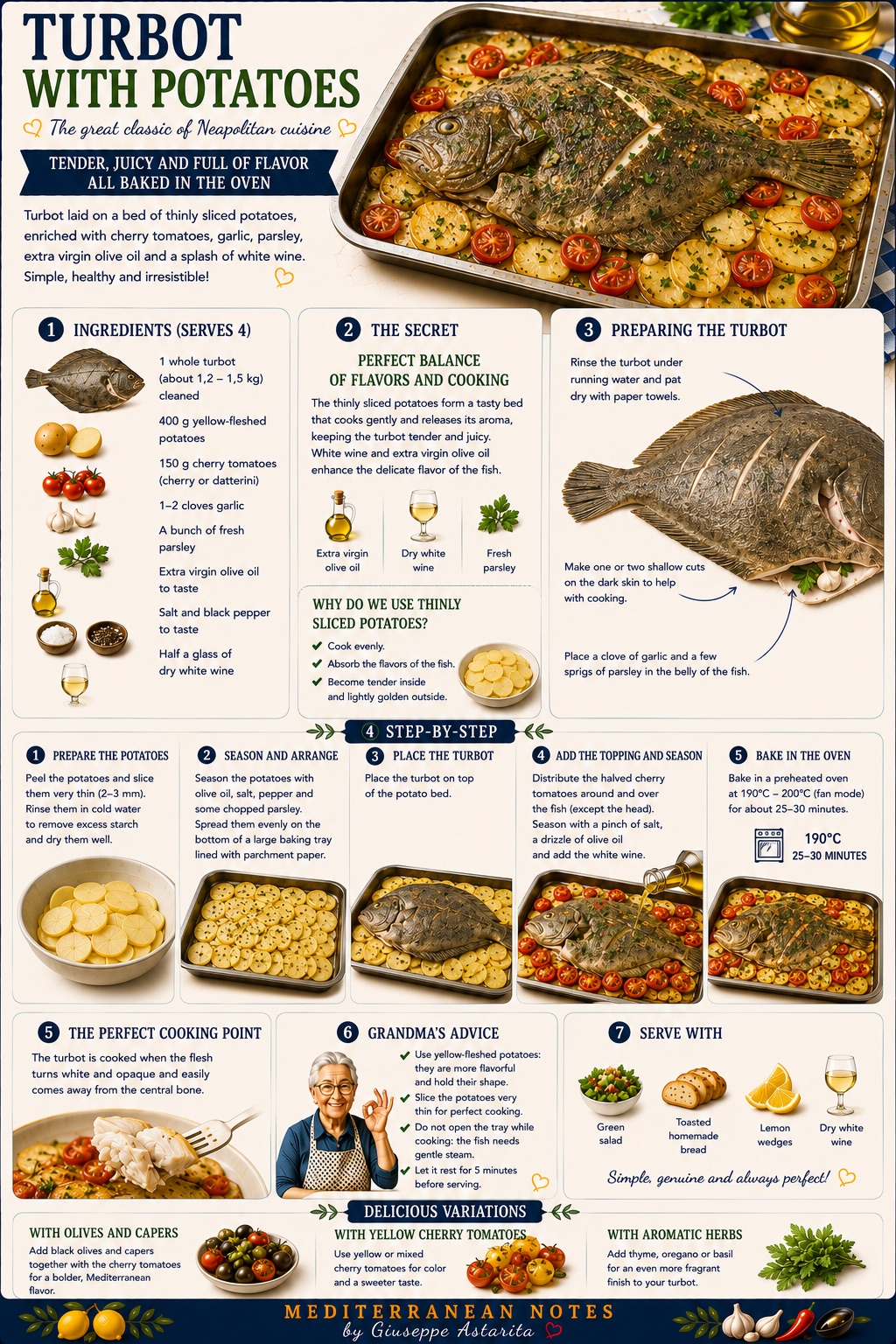
The rombo con patate is a generous dish — the fish is large enough to feed four people properly from one tray, and the potato bed beneath it carries the cooking juices of a richer fish than the spigola. The flesh, once off the bone, is dense and white and sweet in a way that sea bass is not. The bones themselves are substantial and clearly visible, which makes the table service straightforward even without a fishmonger's knife skills. It is a dish for a table with time — not particularly difficult to make, but requiring a fish worth the occasion and an oven that can be trusted to finish the job without interference.
Delizioso e raffinato — il rombo lo merita.