Risotto di Zucca
The autumn risotto — pumpkin melted into the rice until the whole bowl turns the color of the season. Creamy, sweet, and the reason to be patient at the stove.
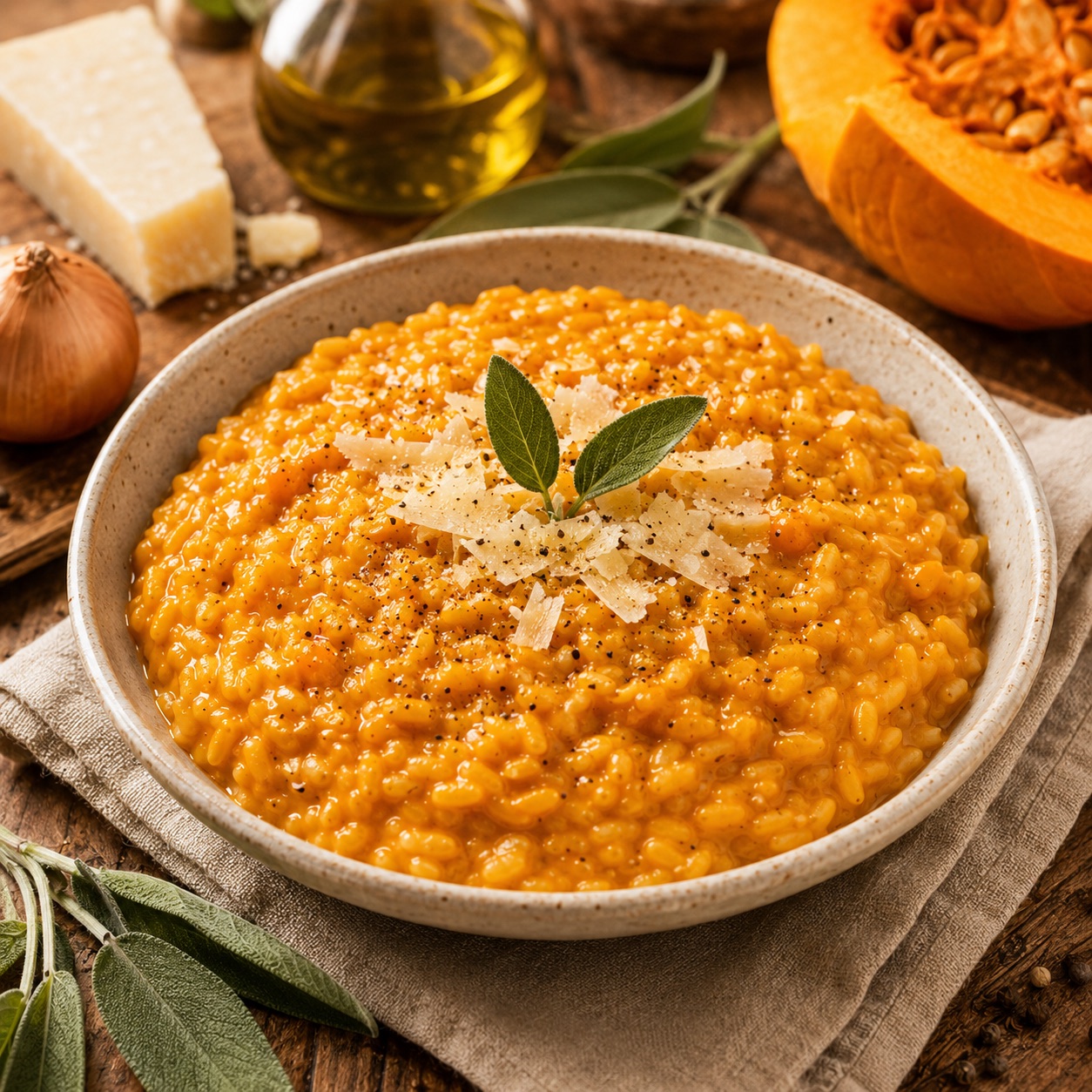
Risotto, in our house, was a winter posture: my mother standing at the stove, ladle in hand, not leaving. Pasta forgave you for walking away. Risotto did not. And of the risotti in her rotation, the zucca was the one that announced autumn — the same long Neapolitan squash from the market, 'a cucozza, that went onto the grill for the contorno went into the pot for this, cubed small, half-dissolving into the rice until the whole pot turned orange.
The dish works because pumpkin wants to fall apart. You cook the cubes until soft — roasted in the oven if you want a deeper flavor, or simply in the pan with a splash of water — and then you let the risotto finish the demolition. By the end there should be almost no whole pieces: the squash becomes the sauce, the rice carries it, and the Parmigiano and butter at the end pull everything into one silky thing. Sweet, but not dessert-sweet; the cheese and black pepper hold the other end of the rope.
My daughters know this dish by its color before its name — the orange bowl. Anna stirs when allowed, with supervision and great seriousness. The mantecatura at the end, off the heat — butter, Parmigiano, a few leaves of sage if there are any — is the step my mother performed with the pot already off the flame and the lid in her other hand, and it is the difference between rice in sauce and risotto.
What the stirring actually does
Arborio rice carries two starches: amylopectin on the outside, which dissolves into the cooking liquid, and amylose inside, which keeps the grain al dente. Constant stirring rubs the surface starch free, and the gradual additions of hot broth keep that starch in a concentrated suspension around the grains — this is the cream of a risotto, made of rice itself, no cream involved.
The pumpkin joins the same emulsion: its softened cell walls release pectin, a natural thickener, which is why a zucca risotto turns silky faster than a plain one. The final mantecatura off the heat beats cold butter and Parmigiano into this warm starch-pectin matrix — an emulsion in the technical sense, and the reason the texture is called all'onda, the wave.
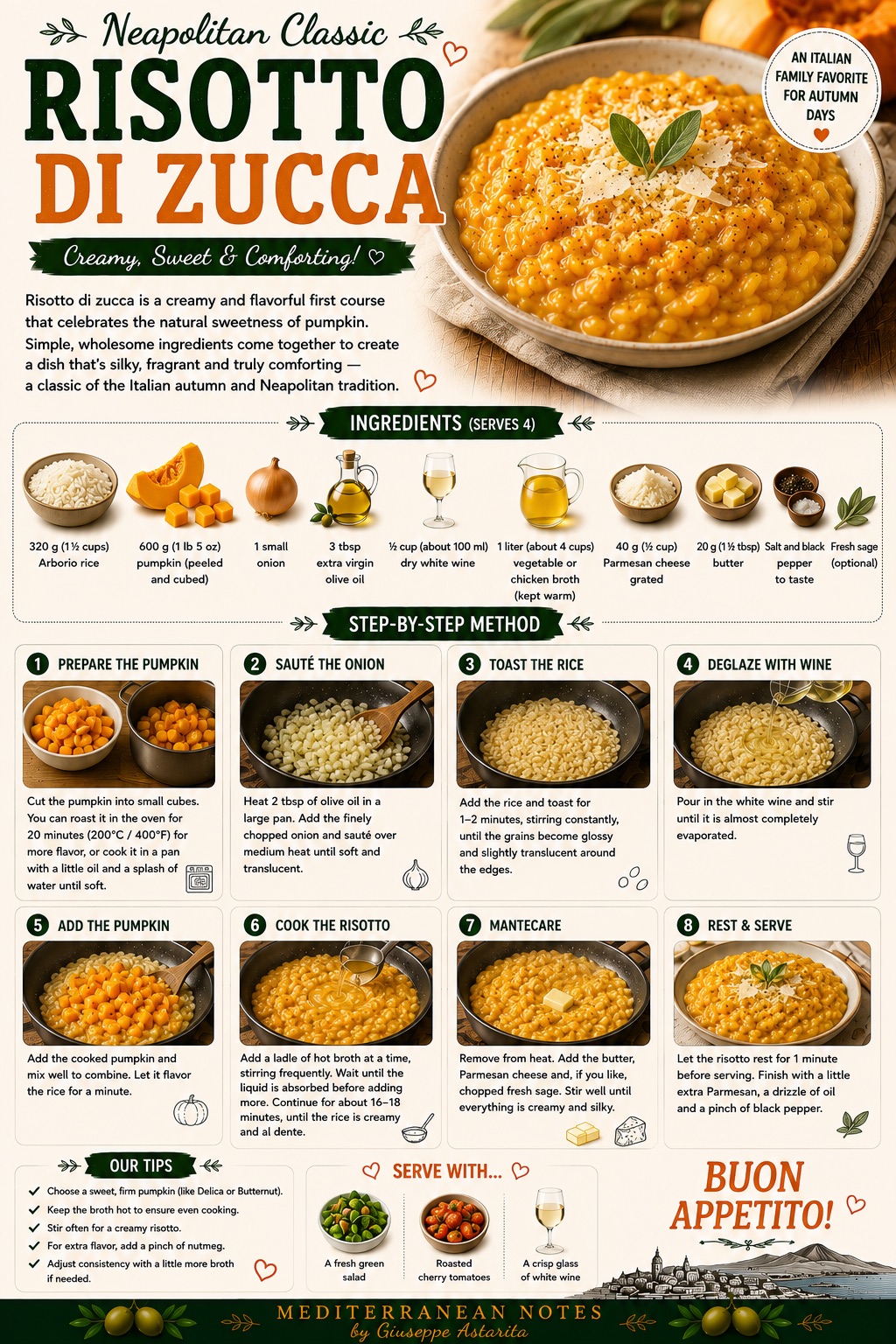
Tap to enlarge — Risotto di zucca: ingredienti, metodo, consigli
Recipe — Risotto di Zucca
Serves 4 · About 35 minutes
- 320 g (1½ cups) Arborio rice
- 600 g pumpkin peeled and cubed small
- 1 small onion finely chopped
- 3 tbsp extra virgin olive oil
- ½ cup (100 ml) dry white wine
- 1 liter vegetable or chicken broth kept warm
- 40 g Parmigiano grated
- 20 g butter
- Salt and black pepper to taste
- Fresh sage optional
The same squash runs through the whole Campanian autumn: grilled and dressed as zucca grigliata, melted into pasta as pasta e cocozza, and folded into rice here. Three dishes, one vegetable, one market stall. If it is summer instead and the squash is still flowers, the answer is the risotto ai fiori di zucca.