Le Olive in Campania
A small fruit with a big tradition — in cooking, and on the table before dinner
We love our olive oil — that is a given, and it goes without saying in any Campanian kitchen. But we also love to have olives themselves around: to add to dishes, to put out in a bowl before dinner, to pop one as you pass the kitchen counter. The olive is not a garnish in this tradition. It is an ingredient, a condiment, and an occasion.
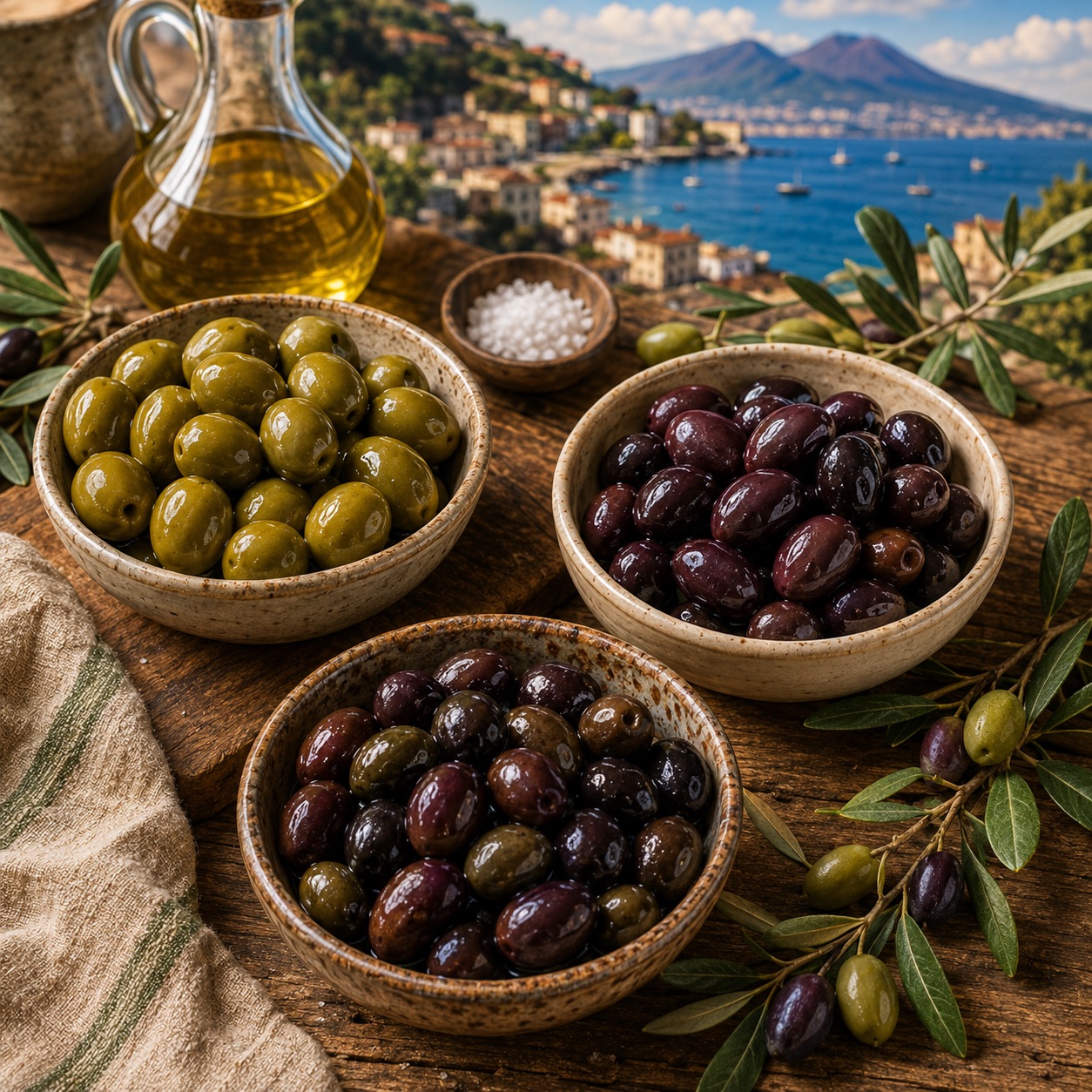
The olive tree has been in Campania for at least three thousand years, cultivated by the Greeks who founded the coastal colonies and integrated into the agricultural landscape of the region so thoroughly that it is now impossible to imagine the hills and terraces without it. The olives themselves — eaten whole, cured in brine, pressed into oil — are woven into the daily food of the territory in a way that is different from their role in other parts of Italy. In Campania the olive is not a specialty or an ingredient reserved for specific dishes. It is always present, always available, always appropriate. A bowl on the table before the meal begins. A handful in the braised escarole. A scattering through the puttanesca. A few pressed into the filling of the stuffed peppers. The olive is background and foreground simultaneously, depending on the dish.
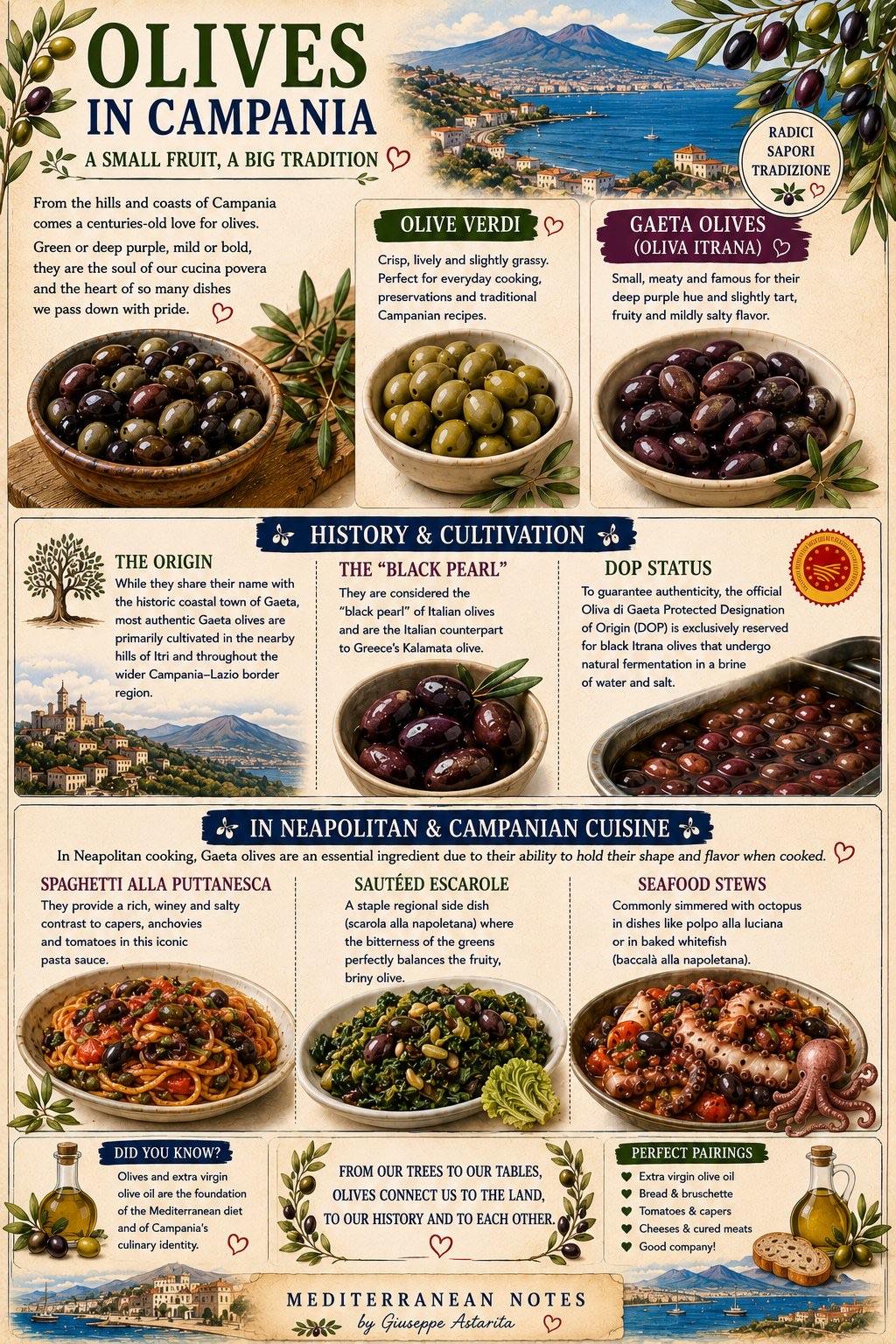
There are two olives that define the Campanian table. The first is the oliva verde — the green olive in its various local forms, crisp and slightly grassy, good for everyday cooking and for eating fresh as a table olive. The second, and the one most specifically associated with this territory, is the oliva di Gaeta — the Itrana olive, small and round and deep purple-black, with a meaty flesh and a flavor that is simultaneously fruity, mildly salty, and slightly tart. The Gaeta olive is the olive that appears in the recipes of this collection: in the scarola all'agro, in the baccalà alla napoletana, in the insalata di rinforzo, in the puparuoli mbuttunati. It holds its shape and its character during cooking in a way that larger, milder olives do not, and it brings a specific flavor note — the slightly winey, briny depth of a naturally fermented small olive — that is part of the identity of those dishes.
The Gaeta olive takes its name from the historic coastal town on the border between Campania and Lazio, though most authentic Itrana olives are cultivated in the nearby hills of Itri and throughout the wider Campania–Lazio border region. The DOP designation — Oliva di Gaeta Denominazione di Origine Protetta — applies specifically to the black Itrana olives that have undergone natural fermentation rather than the chemical lye-curing used to accelerate production of many commercial black olives. The natural fermentation process takes months rather than days and produces the complex, rounded flavor that distinguishes the genuine Gaeta olive from its industrially processed counterparts. When you find the real thing — at a Campanian market, at a good Italian specialty shop — the difference is immediately evident.
Raw olives are intensely bitter and inedible due to their high concentration of oleuropein — a phenolic compound that protects the fruit from insects and oxidation. All curing methods work by removing or breaking down the oleuropein, but they produce very different results. Chemical lye curing (using sodium hydroxide solution) removes oleuropein within days but also breaks down other phenolic compounds, producing a milder, blander flavor and a softer texture. Natural brine fermentation over several months allows lactic acid bacteria to gradually convert oleuropein into less bitter compounds while preserving a broader range of polyphenols — the compounds responsible for the fruity, complex, slightly tannic flavor characteristic of naturally cured olives like the Gaeta. The higher residual polyphenol content also contributes to the structural integrity of the olive flesh, which is why naturally fermented olives like the Gaeta hold their shape better during prolonged cooking than chemically cured ones, which tend to become mushy.
Where olives belong in the Campanian kitchen
The olive in Campanian cooking is almost never the star of a dish — it is the element that adds depth, salinity, and a specific fruity bitterness that the dish would be poorer without. It appears in combinations where its flavor is needed as a counterweight: with the bitterness of escarole in the scarola all'agro, with the richness of baccalà in the napoletana preparation, with the acidity of tomato and the intensity of anchovies in the spaghetti alla puttanesca. In all of these it contributes without dominating. Remove the olives and something is missing; the dish has less complexity, less of the specific southern Italian character that the Gaeta olive provides.
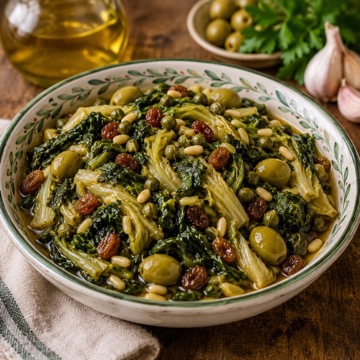
- Scarola all'agro — green olives braised with escarole, capers, raisins, pine nuts and vinegar. The olive's salinity and fruitiness against the bitter green.
- Spaghetti alla puttanesca — Gaeta olives with tomato, anchovies, capers. The classic Neapolitan pantry pasta. Nothing substitutes.
- Baccalà alla napoletana — salt cod simmered with tomato, olives, and capers. The olive carries the sauce.
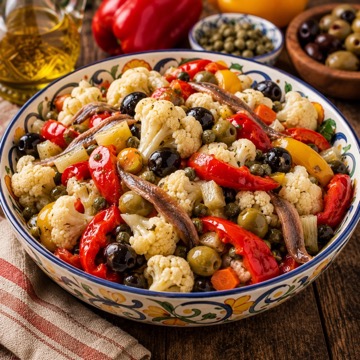
- Insalata di rinforzo — the Christmas salad. Olives alongside the papaccelle, capers, and cauliflower.
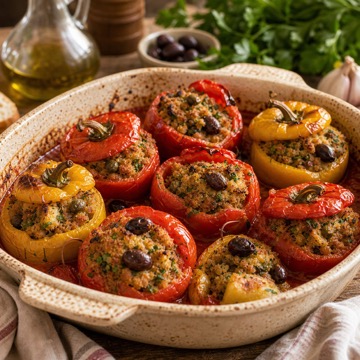
- Puparuoli mbuttunati — the Caserta stuffed peppers. Chopped black olives in the bread filling.
- Capitone arrostito — the Christmas Eve eel in agrodolce. Black olives in the sauce alongside raisins and pine nuts.
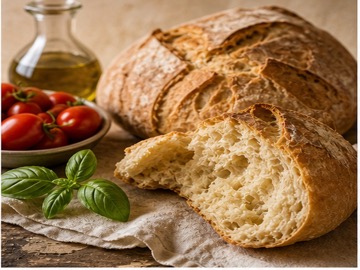
- On the antipasto plate — simply as they are, with bread and cheese and whatever else is on the table. This is perhaps the most important use of all.
The last entry in that list is worth dwelling on. The olive eaten on its own — pulled from a bowl, or picked from a jar in the refrigerator while something else is being prepared — is not a lesser use than the olive in a braised dish or a pasta sauce. It is a different use, and in some ways the most direct expression of what the olive is. The Gaeta olive needs nothing added to it. Its flavor is complete as it is: fruity and slightly salty and mildly tart from the natural fermentation, with the meaty texture of a small olive that has been cured correctly and has had time to develop. A good Gaeta olive eaten with a piece of bread and a glass of wine before dinner is one of the uncomplicated pleasures of the Campanian table, and it is one I try to replicate wherever I am.
In Massachusetts a genuinely good Gaeta olive requires some searching — a good Italian specialty market or an online source will have them, usually packed in brine rather than oil, which is the correct format for preserving the natural fermentation character. Oil-packed olives are not wrong, but they are a different product: the oil smooths the flavor and rounds the tart edge that is part of what makes the Gaeta distinctive. Brine-packed, they keep for several weeks in the refrigerator. We keep a jar in the kitchen at all times. Sometimes they go into a dish. Often they simply disappear.
Dalle nostre colline alla nostra tavola —
le olive ci connettono alla terra, alla storia, e a noi stessi.