Scarola all'Agro
Braised escarole with olives, capers, raisins and pine nuts -- also the pizza di scarole filling
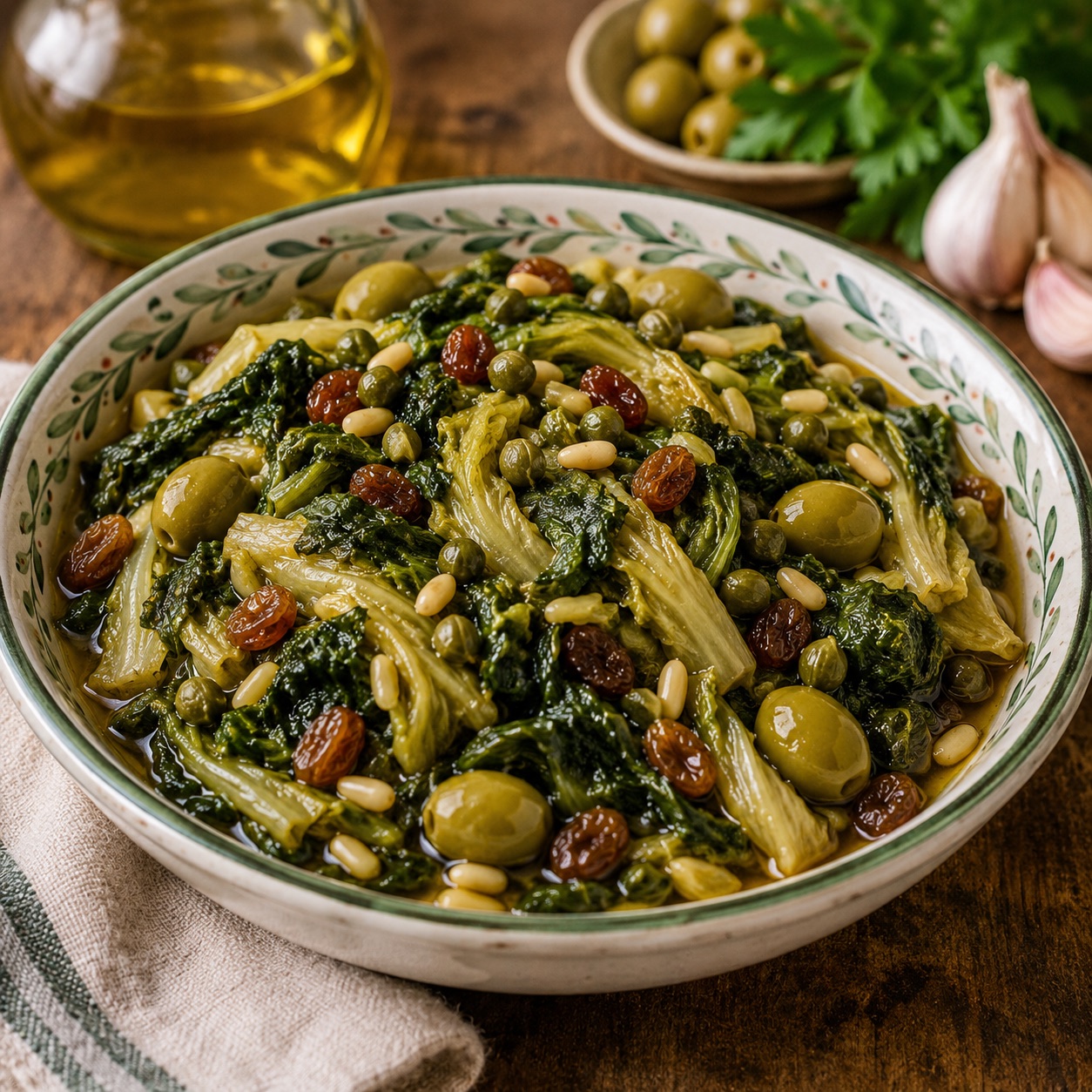
The scarola -- escarole, or curly endive -- is one of the vegetables most specifically associated with the Neapolitan table, and the all'agro preparation is the one that makes its particular character most evident. Bitter greens slowly braised with olives, capers, raisins, pine nuts, and a splash of red wine vinegar: the result is a dish of contrasts that balance each other precisely, with the bitterness of the escarole softened but not eliminated by the sweetness of the raisins, the richness of the pine nuts, and the mineral salinity of the olives and capers. The vinegar at the end ties it together and gives the brightness that holds the dish in place rather than letting it become heavy. This is the agrodolce principle applied to a green vegetable, and it is one of the most distinctive flavor combinations in the Neapolitan kitchen.
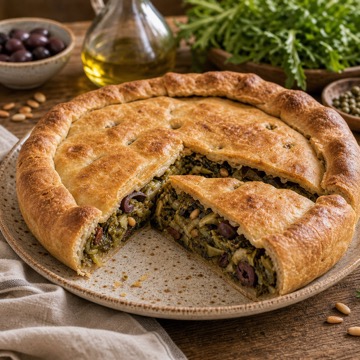
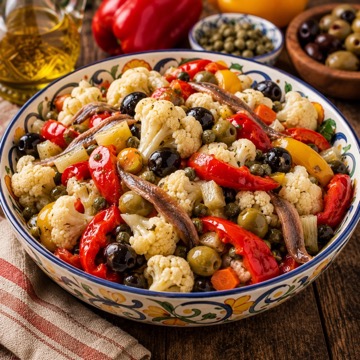
The scarola all'agro appears at the Christmas Eve table in Naples -- the cenone della Vigilia, the fish-based feast before midnight Mass -- where it is one of the traditional side dishes alongside the baccala and the insalata di rinforzo. But it is not only a holiday dish; it appears year-round alongside roasted meat, grilled fish, or simply on toasted bread as a light lunch. And it is the filling for the pizza di scarole -- the Neapolitan stuffed pizza where the braised escarole is enclosed in pizza dough and baked, one of the most beloved examples of the Neapolitan street food and holiday baking tradition.
Escarole contains lactucin and lactucopicrin -- sesquiterpene lactones that are responsible for the characteristic bitter taste of the chicory family (which includes endive, radicchio, and curly endive). These compounds are not reduced significantly by cooking, which is why braised escarole retains its bitter character even after 20 minutes of covered cooking. The agrodolce balance in this dish does not eliminate the bitterness -- it provides contrast. Raisins contain concentrated fructose and glucose that stimulate sweet receptors simultaneously with the bitter receptors activated by the lactucins, producing a perceptually less bitter result through competitive receptor saturation rather than through chemical neutralization. The acetic acid in the vinegar provides acidity that further suppresses bitter perception through a mechanism similar to how salt reduces bitterness in coffee. This is flavor balancing through sensory competition rather than through chemical change.
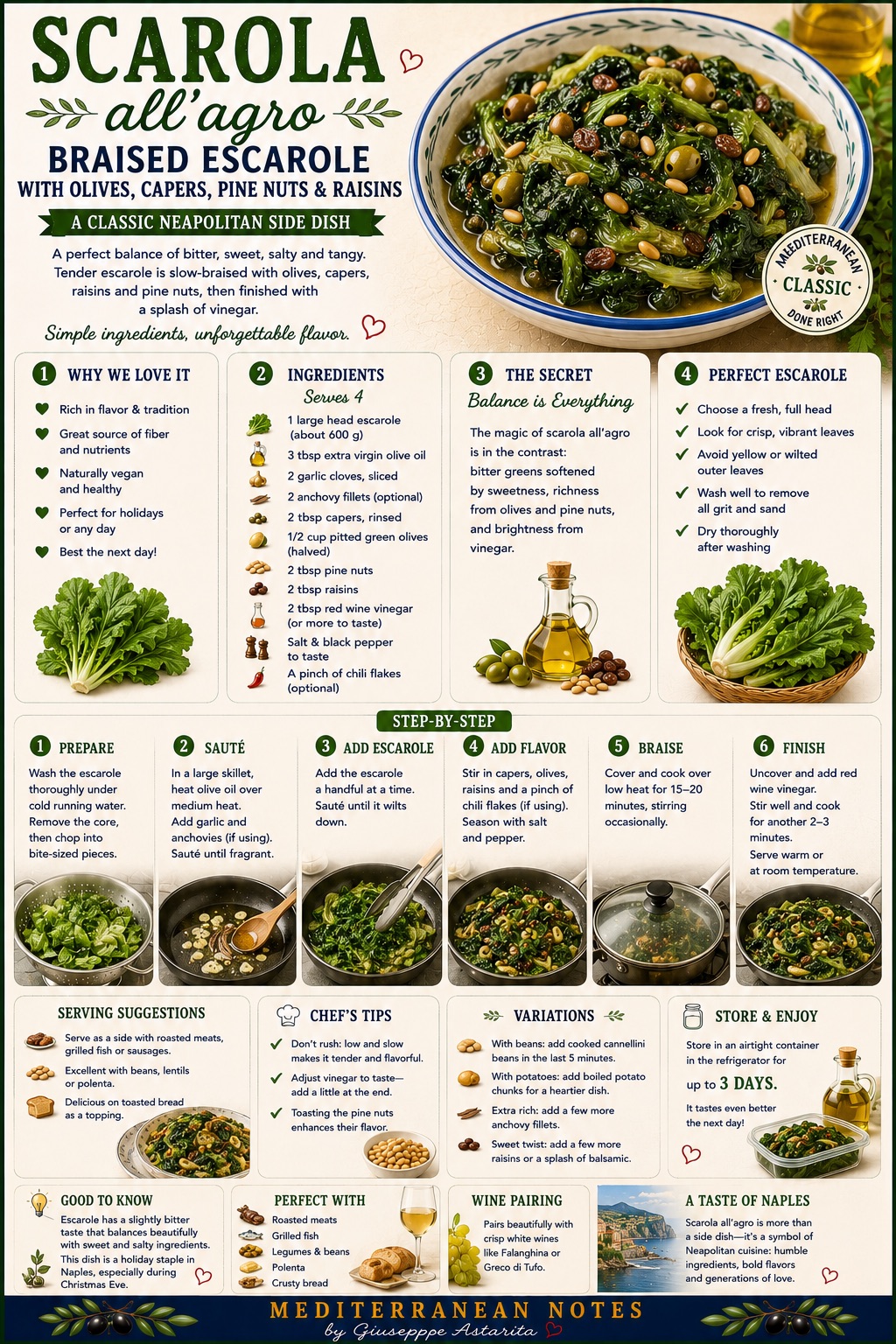
The recipe
Buon appetito.