Insalata di Fagioli e Cipolle
alla napoletana — my father's summer dish
This is what my father ate in summer when the heat made cooking feel unnecessary. Cannellini beans, thinly sliced red onion, olive oil, a splash of vinegar, fresh basil. No fire required. Everything assembled cold and left to rest. He liked it at room temperature, alongside whatever was on the table, or sometimes as the whole meal with bread.
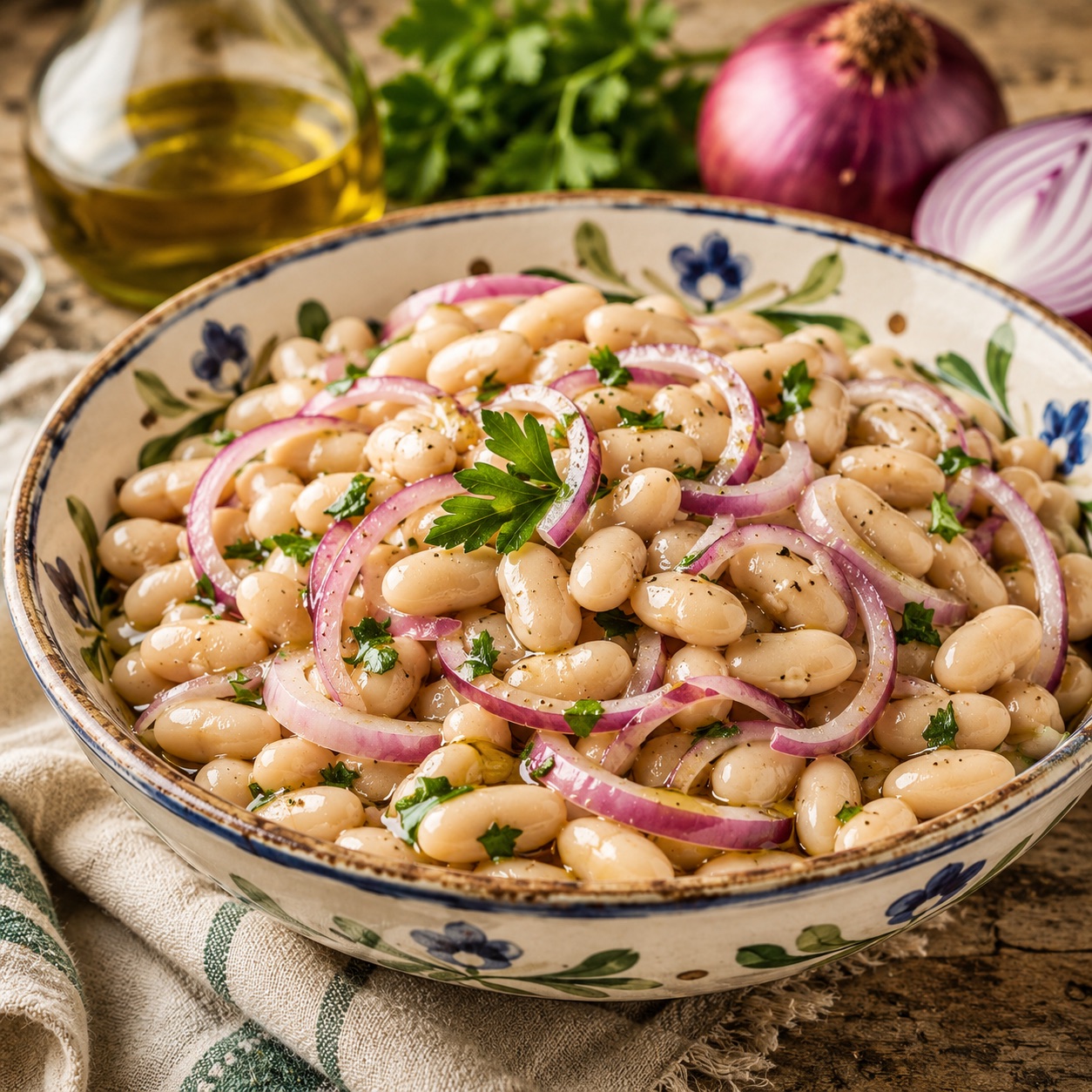
My father was not a cook in the way my mother was a cook. She ran the kitchen; he appeared in it occasionally, on his own schedule, to make the two or three things he made well. The spaghetti aglio e olio, the spaghetti al limone — and this: the bean salad. It was a summer dish, almost always. In the months when Caserta was hot and the kitchen was not somewhere you wanted to spend time, this was one of the things he put together without heat, without instruction, without consulting anyone. Beans from a tin — cannellini, good quality, rinsed well — thinly sliced cipolla di Tropea or white onion, olive oil, vinegar, a handful of basil leaves torn at the last moment. Assembled in a bowl and left to rest until the table was ready.
The dish is almost embarrassingly simple. It is not a recipe in any demanding sense — it is an assembly, a combination of things that are individually ordinary and together become something that tastes specifically of summer in the south of Italy. The key is the resting. Fifteen or twenty minutes at room temperature, the beans absorbing the dressing and the onion softening slightly in the acid, and the separate elements become a coherent whole. Eaten immediately after assembling, it tastes like beans with dressing. After resting, it tastes like the dish it is supposed to be.
The onion is worth discussing briefly. In the classic version this is a cipolla di Tropea — the elongated, deep-red sweet onion from Calabria that is milder and less aggressive than most red onions, sweet enough to eat in thin slices without the sharp bite that makes raw onion difficult for some people. If you can source it, use it. If you cannot, a brief soak of the sliced onion in cold water for five minutes removes enough of the sulfurous bite to approximate the same gentleness. Standard red onion soaked and dried works well. White onion is more traditional in some versions and slightly more pungent; a spring onion provides the lightest result of all.
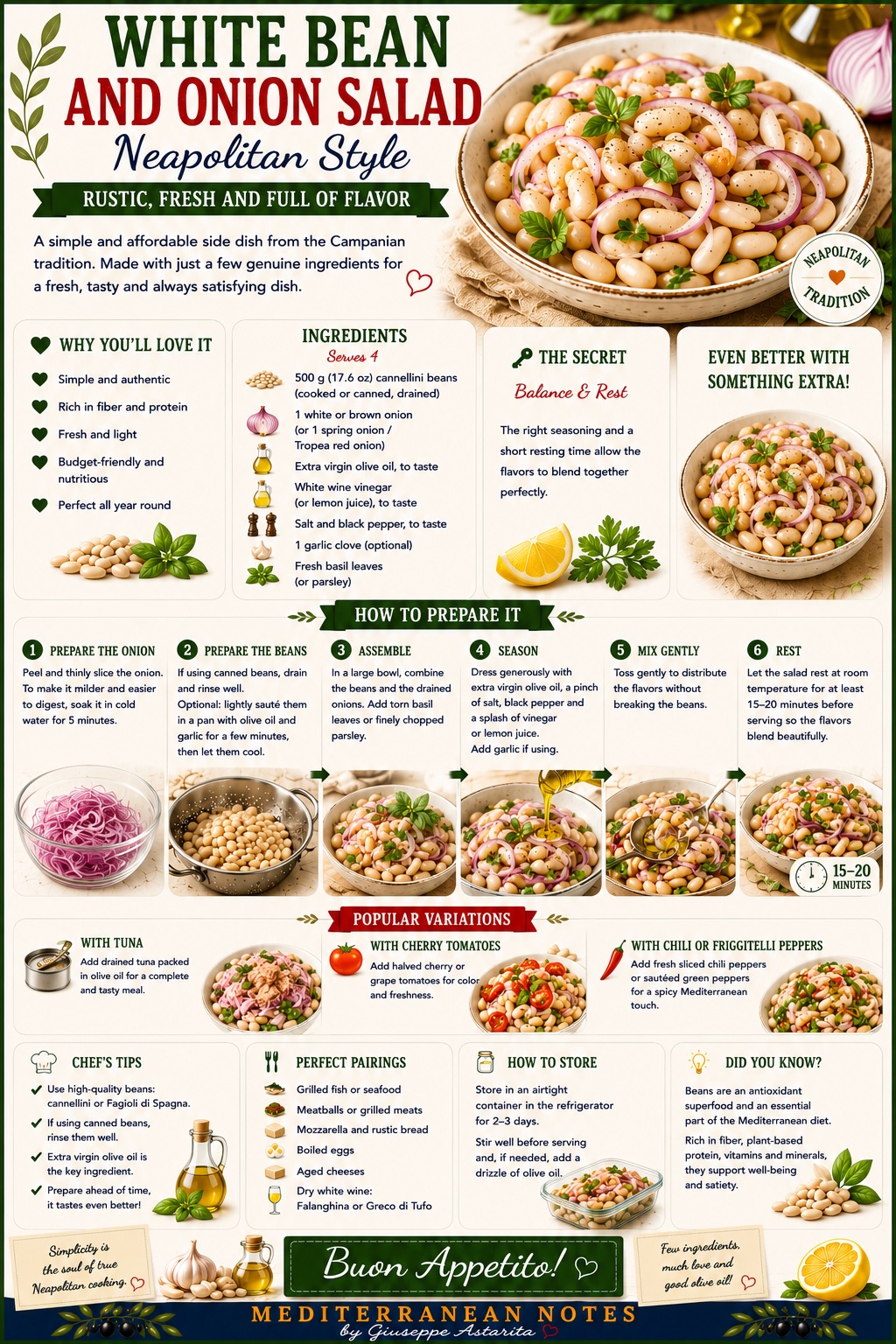
The tuna variation mentioned in the infographic — con tonno — is worth noting: a tin of good-quality tuna in olive oil, drained and broken into the salad just before serving, transforms this from a side dish into a light main. It is a Campanian combination as classic as the beans alone, and on the hottest days when nobody wanted to eat much, this version appeared on our table as the meal itself, with bread and nothing else. The tuna should be in olive oil, not in water — the oil-packed variety has a richer flavor and integrates better with the dressing.
Cannellini beans are one of the most nutritionally dense foods in the Mediterranean diet, combining plant protein, complex carbohydrates, soluble fiber, and a range of micronutrients in a form that keeps well and costs very little. Their protein content — approximately 7–8 g per 100 g cooked — is complementary to cereal proteins: the amino acids that beans lack (primarily methionine) are abundant in grains, and vice versa. This is why the combination of beans and bread in a meal like this one produces a more complete protein profile than either alone. The soluble fiber in cannellini beans, primarily in the form of resistant starch and oligosaccharides, slows glucose absorption and feeds beneficial gut bacteria — one of the mechanisms behind the association between legume consumption and reduced cardiovascular risk observed consistently in Mediterranean diet research.
The soaking of the sliced onion in cold water reduces the concentration of allicin and other organosulfur compounds responsible for the sharp, tear-inducing bite of raw onion. These compounds are water-soluble and leach out in 5–10 minutes. The resulting onion is milder but retains the flavor compounds — primarily the sulfenic acids produced when the cells are cut — that make raw onion a worthwhile ingredient rather than just a sharp one. The vinegar in the dressing also moderates the onion's bite over the resting period, which is another reason why the dish is better after fifteen minutes than immediately after assembly.
The recipe
Serves 4. No cooking required — this is an assembly. Use the best canned cannellini you can find, or cook dried beans from scratch if you have time. The dried version is richer and absorbs the dressing better; the canned version is what my father used and is perfectly good. Rinse thoroughly either way.
Variations
With good-quality tuna in olive oil: drain a 150 g tin, break into the salad gently just before serving. This version becomes a light main dish rather than a side. With halved cherry tomatoes for color and acidity. With a pinch of chili flakes or thin rounds of fresh chili for heat — this was the version my father made when he wanted something with more presence. With boiled eggs, quartered and arranged on top. All of these work. The bean and onion salad is one of those dishes that accommodates additions without losing its identity, because the identity is in the dressing and the resting rather than in the exact list of ingredients.
Buon appetito — e grazie, papà.