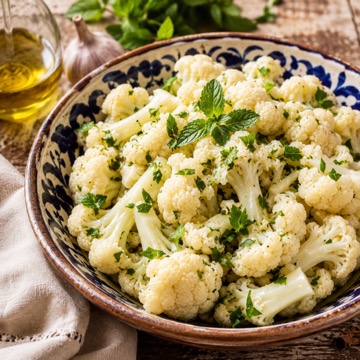
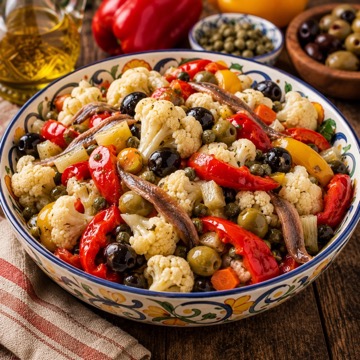
Cavolfiore con Olive e Capperi
Neapolitan style — cherry tomatoes, olives, capers, olive oil
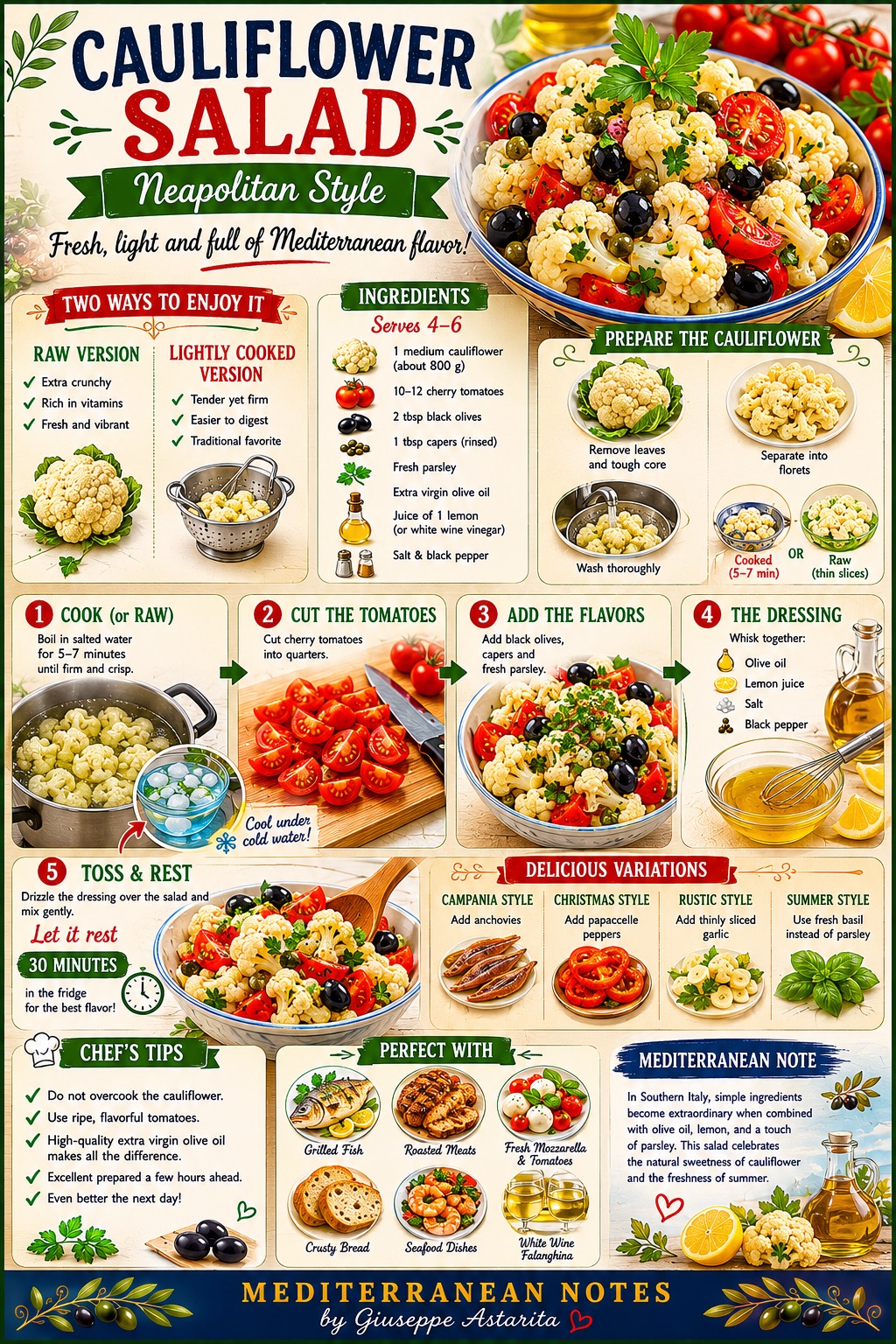
A colorful summer salad — cauliflower lightly cooked, cooled, then combined with cherry tomatoes, Gaeta olives, capers, parsley, and a dressing of olive oil and lemon. Better after thirty minutes. Better still the next day.
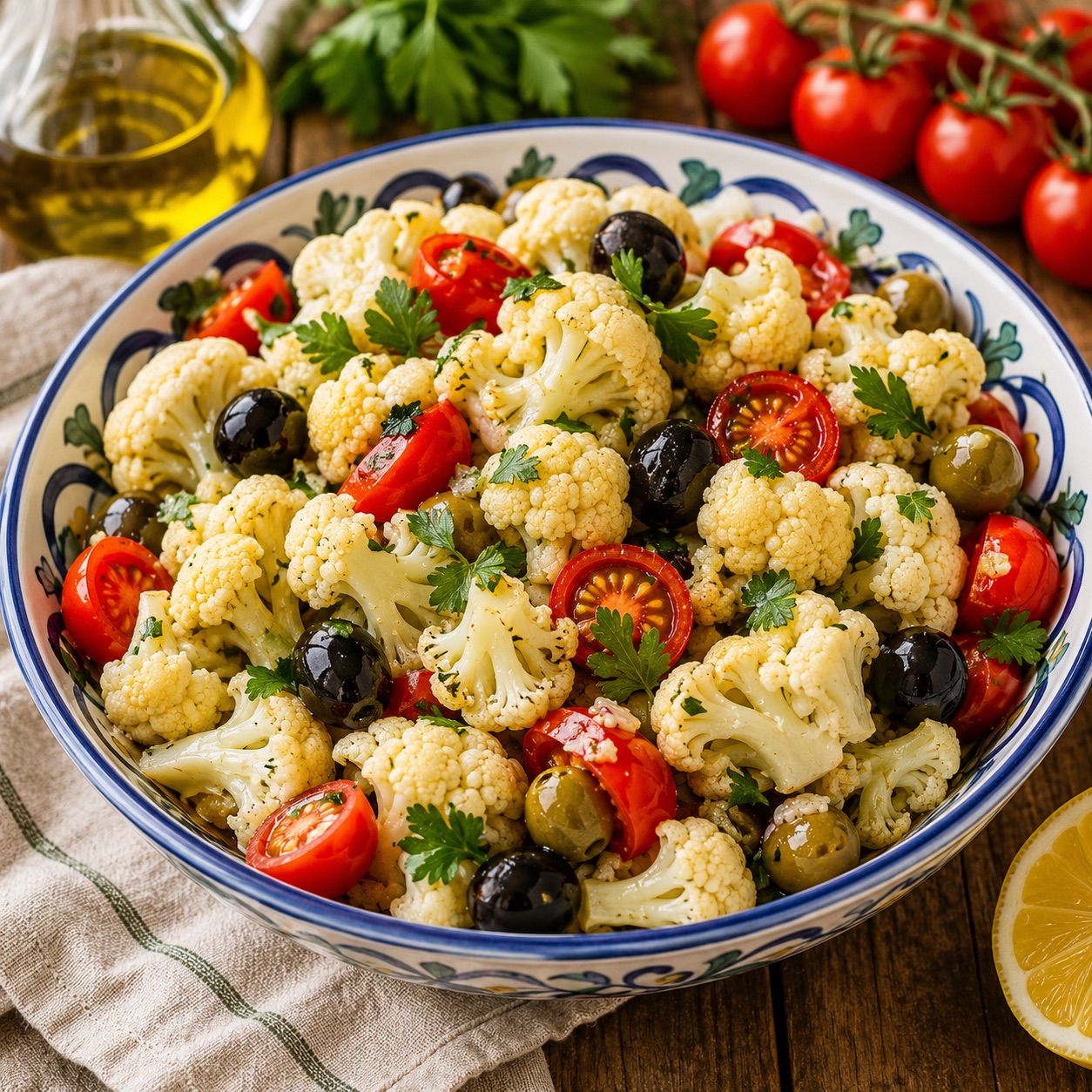
The Neapolitan summer table has a particular relationship with the cauliflower that seems counterintuitive until you taste it: the sweetness of lightly cooked cauliflower, dressed cold with acidic tomatoes and briny olives and capers, produces a salad that is more refreshing than most summer vegetables. The cauliflower provides substance and a mild sweetness; the tomatoes and vinegar provide acidity; the olives and capers provide salt and a mineral depth. The parsley, added at the end, lifts everything. It is a dish of contrasts that work because they are well-balanced, and it is significantly better when it has had time to rest and the flavors have found each other.
The cauliflower should be cooked until tender but firm — what the Italian kitchen calls al dente even for vegetables. It should hold its shape, not collapse. Five to seven minutes in salted boiling water is usually enough; test a floret before draining. The ice water step matters here for the same reason it matters for green beans and spinach: it stops the cooking at the right moment and keeps the color bright rather than grey-yellow.
Cauliflower belongs to the Brassica family and contains glucosinolates — sulfur-containing compounds that break down during cooking into isothiocyanates, some of which have documented anti-inflammatory and antioxidant properties. Brief cooking (5–7 minutes) preserves more of these compounds than extended cooking; overcooking also activates enzymes that release hydrogen sulfide, producing the unpleasant smell associated with overcooked brassicas. The ice water bath both stops this enzymatic activity and preserves the cellular structure that keeps the florets firm. The vitamin C in the cherry tomatoes and lemon juice enhances iron absorption from any greens added to the salad, and the olive oil facilitates absorption of the fat-soluble antioxidants present in the capers and olives.
The recipe
Serves 4–6. Raw or lightly cooked — both versions are given. The cooked version is the traditional Neapolitan one; the raw version is crunchier and requires slicing the cauliflower very thin.
Buon appetito.