Second Courses · A Caserta memory
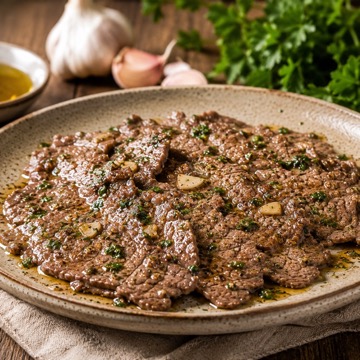
Fettina di Cavallo
Pan-seared horse steak in five minutes — lean, iron-rich, and seared fast so it stays tender. The fettina my mother bought after every blood draw.
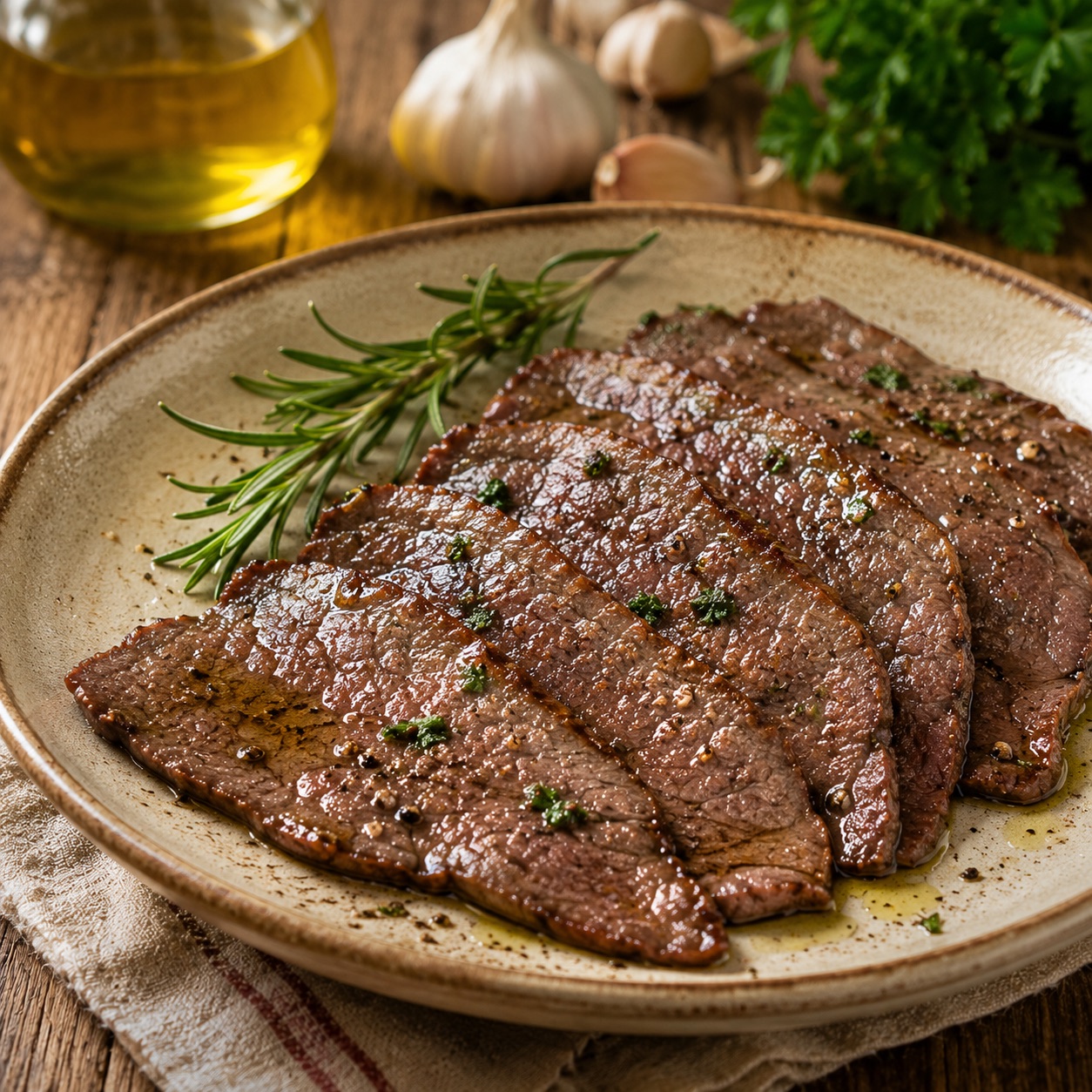
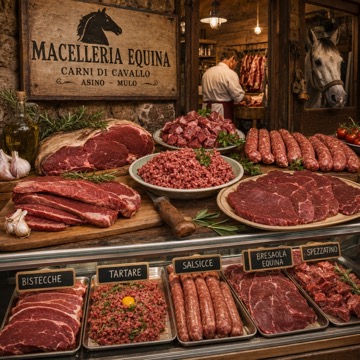
This is the dish at the heart of the horse butcher of viale Beneduce — the macelleria equina near where my grandmother lived in Caserta. My mother bought the fettina there whenever I had a prelievo di sangue, a blood draw: horse meat, she said, builds the blood back. The full story of that shop, and why those counters have nearly all disappeared, lives in the culture post. This is just the cooking.
It is barely a recipe — and that is the point. A fettina di cavallo is cut very thin and cooked very fast, the same family grammar as my father's fetta di carne in padella, applied to a leaner animal from a different counter. Garlic in the oil, a quick sear, a splash of wine, parsley at the end. The one way to ruin meat this lean is to keep it on the heat too long.
Why was horse meat prescribed to anemic children?
Horse meat carries more heme iron than beef — the most bioavailable dietary form of iron, absorbed far more efficiently than the non-heme iron in plants. It pairs this with very little fat and a complete amino acid profile. For a mid-century family that meant a clear, practical logic: after a child lost blood — or simply looked pale — a fettina di cavallo was the food that put it back. The science was real even when the reasoning was folk: lean, iron-dense, easy to digest.
Recipe — Classic Pan-Seared Fettina
Serves 2 · A few minutes — designed to keep the meat tender
- 400 g horse meat thin slices or strips — or substitute thin beef
- 2 garlic cloves crushed
- Fresh parsley chopped
- Extra-virgin olive oil
- ½ glass white wine optional
- Salt and black pepper to taste
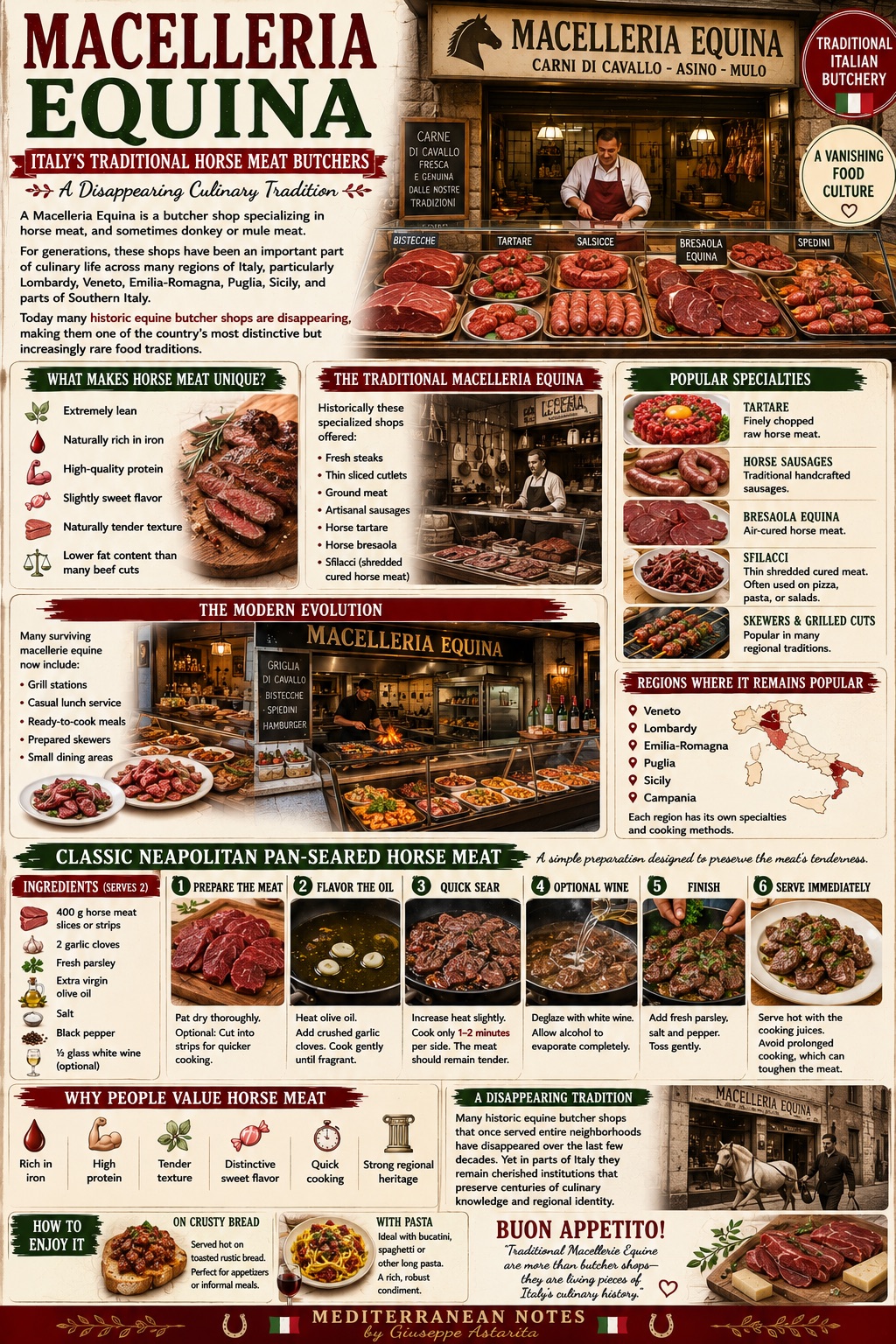
Tap to enlarge — classic pan-seared horse meat, step by step
I have not eaten horse meat in forty years. But the method is exact in my memory because it never changed — and because of where it came from. For that story, read The Horse Meat Butcher.