'O Broro 'e Purpo
Acqua di polpo — the legendary octopus broth of old Naples, served burning hot with a tentacle in the cup. Once on every winter corner, now almost impossible to find.
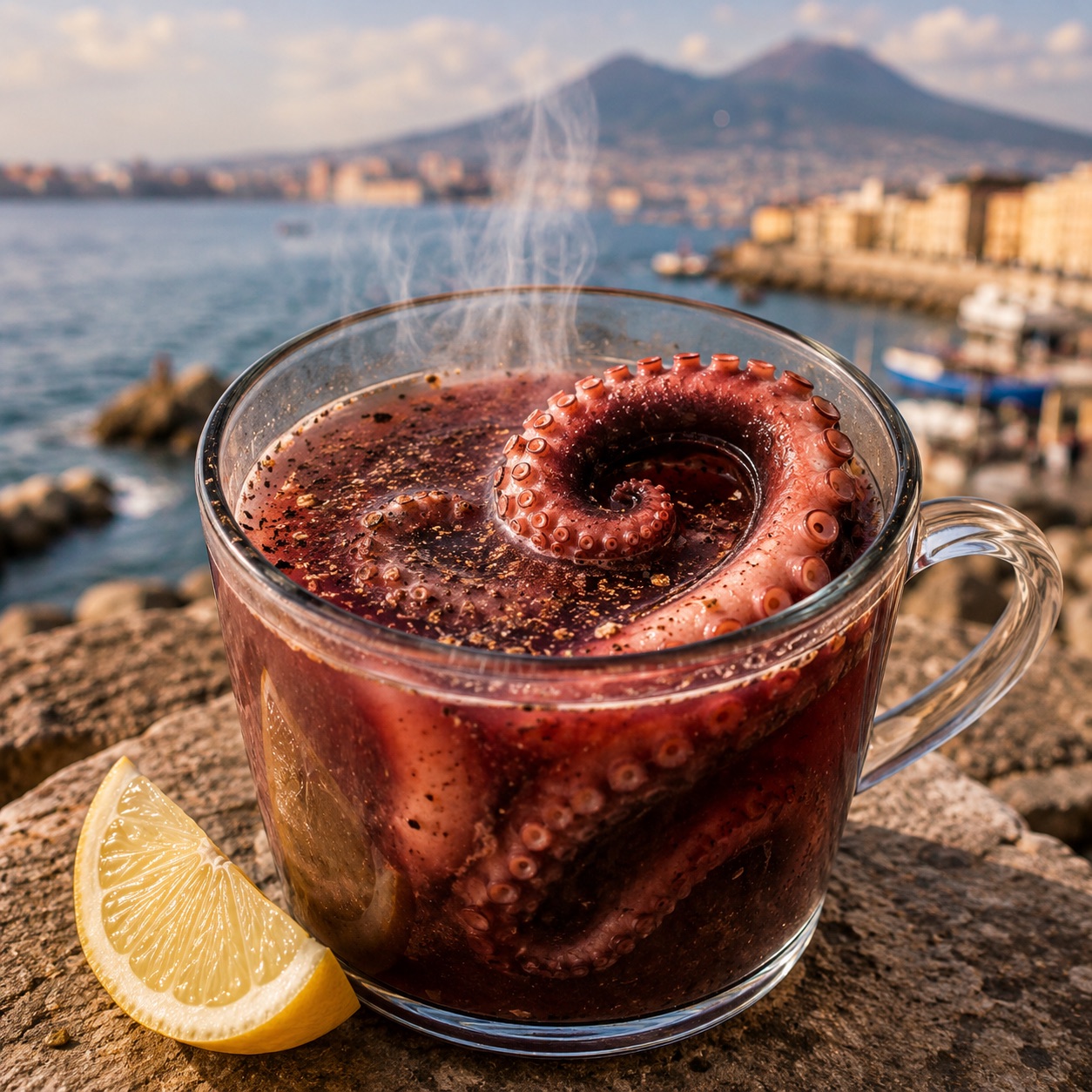
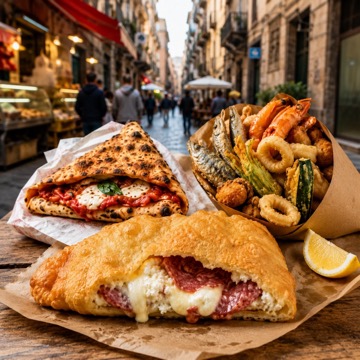
Some of the street foods of Naples are still everywhere. This one you have to hunt. 'O broro 'e purpo — acqua di polpo, the octopus broth — used to be common: the brodaioli, the broth vendors, pushed their steaming cauldrons through Porta Capuana and Pignasecca before dawn, boiled their octopus by the fish market, and sold the hot, peppery cooking water by the cup to laborers on winter mornings. A poor man's drink from a city where octopus was cheap and nothing — not even the water it cooked in — was wasted. Now it is a rarity you seek out, mostly in the winter holidays, traditionally on the eve of the Epiphany.
And here is the thing the old Neapolitans always said about it: it was good for you. Supposedly very healthy — restorative, warming, the thing that put strength back into a body that had been working in the cold since four in the morning. For once, the folklore holds up: the slow simmer pulls the octopus's collagen and minerals into the water, and what you drink is essentially a marine bone broth, gelatin-rich and deeply savory, seasoned with nothing but coarse salt and a violent amount of black pepper. A tentacle — the ranfa — snipped into the cup, a squeeze of lemon, and you understand why a city kept this alive for centuries.
What the slow simmer puts in the water
Octopus connective tissue is dense with collagen, which converts to gelatin over a 30–45 minute simmer — the same chemistry as a long meat broth, on a faster clock. The gelatin gives the broro its body and its faint stickiness on the lips; the purple-red color comes from the skin's pigments releasing into the water. Add the minerals of sea-creature and sea-salt, and the laborers' instinct was right: this is about as nourishing as a street cup gets.
The method, from the infographic
Bring a large pot of water to the boil with plenty of coarse salt and a very generous amount of crushed black pepper — some add a bay leaf or parsley stems. Dip the octopus by the head into the boil three times to curl the tentacles, then submerge it. Simmer slowly, 30 to 45 minutes, until tender and the water has turned deep purplish-red. Ladle the burning liquid into a cup, snip in a tentacle, crack more pepper over it — and finish with lemon. Drink immediately, standing, ideally in January.
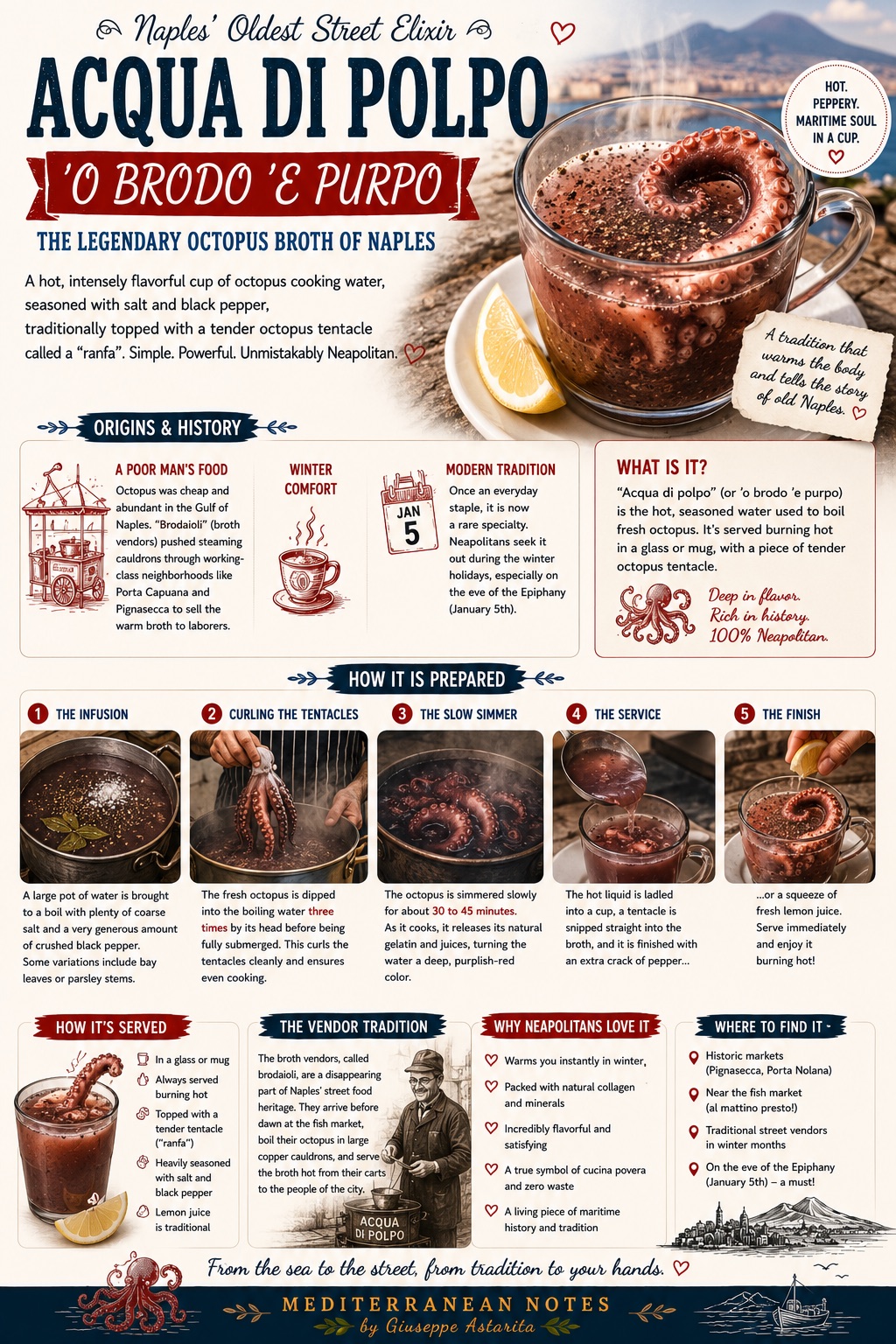
Tap to enlarge — 'O broro 'e purpo: origins, method, the vendor tradition
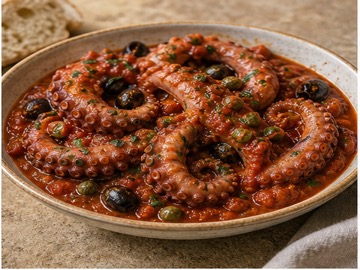
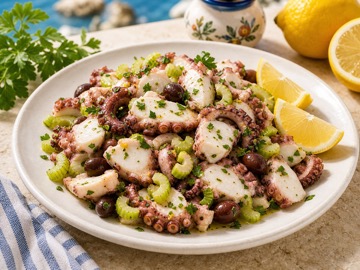
The octopus itself, once it has given its broth, is never wasted either — it becomes the insalata di polpo, or goes the way of the polpo alla Luciana. Cucina povera never used one part of an animal when it could use all of them — the principle that built half the street canon.