Zuppa di vongole
Clams in a tomato and white wine broth — light, bright, and fast. The kind of soup you make at lunch in summer when the vongole at the market looked good.
I have eaten mussels in Belgium with cream and shallots, and they were excellent, and the frites alongside them were the best I have ever had anywhere. I have eaten them in Brittany cooked with white wine and butter in large heaping pots you work through patiently over an hour. Both of these are genuinely good things. But they do not taste the same as the shellfish I grew up eating, and this is not nostalgia — it is chemistry. The animal filters the water it lives in. The Mediterranean is different water. The clam that grows in the Tyrrhenian produces something that tastes specifically of that sea, and you cannot replicate it by importing the recipe.
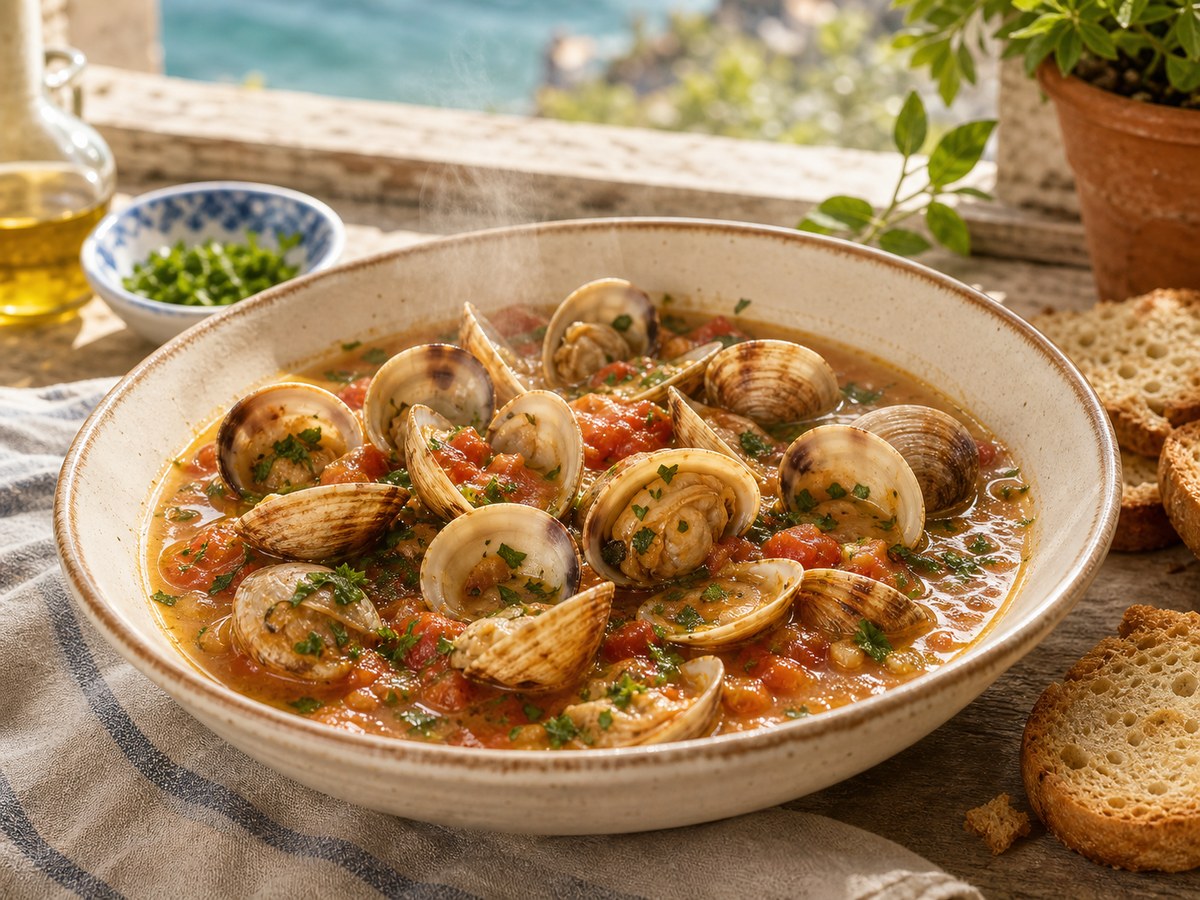
The zuppa di vongole is the lighter of the Neapolitan shellfish soups — brighter and more fragrant than the mussel version, with less mineral weight and more of the sweet marine character that makes vongole veraci what they are. It is built on a guazzetto: the liquid the clams release when they open over heat, filtered and enriched with cherry tomatoes, garlic, and white wine. This is the broth. The clams are returned to it at the end, barely warmed through. The bread is the vehicle, and it is not optional.
This was the soup I ordered most often at restaurants when I didn't want pasta — which was rare, but it happened. On summer lunch when the appetite wanted something with broth instead of something substantial, when the table was near enough to the sea that you could smell it, this was the right thing.
Why the guazzetto contains everything — and why you never discard it
Clams are filter feeders. They draw water continuously across their gills, extracting phytoplankton and dissolved organic compounds and concentrating them in their tissue. The liquid that pours out when the clams open over heat is not just water: it is the accumulated flavor of the sea in which the animal lived, plus dissolved minerals, amino acids, and water-soluble aromatic compounds — principally glycine, taurine, and glutamate — that together produce the characteristic marine sweetness of shellfish broth. This is the guazzetto. Discarding it and replacing it with stock or water produces a technically similar dish with a fundamentally shallower flavor. The one step that cannot be skipped is filtering it through cloth: live clams always carry some sand inside the shell regardless of how long they have been purged, and a single grain of sand in the bowl ruins the entire experience. The cloth catches the sediment; the liquid that passes through is clear, intensely flavored, and ready to become the soup.
Recipe — serves 4
Ingredients
Method
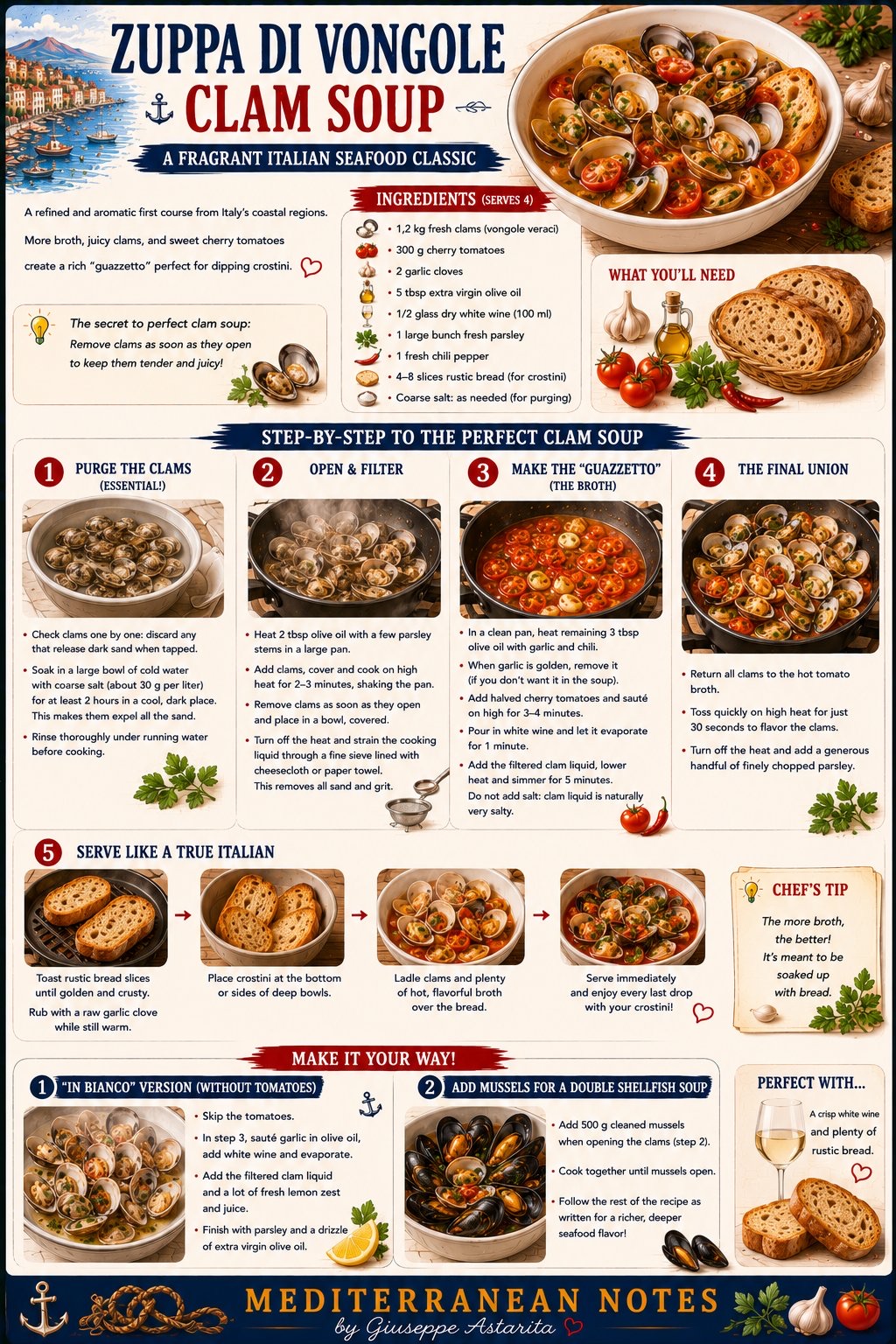
Purge the clams — start 2 hours before. Soak in cold water with coarse salt (30 g per litre) for at least 2 hours in a cool place. Tap each clam on the sink and discard any that do not close. Rinse thoroughly.
Sand in the broth ruins everything. Two hours minimum; overnight in the refrigerator is better.
Open the clams and capture the liquid. In a large pan, heat 2 tbsp olive oil over high heat. Add the parsley stems and the clams, cover immediately, and cook over high heat for 2–3 minutes shaking the pan. Remove clams as soon as they open — do not overcook. Strain the cooking liquid through a fine-mesh sieve lined with cheesecloth. Reserve this liquid. It is the soul of the dish.
Build the guazzetto. In a clean pan, heat the remaining 3 tbsp olive oil with the garlic and chili over medium heat. When the garlic is golden, remove it. Add the halved cherry tomatoes and sauté over high heat for 3–4 minutes. Add the wine and let it evaporate for 1 minute. Add the filtered clam liquid, lower the heat, and simmer 5 minutes. Do not add salt.
This is not a tomato sauce — it is a tomato-seasoned clam broth. Don't overcook the tomato.
Return the clams to the broth. Add all clams back to the hot broth. Toss quickly over high heat for 30 seconds — just enough to warm through. Turn off the heat and scatter a generous handful of chopped fresh parsley.
Assemble and serve. Toast the bread golden. Rub immediately with a raw garlic clove while warm. Place the crostini in deep wide bowls. Ladle the clams and plenty of broth over the bread. Serve immediately — the bread must soak the broth while it is still hot.
The bread is the point. If the bowl is not empty at the end, including the bread, something went wrong. Use a spoon for the broth, the shells for the clams, your hands when necessary.
The other shellfish soups
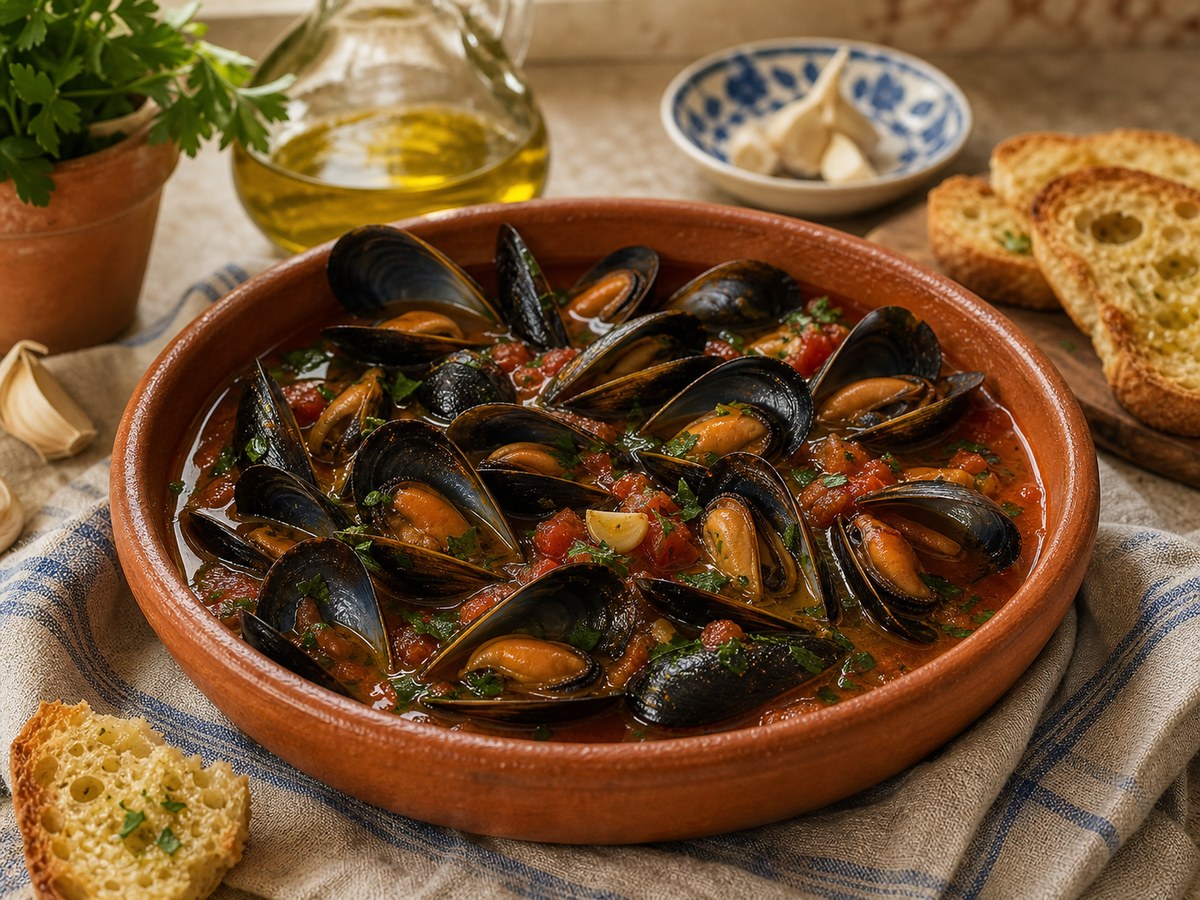
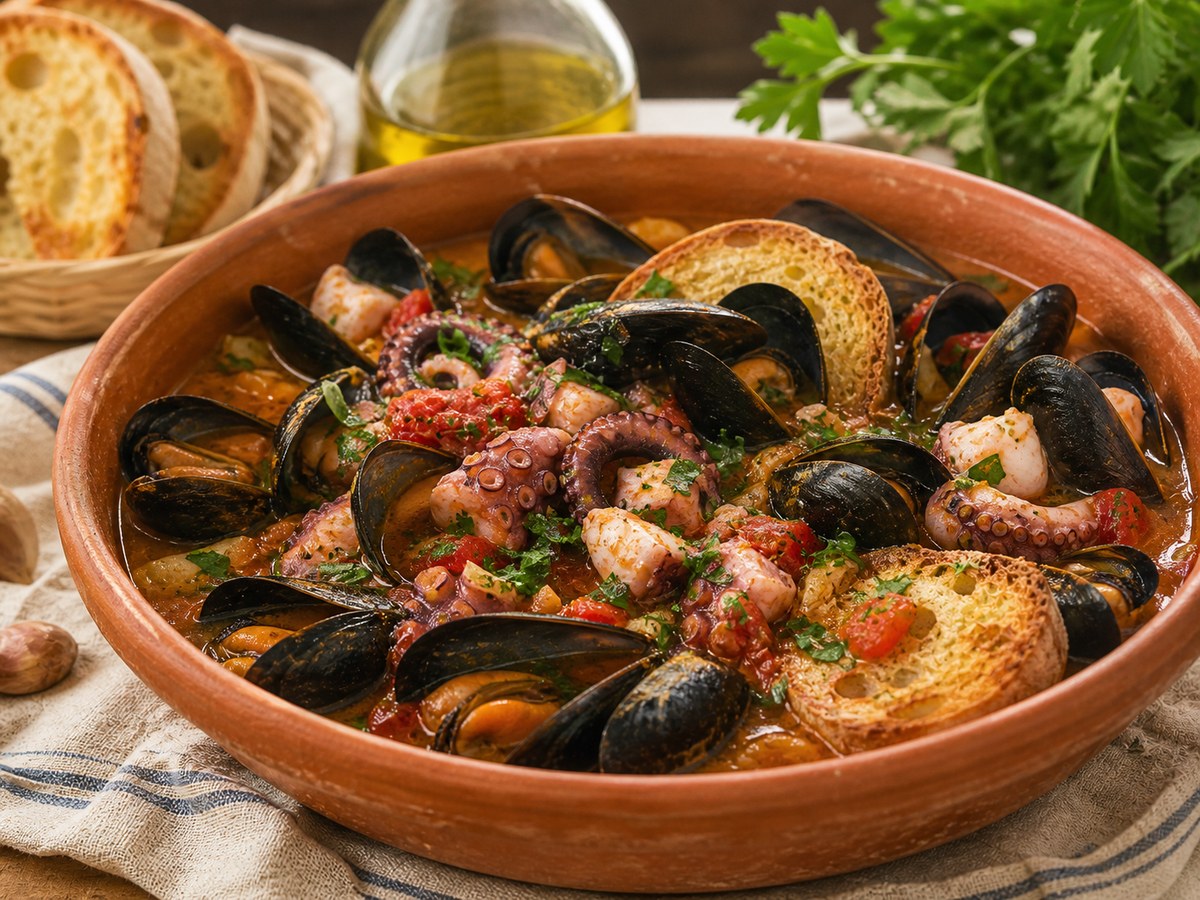
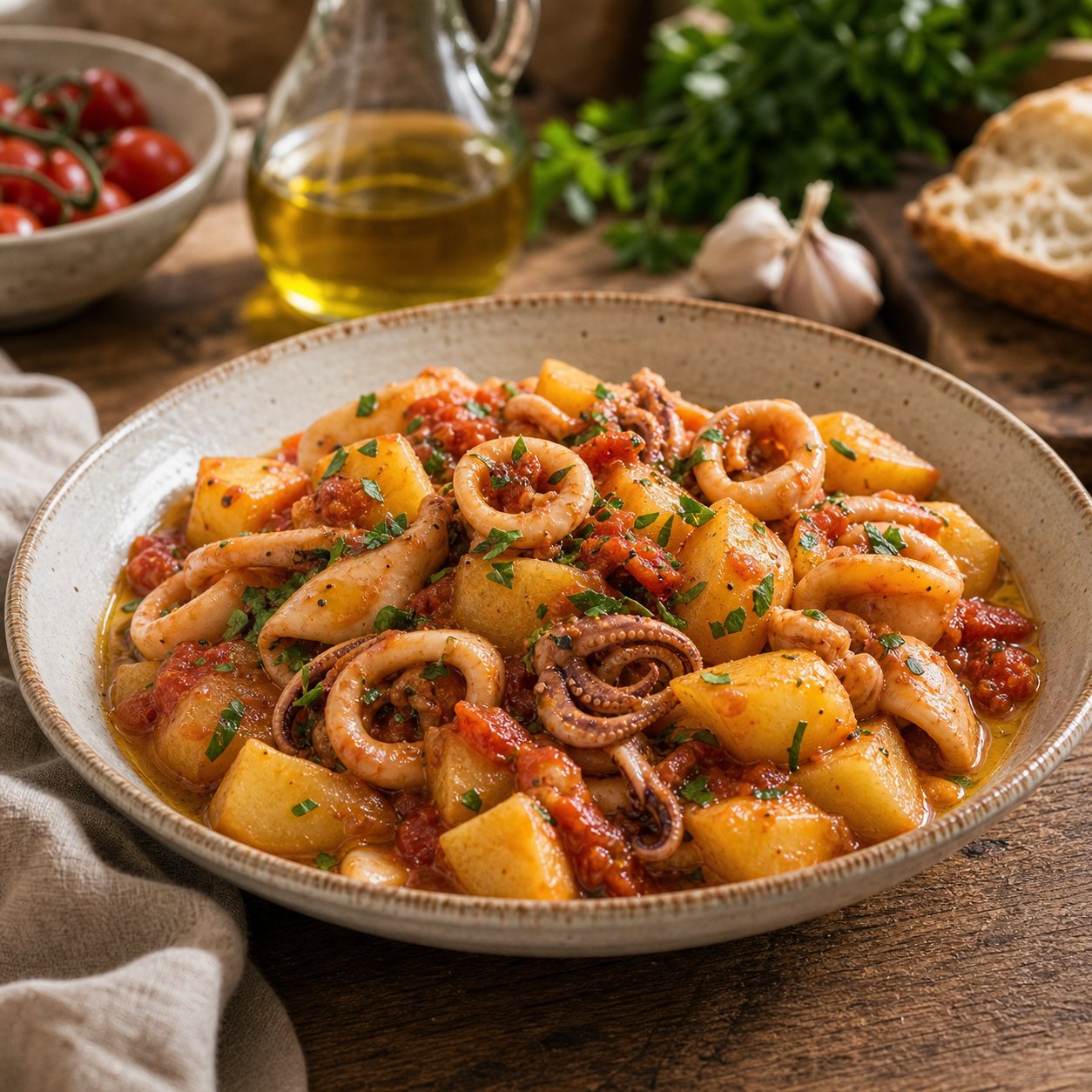
The clam soup is the lighter version. For the mussels — either the quick weekday version or the full Holy Thursday preparation with octopus, sea snails, and freselle di mare — see the companion pages.
Buon appetito — e che il brodo sia abbondante.