Zuppa Inglese
The Italian trifle — ladyfingers, Alchermes, custard, whipped cream
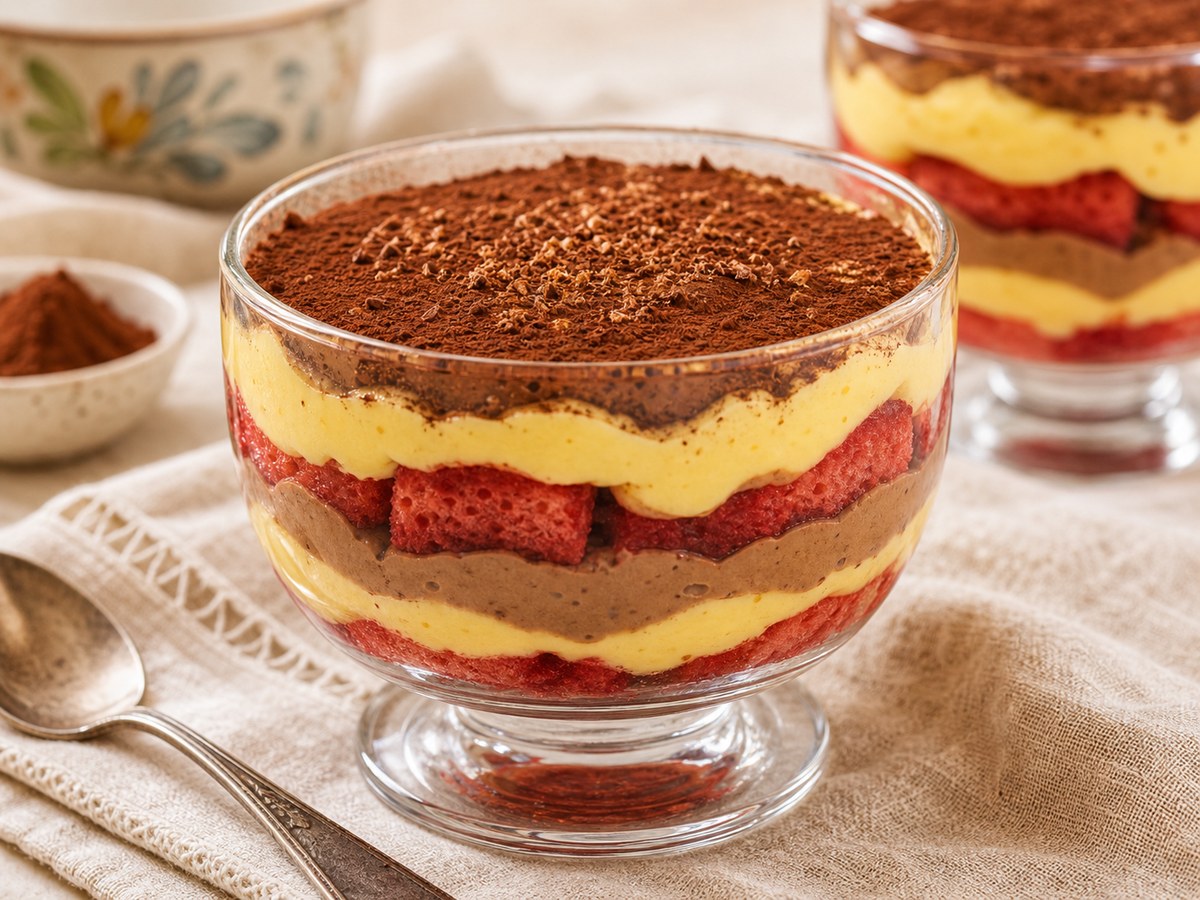
The name means English soup, which is neither accurate in language nor in content. Zuppa inglese is an Italian dessert — a layered construction of savoiardi (ladyfingers) soaked in Alchermes, the deep crimson Florentine liqueur that stains the biscuits a vivid pink-red, alternated with layers of thick vanilla custard, finished with whipped cream and a dusting of bitter cocoa. It has nothing to do with England and nothing to do with soup. The most credible explanation of the name is that it was originally prepared by Italian cooks for English visitors or merchants who requested something similar to their own trifle tradition, and the name stuck. What it became over the centuries in Italian pasticcerie and home kitchens is entirely its own thing.
The Alchermes is the ingredient that defines this dessert. It is a liqueur produced in Florence since the Renaissance, colored with cochineal (the natural dye derived from insects that also gives the color to certain Campari products) and flavored with cinnamon, cloves, cardamom, and rose water. Its color — deep crimson, almost purple — bleeds into the soaked ladyfingers and produces the characteristic contrast between the red-stained biscuit layers and the pale yellow custard. Without Alchermes, zuppa inglese becomes a vanilla custard dessert with ladyfingers; the Alchermes transforms it into something visually and aromatically specific. If you cannot source it — it is hard to find outside Italy — a combination of rum, a little grenadine for color, and a pinch of cinnamon approximates the flavor profile, though not the exact color.
The custard must be properly thick — not a light sauce but a dense crema pasticciera that holds its layers when assembled and sliced. The cornstarch is what provides this density; without it, the custard is too fluid and the dessert collapses rather than slicing cleanly. The ladyfingers should be dipped quickly — one to two seconds per side in the liqueur. More than that and they become saturated to the point of disintegrating; less and they have a dry center that breaks the layered texture.
Alchermes gets its characteristic deep crimson color from carmine — the dye derived from cochineal insects, which has been used as a food colorant since the Aztec period and was introduced to Europe through Spanish trade routes in the sixteenth century. The color is stable across a range of pH values and is not significantly affected by the alcohol or the acidic components of the liqueur, which is why the stained ladyfingers retain their vivid color even after refrigeration overnight. The aromatic profile of Alchermes — cinnamon, cloves, cardamom, nutmeg, rose water — comes from an infusion of spices in the alcohol base, similar to the technique used for limoncello but applied to dried aromatics rather than citrus zest.
The cornstarch in the custard functions as a thickener through gelatinization: when heated in the presence of water and egg yolks, the starch granules swell and form a continuous gel network that sets the custard into a sliceable consistency. Without cornstarch, an egg-yolk custard thickened purely by protein coagulation would need to be cooked to a higher temperature, risking curdling, and would produce a less stable gel. The egg yolks contribute lecithin — a natural emulsifier — that stabilizes the fat-water interface in the custard and produces its characteristic smooth, glossy surface.
The recipe
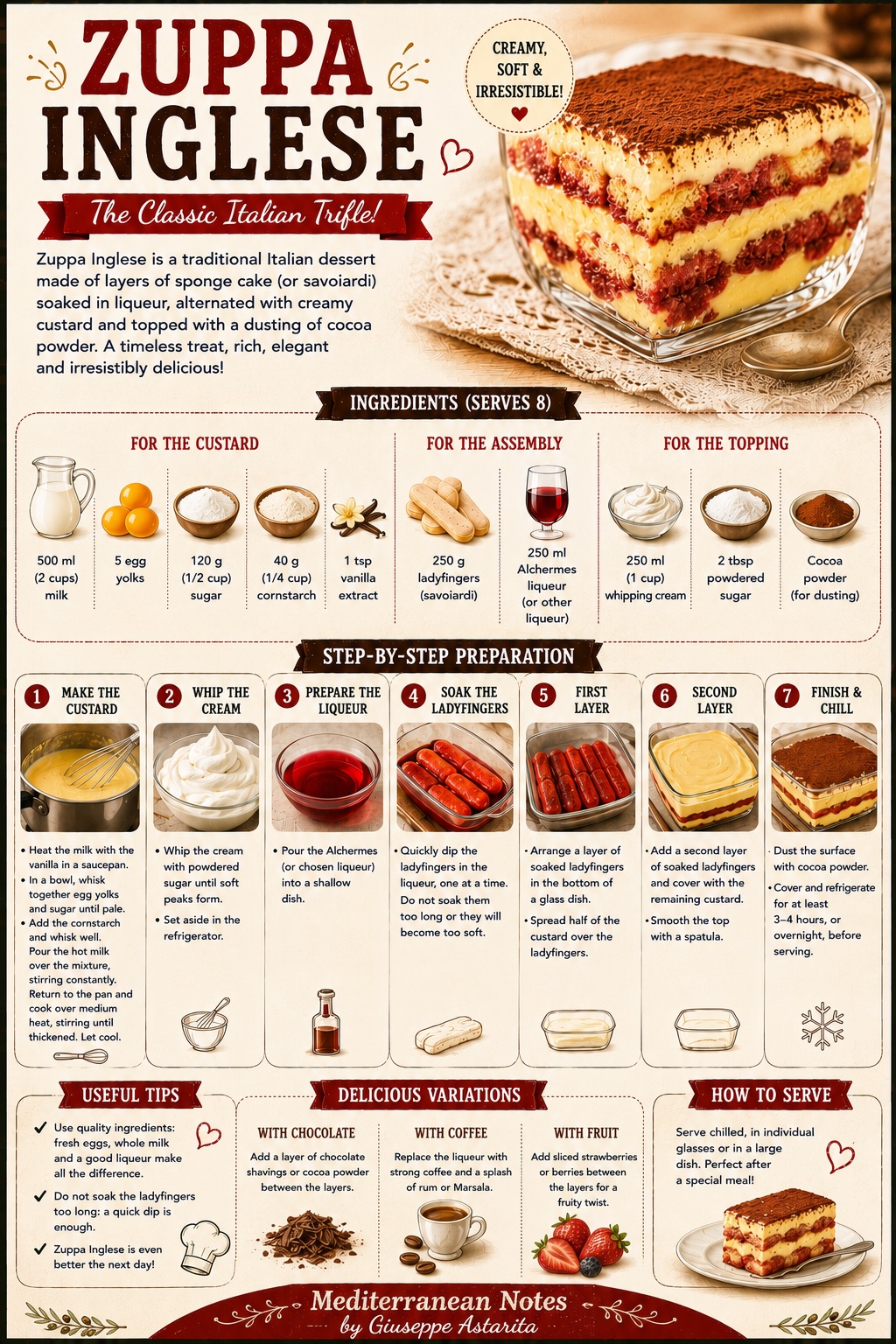
Serves 8. Make the custard first and let it cool completely before assembly. The dessert needs at least 3–4 hours in the refrigerator, preferably overnight.
For the custard
For the assembly
Buon appetito.