Verza Stufata
Braised savoy cabbage with pork or sausage -- the cabbage is the star
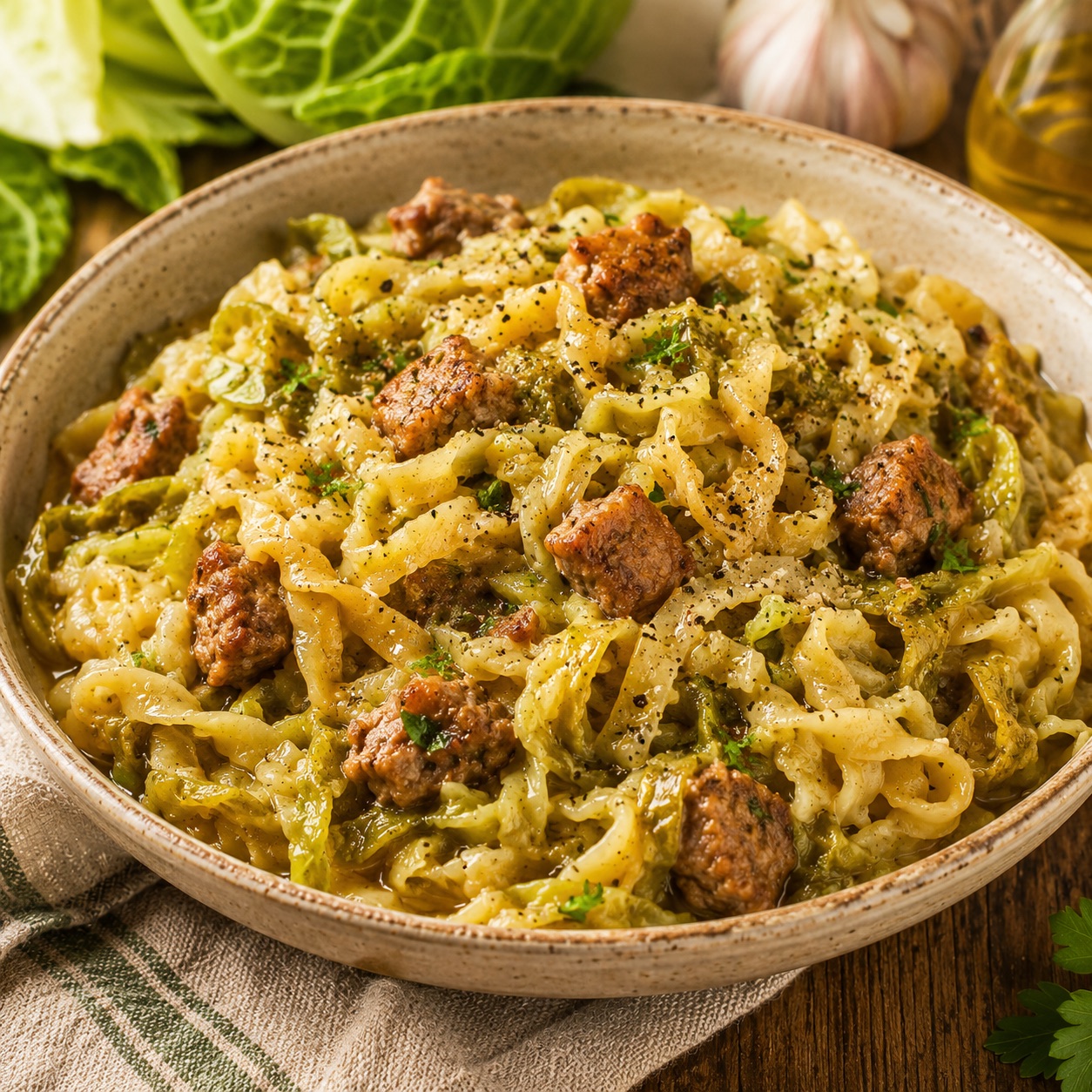
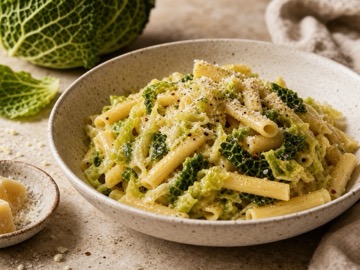
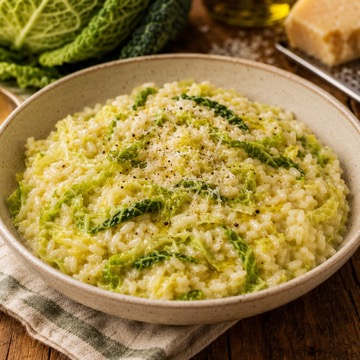
The verza stufata is the winter dish that the pasta con verza and risotto con verza share their starting ingredient with, but produces something entirely different: not pasta or rice as the vehicle for the cabbage, but the cabbage itself braised slowly with pork or sausage until it is meltingly tender and has absorbed the fat and flavor of the meat. The cabbage is the star, the meat is the seasoning. This distinction matters: a verza stufata made with too much meat becomes a meat dish with cabbage; made correctly it is a cabbage dish enriched by meat, and the subtlety of the savoy cabbage -- its mild sweetness, its slight bitterness, its ability to absorb surrounding flavors -- is what you taste first.
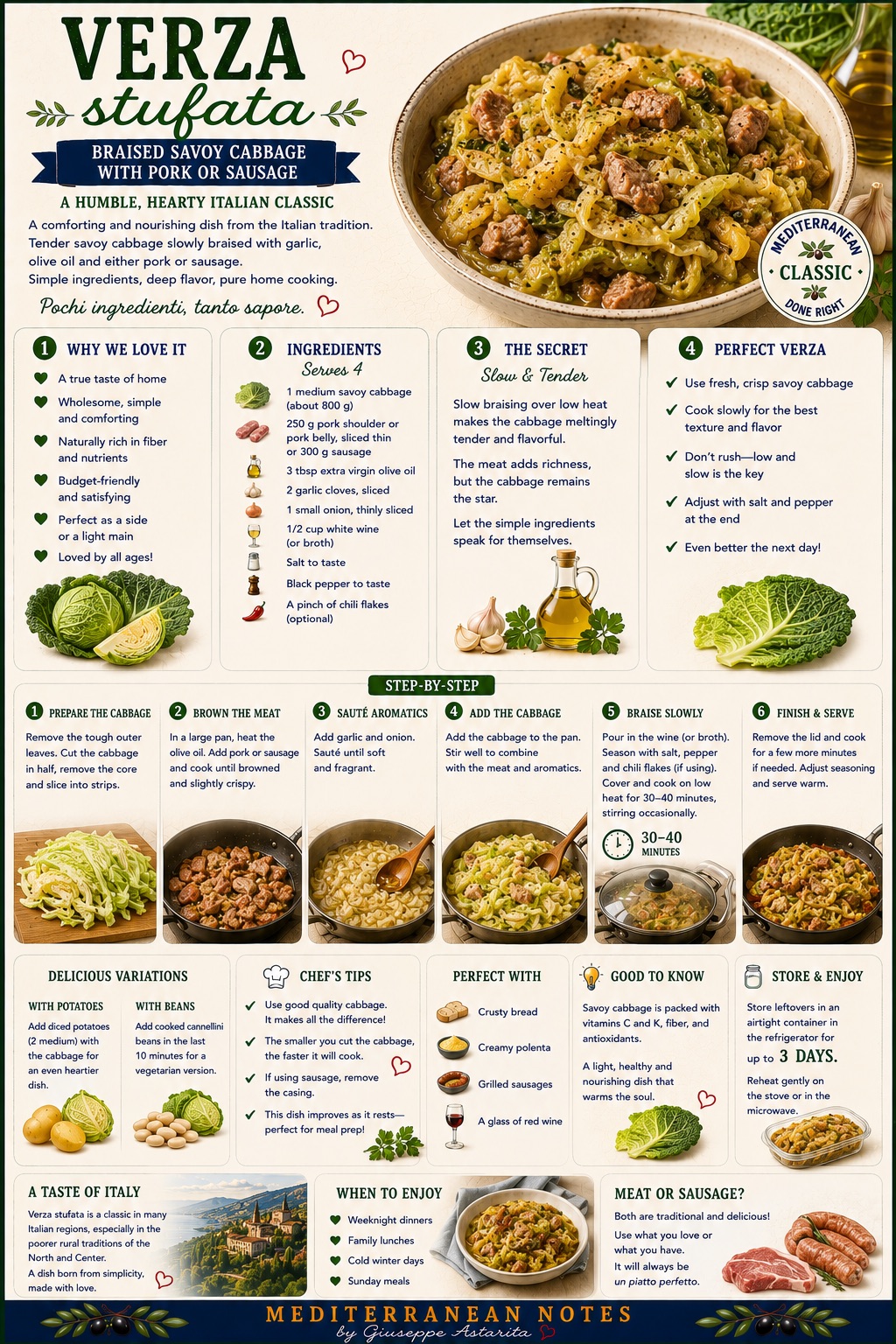
The slow braise is the technique and the patience is the requirement. Thirty to forty minutes over low heat with the lid on, the wine and the meat juices creating a steam environment inside the pan, the cabbage collapsing gradually from its initial bulk into a tender, concentrated mass that has taken on the character of the sausage fat and the garlic without losing its own. A rushed verza stufata -- cooked quickly at high heat -- produces al dente cabbage with sausage, which is a different dish. The slow version produces something unified and rich in the way that slow-cooked things always are: the individual elements have merged into something greater. This is the lesson of the minestra maritata applied to a simpler preparation.
Savoy cabbage has a particularly porous cellular structure compared to other brassicas, with larger intercellular spaces that allow liquids and fat-soluble flavor compounds to penetrate the tissue during slow cooking. This is why savoy cabbage becomes more flavorful during braising than, say, white cabbage, which has a denser cellular structure. The white wine deglaze dissolves the Maillard compounds from the browned sausage surface -- the fond -- into the liquid base of the braise. These compounds are then absorbed by the cabbage over the 30-40 minute covered simmer, distributing the roasted, savory character of the browned sausage through the entire dish rather than keeping it confined to the meat surface. The ethanol in the wine also acts as a solvent for fat-soluble flavor compounds that water alone cannot extract, carrying them into the braising liquid where they become available to the cabbage.
The recipe
Buon appetito.