Uova al Tegamino con Mozzarella
The second life of day-old fior di latte. Five minutes, one pan, and the yolks stay soft inside a white lake of melted cheese.
In our house in Caserta, mozzarella had a lifecycle. You bought it fresh — still dripping, wrapped in its paper — and it was at its best that day. Eaten with tomatoes, or melted over pasta, or simply pulled apart at the table with bread. But mozzarella aged quickly. By the second day it was still perfectly fine, just not quite the same: a little firmer, less milky, the water starting to separate. That is when my parents turned it into something else entirely.
The solution was eggs. Uova al tegamino con mozzarella is not a recipe that anyone in Naples needed to invent — it arrived naturally from the circumstance of having leftover cheese and hungry people. A small pan, some olive oil, crack the eggs, lay the sliced mozzarella around them, cover and wait. What came out of those five minutes was something that managed to be both extremely simple and completely satisfying: the white set, the yolk still soft, and the cheese melted into long strings that pulled apart when you tried to scoop it onto bread.
My father, who was not an adventurous eater in any direction, had no objection to this. Eggs he understood. Mozzarella he understood. The combination was exactly the kind of thing he would accept without question, which in our house counted as high praise. My mother made it quickly, without ceremony, usually when there was no plan for the evening or when the original plan had collapsed. It appeared on the table in the pan it was cooked in, with bread on the side and nothing else needed.
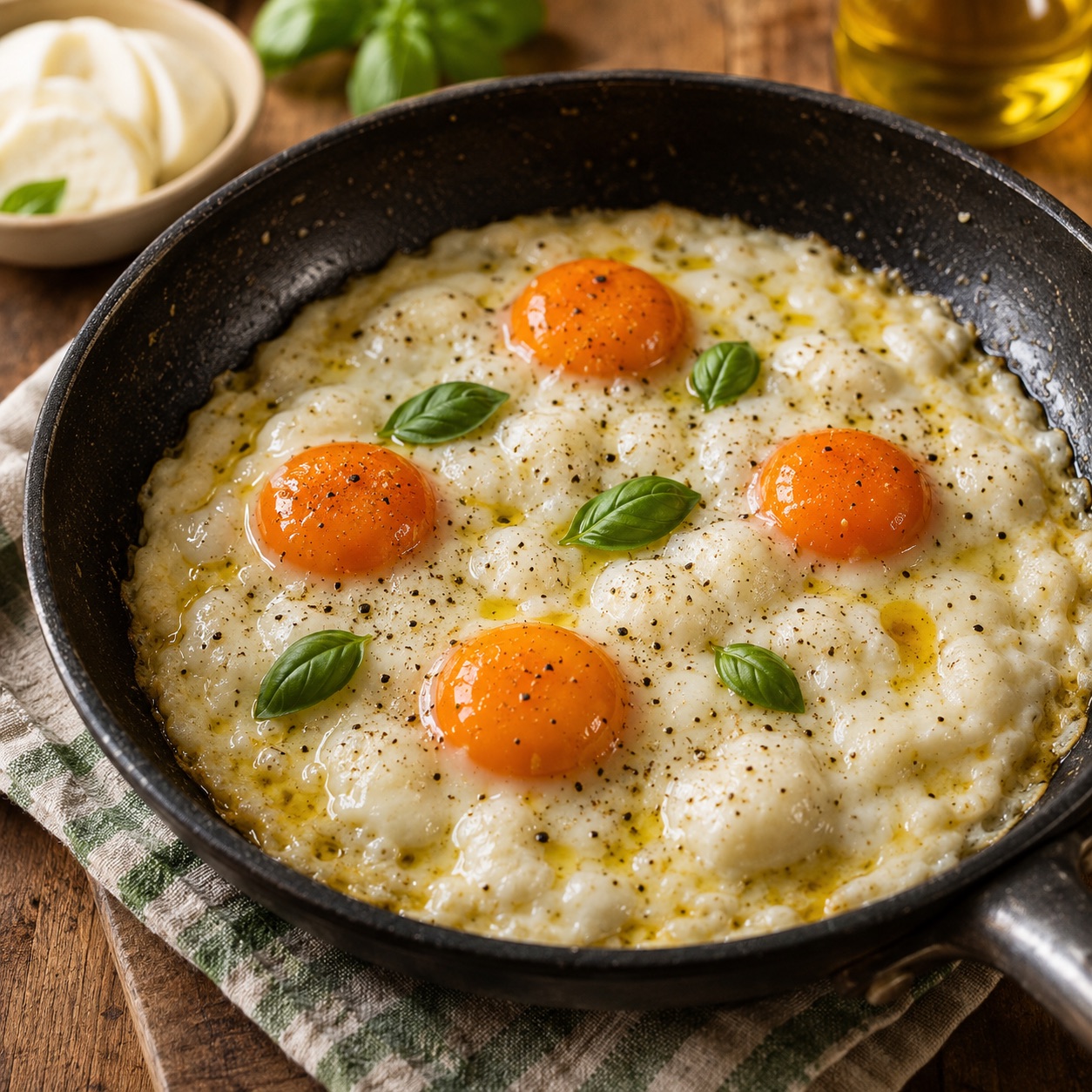
The dish is open by nature — the eggs lie visible in their pool of melted cheese, the yolks orange and intact at the surface, waiting to be broken. This is what distinguishes it from the filoscio, the folded version where beaten eggs enclose the mozzarella inside. The tegamino is the simpler of the two: the eggs are cracked whole, the cheese is arranged around them, the lid goes on, and five minutes later you are done. What you are aiming for is a specific moment — white opaque and set, yolk still runny, cheese pulled into long elastic threads.
I remember the yolks most clearly. Orange and intact, sitting in the white lake of melted cheese. Carolina, who has strong opinions about egg yolks, saves hers for last. She is correct about this.
Why the lid and why medium-low
Egg whites and yolks coagulate at different temperatures: whites begin to set around 60°C and are fully firm by 80°C, while yolks start thickening around 65°C and set hard above 70°C. The goal is to have the white opaque and just set while the yolk remains fluid — a window of only a few degrees.
The lid traps steam that gently cooks the top of the whites from above without requiring you to flip the eggs. This steam cooking keeps the surface temperature controlled. Medium-low heat underneath prevents the whites from turning rubbery at the base before the top has set. High heat will set the yolks before the whites are done.
Mozzarella melts progressively as its casein protein structure loosens with heat, releasing fat and water. Draining is important: excess water prevents the characteristic filante — the elastic, pulling threads — and instead produces a wet, steaming pool. Fior di latte behaves more predictably than fresh buffalo mozzarella for this reason.
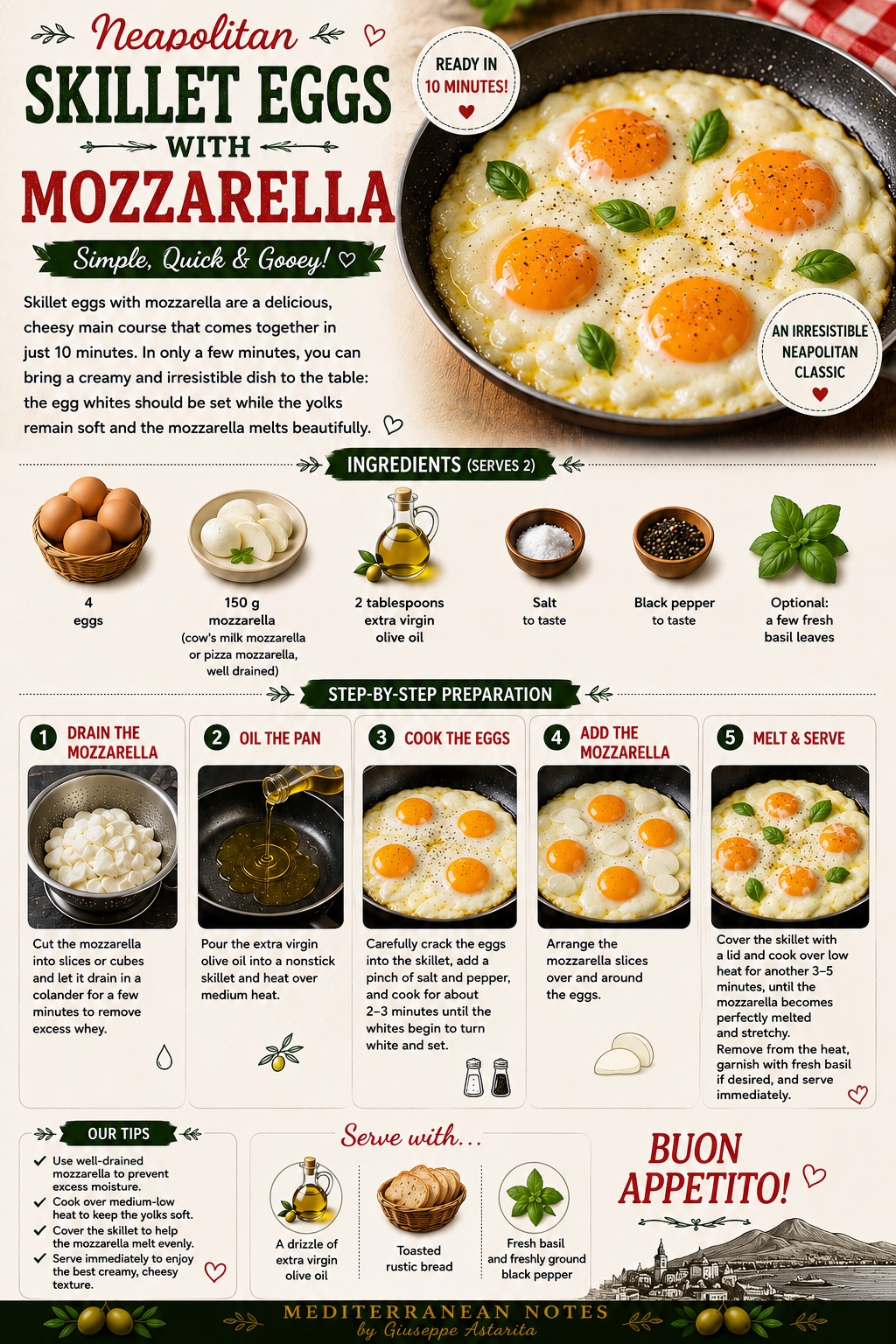
Tap to enlarge — Uova al tegamino: ingredienti, metodo, consigli
Recipe — Uova al Tegamino con Mozzarella
Serves 2 · Ready in 10 minutes
- 4 eggs the freshest available
- 150 g fior di latte day-old, well-drained, sliced
- 2 tbsp extra virgin olive oil
- Salt and black pepper to taste
- Fresh basil optional — a few leaves at the end
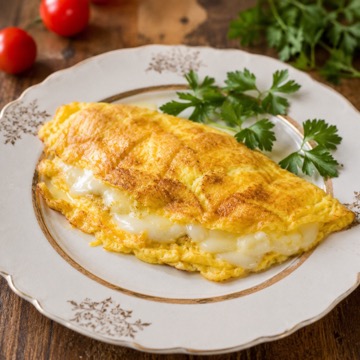
Both this and the filoscio come together in under ten minutes and from the same two ingredients. The tegamino is the one I remember more clearly from childhood — the yolks visible at the surface, the cheese arranged around them, the whole thing served in the pan it was cooked in. The filoscio is the folded version, the one that looks more composed on a plate. They are related and distinct. Each one is the right choice at a different moment, which is to say they are both the right choice most of the time.