Trippa alla Napoletana
Beef tripe in a light tomato sauce with bay and fresh mint — gentle where the soffritto is fiery. My mother and grandmother ate it happily. I watched, with respect.
Full honesty, which by now is this blog's house style: my mother and my grandmother ate trippa happily — and I never did. Not as a child, not now. I should also confess the larger context: I was vegetarian for twenty years, starting in my twenties, which tells you how far the apple can roll from the quinto-quarto tree. But the trippa alla napoletana belongs in this collection regardless of my squeamishness, because it sat on the tables I grew up around, my grandmother's above all, and because it is one of the gentlest and most aromatic things Naples ever made from the parts nothing else wanted.
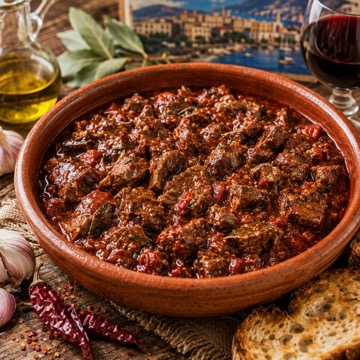
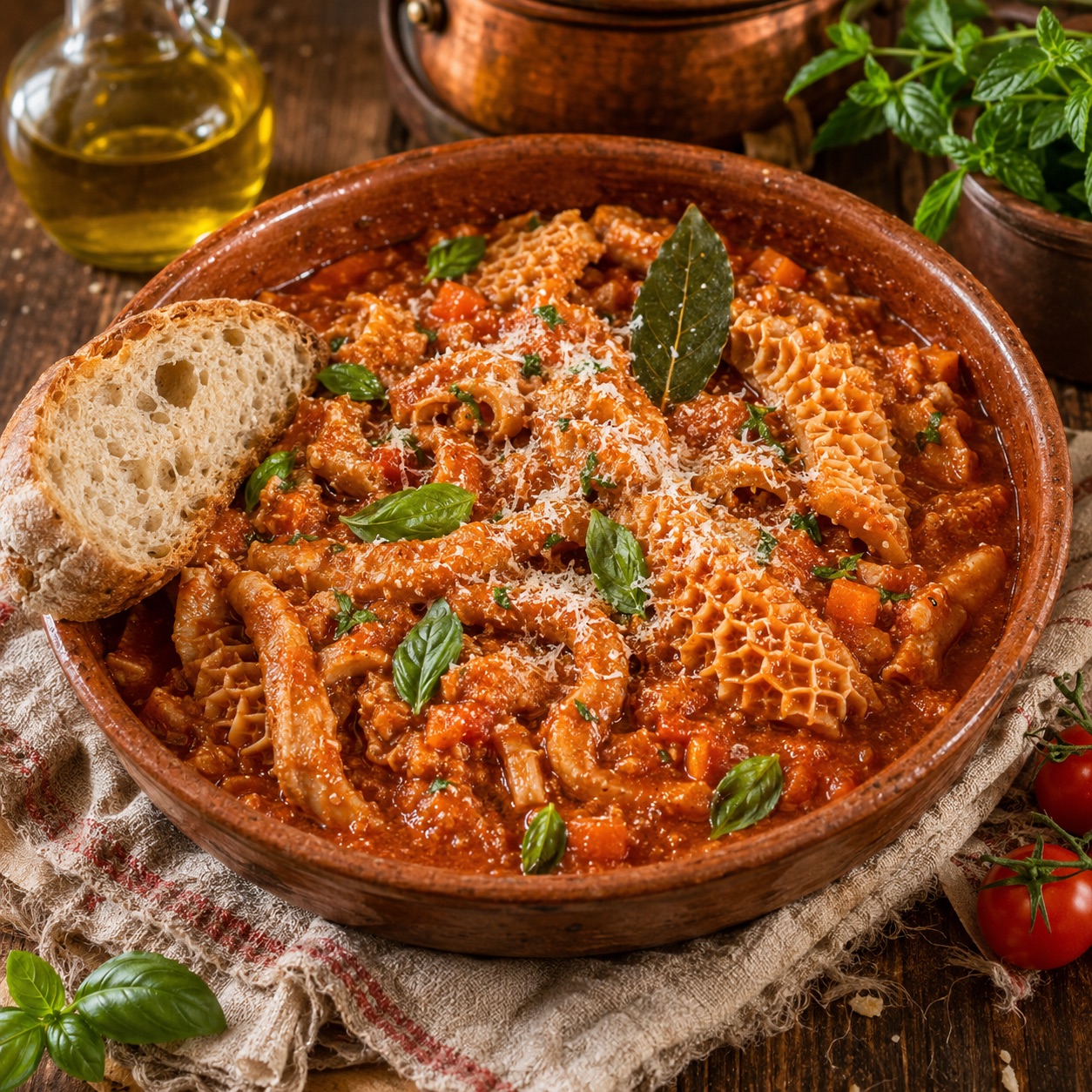
And gentle is the word. Unlike the fiery zuppa di soffritto — with which it is constantly confused — the Neapolitan trippa is mild and fragrant: beef tripe (the stomach linings — honeycomb, blanket, leaf) simmered slowly in a light tomato sauce built on onion, carrot and celery, finished with grated pecorino and, the signature, fresh mint. The mint is what makes it Neapolitan: it cuts the richness, freshens the tomato, and distinguishes this trippa from every other Italian tripe stew. A beloved family variation adds diced potatoes in the last half hour — trippa e patate.
Why tripe needs the long simmer — and the mint
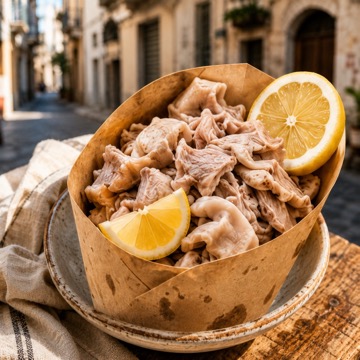
Tripe is almost pure collagen-rich connective tissue; the 45–60 minute simmer converts it to gelatin, transforming rubber into velvet and giving the light tomato sauce its body. The mint is chemistry as much as poetry: its menthol and volatile terpenes register as cooling and clean against the gelatinous richness — the same trick the lemon performs on the street's pere e musso. Nutritionally tripe is the frugal champion it was reputed to be: high protein, low fat, B12 and zinc, at the price of the cheapest counter in the market.
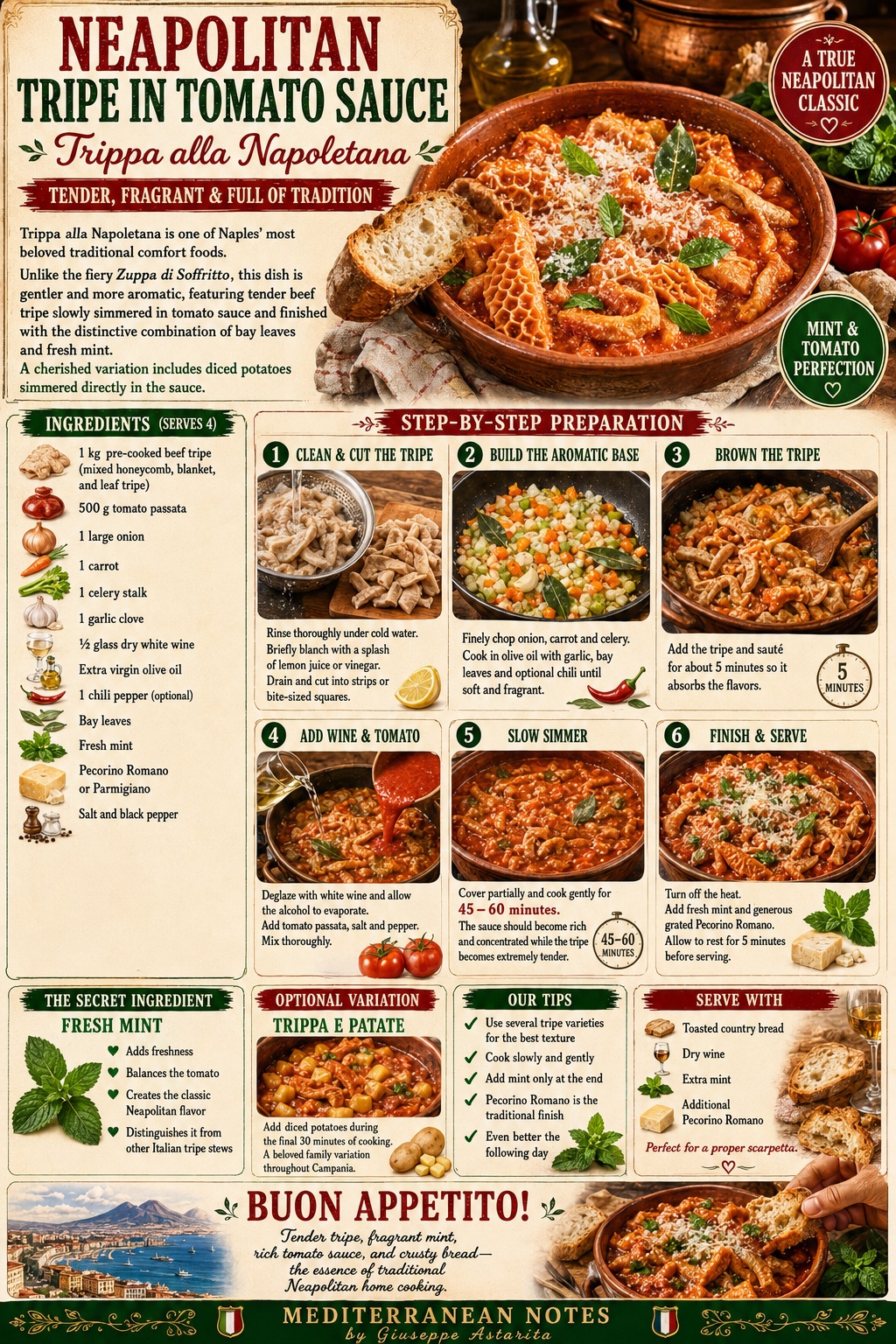
Tap to enlarge — Trippa alla napoletana: mint and tomato perfection
Recipe — Trippa alla Napoletana
Serves 4 · About 1 hour 30 minutes
- 1 kg pre-cooked beef tripe mixed honeycomb, blanket and leaf
- 500 g tomato passata
- 1 large onion
- 1 carrot
- 1 celery stalk
- 1 garlic clove
- ½ glass dry white wine
- Extra virgin olive oil
- 1 chili pepper optional
- Bay leaves
- Fresh mint the signature — only at the end
- Pecorino Romano or Parmigiano, grated
- Salt and black pepper
The trippa completes the blog's quinto-quarto shelf alongside the soffritto and the street's pere e musso — three dishes I document with respect and decline with consistency. My grandmother would find that hilarious, and then finish my portion.