Torta alle Noci Napoletana
The Neapolitan walnut cake — with Sorrento walnuts, orange zest, and Nocino
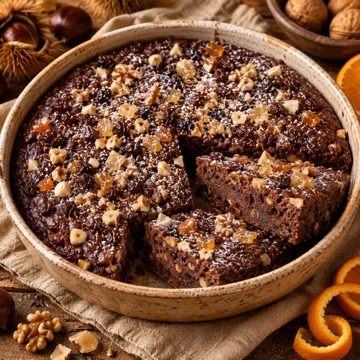
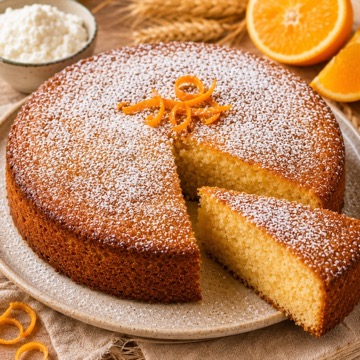
A traditional Neapolitan dessert built around walnuts. Moist, fragrant, deeply flavorful — orange zest, a shot of Nocino, folded beaten egg whites to keep it light. My mother made this without flour; the version with flour is also traditional and slightly easier to slice. Both are extraordinary on the second day.
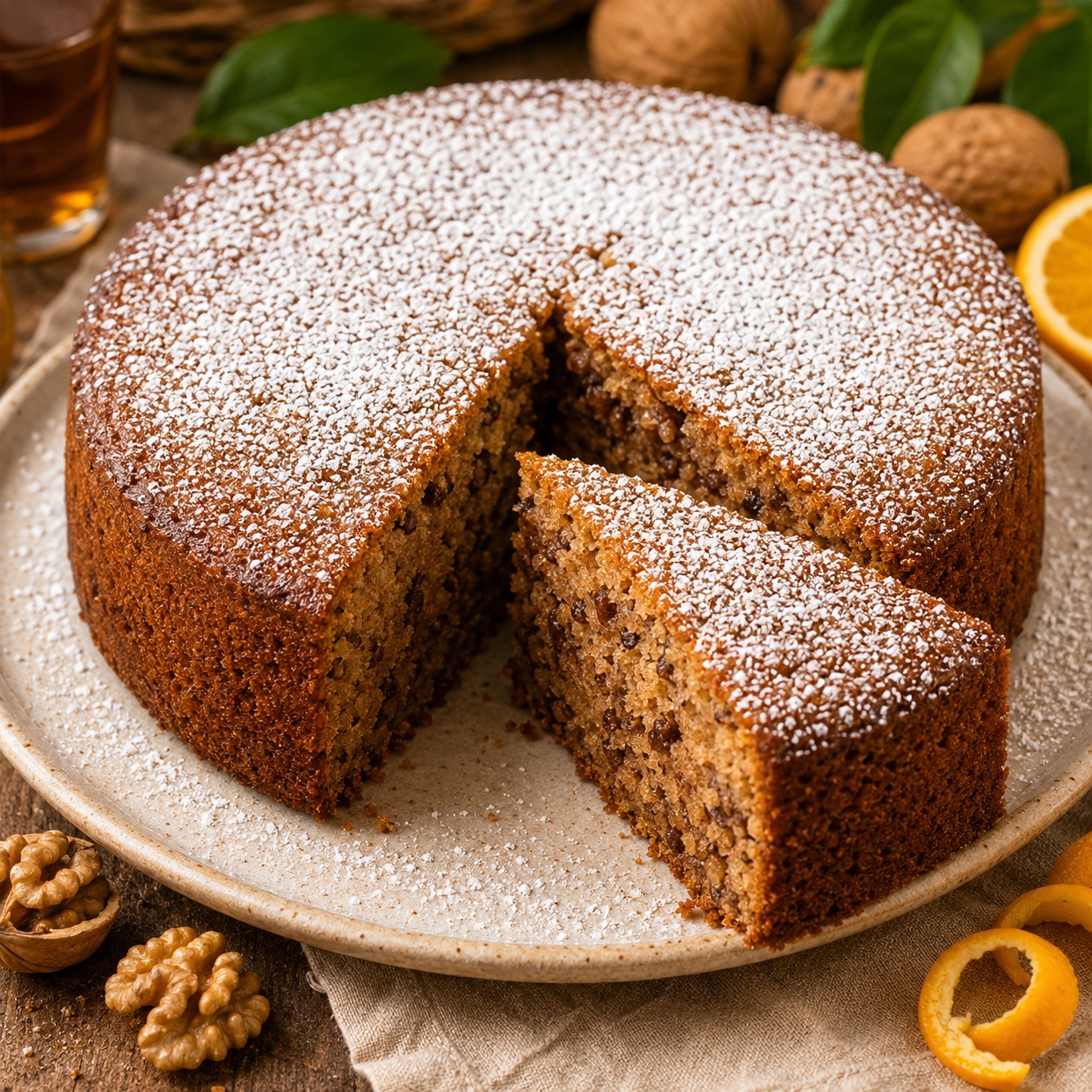
The walnuts of Sorrento are the most prized expression of an ingredient that runs through all of Campania. The whole region has a deep relationship with walnuts — from the Irpinia hills in Avellino province to the Sannio, where ancient groves have produced walnuts since before Roman settlement, to the terraced slopes of the Sorrentine peninsula where the same Mediterranean light and volcanic soil that give the Limone di Sorrento its perfume give the local noci their particular richness. In Campania, walnuts are not a baking ingredient. They are a pantry constant: in Nocino, the traditional walnut liqueur made on the night of San Giovanni; in the sfogliatelle filling variations; in the Christmas sweets; and in this cake, which exists specifically to let them be the point.
There is also a reason beyond flavor to appreciate them. Walnuts are the only common nut that contain meaningful amounts of ALA — the plant-form omega-3 fatty acid — alongside a significant polyphenol load and a ratio of omega-6 to omega-3 that is more favorable than almost any other food in a typical Mediterranean kitchen. The research on walnut consumption and cardiovascular and cognitive outcomes is among the more consistent in nutritional science. They are, in the vocabulary of this blog, genuinely interesting from a lipid perspective — the fat in a walnut is not just there for flavor. The cake that has them as its principal ingredient is doing something nutritionally as well as gastronomically.
The technique is important. The butter and sugar are creamed first until genuinely light and pale — this step builds the structure that the absence of flour requires. The egg yolks go in one by one, each beaten in fully before the next. Then the orange zest and the Nocino, which at this point make the base smell extraordinary. Then the finely chopped walnuts — chopped, not too finely, because texture matters: the cake should have the presence of the walnuts in every bite, not merely their flavor. And then the egg whites, beaten to stiff peaks and folded in with the slow movements that preserve the air beaten into them, which is what keeps this flourless cake light rather than dense. The folding is the one step that requires patience — not speed, not enthusiasm, just slow deliberate movements from the bottom of the bowl upward until the whites are incorporated and the batter is still airy.
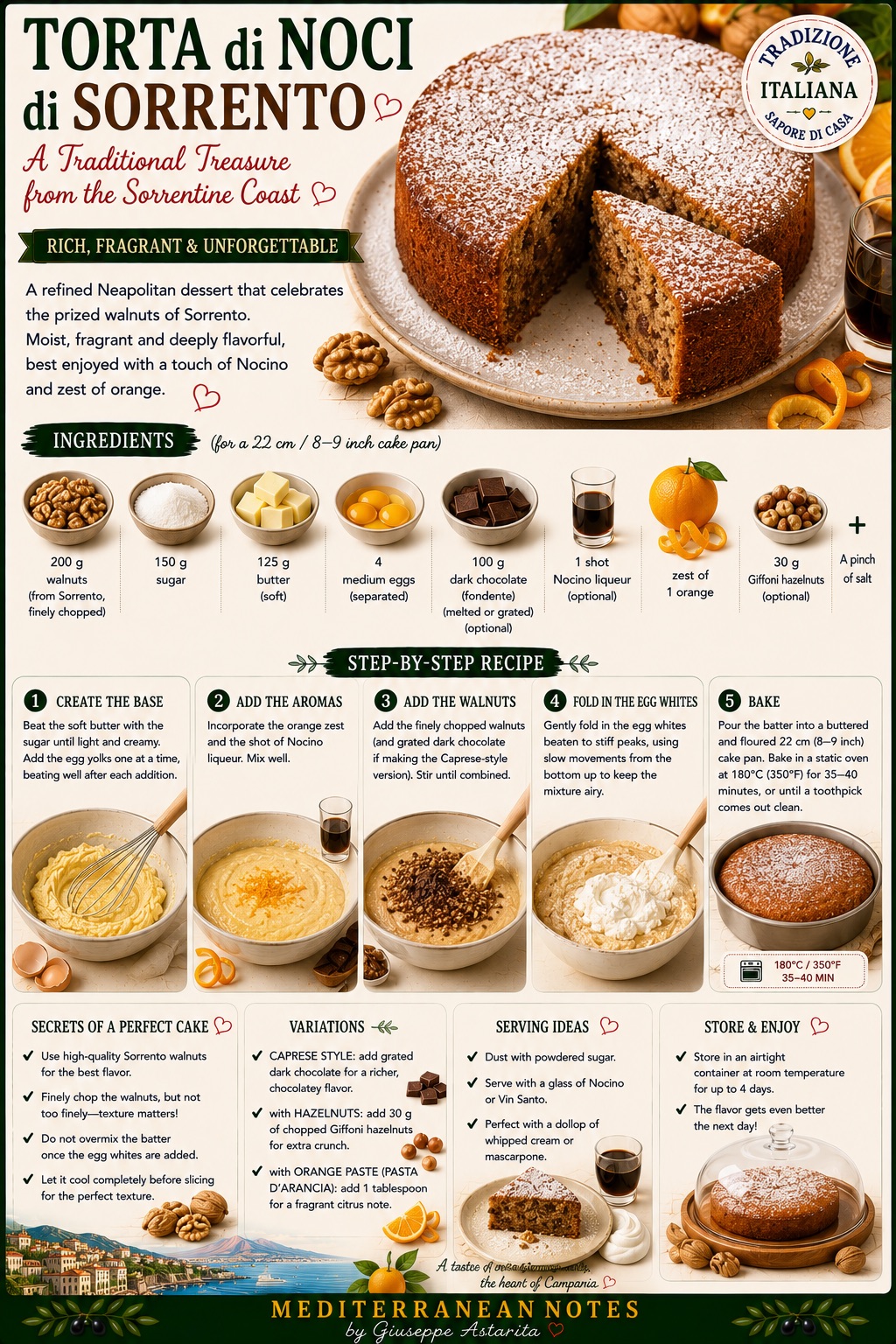
My mother sometimes added flour — about 2¼ cups (225 g all-purpose) plus 1 tsp baking powder, folded in before the egg whites. Without flour the cake comes out more moist but thinner and more delicate; with flour it rises higher, holds its shape better, and slices cleanly. The walnut flavor is the same either way. This is the version in the infographic below.
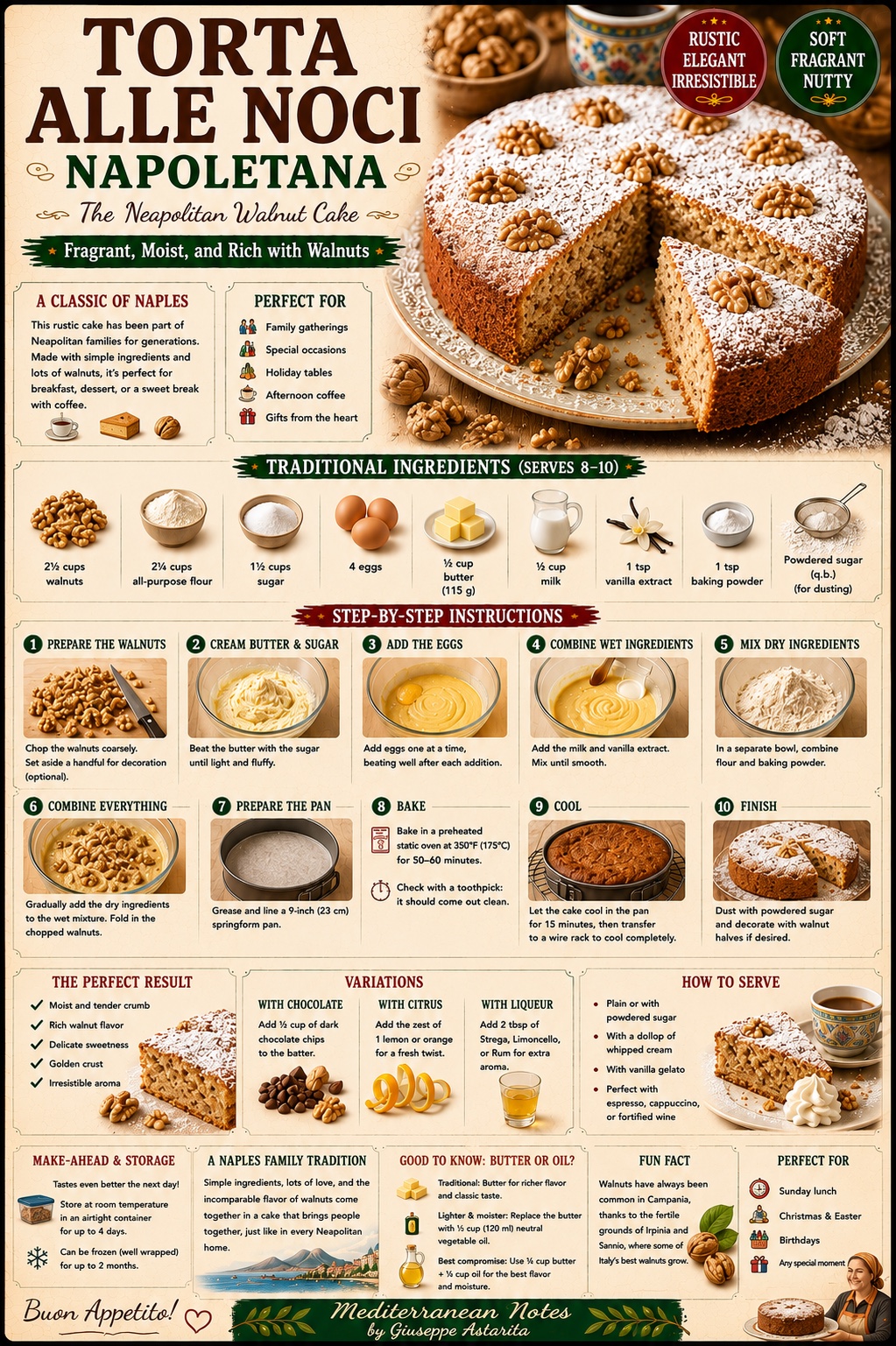
La ricetta — for a 22 cm tin
Varianti
Serve with a glass of Nocino or Vin Santo, or with a dollop of whipped cream or mascarpone. Perfect with a cup of espresso. Stores well in an airtight container at room temperature for up to 4 days — the flavor genuinely gets better on the second day, when the orange and walnut aromas have had time to integrate fully into the crumb.
I made this recently for Father's Day — the American Festa del Papà, which falls in June. We had it for breakfast, without flour, the way my mother made it in Caserta. That is how we always had it growing up: not after dinner, not as a dessert at the table, but in the morning, with coffee, sometimes still slightly warm from the day before. The cake hardens a little as it ages, which is not a flaw — it is part of how you eat it. By the third or fourth day it has a firmer, almost biscotto-like quality, and the thing to do, the thing my mother did and we all did, was to dip it briefly in milk before eating. Cold milk, a piece of walnut cake, a morning in Caserta. That is a complete breakfast.
Buona colazione — e aspetta il giorno dopo.