CoursesBasicsFirst CoursesSecond CoursesSides & VegetablesSoupsSaucesEggs & FrittatePizza & BreadBreakfastSnacksStreet FoodDesserts
DietVegetarianVegan
SeasonSpringSummerAutumnWinter
MainSeafoodMeatEggs
MoreCulture & TraditionsGlossaryAbout

Migliaccio alla Napoletana
Il dolce antico della tradizione campana — soffice, profumato, inconfondibile

A simple, ancient Neapolitan cake: sheep's milk ricotta sieved smooth, semolino rimacinato incorporated slowly, orange zest and orange blossom water as the fragrance. Do not open the oven during baking. Better the next day. Un dolce semplice, una tradizione senza tempo.
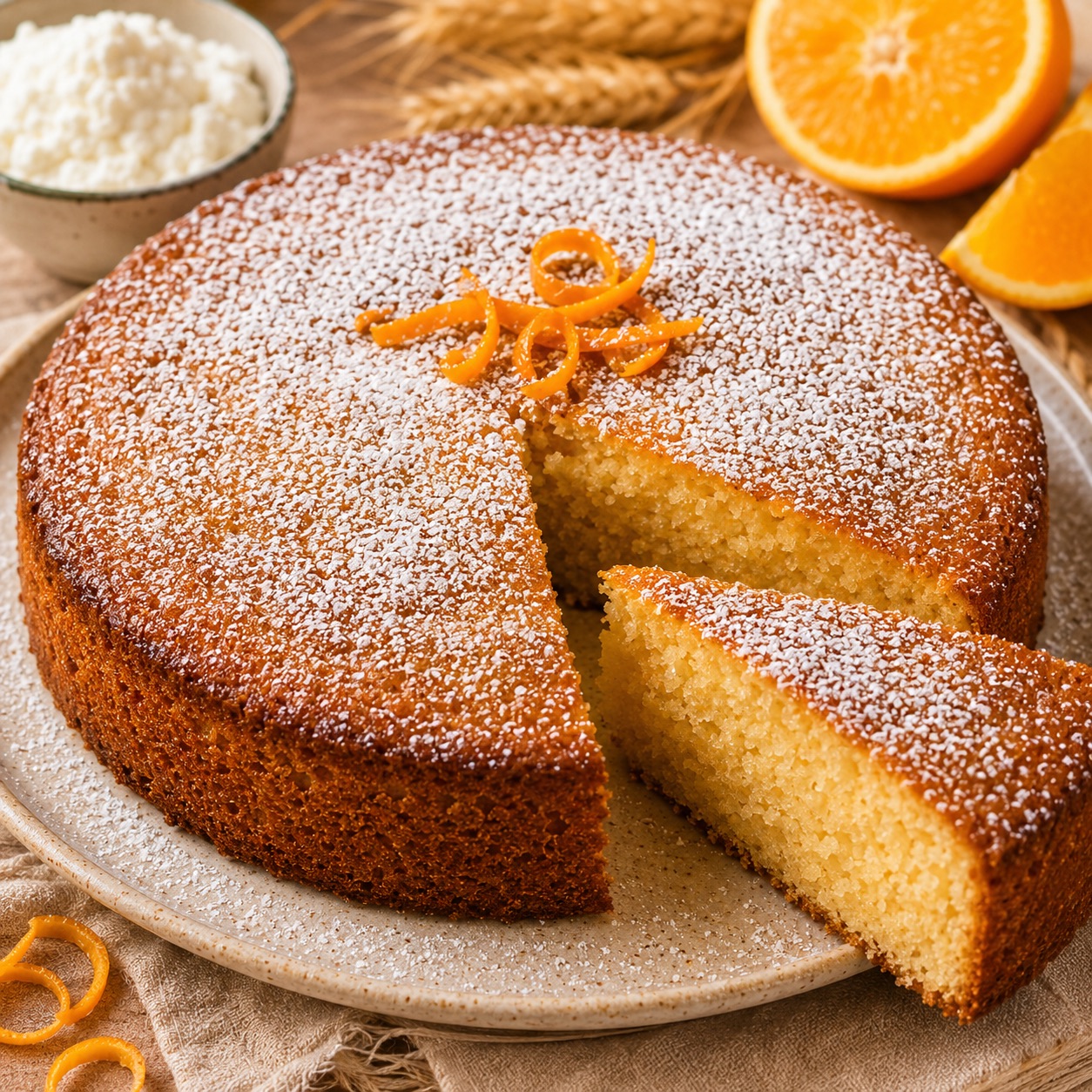
migliaccio

The migliaccio is one of those preparations where the simplicity of the ingredient list is slightly misleading — not because the technique is difficult, but because the quality of each individual element matters more than it would in a more complex cake where stronger flavors can compensate for weaker ones. The sheep's milk ricotta, sieved until perfectly smooth, is the structural and flavor foundation. The semolino rimacinato — fine-ground semolina, distinct from the coarser semolino used in brodi and some pastas — gives the migliaccio its characteristic density, the quality that makes a slice hold together without being heavy, that makes it feel different from a flour-based cake in a specific and identifiable way. The orange zest and orange blossom water are the fragrance, and the migliaccio without them would be a different and lesser thing.

My mother made this for breakfast occasionally, and for Carnevale in the traditional context where it appears most often in Naples — the migliaccio is one of the classic Carnevale sweets alongside struffoli and chiacchiere, though it appears on the table throughout the year in Campanian kitchens that know it. The specific smell of baking migliaccio — orange zest and ricotta warming in the oven, the semolino setting — is unlike anything else and fills the house in the way that specific baked things do: not just with warmth but with the identity of the thing being made. By the time the migliaccio comes out of the oven you already know exactly what it is going to taste like, and you are correct.

Do not open the oven during baking. The migliaccio rises slightly during cooking and deflates if the seal is broken before it has set. This is not superstition. It is the structural behavior of a ricotta and semolino batter without the gluten network that would hold a flour-based cake together through the thermal shock of cold air mid-bake.

The rest-before-slicing instruction is equally non-negotiable. A warm migliaccio is too soft to cut cleanly and the texture is not yet what it will become. Cold — properly refrigerated for at least two hours, ideally overnight — the migliaccio sets to its characteristic dense, smooth, almost flan-like interior texture that is the point of the cake. Sliced cold from the refrigerator and brought to room temperature for thirty minutes before eating, it is exactly what it is supposed to be. Eaten warm from the oven it is a good thing that is not yet quite itself.
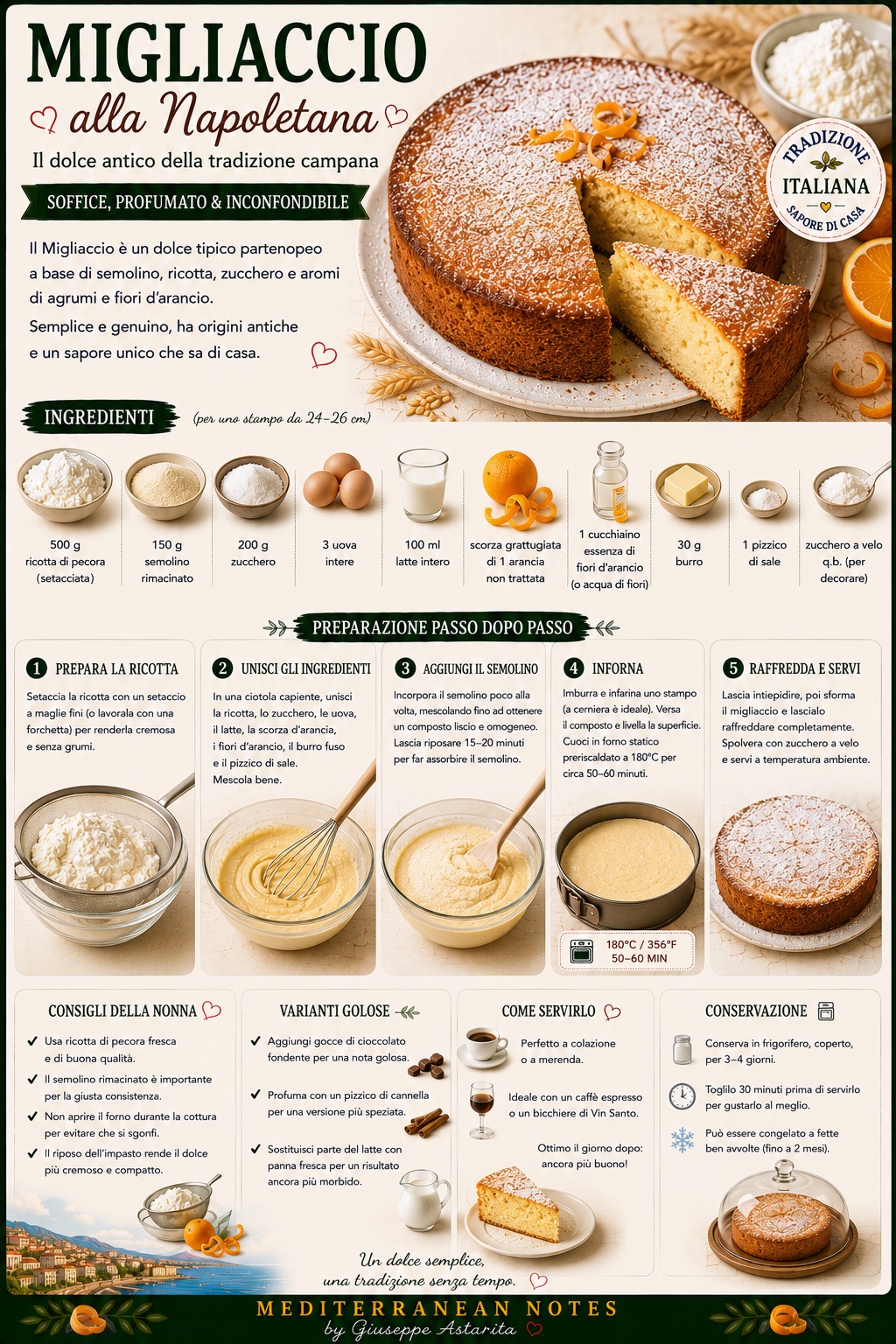
Migliaccio alla napoletana -- il dolce antico della tradizione campana, Mediterranean Notes
Migliaccio alla napoletana — soffice, profumato, inconfondibile — click to enlarge.

La ricetta — per uno stampo da 24–26 cm

500 g, sieved — sheep's milkRicotta di pecora, freshly sieved
150 g, rimacinato (fine-ground)Semolino rimacinato
200 gSugar
3 wholeEggs
100 mlWhole milk
zest of 1 untreatedOrange, grated
1 tspOrange blossom water (acqua di fiori d'arancio)
30 g, meltedButter
1 pinchSalt
to finishPowdered sugar (zucchero a velo)
La regola fondamentale
Do not open the oven during baking. The migliaccio rises slightly as it bakes and collapses if cold air enters the oven before the batter has set. Set your timer and resist. Let it cool completely before unmoulding and slicing — at least 2 hours at room temperature, then refrigerate. Refrigerate 30 minutes before serving for the best texture. Better the next day.
1
Prepara la ricotta. Sieve the ricotta through a fine-mesh sieve — press it through with a spatula until perfectly smooth with no lumps. This step is important: lumpy ricotta produces an uneven batter and an uneven crumb.
Use fresh sheep's milk ricotta for the best flavor. Cow's milk ricotta works but produces a milder result.
2
In a large bowl, combine the sieved ricotta, sugar, eggs, milk, orange zest, orange blossom water, melted butter, and salt. Whisk or beat until smooth and well combined.
3
Aggiungi il semolino. Add the semolino gradually — a little at a time — stirring as you add, until fully incorporated and the mixture is smooth and uniform. The resting time is essential: cover the bowl and leave for 15–20 minutes for the semolino to absorb the liquid and swell. This is what gives the migliaccio its characteristic texture.
The batter will thicken noticeably during resting. This is correct. Do not add more liquid.
4
Butter and flour a 24–26 cm springform pan (a springform is ideal for unmoulding cleanly). Pour in the batter and smooth the surface. Bake in a static oven preheated to 180°C (356°F) for 50–60 minutes. Do not open the oven door. The migliaccio should be golden on top and set through — a skewer should come out clean.
Static oven, not fan. Fan oven dries the surface before the interior has set.
5
Let cool completely in the pan at room temperature — at least 2 hours. Unmould carefully. Refrigerate. Slice cold. Remove from refrigerator 30 minutes before serving. Dust with powdered sugar just before bringing to the table.

Serve at breakfast with coffee or at merenda. Pairs well with a glass of Vin Santo. Keeps in the refrigerator covered for 3–4 days, improving each day. Can be frozen in slices wrapped individually for up to 2 months — thaw in the refrigerator overnight. The orange blossom water is what makes it unmistakably Neapolitan; do not substitute it.

Buona colazione — aspetta domani, ne vale la pena.
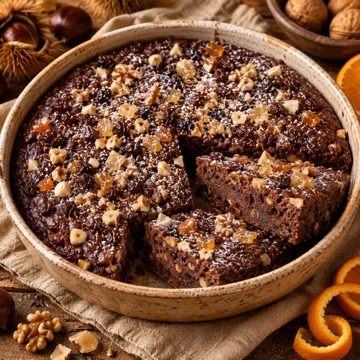
Castagnaccio napoletano
The chestnut and chocolate cake in two versions — equally ancient, equally Neapolitan.
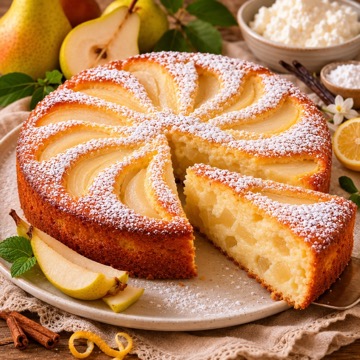
Torta ricotta e pere
Another breakfast ricotta cake -- with ripe pears and lemon zest.
← All dolci