CoursesBasicsFirst CoursesSecond CoursesSides & VegetablesSoupsSaucesEggs & FrittatePizza & BreadBreakfastSnacksStreet FoodDesserts
DietVegetarianVegan
SeasonSpringSummerAutumnWinter
MainSeafoodMeatEggs
MoreCulture & TraditionsGlossaryAbout

Scarola e Fagioli
Escarole and Bean Soup — Warm, Rustic, Full of Flavor

A classic I still make almost every week during winter. Warm and comforting in a way that few dishes are — the kind of thing that heats the kitchen while it cooks and heats you from the inside when you eat it. Good olive oil and garlic are essential. Bread for dipping is not optional. Seeing my family eating it and remembering them keeps me craving it all season long.
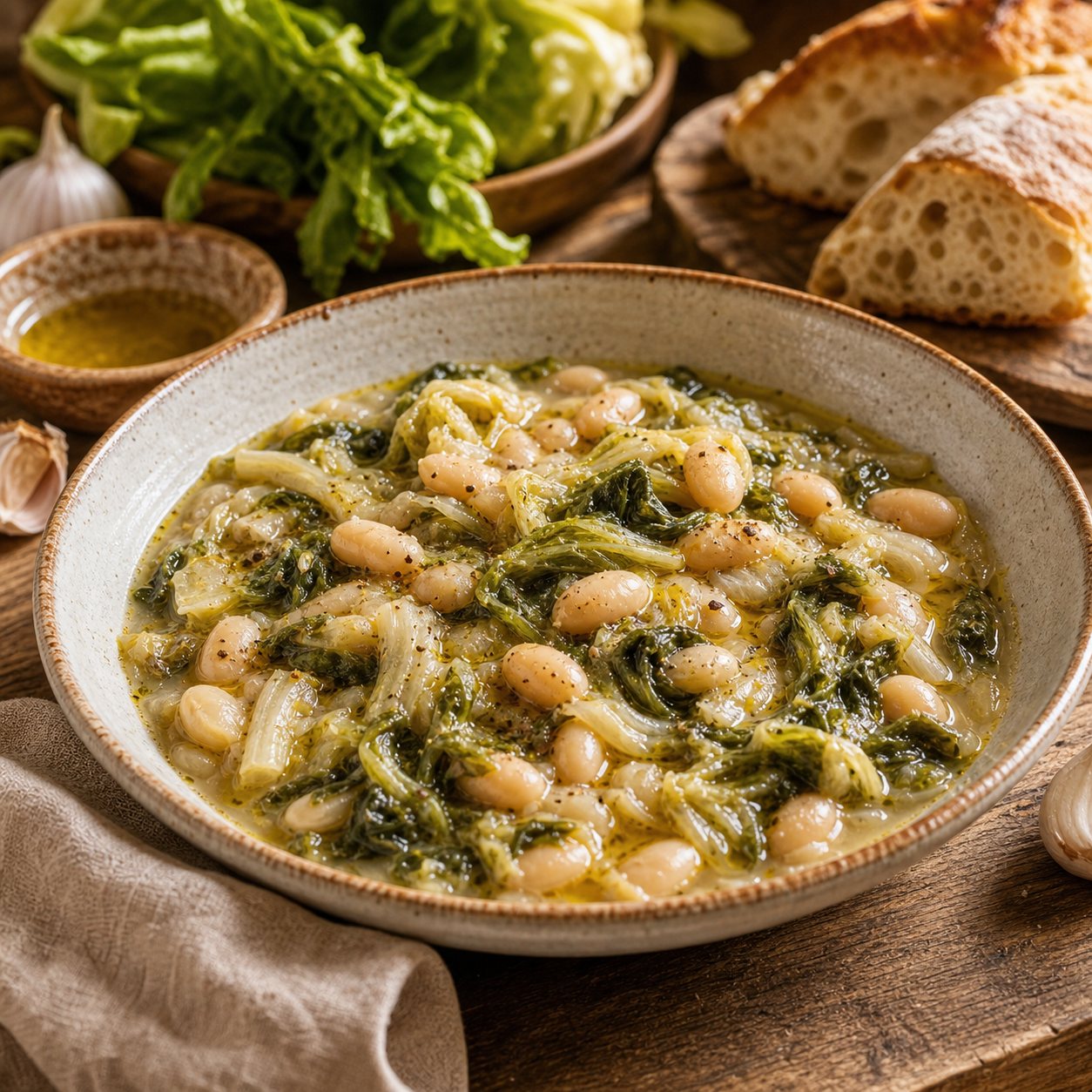
Scarola E Fagioli
Beans and escarole is a match made in heaven — this is not an overstatement. The bitterness of the escarole and the creaminess of the cannellini or borlotti beans complement each other in a way that neither ingredient achieves alone. The garlic and olive oil carry both through the cooking, and the bread at the bottom of the bowl absorbs the broth and the oil and becomes part of the dish rather than a vehicle for it. We used to put dry bread or fresella at the bottom — the fresella broken into large pieces so it would soften slowly in the hot soup, each piece absorbing the broth unevenly, some parts still firm at the center when you reached them with the spoon. That texture — the contrast between the soft beans and the yielding greens and the unevenly softened bread — is the specific pleasure of this dish. Nothing else produces it.

This is winter food in the truest sense — not because it requires winter ingredients (escarole and dried beans are available year-round) but because it is the kind of food the cold calls for. The smell of garlic warming in olive oil, then the escarole going in still slightly wet from blanching, then the beans with their cooking water creating a broth that thickens as a few beans are mashed against the side of the pot. The dish takes about forty minutes the traditional way. Or five minutes in the pressure cooker, which is how I make it now. The result is identical. The pressure cooker does not compromise flavor — it compresses time and produces the same slow-cooked depth in a fraction of it.

No chili pepper in my memory of this dish growing up — not in the version I knew at home. The infographic includes it as an option and it works, but it is optional. The dish does not need heat; it has depth instead. The combination of flavors is specific and complete without it: bitter greens, creamy beans, pungent garlic, grassy olive oil, the faintly mineral quality of good cannellini. Adding chili changes the character. Sometimes that is what you want. The version I make most often does not include it.

The fresella at the bottom of the bowl is the detail that takes this from soup to something more specific. The fresella — the traditional Campanian and southern Italian twice-baked hard bread — is broken into large irregular pieces and placed in the bowl before the soup is ladled over. It softens but not uniformly: the edges dissolve into the broth, the centers hold longer, and the result is a texture that changes spoonful by spoonful. Dry bread works too. The principle is the same: the bread is not there to dip; it is there to become part of the soup.

The recipe — serves 4

Ingredients
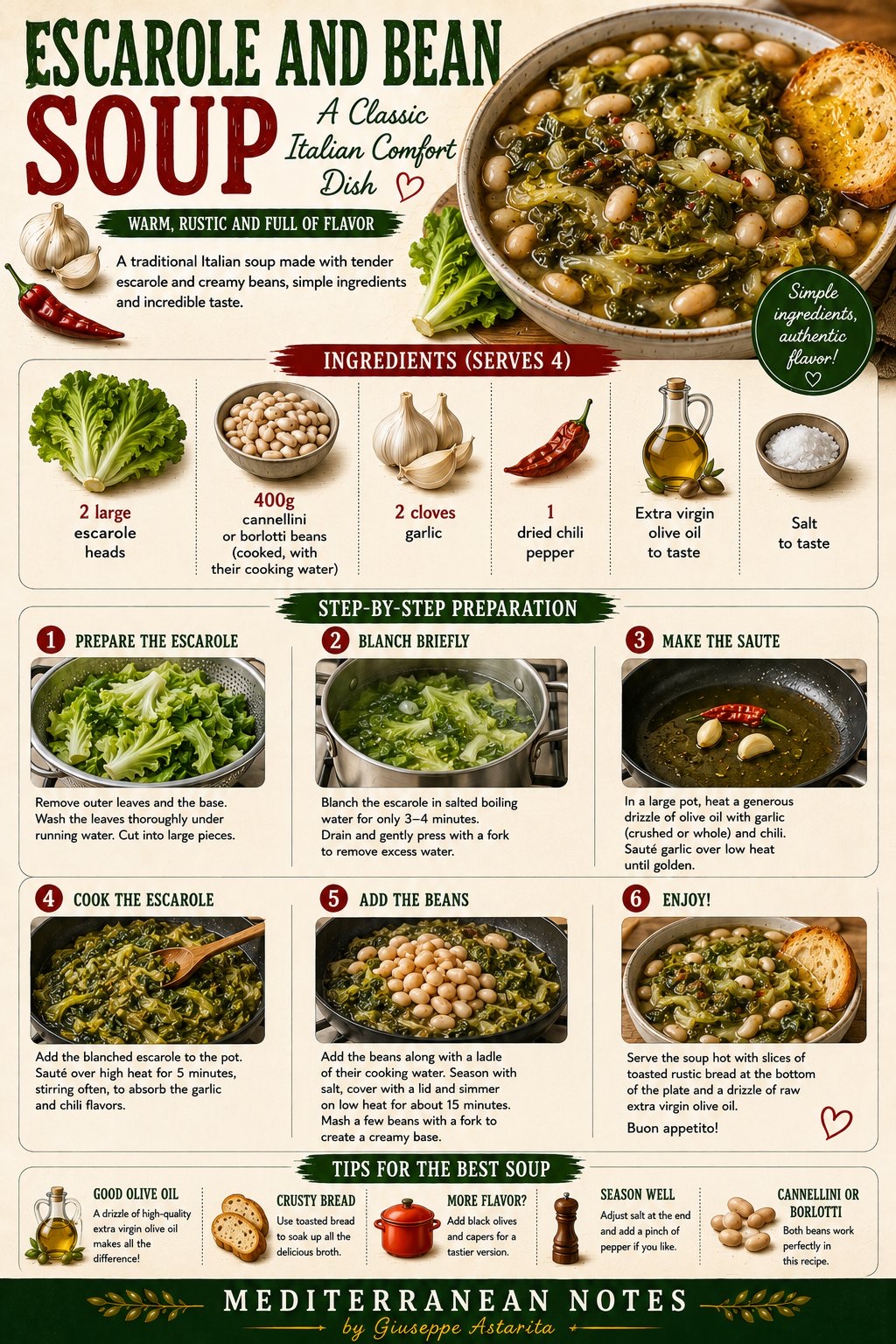
Escarole and bean soup — classic Italian comfort dish infographic
Scarola e fagioli — semplici ingredienti, sapore autentico. Click to enlarge.
2 large headsEscarole — or Swiss chard, which works equally well
400 g cooked, with their liquidCannellini or borlotti beans — from a can is fine; dried soaked and cooked overnight is better
2 cloves, crushedGarlic — generously
generous, to tasteExtra-virgin olive oil — for cooking and raw to finish
optional1 dried chili pepper — not in my memory of this dish, but your choice
to tasteSalt
for the bowlDry bread or fresella — broken into large pieces, placed at the bottom before serving
1
Remove the outer leaves and base of the escarole. Wash the leaves thoroughly — escarole holds grit between its leaves and needs real washing, not a quick rinse. Cut into large pieces.
2
Blanch the escarole in well-salted boiling water for 3–4 minutes. Drain and press gently to remove excess water. This step removes some of the bitterness and wilts the greens so they integrate into the soup rather than sitting on top of it.
Swiss chard variation: chard works beautifully in place of escarole. It is less bitter and slightly sweeter, which changes the balance of the dish but not its character. The same preparation applies.
3
In a large pot (or pressure cooker), warm a generous drizzle of olive oil over low heat. Add the garlic (and chili if using). Let the aromatics perfume the oil slowly without browning — 2–3 minutes. The smell at this point already tells you something about how the finished dish will taste.
4
Add the blanched escarole. Sauté over medium-high heat for 5 minutes, stirring often, until the greens have absorbed the garlic and oil. Then add the beans with all their cooking liquid or can liquid. Add a ladle of water if needed — you want enough liquid to make a broth, not a stew.
Mash 3–4 tablespoons of beans against the side of the pot with the back of a spoon. This thickens the broth naturally and creates the creamy base that holds everything together.
5
Cover and simmer over low heat for 15 minutes until everything is unified and the flavors have settled into each other. Taste and adjust salt.
Pressure cooker method: after step 3, add the escarole and beans together with their liquid directly to the pressure cooker. Cook at pressure for 5 minutes. Release pressure, taste, adjust salt. The result is identical to the 40-minute version. This is how I make it now, every week.
6
To serve: place a handful of broken dry bread or fresella at the bottom of each bowl. Ladle the hot soup generously over it. Finish with a drizzle of your best raw extra-virgin olive oil — not a few drops, a real drizzle, the oil pooling slightly on the surface of the soup. The raw oil at the end is not a garnish; it is a structural part of the flavor. Serve immediately.
Why escarole and beans work together — bitter compounds, resistant starch, and the gut microbiome

Escarole belongs to the chicory family and contains lactucopicrin and other sesquiterpene lactones — the bitter compounds responsible for its characteristic flavor and also for its traditionally attributed digestive benefits. These compounds stimulate bile secretion and gastric motility through the same bitter receptor pathway (TAS2R) activated by other bitter foods in the Campanian diet: wild greens, radicchio, cicoria. The blanching step removes a portion of these compounds along with some of the water-soluble vitamins — a trade-off between palatability and bitterness intensity that each cook calibrates to taste.

Cannellini and borlotti beans are among the richest dietary sources of resistant starch — starch that is not digested in the small intestine and reaches the colon intact, where it is fermented by the gut microbiome into short-chain fatty acids, principally butyrate. Butyrate is the primary fuel of the colonocytes (the cells lining the colon) and has documented roles in maintaining the gut barrier, reducing local inflammation, and supporting microbiome diversity. The combination of bitter polyphenols from the escarole and resistant starch from the beans in a single dish — cooked with extra-virgin olive oil whose polyphenols further modulate the gut microbiome — makes scarola e fagioli one of the most nutritionally complete single-dish preparations in the collection. The Campanian grandmothers who made it every winter week did not know this. They knew it tasted good and felt right in cold weather. Both things are true simultaneously.

The dish is in the Mediterranean diet in its most literal form — legumes multiple times per week, bitter greens, olive oil, minimal meat, bread as the base rather than the side. Ancel Keys' wife Margaret named the legume as the center of the meal rather than the side dish. This is precisely that. The beans are not there to accompany something else; they are the protein, the body, and the base of the broth all at once.

I make this every week in winter, in Massachusetts, with dried beans soaked the night before when I plan ahead and canned cannellini when I don't — the result is slightly better with dried but both are good. The pressure cooker makes it achievable on a weeknight without planning. Five minutes at pressure. The smell when it comes off: garlic, olive oil, escarole, beans. A specific smell that belongs to a specific season and a specific set of people sitting around a table I no longer have access to. The dish keeps that table present in the kitchen.

Scarola e fagioli — ogni inverno, ogni settimana.
And always with bread at the bottom.
Greens & beans
Scarola Affogata
Escarole cooked covered in its own moisture with garlic, anchovies, olives, capers, pine nuts, and…
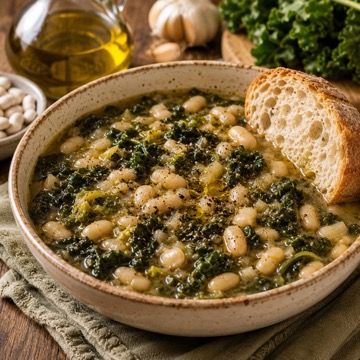
Zuppa Di Kale E Fagioli
Kale and white beans in olive oil and garlic — the simplest soup there is, and in January, the one…
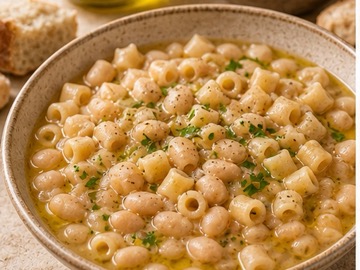
Pasta E Fagioli
Pasta with white beans — dense, warming, humble, and one of the most nutritionally complete meals…
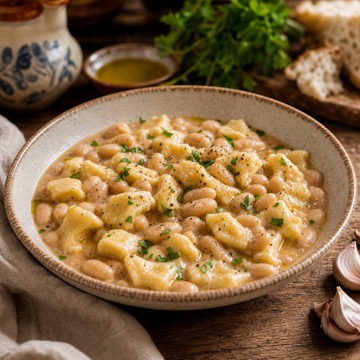
Pettole e Fagioli
A creamy, rustic pasta and bean dish from the Neapolitan countryside.