Plumcake allo yogurt: the Italian breakfast cake that gets better dipped in milk
Soft, moist, fragrant with lemon — and measured in yogurt pots, so no scale is ever needed. My mother made it in all the variations: plain, marble with cocoa powder swirled through, with chocolate chips, with raisins and candied fruit. When it dried after a few days we dipped it in milk. Exactly the same way we ate the torta caprese.
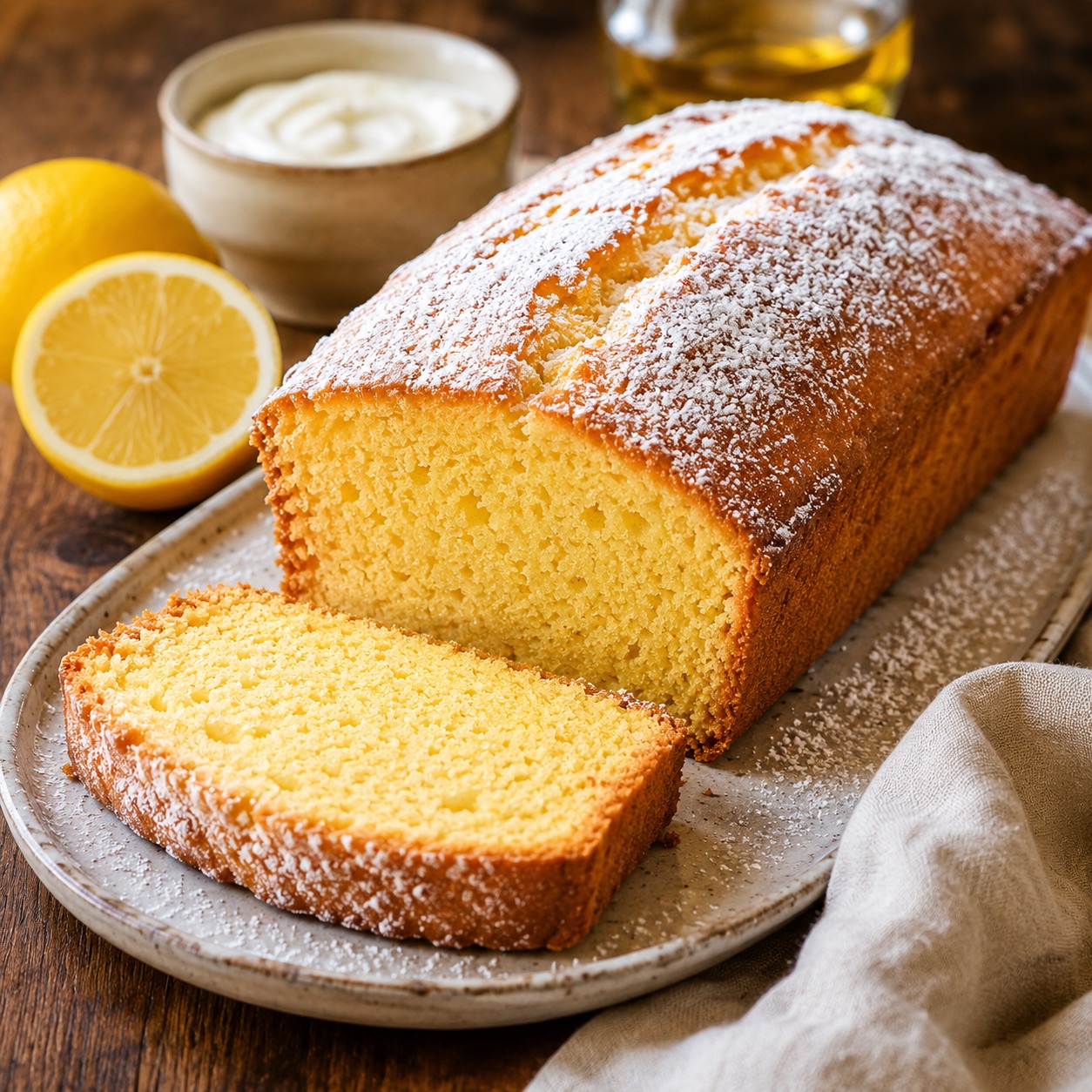
The plumcake allo yogurt occupies a specific position in the Italian breakfast landscape: it is on the table of every B&B from Campania to the Dolomites, it is in the glass case of every bar alongside the cornetti, and it is something that Italian mothers make at home in an afternoon because it requires nothing special — no mixer is strictly necessary, no scale, no pastry expertise. The yogurt pot itself is the measuring unit: one pot of yogurt, three pots of flour, two pots of sugar, one pot of oil. Once you understand the ratio, you can make this cake without a recipe and adjust it to whatever yogurt is in the refrigerator.
The name is slightly misleading. It is not a plum cake in the English sense — there are no plums, and the English cake it resembles most closely is a Madeira or a pound cake. The word plumcake arrived in Italian from British English during the nineteenth century as a generic term for dense loaf cakes, and it has remained in use without retaining any specific association with the fruit. The Italian plumcake is lighter and more fragrant than the British original, the yogurt contributing moisture and a slight tang that keeps the crumb soft for several days.
The marble version — bicolore — is the one my mother made most often for variety: the batter divided in half before going into the loaf pan, cocoa powder stirred into one half, then the two halves alternated in the pan and a knife drawn gently through in a figure-eight to create the marbled pattern. The result, when sliced, has the pale yellow and dark brown swirls that make it look considerably more effortful than it is. Children are reliably impressed. It is a fifteen-minute batter modification that produces a visually different cake with no structural change to the recipe.
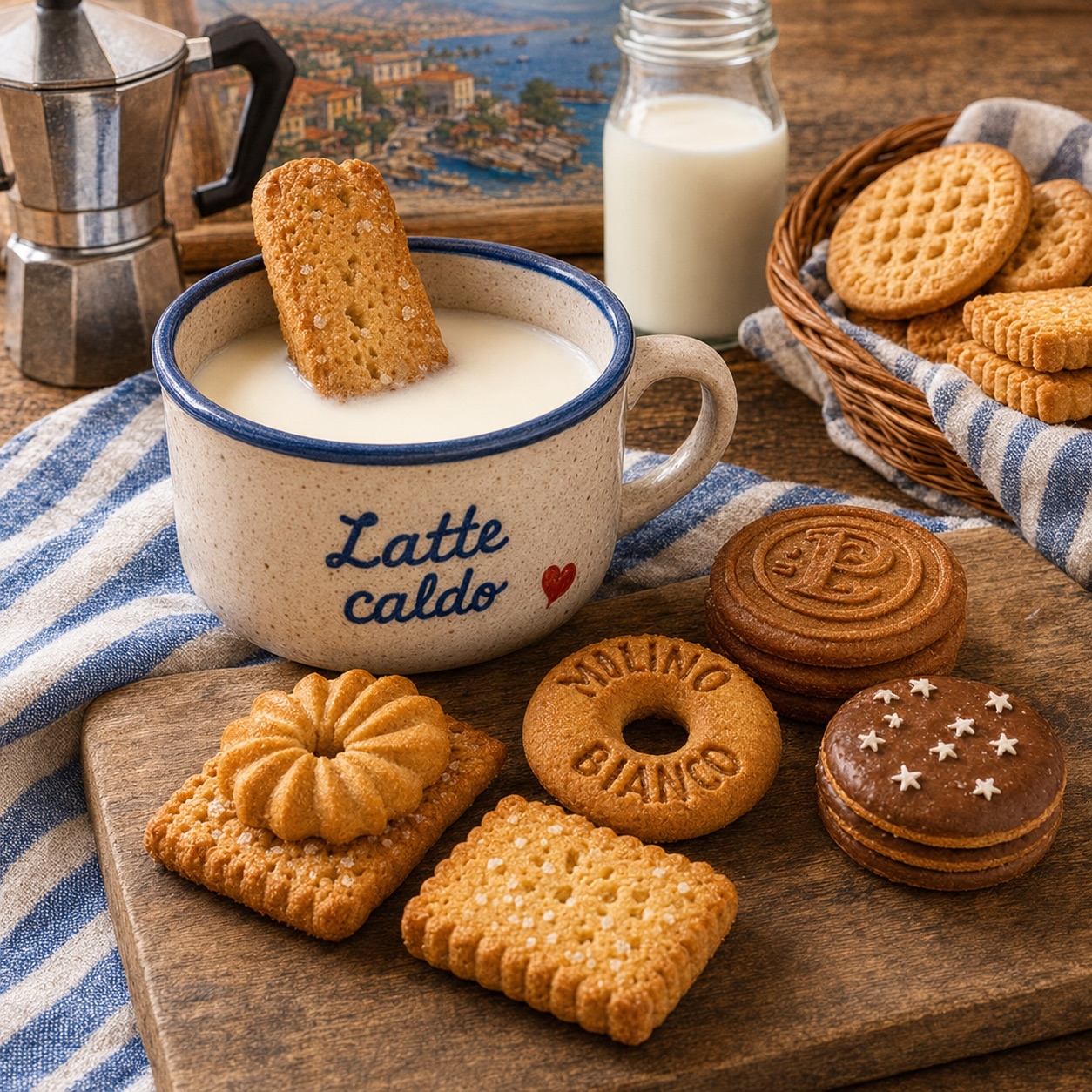
The dipping-in-milk detail connects this to a broader Italian practice of eating dry or slightly stale cake with a hot drink. The torta caprese, when it dries after a day or two, gets dipped in milk or espresso and becomes something different — the chocolate and almond crumb absorbs the liquid and the texture transforms. The plumcake does the same: a day-old slice in warm milk is a different and very good breakfast, the cake softening and releasing its lemon flavor into the milk while absorbing enough to become creamy rather than dry. Nothing is wasted. The cake lasts four days this way — the last slices often the best ones.
Lactic acid, baking soda, and why yogurt produces a better crumb than milk
The yogurt in this recipe is not merely a moisture source — it actively participates in the cake's texture and shelf life. Yogurt contains lactic acid (typically at a pH of 4.0–4.5), which reacts with the baking powder to produce additional CO₂ during mixing and baking, contributing to a lighter, more tender crumb than oil-based cakes without an acidic ingredient. The lactic acid also partially denatures some of the egg white proteins during mixing, reducing gluten network formation and producing a softer texture — the same principle as buttermilk in American baking. The casein proteins and whey proteins in yogurt contribute to moisture retention during storage: they form a hydrophilic network that traps water in the crumb, which is why the plumcake stays moist for 3–4 days rather than drying out within 24 hours as a straight oil-and-egg cake might. The eggs contribute lecithin (an emulsifier that keeps the oil dispersed evenly throughout the batter), complete protein, choline, and fat-soluble vitamins. The lemon zest contributes limonene and linalool — volatile terpenes that are partially incorporated into the fat droplets of the batter during mixing and released slowly from the crumb as the cake bakes and cools, producing the characteristic lemon fragrance. The oil used (seed oil in the traditional recipe) contributes linoleic acid and vitamin E; substituting extra-virgin olive oil is possible and produces a slightly more complex flavor. The baking powder's CO₂ production is completed in two stages: the first release occurs when the powder contacts the liquid in the batter (immediate), the second when the batter reaches approximately 60°C in the oven (heat-activated). This two-stage leavening is why the batter should be baked without excessive delay after mixing. The milk-dipping behavior of day-old cake — the absorption of liquid that restores softness to the staling crumb — is a practical application of starch retrogradation reversal: the crystalline starch structures that form during staling (producing dryness) are partially dissolved by the warm milk and return to an amorphous state, recovering softness. Italian food culture discovered this empirically; food scientists confirmed it.
The recipe — measured in yogurt pots, no scale needed
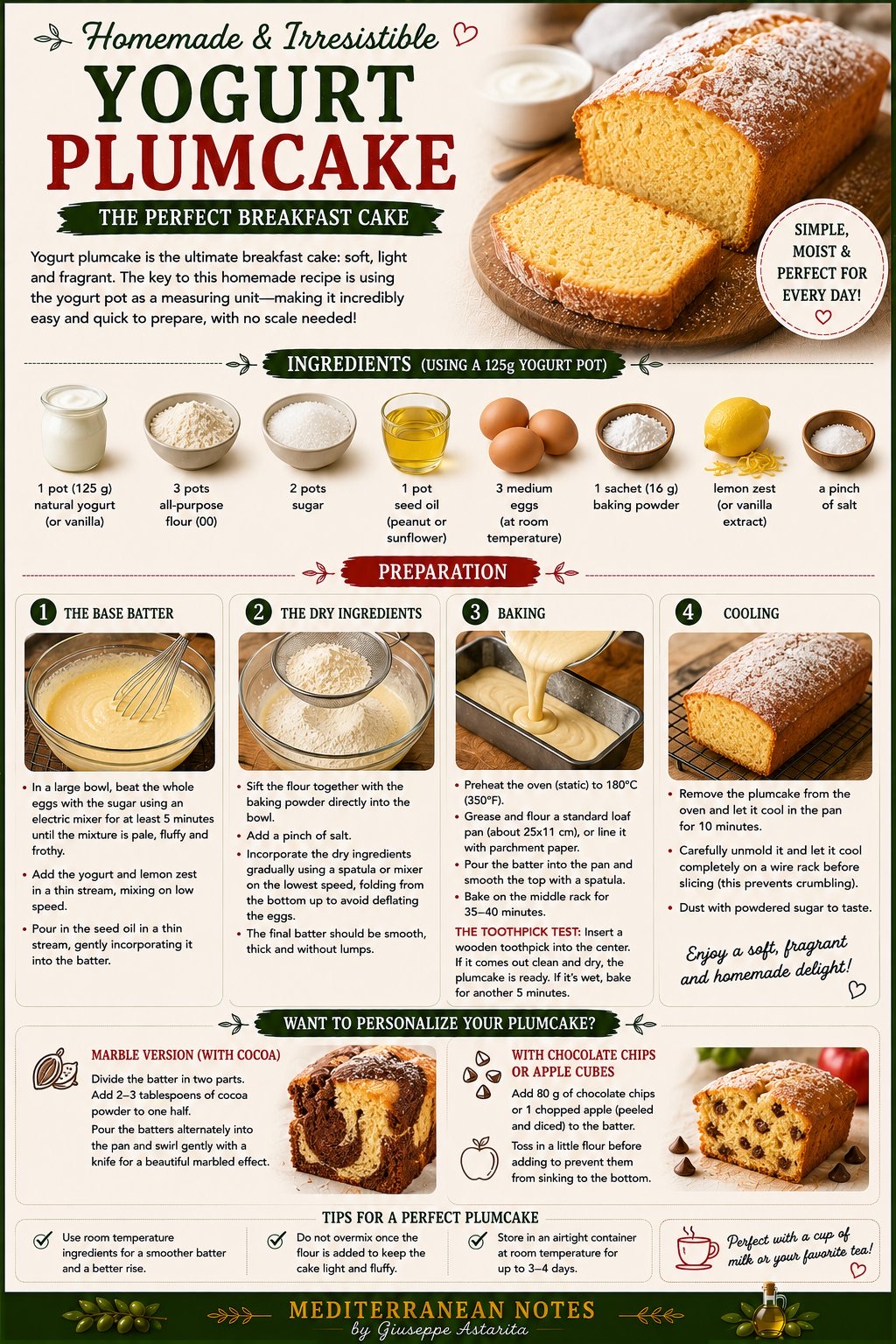
The measuring unit is the empty yogurt pot (125 g). Once you have eaten the yogurt, use the pot to measure everything else. This is the recipe as it exists in Italian home kitchens — passed along without written quantities because the pot ratio is all you need.
Ingredients · makes 1 loaf, 8–10 slices
Method
Build the base batter. In a large bowl, beat the eggs with the sugar using an electric mixer (or vigorously by hand) for at least 5 minutes until the mixture is pale, fluffy, and tripled in volume. Add the yogurt and lemon zest and mix on low speed. Pour in the oil in a thin, steady stream, incorporating gently.
Room temperature eggs and yogurt produce a smoother, more stable batter and a better rise. Take them out of the refrigerator 30 minutes before starting.
Add the dry ingredients. Sift the flour together with the baking powder directly into the bowl. Add the pinch of salt. Fold in gently with a spatula — from the bottom of the bowl upward — at the lowest possible speed if using a mixer. Do not overmix once the flour is added; overmixing develops gluten and produces a tough, dense cake. Stop as soon as no flour streaks are visible. The batter should be smooth, thick, and pourable.
Bake. Preheat the oven to 180°C (350°F) static. Grease and flour a standard loaf pan (25×11 cm), or line it with parchment paper. Pour the batter in and smooth the top with a spatula. Bake on the middle rack for 35–40 minutes. Test with a wooden toothpick inserted in the centre — it should come out clean and dry. If it comes out wet, bake another 5 minutes. Do not open the oven during the first 25 minutes.
The crack that forms along the top of the plumcake during baking is not a mistake — it is characteristic and expected. It forms because the crust sets before the interior has finished rising.
Cool before slicing. Remove from the oven and cool in the pan for 10 minutes. Unmold carefully onto a wire rack and let cool completely before slicing. Slicing warm produces crumbling. A completely cool plumcake slices cleanly. Dust with powdered sugar before serving. Store in an airtight container at room temperature for 3–4 days.
Variations — the same batter, different cakes
Marble bicolore — with cocoa
Divide the finished batter into two equal portions. Stir 2–3 tablespoons of unsweetened cocoa powder into one half. Pour the batters alternately into the pan in layers — light, dark, light — then draw a knife or skewer through in a gentle figure-eight or S-shape. Do not overmix or the colors will muddy. The result, sliced, is pale yellow and deep brown swirled together — the version my mother made most often, the one that looks more difficult than it is. The same bicolor idea, built on oil and milk instead and baked in a ciambella pan, is its own recipe here: Presto Fatto.
Con gocce di cioccolato — chocolate chips
Fold 80 g of chocolate chips into the finished batter before pouring into the pan. Toss the chips with a teaspoon of flour first to prevent them sinking to the bottom during baking. The chips melt slightly into the crumb, creating pockets of chocolate distributed through the loaf. The version children reliably prefer and request by name.
Con mele — with apple
Peel, core, and dice 1 medium apple into small cubes. Toss with a teaspoon of flour and fold into the batter. The apple adds moisture and a gentle sweetness that complements the lemon. Autumn version — good with a cinnamon-laced batter (add ½ tsp cinnamon to the flour) and served warm with a cup of tea.
Con uvetta e canditi — raisins and candied fruit
Another one my mother put in regularly: 60 g of raisins (soaked in warm water 10 minutes, drained, and patted dry) and 40 g of chopped candied fruit, both tossed with a teaspoon of flour before folding into the finished batter, the same trick used to keep the chocolate chips from sinking. It reads as a holiday version — the same logic as the candied fruit in a pastiera or a panettone — but in this house it showed up as often as any of the others, not reserved for any particular occasion.
Dipped in milk — days three and four
Not a variation so much as a practice: when the plumcake has dried slightly after a few days, slice it thick and dip briefly in warm milk or warm espresso (for adults). The staling crumb absorbs the liquid and softens, the lemon fragrance releases into the milk, and the last slices of the week become as good as the first ones. The same practice as the torta caprese. Some Italian breakfast habits are universal.
The plumcake allo yogurt is one of those recipes that lives in Italian households without much ceremony. It appears on the kitchen counter on weekend mornings, it travels in the school bag on Monday, it sits on the breakfast table of every agriturismo and B&B from north to south. It is not associated with a season or a celebration — it is simply breakfast, available whenever someone had an afternoon and a 125g yogurt pot. My mother made it often. The variations kept it from being always the same cake, which is one of the more reliable principles of keeping a family fed and interested at the same time.
Buon appetito — e buona colazione.